
27-Jun-2025
Modernizing Old Factories: Space-Saving Solutions with Underhung Cranes
Introduction
Many older industrial facilities struggle to keep up with modern production demands due to outdated material handling systems. Low ceilings, weak structural support, and limited floor space often make traditional overhead cranes impractical for retrofitting projects. This is where underhung cranes (also called under-running cranes) offer an innovative solution.
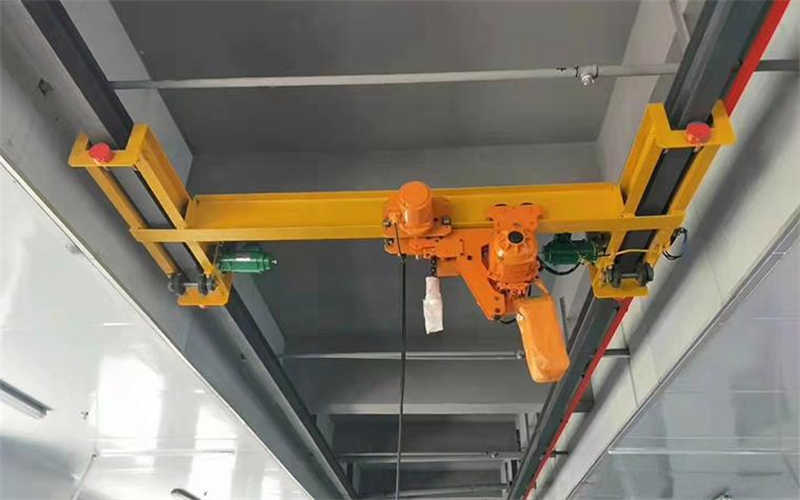
These specialized cranes operate on suspended runways, making them ideal for facilities where space is at a premium. Unlike conventional overhead cranes that require substantial headroom and reinforced support columns, underhung cranes maximize available space while maintaining impressive lifting capacity.
The Unique Challenges of Retrofitting Older Facilities
1. Low Ceilings and Limited Vertical Space
Many historic factories and warehouses were built with lower ceiling heights than modern standards. Traditional overhead cranes simply won’t fit in these spaces, leaving businesses with inefficient material handling options like forklifts or manual labor.
2. Structural Limitations
Decades-old buildings often weren’t designed to support the weight of heavy crane systems. Reinforcing floors and columns to accommodate standard overhead cranes can be prohibitively expensive and disruptive.
3. Floor Space Constraints
In tight production environments, every square foot matters. Traditional crane systems with their support columns and runways can interfere with workflow and reduce usable workspace.
4. Minimizing Downtime During Upgrades
For active production facilities, extended shutdowns for installation aren’t practical. The ideal retrofitting solution should allow for quick installation with minimal disruption to operations.
Why Underhung Cranes Excel in Retrofitting Projects
Space-Efficient Design
Underhung cranes mount directly to existing ceiling support structures, eliminating the need for floor-mounted columns. This design preserves valuable floor space while providing full overhead coverage for material handling needs.
Adaptability to Existing Structures
These cranes are particularly suited for older buildings because they:
- Distribute weight along existing support beams rather than requiring new columns
- Can be configured to work around obstructions like skylights or ductwork
- Are available in single or double girder configurations to match specific load requirements
Lower Installation Impact
Compared to traditional overhead cranes, underhung systems typically:
- Require less structural reinforcement
- Can be installed with minimal disruption to ongoing operations
- Often qualify as “light” modifications rather than major structural changes
Enhanced Operational Efficiency
Modern underhung cranes offer:
- Smooth, precise load positioning
- Options for manual or powered operation
- Potential for automation integration in smart factory applications
Practical Applications in Modernized Facilities
Manufacturing Plants
- Moving raw materials and finished products in space-constrained production areas
- Supporting lean manufacturing initiatives by optimizing material flow
Warehouses and Distribution Centers
- Maximizing storage density in converted industrial buildings
- Enabling efficient order picking and inventory management
Specialty Industries
- Automotive and aerospace: Precise component handling in assembly areas
- Food processing: Hygienic material transfer in retrofitted facilities
- Historical buildings: Preserving architectural integrity while adding modern functionality
Real-World Success Stories
Case Example: Century-Old Textile Mill
A historic New England textile mill converted to modern manufacturing space faced material handling challenges due to:
- Original timber ceiling structure with limited load capacity
- Need to preserve the building’s architectural character
The solution:
- Custom-designed underhung crane system
- Distributed load across multiple support points
- Maintained the open floor plan essential for flexible production
Results included a 40% improvement in material handling efficiency without compromising the building’s historic features.
Case Example: Urban Adaptive Reuse Project
A 1920s industrial building being converted to a mixed-use facility required:
- Material handling for both construction and future tenant needs
- Solutions that wouldn’t limit future space configurations
The underhung crane system provided:
- Flexible coverage across the entire floorplate
- Ability to reposition runways as tenant needs evolve
- Minimal visual impact on the restored industrial space
Selecting the Right Underhung Crane Solution
When considering underhung cranes for a retrofitting project, key factors include:
- Load Requirements
- Capacity needs (typically 1-20 tons for underhung systems)
- Frequency of use and duty cycle
- Building Characteristics
- Existing support structure capacity
- Ceiling height and obstructions
- Operational Needs
- Manual vs. powered operation
- Special features like explosion-proof or cleanroom designs
- Future Flexibility
- Ability to modify or expand the system
- Compatibility with potential automation upgrades
Conclusion: Smart Solutions for Historic Spaces
Underhung cranes represent one of the most effective solutions for bringing modern material handling capabilities to older industrial buildings. By working with the existing architecture rather than against it, these systems allow businesses to:
- Preserve historic structures while gaining modern efficiency
- Avoid costly structural modifications
- Maintain flexible, open floor plans
- Implement solutions quickly with minimal disruption
For facility managers and plant engineers facing the challenges of modernizing older buildings, underhung cranes offer a practical path to improved productivity without compromising the unique character of historic industrial spaces.
Considering a retrofitting project? Consulting with crane specialists who understand both modern material handling needs and historic preservation requirements can help identify the optimal solution for your specific facility.
