
30-Jun-2025
How Single Girder Overhead Cranes Help Small Factories Cut Costs Without Compromising Quality
Small factories and workshops often operate on tight budgets, where every equipment purchase requires careful consideration. When it comes to material handling, many assume they must choose between affordability and reliability. The truth is, single girder overhead cranes offer a smart balance – delivering substantial cost savings while maintaining the performance growing businesses need.
The Financial Challenges Small Factories Face
Running a small-scale manufacturing operation comes with unique financial pressures:
- Limited capital for large equipment investments
- High sensitivity to ongoing operational costs
- Need for flexibility as production demands change
Traditional double girder cranes, while robust, often represent over-engineering for smaller operations. Their higher price tag includes capacity and features that many workshops simply don’t require. This is where single girder cranes shine, providing the essential lifting power at a fraction of the cost.
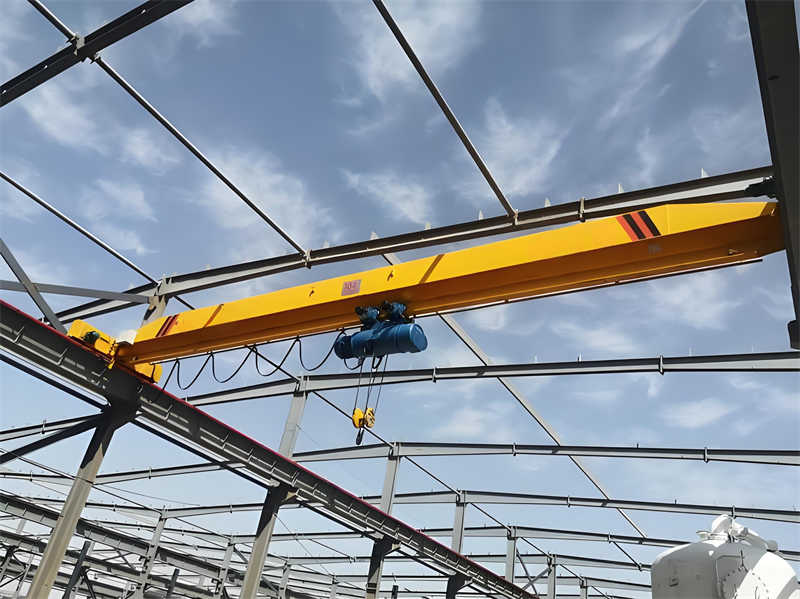
Where the 30% Savings Come From
1. Lower Upfront Investment
The simplified design of single girder cranes translates directly to cost advantages:
- Reduced material requirements (one main beam instead of two)
- Less complex manufacturing process
- Lighter structure means lower shipping and handling costs
For a typical 5-ton capacity crane with 15-meter span, the price difference can be significant – often 25-35% less than an equivalent double girder model.
2. Installation and Infrastructure Savings
Many small factories don’t realize how much they can save on installation:
- No need for reinforced building structures in most cases
- Simpler rail systems that are faster to install
- Lower power requirements mean no expensive electrical upgrades
These “hidden” savings often surprise buyers when they compare total project costs.
3. Ongoing Operational Efficiency
The savings continue long after installation:
- Energy consumption typically 15-20% lower than double girder models
- Fewer moving parts means less maintenance over time
- Easier access for routine inspections and servicing
Maintaining Quality While Cutting Costs
Some manufacturers assume cheaper price means inferior quality, but that’s not necessarily true. The key is smart engineering:
Right-Sized Capacity
Most small factories don’t need the 20-50 ton capacity of industrial double girder cranes. Single girder models perfectly match the 1-10 ton requirements of smaller operations without paying for unused capability.
Smart Material Selection
Modern single girder cranes use high-strength steel alloys that provide durability while keeping weight (and cost) down. Advanced welding techniques ensure structural integrity.
Focused Features
Rather than including every possible feature, single girder cranes concentrate on what matters most for small operations:
- Reliable lifting performance
- Smooth operation
- Easy maintenance
Real-World Examples
A automotive parts supplier replaced their aging double girder crane with a new single girder model and saw:
- 28% reduction in purchase price
- 12% lower monthly energy costs
- Fewer maintenance callouts
A packaging materials workshop implemented their first overhead crane – a single girder model – and achieved payback in just 7 months through labor savings and reduced product damage.
Making the Right Choice for Your Operation
When evaluating overhead cranes, small factories should consider:
- Actual lifting needs (weight, frequency, span)
- Available building infrastructure
- Future growth projections
For many, the single girder solution provides the perfect balance of performance and value. The substantial cost savings can then be reinvested in other areas of the business.
The bottom line: single girder overhead cranes aren’t just a cheaper alternative – they’re often the smarter choice for small to medium operations. By matching the equipment to actual needs rather than overbuying, factories can achieve significant cost reductions without sacrificing the reliable performance they require.
For operations where lifting demands stay below 10 tons and spans remain under 20 meters, the single girder crane delivers outstanding value. The savings go beyond the initial purchase price, continuing through years of efficient operation.
When properly specified and installed, these cranes provide small factories with an affordable path to safer, more efficient material handling – exactly what growing businesses need to stay competitive.
