
4-Jul-2025
Hygienic Overhead Cranes for Food & Beverage Facilities
In food production, every piece of equipment must meet strict hygiene and safety standards—and overhead cranes are no exception. Standard industrial cranes aren’t designed for environments where contamination risks, frequent washdowns, and food-grade compliance are critical. That’s why specialized food-grade single girder bridge cranes are essential for efficient, safe material handling in food processing, packaging, and storage.
What Makes a Crane “Food-Grade”?
When selecting an overhead crane for food processing facilities, standard industrial cranes simply won’t cut it. Food-grade cranes require specialized design features that address three critical concerns: hygiene, safety, and regulatory compliance. Here’s a detailed breakdown of what truly makes a crane suitable for food production environments:
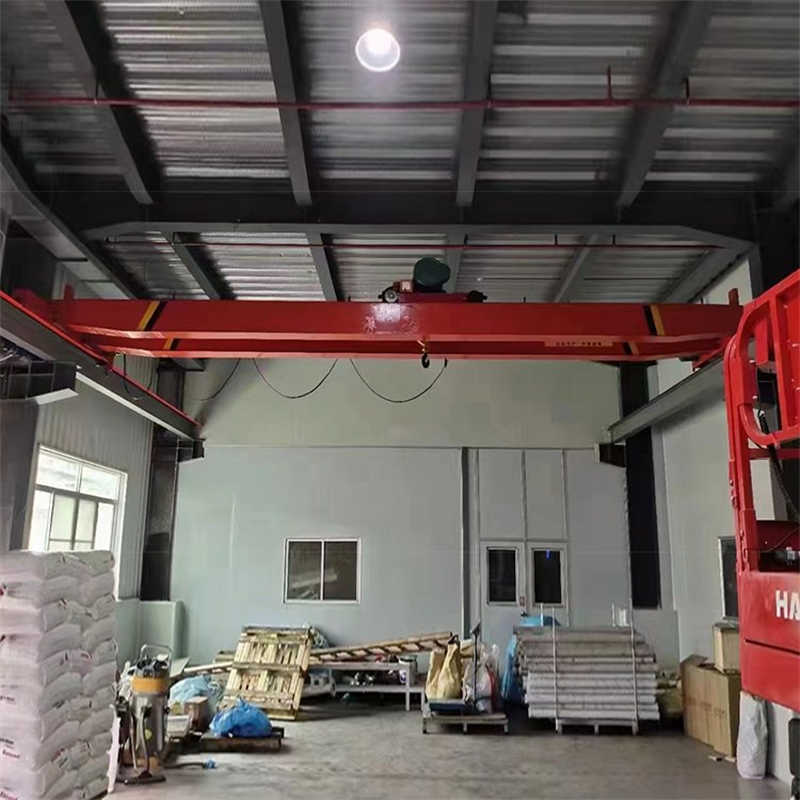
1. Hygienic Construction & Materials
- Stainless Steel Components:
- Primary structural elements made from 304 or 316L stainless steel
- Electropolished surfaces with Ra < 0.8 μm smoothness to prevent bacterial adhesion
- Welded joints (no bolt pockets) to eliminate contamination traps
- Sealed Systems:
- Totally enclosed motors (TEFC) with IP66/IP67 protection
- Hermetically sealed gearboxes with food-safe lubricants
- Conductive wheel coatings to prevent static buildup
- Cleanroom-Compatible Design:
- Smooth radius corners (no sharp angles)
- Sloped surfaces to prevent liquid pooling
- Quick-release panels for thorough cleaning access
2. Sanitary Movement Systems
- Specialized Trolley & Hoist Design:
- Stainless steel wire ropes or food-grade polyurethane-coated cables
- Self-lubricating bearings that don’t require external grease
- Drip pans under all moving components
- Contamination-Free Operation:
- NSF H1-certified lubricants in all moving parts
- Non-marking nylon or polyurethane wheels
- Magnetic particle-free construction
3. Washdown & Corrosion Resistance
- High-Pressure Cleaning Ready:
- All electrical components rated IP69K for steam cleaning
- Corrosion-resistant connectors and junction boxes
- Conformal coated circuit boards
- Special Protective Features:
- FDA-compliant powder coatings where stainless isn’t used
- Cathodic protection on submerged components
- Antimicrobial surface treatments
4. Food Safety Certifications
- Global Standards Compliance:
- FDA 21 CFR 178.3570 (lubricants)
- EC 1935/2004 (materials in contact with food)
- 3-A Sanitary Standards 74-05
- Industry-Specific Approvals:
- USDA Grade A for dairy applications
- EHEDG certification for hygienic design
- ISO 21469 for lubrication safety
5. Operational Considerations
- Product Protection Features:
- Anti-microbial paint options
- Non-sparking aluminum or bronze components
- Smooth acceleration profiles to prevent ingredient spillage
- Maintenance Accessibility:
- Tool-free inspection points
- Quick-disconnect wiring
- Corrosion-resistant fasteners
Why This Matters: In food production, a single contamination incident can lead to massive product recalls, regulatory fines, and brand damage. Food-grade cranes are engineered to eliminate these risks while maintaining the durability and performance expected from industrial lifting equipment.
For facilities handling sensitive food products, these design elements aren’t just nice-to-have – they’re essential requirements for protecting both product quality and operational continuity. The right food-grade crane should function as seamlessly in your environment as any other piece of sanitary process equipment.
Where Food-Grade Cranes Are Used
Food-grade overhead cranes play a critical role in maintaining hygiene, efficiency, and safety across various stages of food production. Below is a detailed breakdown of their key applications in the food and beverage industry:
1. Raw Material Handling & Storage
Bulk Ingredient Movement
- Flour, Sugar, Grains, and Powders
- Dust-proof hoists with sealed bearings prevent particulate contamination.
- Explosion-proof (ATEX) options for facilities handling combustible dust.
- Liquid Ingredients (Oils, Syrups, Dairy)
- Stainless steel hooks and slings resist corrosion from spills.
- Drip containment systems prevent leaks during transfers.
Silo & Warehouse Loading/Unloading
- Heavy-duty lifting (5–20 tons) for palletized raw materials.
- High-cycle duty cranes for frequent loading operations.
2. Food Processing & Production Lines
Cooking & Mixing Stations
- Heat-resistant cranes (up to 80°C/176°F) for use near boilers, fryers, or ovens.
- Stainless steel construction withstands steam and cleaning chemicals.
Meat & Poultry Processing
- Hygienic trolley systems with easy-clean designs for blood and fat resistance.
- Corrosion-resistant chains for high-moisture washdown areas.
Beverage & Dairy Production
- Precision lifting for tanks and vats (fermentation, pasteurization).
- Non-marking wheels to avoid floor scuffs in bottling areas.
3. Packaging & Final Product Handling
Bottling & Canning Lines
- Anti-sway technology (±2mm accuracy) for delicate glass bottles.
- Automated guided vehicle (AGV) integration for seamless conveyor transfers.
Boxed & Bagged Goods
- Soft-start/stop controls prevent toppling stacked products.
- Sanitary vacuum lifters for handling packaged foods without direct contact.
4. Cold Storage & Freezer Facilities
Frozen Food Warehousing
- Low-temperature kits (-30°C/-22°F rated) for reliable operation in freezers.
- Anti-condensation heaters on electrical components.
Refrigerated Distribution Centers
- High-duty cycle cranes for fast loading/unloading of perishables.
- Frost-resistant lubricants to maintain smooth operation.
5. Specialty Food Manufacturing
Confectionery & Chocolate
- Temperature-controlled lifting to prevent melting during transfers.
- Hygienic belt hoists for delicate product handling.
Seafood Processing
- Saltwater-resistant coatings on all components.
- Enhanced corrosion protection for high-salinity environments.
Why Application-Specific Design Matters
Each food production environment presents unique challenges—whether it’s extreme temperatures, moisture, or strict hygiene standards. A properly specified food-grade crane ensures:
✔ No product contamination (FDA/EC1935 compliance)
✔ Longer equipment lifespan (corrosion/wear resistance)
✔ Higher productivity (reduced downtime for cleaning/maintenance)
Need a crane tailored to your food processing needs? [Contact us] for a free facility assessment.
Choosing the Right Crane for Your Facility
1. Assess Your Needs
- Load capacity (including packaging weight).
- Span and height to fit your workspace.
- Washdown requirements (daily cleaning vs. occasional sanitization).
2. Compliance & Certifications
- CE, ISO 22000, or HACCP compliance for food safety.
- ATEX certification if handling explosive dust (e.g., flour, powdered ingredients).
Why Food Manufacturers Choose Dongqi Cranes
- Proven in demanding environments (dairy, meat processing, beverage plants).
- Customizable options (stainless steel, washdown-ready, automation-ready).
- Low-maintenance design to minimize downtime.
Need a crane that meets food safety standards? [Contact us] for a free consultation.
Frequently Asked Questions
Q: How do you prevent contamination from crane lubricants?
A: We use food-grade NSF H1 lubricants that are safe for incidental contact with food.
Q: Can these cranes work in high-moisture areas?
A: Yes—our IP55/IP65-rated cranes are built for wet and washdown environments.
Q: Do you offer automation integration?
A: Absolutely. Our cranes can be equipped with PLC controls, RFID tracking, and AGV compatibility.
