
7-Jul-2025
Single vs Double Girder Overhead Crane: Which Fits Your Workshop?
Introduction
Overhead cranes are essential for material handling in industries such as manufacturing, construction, and warehousing. Choosing the right type—single girder vs double girder overhead crane—can significantly impact efficiency, safety, and cost-effectiveness.
This guide compares single and double girder cranes, helping you decide which is best for your workshop based on load capacity, space constraints, budget, and long-term needs.
1. What is a Single Girder Overhead Crane?
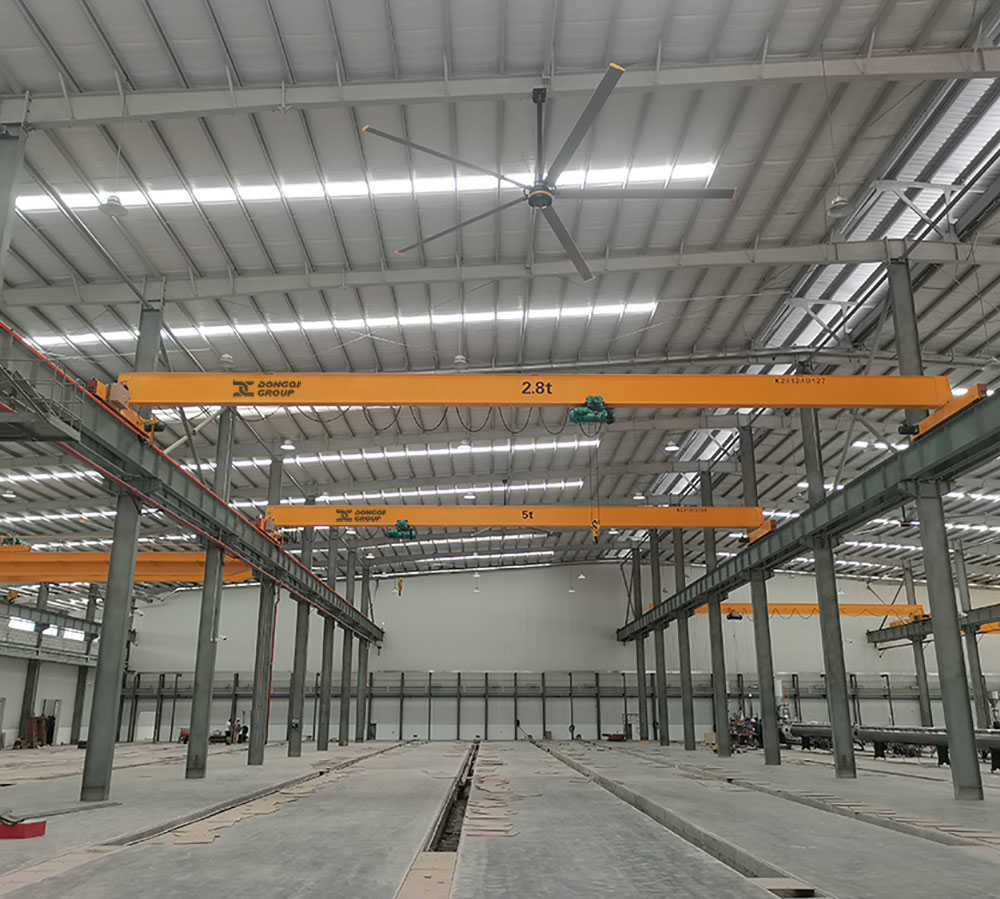
A single girder overhead crane consists of one bridge beam (girder) supported by end trucks, with a hoist and trolley that move along the bottom flange.
Key Features:
- Lifting Capacity: Typically up to 20 tons (suitable for light to medium-duty work).
- Design: Compact, cost-effective, and easier to install.
- Applications: Ideal for workshops, warehouses, and assembly lines where heavy lifting isn’t required.
Advantages:
✔ Lower initial cost
✔ Requires less headroom (hoist hangs below the girder)
✔ Easier maintenance
Disadvantages:
✖ Limited to lighter loads
✖ Less durable for continuous heavy use
2. What is a Double Girder Overhead Crane?
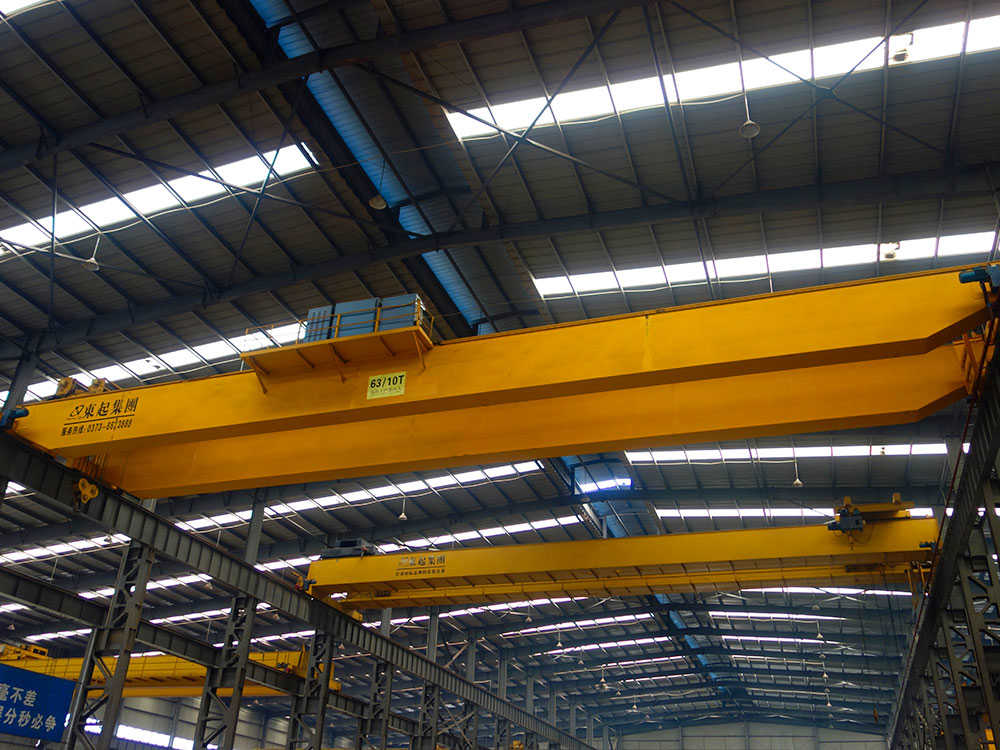
A double girder overhead crane has two bridge girders, providing greater strength and stability for heavy-duty applications.
Key Features:
- Lifting Capacity: 20 tons and above (some models exceed 500 tons).
- Design: More robust, with the hoist mounted between girders.
- Applications: Used in steel mills, shipyards, and large-scale manufacturing.
Advantages:
✔ Higher load capacity
✔ Longer lifespan for intensive operations
✔ Can accommodate auxiliary hoists for multi-lifting tasks
Disadvantages:
✖ Higher initial cost
✖ Requires more installation space
✖ More complex maintenance
3. Key Differences Between Single and Double Girder Cranes
When choosing between single and double girder overhead cranes, understanding their key differences is crucial. Below is a detailed comparison across multiple factors:
3.1. Structural Design & Load Capacity
| Feature | Single Girder Crane | Double Girder Crane |
|---|---|---|
| Number of Girders | 1 main girder | 2 parallel girders |
| Hoist Position | Below the girder | Between the girders |
| Typical Capacity | Up to 20 tons | 20–500+ tons |
| Stability | Moderate (suitable for lighter loads) | High (better for heavy, unbalanced loads) |
Why It Matters:
- Single girder cranes are lighter and more compact, ideal for standard lifting.
- Double girder cranes offer greater structural integrity, making them suitable for heavy-duty industrial use.
3.2. Span & Height Efficiency
| Feature | Single Girder Crane | Double Girder Crane |
|---|---|---|
| Headroom Requirements | Needs more vertical space (hoist hangs below girder) | Requires less headroom (hoist fits between girders) |
| Max Span | Typically up to 30m | Can exceed 35m+ |
| Lifting Height | Limited by hoist below girder | Higher lifts possible due to compact design |
Workshop Impact:
- Low ceilings? Double girder cranes maximize lift height.
- Wide spans? Double girders handle longer distances better.
3.3. Cost & Installation
| Feature | Single Girder Crane | Double Girder Crane |
|---|---|---|
| Initial Cost | 20–40% cheaper | Higher upfront investment |
| Installation Time | Faster (simpler structure) | Longer (requires precise alignment) |
| Maintenance Costs | Lower (fewer components) | Higher (complex mechanics) |
Budget Considerations:
- Short-term savings? Single girder is cost-effective.
- Long-term ROI? Double girder lasts longer under heavy use.
3.4. Durability & Maintenance
| Feature | Single Girder Crane | Double Girder Crane |
|---|---|---|
| Lifespan | 10–15 years (with moderate use) | 20+ years (heavy-duty) |
| Maintenance Needs | Simple (accessible hoist) | Complex (more moving parts) |
| Duty Cycle | Light to moderate | Continuous heavy-duty |
Best For:
- Occasional use: Single girder.
- 24/7 operations: Double girder.
3.5. Space & Workshop Layout
| Feature | Single Girder Crane | Double Girder Crane |
|---|---|---|
| Workshop Size | Fits small/medium spaces | Requires large facilities |
| Obstruction Risk | Hoist hangs low (may interfere) | Compact design (less obstruction) |
| Mobility | Easier to relocate | Permanent installation |
Layout Tips:
- Tight spaces? Single girder avoids clutter.
- Heavy, frequent lifts? Double girder optimizes workflow.
Quick Decision Checklist
✔ Choose Single Girder If:
- Lifting ≤ 20 tons
- Limited budget
- Moderate usage
✔ Choose Double Girder If:
- Heavy loads (20+ tons)
- High-duty cycles
- Need maximum height/span
This breakdown helps you match the crane to your workshop’s specific needs. Need further guidance? Consult an overhead crane specialist for a tailored solution.
4. How to Choose the Right Crane for Your Workshop
Consider These Factors:
- Load Requirements – Will you lift under or over 20 tons?
- Workspace Dimensions – Do you have height or span limitations?
- Budget – Can you afford a double girder’s long-term benefits?
- Future Needs – Will your lifting demands increase?
For small workshops: A single girder crane is usually sufficient.
For heavy industries: A double girder crane ensures safety and efficiency.
5. Common Applications for Each Crane Type
Single Girder Overhead Crane Applications
1. Manufacturing & Assembly Operations
- Ideal for: Automotive parts assembly, appliance manufacturing
- Why it works:
- Handles repetitive light-to-medium lifts (1-15 tons)
- Fits perfectly in assembly line layouts
- Cost-effective for batch production environments
2. Warehousing & Logistics
- Typical uses:
- Loading/unloading trucks
- Moving palletized goods
- Stacking materials in storage racks
- Key benefits:
- Requires minimal headroom (critical in storage facilities)
- Easy to operate for frequent, short-distance moves
3. Repair & Maintenance Shops
- Perfect for:
- Equipment servicing
- Engine removal/installation
- Machinery overhauls
- Operational advantages:
- Provides precise positioning
- Compact design fits in tight service bays
4. Light Fabrication Facilities
- Common tasks:
- Metal sheet handling
- Small structural component movement
- Tool and die positioning
- Why preferred:
- Smooth operation for precision work
- Lower energy consumption
Double Girder Overhead Crane Applications
1. Heavy Industrial Manufacturing
- Critical in:
- Steel mill production lines
- Large machinery assembly
- Industrial boiler installation
- Capacity advantages:
- Handles 50-500+ ton loads
- Withstands high-temperature environments
2. Power Generation Plants
- Essential for:
- Turbine installation/maintenance
- Transformer handling
- Generator set movements
- Special features:
- Often equipped with auxiliary hoists
- Can include specialized lifting attachments
3. Shipbuilding & Port Operations
- Vital for:
- Engine room component installation
- Hull section movement
- Dry dock operations
- Operational strengths:
- Corrosion-resistant designs available
- Precise control for delicate positioning
4. Mining & Heavy Material Processing
- Key uses:
- Ore crusher maintenance
- Large equipment repair
- Processing plant operations
- Why necessary:
- Handles abrasive materials
- Built for harsh environments
5. Aerospace & Defense Manufacturing
- Critical applications:
- Aircraft fuselage assembly
- Missile component handling
- Satellite integration
- Special requirements met:
- Extreme precision movement
- Clean room compatible options
Industry-Specific Considerations Table
| Industry | Recommended Type | Special Features Often Needed |
|---|---|---|
| Automotive | Single Girder | Anti-sway control, precision positioning |
| Steel Production | Double Girder | Heat-resistant coatings, magnet options |
| Food Processing | Single Girder | Stainless steel construction, hygienic design |
| Paper Mills | Double Girder | Explosion-proof options, corrosion protection |
| Construction | Either | Outdoor protection, variable frequency drives |
Emerging Applications
- Renewable Energy Sector:
- Single girder: Solar panel installation
- Double girder: Wind turbine component handling
- Waste Management:
- Double girder: Scrap metal processing
- Single girder: Recycling plant operations
Special Case: Multi-Purpose Facilities
For workshops handling both light and occasional heavy lifts:
- Solution: Install single girder cranes with capacity for 80% of lifts
- Supplement with:
- Mobile gantry cranes for heavy lifts
- Jib cranes for precision workstations
6. Conclusion
Choosing between a single and double girder overhead crane depends on your lifting needs, workspace, and budget.
- For light-duty tasks: A single girder crane offers cost savings and simplicity.
- For heavy industrial use: A double girder crane provides strength and durability.
Consult with a crane specialist to ensure the best fit for your workshop.
7. FAQs
Q: Can a single girder crane be upgraded to a double girder later?
A: Not easily—structural reinforcements are usually needed. It’s better to choose the right type from the start.
Q: Which crane is better for high-temperature environments?
A: Double girder cranes handle extreme conditions better due to their robust construction.
Q: What safety features should I look for?
A: Overload protection, emergency stops, and anti-collision systems are essential for both types.
By understanding these differences, you can select the best overhead crane for your workshop, ensuring efficiency, safety, and cost-effectiveness.
Need help deciding? Contact Dongqi crane expert today for a customized solution!
