
11-Jul-2025
Why Metal Fabrication Plants Demand Higher Safety Factors in Single Girder Cranes
Metal manufacturing environments rank among the world’s most hazardous industrial settings. From scorching molten metal to heavy irregular loads and airborne contaminants, these facilities push material handling equipment to its absolute limits. Standard overhead cranes—designed for general factory use—often lack the specialized engineering needed to withstand these extreme conditions reliably. This gap between conventional equipment capabilities and metallurgical operational realities creates unacceptable safety risks that demand engineered solutions. Here, we examine why metal fabrication plants require single girder cranes specifically designed with higher safety factors, robust metallurgical-grade construction, and specialized safety systems to protect personnel, assets, and productivity.
The Extreme Environment of Metalworking Facilities
Unlike typical manufacturing plants, metal processing sites present a convergence of physical and environmental hazards that exponentially increase operational risks. Molten metal handling—common in foundries and steel mills—creates intense radiant heat exceeding 1000°C, capable of degrading crane components not engineered for thermal resistance. A momentary failure when transporting ladles can trigger catastrophic explosions, fires, or fatalities.
Adding to thermal stress are heavy, irregular-shaped loads like castings, forgings, or steel coils. These introduce unpredictable dynamic forces during lifting and transport. Unlike uniform loads, shifting centers of gravity cause violent swinging, generating shock loads that may exceed a crane’s rated capacity by 200% or more. Combined with high dust levels from grinding or melting processes—which penetrate motors and electrical systems—and corrosive atmospheres laden with chemical fumes or humidity, standard IP44-rated components rapidly deteriorate. The result? Premature failures in motors, brakes, or structural elements that bypass standard safety margins.
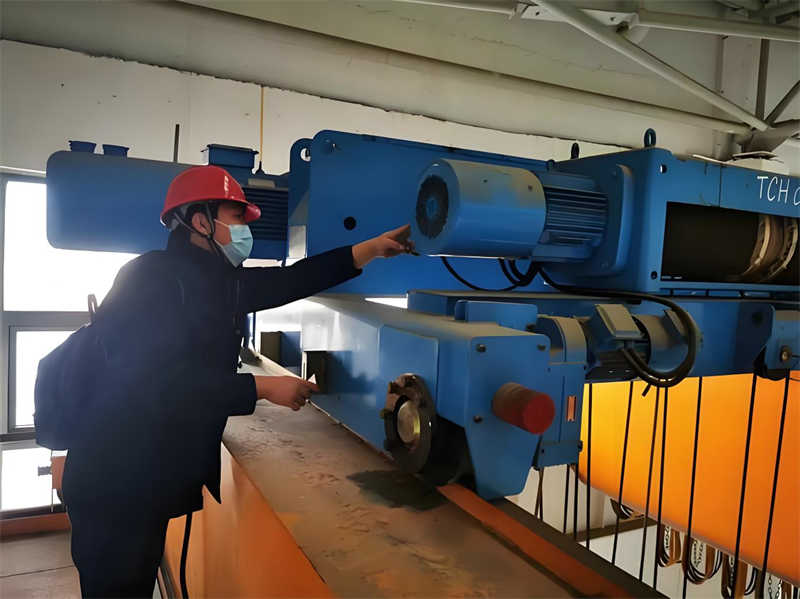
5 Critical Reasons Why Standard Safety Factors Fall Short
- Unpredictable and Extreme Load Dynamics:
Metal fabrication involves moving non-standardized heavy loads (e.g., 10-ton castings or 6-meter steel beams) that create side-pull forces, sway, or sudden impacts. Unlike controlled warehouse lifting, these dynamics exert immense stress on girders, hoists, and end trucks. A higher safety factor (e.g., ≥25% above rated load) provides essential buffer capacity to absorb these shocks without structural compromise. - Thermal Degradation and Heat Radiation:
Ambient temperatures near furnaces or ladles routinely exceed 60°C. Prolonged exposure weakens standard steel girders and electrical insulation. Class F (155°C) or H (180°C) motor insulation, heat-reflective shields under girders, and high-temperature cables are essential to prevent insulation breakdowns—a leading cause of hoist failure in foundries. - Corrosive/Dusty Atmospheres:
Particulate from sandblasting, slag, or powdered alloys infiltrates conventional crane enclosures. Motors and electricals rated below IP55 rapidly accumulate debris, causing short circuits or bearing seizures. In humid settings (e.g., hydro-testing zones), moisture accelerates corrosion. IP65-sealed components and corrosion-resistant coatings (epoxy or hot-dip galvanizing) are non-negotiable for longevity. - Fatigue from High-Cycle Operations:
Continuous production demands A6/A7 duty cycle cranes capable of 150,000+ lifts. Standard A3 cranes lack the reinforced welds, fatigue-resistant steels (e.g., Q345B), and oversized gearboxes needed to endure this relentless usage without developing cracks or deformation. - Regulatory Compliance for High-Risk Lifts:
Global standards (FEM 1.001, ISO 4301) mandate stricter safety factors for molten metal handling (≥1.5x load) versus general cargo (≥1.33x). Non-compliant cranes risk operational shutdowns, liability lawsuits, or catastrophic failures.
Engineering Solutions: How High-Safety-Factor Cranes Mitigate Risk
Structural Reinforcements for Resilience:
- Optimized Girder Design: Utilizing wide-flange beams or box girders fabricated from low-alloy steel (Q355B or equivalent) with 20–30% thicker webs to resist bending under dynamic loads.
- Impact-Resistant End Trucks: Reinforced bolted connections and forged steel wheels prevent derailment during lateral load swings.
Specialized Hoisting Systems:
- Triple Braking Systems: Primary brake + safety brake + mechanical load limiter ensure failsafe load control, critical near molten material.
- Metallurgical-Grade Wire Ropes: Zinc-nickel coated or stainless-steel ropes resist heat scaling and abrasion, with 8:1 design factor (vs. 5:1 standard).
Environmental Hardening:
- Thermal Management: Insulation plates below girders, H-class motors with embedded thermistors for auto-shutdown at 150°C.
- Sealed Electricals: IP65-rated motors, pendant stations, and junction boxes prevent dust/water ingress. Centralized lubrication systems with high-temp grease protect bearings.
Intelligent Safety Systems:
- Overload Limiters with LCD Displays: Real-time load monitoring with auto-cutoff at 110% capacity.
- Dual-Limit Switches: Redundant upper/lower travel stops prevent over-hoisting.
- Anti-Sway Technology: VFD controls minimize load oscillation during transport.
The Tangible Value of Investing in Higher Safety
Beyond preventing disasters, cranes engineered with elevated safety margins deliver measurable operational returns:
- 99% Uptime: Reduced breakdowns from fatigue or environmental damage.
- Longer Asset Life: 30% extended service life versus standard cranes in harsh mills.
- Lower Insurance Premiums: Demonstrable risk mitigation cuts liability costs.
- Regulatory Assurance: Compliance with ISO 12482, OSHA 1910.179, and EN 13001.
As one steel plant manager noted after upgrading to high-safety-factor cranes:
“Our foundry’s 5-ton LDY crane with dual brakes and H-class insulation has operated flawlessly for 8 years—despite daily exposure to 1600°C molten steel. Zero critical incidents and maintenance costs dropped by 40%.”
Partner with Dongqi Crane for Your Metalworking Safety Upgrade
At Dongqi Crane, we specialize in custom single girder cranes built to FEM/ISO metallurgical standards for the world’s most demanding metal plants. Our solutions integrate:
- Application-Specific Engineering: Span-specific girders, >A6 duty cycles, and IP66 protection.
- End-to-End Safety Systems: From redundant brakes to IoT-enabled load sensors.
- Lifecycle Support: Installation, inspection, and maintenance aligned with ANSI B30.2.
“In metal fabrication, the cost of a crane accident isn’t just equipment damage—it’s lives. Don’t let standard designs gamble with your most critical assets.”
