
16-Jul-2025
Guide to Selecting Motor Protection Levels for Cranes in Humid Paper Mill Environments
Introduction
Paper mills feature high temperature, high humidity, dust, and corrosive conditions, posing significant challenges to the reliability and lifespan of crane motors. Improper motor protection levels can lead to insulation failure, bearing corrosion, electrical short circuits, and increased maintenance costs.
As a professional crane solutions provider, Dongqi Crane combines global paper industry expertise to analyze motor protection level selection for humid environments and provide comprehensive protection strategies to ensure long-term stable operation under harsh conditions.
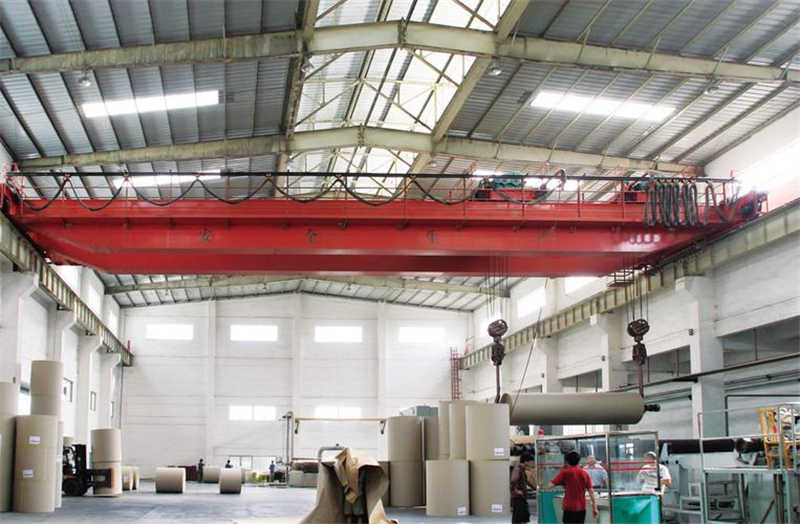
1. Challenges of Paper Mill Environments on Crane Motors
Cranes in paper mills (such as overhead cranes, jib cranes, and electric hoists) are typically used for handling paper rolls, equipment maintenance, or production support. However, the unique environment imposes strict demands on motors:
1. High Temperature & Humidity
- High ambient temperature: Workshop temperatures can reach 40°C–45°C, with even higher levels near drying machines.
- Extreme humidity: Relative humidity often exceeds 90%, sometimes reaching 100% saturation, leading to internal condensation.
- Condensation risk: Temperature fluctuations (e.g., after shutdown at night) cause moisture buildup on motor surfaces, potentially seeping inside.
2. Corrosive Substances
- Chemicals (e.g., bleach, sulfides) used in papermaking release corrosive vapors, accelerating metal corrosion.
- Steam, acidic/alkaline liquids may directly contact motors, degrading insulation.
3. Dust Contamination
- Pulp fibers & dust accumulate on motor cooling fins, reducing heat dissipation and blocking vents.
- Tissue paper production areas are particularly prone to dust buildup, increasing fire hazards.
4. Additional Challenges
- High-pressure washing: Some zones (e.g., food-grade packaging) require regular 80°C hot-water cleaning, demanding motors withstand intense spray.
- Electromagnetic interference: Heavy machinery generates EMI, potentially disrupting motor control systems.
- Low-speed precision: Paper roll handling requires smooth operation to prevent product damage.
2. Understanding Motor Protection (IP Ratings)
The Ingress Protection (IP) rating (IEC standard) defines a motor’s resistance to dust and water.
1. IP Code Structure (e.g., IP65)
- First digit (0–6): Solid particle protection (e.g., dust).
- 5 (IP5X): Dust-protected (limited ingress).
- 6 (IP6X): Dust-tight (no ingress).
- Second digit (0–9K): Liquid protection.
- 5 (IPX5): Low-pressure water jets.
- 6 (IPX6): High-pressure water jets.
- 7 (IPX7): Temporary immersion (1m, 30min).
- 9K (IPX9K): High-temp/pressure wash (80°C, 80–100 bar).
2. Recommended IP Ratings for Paper Mills
| IP Rating | Application | Protection Level |
|---|---|---|
| IP55 | Low-humidity, no direct water exposure | Basic dust/water resistance |
| IP65 | Humid/dusty areas (minimum recommendation) | Dust-tight + water-jet resistant |
| IP66 | High-humidity/washdown zones (best value) | Dust-tight + high-pressure resistant |
| IP69K | Extreme humidity/high-pressure cleaning | Dust-tight + steam/hot-water resistant |
3. Insulation Class (H-Class)
Beyond IP ratings, motors must have H-class insulation (180°C rating) to endure paper mill heat. Lower-grade insulation (e.g., B/F-class) degrades faster under prolonged heat.
3. Dongqi Crane Motor Selection Guide
1. Basic Requirements
- Minimum IP rating: IP55 (dry areas only), IP66 recommended (humid zones).
- Insulation: H-class (heat-resistant).
- Variable-frequency drives (VFD): Equipped with independent cooling fans to prevent overheating at low speeds.
2. Enhanced Solutions for Harsh Conditions
| Environment | Recommended Motor |
|---|---|
| Standard humid/dusty zones | IP66 + H-class insulation |
| High-pressure washdown areas | IP69K + anti-corrosion coating |
| Highly corrosive zones | Stainless steel housing + IP66 |
3. Material & Design Optimizations
- Housing: Cast iron + C5 anti-corrosion coating (resists chemicals/salt spray).
- Seals: High-temperature rubber (prevents cracking).
- Bearings: Anti-rust treatment to block moisture ingress.
4. Holistic Crane Protection for Humid Environments
1. Electrical System Protection
- Control panel: IP55+, with anti-condensation heaters or air conditioning.
- Cabling: Shielded cables + waterproof connectors.
- Sensors: IP67-rated (e.g., limit switches, encoders).
2. Mechanical Component Protection
- Wire ropes: Galvanized steel (3x lifespan vs. standard ropes).
- Lubrication: Water-resistant grease (withstands washdowns).
- Gearboxes: Oil drip trays to prevent leaks.
3. Operational Enhancements
- Remote control: Reduces operator exposure to heat/humidity.
- VFD speed control: Smooth lifting/lowering to protect paper rolls.
5. Maintenance Recommendations
- Regularly inspect motor seals and insulation resistance.
- Clean cooling fins to prevent dust clogging.
- Relubricate bearings/gears with water-resistant grease.
- Monitor wire ropes and replace corroded sections promptly.
Conclusion
For paper mills’ humid, dusty, and corrosive settings, selecting motors with IP66/IP69K ratings + H-class insulation is critical. Dongqi Crane delivers customized solutions to ensure efficient, reliable, and durable crane performance in extreme conditions.
Contact our technical team for further consultation! 🚀
(Based on IEC 60529 standards and Dongqi Crane technical documentation. Applicable to cranes in paper, food, chemical, and other humid industries.)
