
21-Jul-2025
Cost-Benefit Analysis: Single Girder Bridge Cranes vs. Jib Cranes for Machine Shops
Introduction
In today’s competitive manufacturing landscape, machine shops face constant pressure to improve productivity while controlling costs. The choice of material handling equipment plays a pivotal role in this balancing act, with single girder bridge cranes and jib cranes emerging as two of the most common solutions – each with distinct advantages and ideal applications.
This comprehensive analysis from Dongqi Crane examines both options across multiple dimensions: initial investment, operating costs, space utilization, work efficiency, and long-term return on investment. By comparing technical specifications, performance parameters, and real-world applications, we reveal the most cost-effective material handling solution for different workshop environments and operational requirements.
Equipment Overview and Technical Specifications
Understanding the fundamental structures and operating principles of single girder bridge cranes and jib cranes forms the foundation for meaningful cost-benefit analysis. These material handling solutions differ substantially in design philosophy, structural composition, and operation methods – factors that directly determine their respective applications and performance characteristics.
Single Girder Bridge Cranes
The core structure consists of:
- A main girder (typically I-beam or box girder design)
- Two end trucks
- An electric hoist
- Travel mechanisms
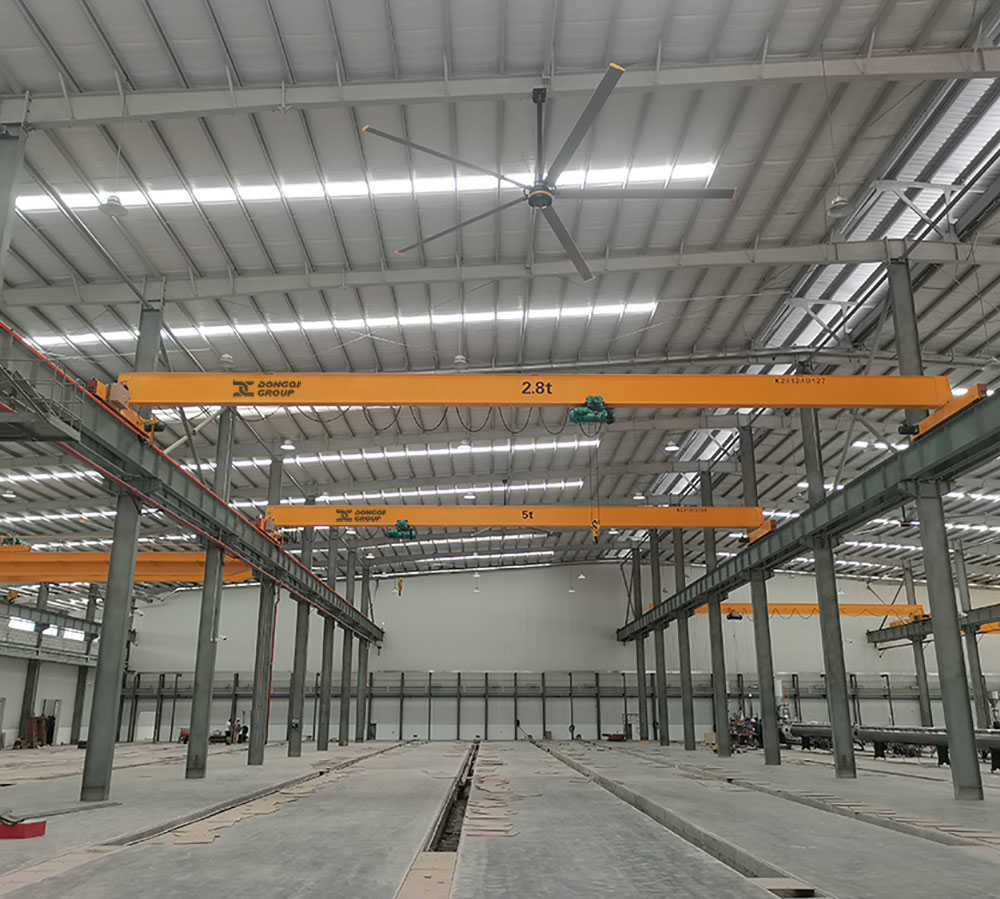
Key technical parameters from Dongqi Crane’s product line:
| Parameter | Range |
|---|---|
| Capacity | 1-20 tons |
| Span | 7.5-31.5 meters |
| Lifting height | 3.2-40 meters |
| Duty class | A1-A5 |
| Lifting speed | 0.32-16 m/min |
| Trolley travel speed | 3.2-40 m/min |
| Crane travel speed | 3.2-50 m/min |
Jib Cranes
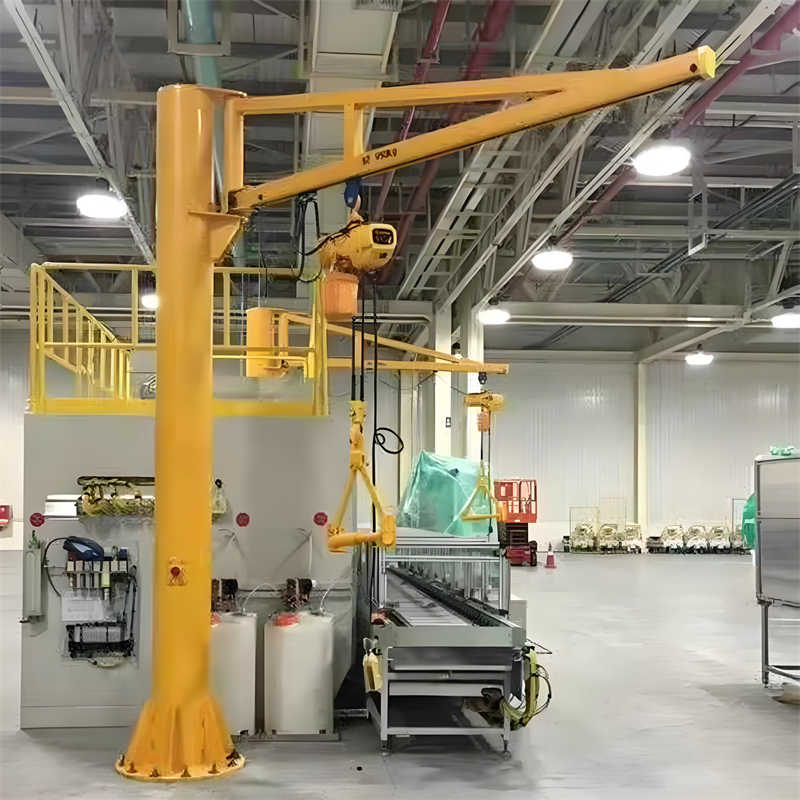
Structural components include:
- Mast (floor- or wall-mounted)
- Rotating boom
- Lifting mechanism
- Slewing unit
Typical specifications:
- Capacity: 2.5-20 tons
- Maximum radius: 10 meters
- Maximum lifting height: 15 meters
Initial Investment Comparison
The purchase decision for material handling equipment must carefully evaluate upfront costs, which vary significantly between these two options based on multiple factors.
Single Girder Bridge Cranes
Cost components:
- Equipment price: $3,325 (1-ton) to $11,350 (20-ton)
- Example: 5-ton crane spans 19m, lifts 6m = $4,765-$6,000
- Rail system: Adds 30-50% to total cost
- Installation and commissioning
- Potential structural reinforcement
Special designs:
- Low headroom versions cost 15-20% more than standard
- FEM/DIN models (A5 duty) may double the price of basic A3 units
Jib Cranes
Simpler cost structure:
- Equipment price:
- 2.5-ton: $5,000-$8,000
- 20-ton: $20,000-$30,000
- Basic installation
Key advantages:
- Minimal facility modifications required
- Faster deployment
- Lower total initial investment for most applications
Operating and Maintenance Costs
Long-term expenses often outweigh initial investment in total cost of ownership.
Energy Consumption
- Single girder cranes:
- 5-ton model: 7.5-10kW (hoist) + 0.8-1.5kW (travel)
- Annual consumption: Thousands of kWh in continuous operation
- Jib cranes:
- Energy only for hoisting (and rotation if motorized)
- Typically 30-50% less consumption
Maintenance Requirements
Single girder cranes need:
- Quarterly professional inspections
- Regular lubrication of wires, pulleys, bearings
- Rail system maintenance
- Electrical system checks
Jib cranes require:
- Less frequent servicing
- Focus on rotation mechanism
- Structural inspections
Component Lifetime
| Component | Single Girder | Jib Crane |
|---|---|---|
| Wire rope | 3-5 years | Similar |
| Wheels/bearings | 5-8 years | 7-10 years |
| Rotation mechanism | N/A | 5-7 years |
| Structure | 15-20 years | 10-15 years |
Space Utilization and Installation Flexibility
Vertical Space
- Single girder cranes:
- Require overhead clearance
- Low headroom designs available (630-802mm)
- Jib cranes:
- No top track needed
- Better for height-limited spaces
Floor Space
- Single girder cranes:
- Full coverage of work area
- Requires runway beams
- Jib cranes:
- Fixed work envelope
- Minimal floor footprint
Installation Options
- Single girder cranes:
- Requires structural support
- Permanent installation
- Jib cranes:
- Wall- or floor-mounted
- Easier to relocate
Productivity and Operational Efficiency
Work Coverage
- Single girder cranes:
- 100% area coverage
- Better for large parts
- Jib cranes:
- Limited radius
- Ideal for workstation service
Handling Speed
| Movement | Single Girder | Jib Crane |
|---|---|---|
| Hoisting | 0.32-16 m/min | Similar |
| Horizontal | 3.2-40 m/min | Manual rotation slower |
Precision
- Single girder cranes offer better positioning accuracy
- Jib cranes provide more flexible angular approaches
Safety Considerations
Single Girder Cranes
Standard features:
- Overload protection
- Limit switches
- Emergency stop
- Anti-collision systems
Jib Cranes
Key safety aspects:
- Moment load monitoring
- Rotation limiters
- Foundation integrity
Decision-Making Guidelines
Choose Single Girder Bridge Cranes When:
- Work area exceeds 10m span
- Full floor coverage needed
- Handling frequency > 20 cycles/hour
- High precision positioning required
- Future expansion anticipated
Opt for Jib Cranes When:
- Work envelope < 10m radius
- Limited installation budget
- Height restrictions exist
- Intermittent usage (<10 cycles/hour)
- Minimal facility modifications desired
Dongqi Crane Recommendations
Our engineers suggest this evaluation process:
- Map current material flow patterns
- Measure available space constraints
- Calculate peak load requirements
- Estimate daily handling cycles
- Project future growth needs
- Compare 10-year total cost scenarios
For mixed requirements, consider:
- Jib cranes at workstations
- Bridge cranes for main aisles
- Combination systems
Conclusion
Both single girder bridge cranes and jib cranes offer distinct advantages for machine shops. The optimal choice depends on your specific:
- Spatial constraints
- Material handling requirements
- Budget parameters
- Long-term operational goals
Dongqi Crane provides customized solutions with:
- Free facility assessments
- Engineering support
- Lifecycle cost modeling
- Installation services
Contact our technical team today for a personalized equipment recommendation based on your unique workshop conditions and production needs.
