
16-Sep-2025
Engineered for Extremes: The Key Technologies Behind Dongqi’s High-Temperature Metallurgical Cranes
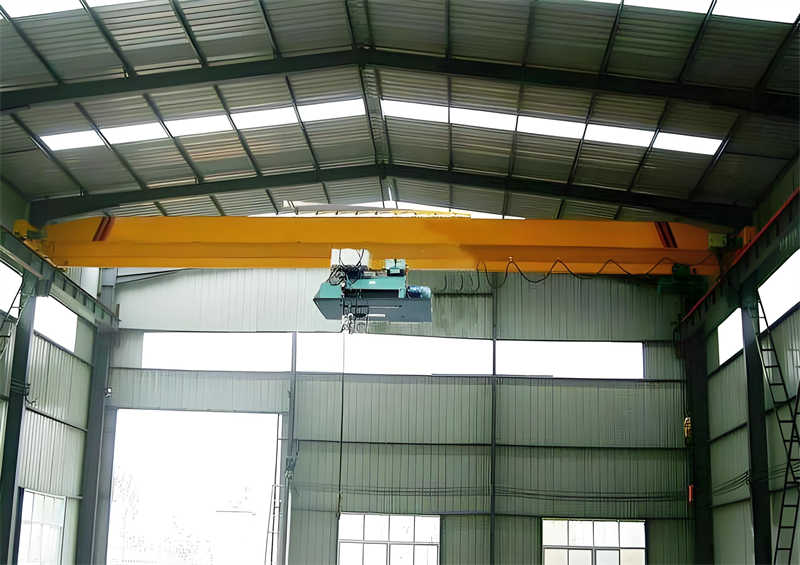
Selecting an overhead crane for a metallurgical environment is a critical decision that impacts safety, productivity, and total cost of ownership. While many manufacturers offer cranes, only those with purpose-built engineering can withstand the relentless demands of high-heat applications. At Dongqi Crane, our Metallurgical Double Girder EOT (Electric Overhead Traveling) Cranes are not simply adapted from standard designs; they are meticulously engineered from the ground up with integrated systems to master extreme conditions. Here’s a detailed look at the key technologies that define their robust performance.
1. Advanced Heat Protection System: The First Line of Defense
The core of our design philosophy is creating a multi-layered barrier against radiant heat.
- Thermal Insulation Shields: We install dedicated heat-resistant stainless steel plates between the crane girder and the hoist block. This crucial barrier effectively deflects a significant portion of radiant heat rising from the molten metal or hot loads below, preventing it from directly baking the crane’s primary structure and the hoist’s mechanical components.
- Anti-Radiation Hoist Assembly: Recognizing that the hoist is most vulnerable, we employ a double-girder, high-rise design. This configuration creates greater distance between the heat source and critical components like the wire rope and drum. For severe applications, we offer a specialized anti-radiation hook group with a extended load block and heat-resistant shrouds, further isolating the wire rope and pulley system from thermal damage.
- High-Temperature Wire Ropes: Standard wire ropes rapidly degrade under heat. We specify steel core wire ropes with high-temperature-tolerant lubricants or special material coatings. These ropes maintain their integrity and lubricity under thermal stress, drastically reducing the risk of premature failure and snapping.
2. Endurance-Optimized Critical Components
Every electrical and mechanical component is selected or upgraded for thermal resilience.
- High-Temperature Rated Motors: The heart of the crane’s power. Dongqi cranes are equipped with triple-phase asynchronous motors built with Class H insulation (rated for up to 180°C). These are complemented by independent forced-air cooling systems. This ensures the motor operates within a safe temperature range even when the ambient temperature is excessively high, preventing the common pitfall of motor burnout.
- Sealed and Cooled Electrical System: The control system is the brain and must be protected. Our fully enclosed electrical cabinet is equipped with a dedicated air conditioner or a thermoelectric air cooler. This maintains a stable, cool internal environment, safeguarding sensitive PLCs, variable frequency drives (VFDs), contactors, and relays from heat, dust, and corrosive fumes. All cabling is sheathed in high-temperature, flame-retardant material.
- Redundant Braking Systems: Safety is non-negotiable. We implement a fail-safe braking system that includes both an electromagnetic brake on the motor and a mechanical brake on the high-speed shaft. This redundancy ensures controlled and safe stopping of both the hoist and bridge movements, even in the event of a power failure or primary brake malfunction.
3. Robust Structural Design for Long-Term Reliability
The crane’s framework is built to last under heavy loads and thermal cycling.
- Heavy-Duty Fabrication: The main girders are constructed from high-strength low-alloy steel (Q345B according to Chinese GB standard, equivalent to ASTM A572). This material offers superior yield strength and better fatigue resistance compared to common carbon steel (Q235B), allowing for a stronger yet potentially lighter design.
- Rigorous Design Standards: Our design calculations adhere to FEM 1.001 and DIN/ISO standards, ensuring the crane is rated not just for the nominal load but also for the dynamic forces and impact factors present in harsh industrial environments. This results in a more durable and reliable structure.
- Precision Manufacturing: Critical welds are performed by certified welders and subjected to Non-Destructive Testing (NDT) like ultrasonic or magnetic particle inspection to eliminate defects. This guarantees the structural integrity of the crane for its entire service life.
Conclusion: A System, Not Just a Product
The superiority of a Dongqi Metallurgical Crane lies in the synergy of these integrated systems. The heat protection system shields the components, the upgraded components ensure performance, and the robust structure supports it all. This holistic approach to engineering delivers a crane that maximizes uptime, minimizes maintenance costs, and, most importantly, provides unparalleled safety for your workforce and assets.
When your operation depends on reliable lifting in extreme heat, choose a crane engineered for the challenge. Contact Dongqi Crane to explore the technical specifications and how our solutions can be customized for your specific workshop conditions.
Keywords:
- Metallurgical Crane Design
- Heat Protection System
- Class H Insulation Motor
- Sealed Electrical Cabinet
- Redundant Braking System
- FEM Standard Crane
- High-Temperature Wire Rope
- Dongqi Crane Technology
- Engineered Overhead Crane
- Foundry Crane Specifications
