
6-Nov-2025
A5-A7 Double Beam Grab Bucket Bridge Crane: Heavy-Duty Solution for Bulk Material Handling
Table of Contents
- Introduction
- Understanding A5-A7 Double Beam Grab Bucket Bridge Cranes
- Key Features and Technical Specifications
- Applications Across Industries
- Dongqi Crane’s Global Project Success
- Technical Specifications
- Conclusion
Introduction
In the world of industrial material handling, efficiency and reliability are paramount when dealing with bulk materials. The A5-A7 Double Beam Heavy Duty QZ Electric Hydraulic Grab Bucket Bridge Crane represents a significant advancement in this field, offering robust performance and precision control for handling various bulk materials. These specialized cranes have revolutionized operations in industries ranging from waste management to port operations, where handling granular materials efficiently makes a substantial difference to productivity and bottom lines.
Dongqi Crane has established itself as a leading provider of these sophisticated material handling solutions, leveraging decades of engineering expertise to deliver cranes that meet the most demanding industrial applications. With a focus on innovation and quality, Dongqi’s grab bucket bridge cranes incorporate advanced features that ensure optimal performance even in the most challenging working environments.
Understanding A5-A7 Double Beam Grab Bucket Bridge Cranes
What is a Grab Bucket Bridge Crane?
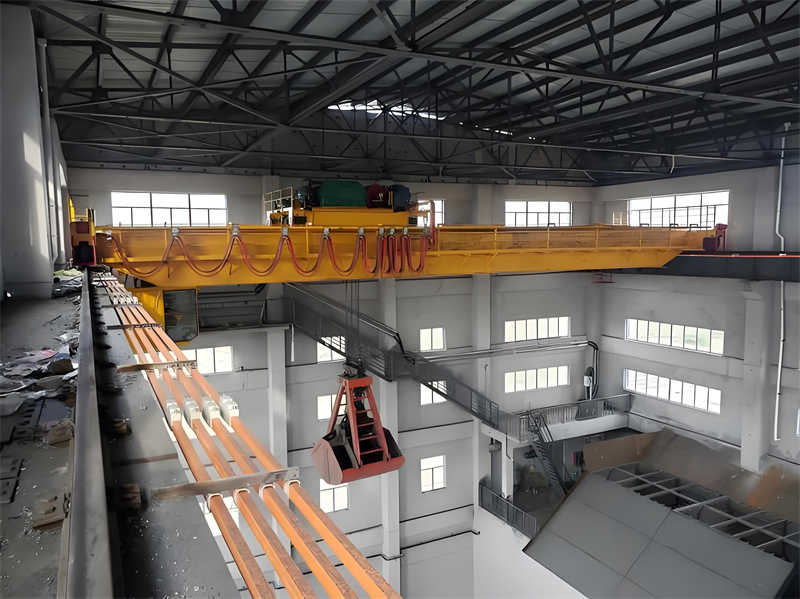
A grab bucket bridge crane is a specialized overhead crane system designed for handling bulk materials through an attached grab mechanism. Unlike standard overhead cranes with simple hooks, these cranes are equipped with a hydraulic or electric grab bucket that can efficiently scoop, lift, and transport loose materials such as coal, ore, grain, and waste products. The QZ designation refers to the specific model type designed for heavy-duty material handling applications across various industrial sectors.
The unique value proposition of these cranes lies in their ability to automate material handling processes that would otherwise require significant manual labor or multiple pieces of equipment. By integrating the grabbing mechanism directly into the crane system, operations become more streamlined, efficient, and cost-effective.
The Significance of A5-A7 Working Classes
The A5-A7 working classification represents an important aspect of crane specifications that directly impacts performance and suitability for different applications. These classifications indicate the crane’s duty cycle and expected intensity of use:
- A5 (Heavy Duty): Suitable for applications with moderate usage where the crane operates at average loads with regular but not continuous use
- A6 (Severe Duty): Designed for high-intensity operations where the crane handles heavy loads frequently with minimal rest periods
- A7 (Extreme Duty): Reserved for continuous severe service in the most demanding applications with near-constant operation under heavy loads
Cranes classified with A6-A7 working levels are engineered for high-frequency operation in challenging environments, making them ideal for industries such as steel plants, ports, cement plants, waste recycling stations, and smelting workshops . The higher working classes ensure that the equipment can withstand the rigorous demands of these applications without compromising performance or safety.
Key Features and Technical Specifications
Structural Design and Components
The double girder design forms the backbone of these robust crane systems, providing enhanced stability and greater load-bearing capacity compared to single girder alternatives . This configuration ensures smooth and stable movement of heavy loads, even when dealing with uneven or dense materials.
Key structural components include:
- High-strength bridge girders: Typically constructed from box-shaped steel sections designed to withstand heavy loads and resist deformation
- Specialized trolley system: Houses the lifting and grabbing mechanisms, capable of precise horizontal movement along the crane bridge
- Durable end trucks: Contain the wheels and drive mechanisms that allow the entire crane to travel along the runway tracks
- Robust grab bucket mechanism: The heart of the system, designed for efficient material handling with options for different bucket types based on application needs
Grab Bucket Mechanisms
The grab bucket represents the operational centerpiece of these crane systems, with different designs available to suit various material types:
- Clamshell Grabs: Featuring two symmetrical jaw flaps that operate similarly to a clamshell, these buckets are ideal for handling free-flowing materials such as coal, ore, gravel, and grain . Their simple design facilitates easy maintenance and provides even gripping force across the material.
- Orange Peel Grabs: Comprising 4-6 curved jaw flaps that resemble orange peel segments when closed, these grabs excel at handling irregular materials such as scrap metal, construction waste, and bulky solid waste . The multiple jaws create a confined space that prevents material leakage and adapts to complex shapes.
The grab operation is typically controlled through electro-hydraulic systems or wire rope mechanisms, allowing operators to open and close the bucket at any height for precise material placement .
Advanced Control Systems
Modern grab bucket bridge cranes incorporate sophisticated control systems that enhance operational efficiency and safety:
- PLC-Based Control: Programmable Logic Controller systems enable high automation levels and simplified operation , allowing for precise control of all crane functions
- Variable Frequency Drives: Provide smooth acceleration and deceleration, reducing material spillage and mechanical stress on components
- Multiple Control Options: Systems can be operated from dedicated cabins, remote radio controls, or fully automated systems integrated into plant operations
- Laser-Assisted Positioning: Some advanced models incorporate laser measurement systems for precise height control and positioning
Safety Features
Given the heavy loads and often challenging environments, these cranes incorporate comprehensive safety systems:
- Overload Protection: Prevents the crane from lifting loads beyond its rated capacity
- Limit Switches: Automatically stops crane movement at the ends of travel paths to prevent overtravel accidents
- Emergency Stop Systems: Allows for immediate shutdown in hazardous situations
- Anti-Collision Systems: Prevents interference between multiple cranes operating in the same area
- Warning Indicators: Visual and audible alerts signal crane operation to nearby personnel
Applications Across Industries
Waste Management and Recycling
In the waste management industry, grab bucket bridge cranes have become indispensable assets for handling various types of solid waste. They are particularly valuable in:
- Waste transfer stations: Where they efficiently move and sort municipal solid waste
- Recycling centers: For separating and organizing recyclable materials
- Landfill operations: Where they compact and position waste for optimal space utilization
- Incineration plants: For feeding waste into combustion systems at controlled rates
The waste handling cranes used in these applications often feature anti-corrosion treatments on critical components to withstand exposure to corrosive elements present in waste materials . Specialized orange peel grabs are commonly employed to handle the irregular nature of mixed waste streams effectively.
Port and Terminal Operations
Port facilities handling dry bulk cargo rely heavily on grab bucket bridge cranes for efficient loading and unloading operations. In these settings, the cranes provide:
- Rapid ship turnaround: By quickly transferring materials between vessels and storage areas
- Flexible material handling: Capability to manage diverse commodities including coal, iron ore, grain, and fertilizers
- Space optimization: Efficient stacking and retrieval in storage yards
- Dust control: Enclosed grabbing operations minimize particulate emissions compared to open handling methods
For port applications, cranes are often designed with enhanced corrosion protection to withstand marine environments and feature higher travel speeds to maintain operational efficiency across large terminal areas.
Power Generation
Thermal power plants utilizing coal or biomass fuels depend on grab bucket cranes for fuel management operations. These include:
- Unloading operations: Transferring fuel from delivery vehicles to storage areas
- Stockpile management: Creating organized storage piles with optimal density
- Reclaim operations: Feeding consistent amounts of fuel to generation systems
- Ash handling: Moving combustion byproducts for disposal or reuse
In power plant applications, the reliability of crane operations directly impacts generation capacity, making the A6-A7 duty classification particularly important for these critical functions.
Mining and Metallurgy
The mining and metallurgical sectors utilize grab bucket cranes in various processes:
- Raw material handling: Moving ores and concentrates between processing stages
- Furnace feeding: Charging raw materials into smelting and refining operations
- Slag handling: Removing and processing byproducts from metallurgical processes
- Product shipment: Loading finished metals and alloys for transport
In these environments, cranes are often specified with heavy-duty grabs designed to handle abrasive materials and equipped with wear-resistant components to extend service life.
Dongqi Crane’s Global Project Success
Engineering Expertise and Quality Commitment
Dongqi Crane has built its reputation on a foundation of engineering excellence and uncompromising quality standards. With capabilities spanning design, manufacturing, installation, and maintenance, the company provides comprehensive material handling solutions tailored to each client’s specific requirements. The company’s approach combines proven designs with custom engineering to optimize crane systems for each application.
Since 1984, Dongqi has developed expertise across numerous industries, allowing them to anticipate challenges and incorporate best practices into their crane designs. This experience is reflected in their diverse product range that includes various crane types beyond grab bucket models, including gantry cranes, jib cranes, and specialized hoists .
International Project Experience
Dongqi Crane has successfully delivered material handling solutions to clients across the globe, with particular presence in Southeast Asia, Central Asia, South Africa, Latin America, and the Middle East . Their equipment operates in approximately 85 countries, demonstrating their ability to meet diverse international standards and operational requirements.
While specific project details are proprietary, customer testimonials highlight the company’s global reach and customer satisfaction:
- A client from New Zealand praised the professional service provided by Dongqi’s sales team and reported successful implementation of jib crane systems
- An Australian customer acknowledged Dongqi’s expertise in FEM standard cranes and hoists, noting compliance with Australian crane standards
- A Brazilian client through their agent recognized Dongqi as a leader in Europe standard cranes in China and purchased multiple jib cranes
Industry-Specific Solutions
Dongqi has tailored their grab bucket bridge cranes for specific applications worldwide:
In the waste-to-energy sector, Dongqi has provided specialized grab cranes for multiple waste incineration plants across Europe and Asia. These cranes feature advanced control systems for precise waste feeding, corrosion-resistant components to withstand harsh environments, and high-temperature capabilities for operations near combustion systems.
For port rehabilitation projects in South America and Africa, Dongqi has supplied heavy-duty grab cranes capable of handling various bulk materials. These installations have significantly improved cargo handling efficiency while reducing operational costs through reliable performance and minimal maintenance requirements.
In the mining sector, Dongqi cranes operate in challenging conditions at several mineral processing facilities in Southeast Asia and Australia. These installations demonstrate the equipment’s durability when handling abrasive materials and operating in environments with significant dust and temperature variations.
Technical Specifications
Dongqi’s A5-A7 Double Beam Grab Bucket Bridge Cranes are available in various configurations to meet different operational needs. The following table outlines key specifications for standard models:
| Parameter | Specification Range |
|---|---|
| Lifting Capacity | 5 ton ~ 25 ton (customizable up to 100 ton ) |
| Span | 10.5m ~ 34.5m (up to 40m available ) |
| Lifting Height | 6m ~ 31m |
| Working Class | A5, A6, A7 |
| Lifting Speed | 38.8 m/min ~ 48.6 m/min |
| Trolley Travel Speed | 37.8 m/min ~ 45.9 m/min |
| Crane Travel Speed | 87 m/min ~ 113.6 m/min |
| Power Supply | 3-phase 380V/415V/480V, 50Hz/60Hz |
| Ambient Temperature | -20°C ~ +40°C (special configurations available for extreme temperatures) |
| Protection Grade | IP54 (higher ratings available for harsh environments) |
| Control Methods | Cabin control, remote radio control, fully automated |
Customization Options
Understanding that standard specifications don’t always match unique operational requirements, Dongqi offers extensive customization capabilities:
- Structural Modifications: Tailored span lengths, lifting heights, and approach dimensions to fit existing structures
- Specialized Grabs: Application-specific grab designs optimized for particular materials
- Control Systems: Integration with plant automation systems or customized control interfaces
- Environmental Adaptations: Explosion-proof configurations, high-temperature variants, or enhanced corrosion protection
- Safety Features: Additional or upgraded safety systems to meet local regulations or specific risk assessments
Conclusion
The A5-A7 Double Beam Heavy Duty Qz Electric Hydraulic Grab Bucket Bridge Crane represents a ** sophisticated material handling solution** for industries working with bulk and granular materials. With their robust construction, advanced control systems, and proven reliability, these cranes deliver significant operational advantages in demanding applications ranging from waste management to port operations and power generation.
The A5-A7 working classifications ensure that these cranes match the intensity of their intended applications, providing appropriate safety margins and service life across different duty cycles. This classification system allows operators to select equipment with confidence, knowing it is engineered to withstand their specific operational demands.
Dongqi Crane has demonstrated global expertise in supplying these specialized crane systems to satisfied customers across six continents. Their commitment to quality engineering, comprehensive service, and customized solutions has established them as a trusted partner in material handling across diverse industries and geographic regions.
For operations requiring efficient handling of bulk materials, investment in a properly specified grab bucket bridge crane from a reputable manufacturer like Dongqi delivers measurable benefits through enhanced productivity, reduced operational costs, and improved safety. As industries continue to seek efficiency improvements, these advanced crane systems will play an increasingly vital role in material handling infrastructure worldwide.
