
9-Dec-2025
The Ultimate Guide to CE-Certified QD Double Girder Overhead Cranes for Modern Storage Yards
1 Product Introduction and Core Value Proposition
In the high-stakes environment of modern logistics and industrial storage, efficiency and reliability are not just goals—they are imperatives. The CE Certificate Qd Double Girder/Beam Overhead Crane with Hook Cap. 5-350/80t represents a pinnacle of engineering designed specifically to meet these demanding requirements. As a flagship product from Dongqi Crane, this overhead crane system transforms storage yard operations by providing unmatched lifting capacity, precision control, and robust durability suitable for the most challenging outdoor and indoor environments.
Storage yards, whether handling shipping containers, bulk materials, or large industrial components, are the circulatory system of global commerce. The machinery operating within them must be more than just equipment; it must be a reliable partner in productivity. The QD Double Girder Overhead Crane fulfills this role by offering a versatile solution that bridges the gap between raw lifting power and operational precision. With a remarkable capacity range from 5 to 350 tons (with an 80-ton hook configuration specifically mentioned), this crane system is engineered to handle everything from routine material movement to the most demanding heavy-lift scenarios.
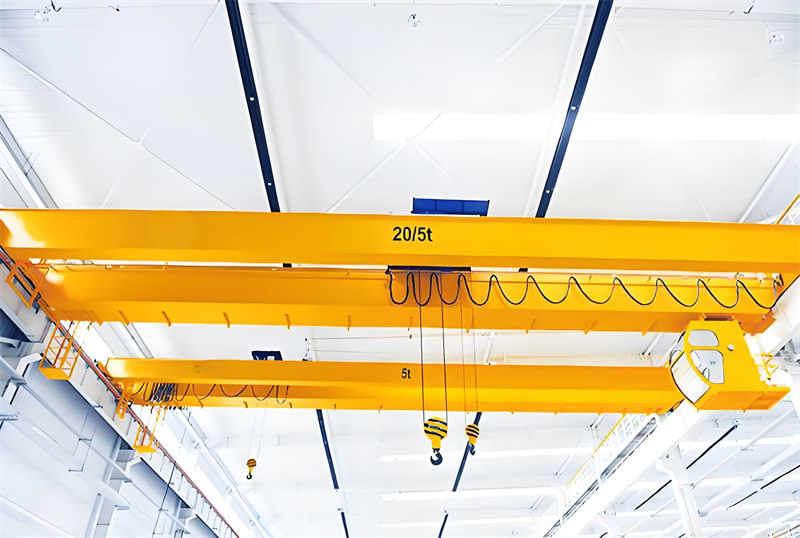
The “QD” designation refers to a specific type of hook bridge crane that has become an industry standard for reliability. These cranes are characterized by their dual-girder configuration, which provides superior structural integrity and lifting stability compared to single-girder alternatives. This design is particularly crucial in storage yard applications where equipment must withstand variable weather conditions, continuous operation cycles, and heavy loads. When combined with Dongqi Crane’s manufacturing expertise and strict CE certification standards, the result is a storage yard solution that delivers both immediate operational improvements and long-term investment value.
2 Technical Specifications and Design Excellence
The technical foundation of the QD Double Girder Overhead Crane is what sets it apart in the competitive material handling landscape. Every component, from the primary structural elements to the control systems, has been optimized for storage yard performance. Understanding these specifications is crucial for operations managers and procurement specialists who need to match equipment capabilities with their specific operational requirements.
2.1 Core Performance Parameters
At the heart of any overhead crane system are its fundamental performance metrics. The QD Double Girder model offers a carefully engineered balance of capacity, reach, and speed that makes it ideal for diverse storage yard applications:
- Lifting Capacity: The crane is available in a comprehensive range from 5 to 350 tons, with specific configurations such as 80-ton models for balanced performance in medium to heavy applications. This wide range ensures that whether you’re handling lightweight materials or the heaviest industrial components, there’s a configuration that matches your needs without over-engineering or under-performance.
- Span and Reach: With span options typically ranging from 10.5 to 31.5 meters, the crane can service storage yards of varying widths. This flexibility in span allows for optimal coverage of storage areas, minimizing dead space and maximizing material density—a critical factor in storage yard economics where every square meter counts.
- Lifting Height: Offering lifting heights from 6 to 22 meters (with some configurations reaching up to 60 meters), the system provides the vertical clearance needed for multi-level storage and stacking operations. In container yards, for instance, this capability translates directly to increased storage density without expanding the yard’s footprint.
2.2 Structural Design and Components
The QD Double Girder Overhead Crane’s superior performance begins with its robust structural design. Unlike single-girder designs that have inherent limitations in load distribution and longevity, the double-girder configuration provides:
- Enhanced Load Distribution: The dual-girder system creates a more balanced load path that reduces stress concentrations and minimizes deflection during lifting operations. This translates to smoother operation, reduced wear on components, and extended service life.
- Increased Hook Height: By positioning the hoist between the girders rather than beneath them, double-girder designs provide increased hook height—a valuable advantage in storage yards where vertical space utilization is critical.
- Superior Component Accessibility: Maintenance and service activities are simplified with the double-girder design, as key components are more accessible. This design consideration reduces downtime and lowers the total cost of ownership over the equipment’s lifecycle.
The crane’s structural system comprises several integrated subsystems:
Table: Key Structural Components of QD Double Girder Overhead Crane
| Component | Function | Key Features |
|---|---|---|
| Bridge Girders | Primary load-bearing structure | Double-box design, optimized steel grades, corrosion protection |
| End Trucks | Support bridge girders and facilitate longitudinal movement | Heavy-duty wheels, precision alignment, integrated drive systems |
| Hoist and Trolley | Vertical lifting and horizontal cross-travel | Multiple speed options, precision braking, overload protection |
| Control System | Operation interface and safety management | Programmable logic, remote control option, diagnostic capabilities |
2.3 Operational Classifications and Duty Cycles
Understanding a crane’s duty cycle is essential for matching equipment to application requirements. The QD Double Girder Overhead Crane is available in different work classifications (A5, A6, A7) based on the intensity and frequency of use. These classifications help ensure that the crane’s design life aligns with operational demands:
- A5 Classification: Suitable for applications with light to moderate service, such as maintenance facilities or warehouses with intermittent lifting needs.
- A6 Classification: Designed for more frequent operation typical of busy storage yards, manufacturing facilities, or assembly operations.
- A7 Classification: Reserved for severe service applications with near-continuous operation, such as steel mills or heavy manufacturing environments.
Selecting the appropriate classification prevents either under-engineering (leading to premature failure) or over-engineering (resulting in unnecessary capital expenditure). Dongqi Crane’s technical team specializes in helping customers identify the optimal classification based on their specific operational patterns, load spectra, and environmental conditions.
3 Storage Yard Applications: From Traditional to Advanced Solutions
The true value of any industrial equipment is revealed in its application. For the QD Double Girder Overhead Crane, storage yards represent both a challenge and an opportunity. These dynamic environments demand equipment that can operate reliably in variable conditions while delivering consistent performance across diverse material handling scenarios.
3.1 Traditional Storage Yard Operations
In conventional storage yards, overhead cranes serve as the primary material handling solution for organizing, stacking, and transferring goods. The QD Double Girder model excels in these applications through its adaptable configuration options and rugged construction. Whether managing steel coils in an industrial yard, machinery components in a manufacturing facility, or project materials at a construction site, this crane system provides the lifting capacity and precision control needed for efficient operations.
One of the most common traditional applications is in container storage yards, where rubber-tired gantry cranes (RTGs) have historically been the standard. These yards typically arrange containers in blocks approximately six containers wide and three high. While functional, this approach has inherent limitations in space utilization and operational efficiency. The stacked containers create what logistics professionals call the “rehandling problem”—when a needed container is at the bottom of a stack, all containers above it must be moved before it can be accessed. These non-revenue-generating moves represent significant operational inefficiency that directly impacts the bottom line.
3.2 Advanced High-Density Storage Solutions
The limitations of traditional storage methods have driven innovation in yard design and equipment specification. Advanced solutions like the BOXBAY High Bay Storage system demonstrate what’s possible when crane technology integrates with innovative yard design. Though conceptually different from standard overhead cranes, these systems highlight the industry direction toward maximizing storage density and operational efficiency.
The BOXBAY system, which won the German Award for Supply Chain Management in 2022, represents a revolutionary approach to container storage. Unlike traditional stacking where containers bear weight on each other, BOXBAY uses a massive steel framework with individual bays for each container. Specialized stacking cranes move between rows to access any container directly without moving those above or below it. This eliminates the rehandling problem entirely and dramatically increases storage density—from approximately 750 TEUs per hectare in conventional yards to as many as 3,000 TEUs per hectare with the BOXBAY system.
While the QD Double Girder Overhead Crane isn’t identical to the specialized equipment used in BOXBAY installations, it shares the same engineering philosophy: maximizing operational efficiency through intelligent design. For customers implementing high-density storage solutions, the crane’s precision control, reliable performance, and adaptability make it an ideal component of advanced yard systems.
3.3 Industry-Specific Applications
Beyond general storage yards, the QD Double Girder Overhead Crane serves specialized applications across multiple industries:
- Port and Terminal Operations: For handling breakbulk cargo, project shipments, or mixed cargo types that don’t fit standard container handling systems.
- Heavy Manufacturing: In facilities producing large equipment, machinery, or structural components where precise positioning of heavy loads is required.
- Steel and Metal Processing: For handling coils, plates, and structural shapes with the care and precision these materials demand.
- Energy Sector Projects: At equipment yards serving power generation, oil and gas, or renewable energy projects where oversized components must be stored and handled.
In each of these applications, the crane’s robust construction and precise control systems deliver value through reduced handling time, minimized product damage, and improved yard organization. The hook attachment mentioned in the product title represents just one of many possible end-effectors; the crane can be configured with specialized grapples, magnets, or other tools to match specific material handling requirements.
4 Safety, Compliance, and Control Systems
In material handling equipment, safety isn’t just a feature—it’s the foundation of operational integrity. The CE certification referenced in the product title represents more than regulatory compliance; it signifies a comprehensive approach to equipment safety, design validation, and risk management that benefits both operators and facility owners.
4.1 CE Certification: What It Means for Your Operations
The CE mark on Dongqi Crane’s equipment indicates conformity with health, safety, and environmental protection standards for products sold within the European Economic Area. For storage yard operators, this certification provides multiple tangible benefits:
- Verified Design Integrity: CE certification requires rigorous testing and documentation of the crane’s structural design, ensuring it can safely handle rated loads throughout its operational life.
- Safety System Validation: All safety systems—including limit switches, overload protection, emergency stops, and braking systems—must meet specific performance standards to earn certification.
- Reduced Liability Exposure: Operating CE-certified equipment demonstrates due diligence in providing a safe working environment, which can positively impact insurance costs and regulatory compliance.
- Global Recognition: While specifically for the European market, CE certification is recognized worldwide as an indicator of quality and safety commitment.
Dongqi Crane’s adherence to CE standards extends beyond mere compliance; it reflects an engineering philosophy that prioritizes operational safety throughout the equipment lifecycle. From material selection to manufacturing processes to final validation testing, every aspect of the crane’s production incorporates safety considerations.
4.2 Advanced Control and Operation Options
Modern storage yards demand flexible operation modes to match varying workflow requirements. The QD Double Girder Overhead Crane offers multiple control options that balance precision, efficiency, and operator safety:
- Cab-Controlled Operation: Traditional cab operation places the operator in an ergonomically designed cabin with optimal visibility of the lifting area. This approach provides direct situational awareness and is often preferred for complex lifts or when visual communication with ground personnel is necessary.
- Radio Remote Control: Wireless control systems allow operators to position themselves at the most advantageous viewpoint for each specific lift. This approach eliminates the need for fixed cab infrastructure and can improve precision for certain applications. Remote control operation also removes personnel from potentially hazardous areas near moving loads.
- Semi-Automated Systems: For repetitive lifting tasks, the crane can be integrated with positioning systems and programmable logic to automate certain aspects of operation. This approach maximizes consistency and can significantly increase throughput for standardized material handling processes.
The control systems incorporate multiple layers of safety redundancy, including dual braking systems, multiple limit switches, and overload protection devices. These features work together to create a “defense in depth” approach to operational safety that protects both personnel and assets.
4.3 Environmental Adaptability
Storage yards present some of the most challenging environments for industrial equipment. Unlike climate-controlled manufacturing facilities, yard cranes must operate reliably in conditions ranging from freezing temperatures to extreme heat, often with exposure to precipitation, dust, and corrosive elements. The QD Double Girder Overhead Crane addresses these challenges through:
- Corrosion Protection: Advanced coating systems and material selections that resist environmental degradation, extending equipment life and reducing maintenance requirements.
- Temperature Tolerance: Components rated for operation across a broad temperature range, ensuring reliable performance regardless of seasonal variations.
- Sealed Electrical Systems: Protection against dust and moisture ingress that could compromise electrical reliability.
- Adaptive Performance Characteristics: Systems that automatically adjust to environmental conditions, such as brake drying cycles for humid environments or lubrication systems that account for temperature variations.
These environmental adaptations ensure that the crane delivers consistent performance year-round, maximizing equipment utilization and return on investment regardless of operational conditions.
5 Conclusion and Strategic Value Proposition
The CE Certificate Qd Double Girder/Beam Overhead Crane with Hook Cap. 5-350/80t represents more than just lifting equipment; it embodies a comprehensive solution for storage yard optimization in an era of increasing logistical complexity and efficiency demands. From its robust double-girder construction to its precise control systems and rigorous safety certifications, every aspect of this crane has been engineered to deliver maximum operational value throughout an extended service life.
For storage yard operators facing the dual challenges of increasing throughput and optimizing space utilization, this crane system offers a compelling value proposition. Its wide capacity range ensures appropriate specification without overinvestment, while its adaptable configuration options allow customization to specific operational requirements. When integrated into a thoughtfully designed yard layout, it becomes the cornerstone of an efficient material handling ecosystem that reduces costs, improves safety, and enhances operational flexibility.
Dongqi Crane brings to this product not just manufacturing capability but a deep understanding of storage yard dynamics gained through decades of global experience. This expertise translates into practical engineering solutions that address real-world operational challenges rather than theoretical specifications. From initial consultation through installation and ongoing support, the company’s approach focuses on creating partnership relationships that extend far beyond a simple equipment transaction.
As storage yards evolve toward higher density, greater automation, and increased integration with digital supply chain systems, the foundation remains reliable, high-performance lifting equipment. The QD Double Girder Overhead Crane provides this foundation while offering the adaptability to evolve with changing operational requirements. Whether as part of a traditional yard layout or an advanced high-density system, it represents an investment in operational excellence that will deliver returns through improved efficiency, reduced downtime, and enhanced safety for years to come.
In a world where logistics efficiency increasingly determines competitive advantage, the right material handling equipment is not an expense but a strategic investment. The QD Double Girder Overhead Crane from Dongqi Crane represents precisely this type of strategic asset—one that transforms storage yard operations from a necessary cost center into a source of competitive differentiation and value creation.
