
25-Dec-2025
The Essential Guide: How to Select a 40T Double Girder Overhead Crane for Your Steel Mill
Choosing the right overhead crane for your steel mill isn’t just a procurement task—it’s a long-term strategic decision that echoes through your workshops for decades. We understand. The constant hum of production, the movement of immense loads, and the relentless demands of temperature and dust create an environment where equipment isn’t merely used; it is tested, every single day.
When the task calls for a robust 40T double girder overhead crane to handle ladles, coils, or raw materials, the stakes are particularly high. The right choice becomes the backbone of your material flow, ensuring safety, maximizing uptime, and protecting your bottom line. The wrong choice, however, can lead to a cycle of costly interruptions, safety concerns, and frustrated teams.
You might be asking: “With so many specifications and claims, where do I even begin to ensure this critical investment is sound?” The process can feel overwhelming, but it doesn’t have to be. By methodically breaking down the core factors that truly matter for performance in a steel mill environment, you can move from uncertainty to clarity.
This guide is designed to walk you through that very process. Think of it as a structured conversation, helping you define and prioritize the essential technical and operational parameters for your 40-ton double girder overhead crane. Our aim is not to sell you a product, but to equip you with the right questions and knowledge—the kind that leads to a confident, informed specification that will serve your operation reliably for years to come. Let’s begin by looking at the most fundamental driver of all: how intensively your crane will work.

1. Define the Duty Cycle and Service Class: Understanding Your Crane’s “Athletic Regimen”
When evaluating a 40-ton double girder overhead crane, it’s natural to focus first on its “strength”—that formidable 40-ton capacity. While crucial, an equally important but often overlooked aspect is its “stamina” and “longevity.” This is where understanding its Duty Cycle and Service Class becomes fundamental.
Think of it this way: not all cranes work the same way. One might lift its maximum load only a few times a day for short periods, akin to a weightlifter performing a few heavy lifts. Another, in the heart of your melt shop or rolling mill, might be in near-constant motion, handling significant loads hour after hour—more like a marathon runner operating at peak endurance. Specifying a crane built for the former scenario and placing it in the latter is a recipe for premature wear, unexpected breakdowns, and safety risks.
This is precisely why international standards (such as FEM, ISO, or CMAA) have established clear Service Classifications. These classifications (often labeled A1 through A8) systematically categorize cranes based on their expected usage intensity, considering factors like:
- Number of lift cycles: How often is the load lifted and lowered?
- Average load intensity: What percentage of the rated capacity (e.g., 40T) is typically handled?
- Daily operational hours: How many hours per day is the crane in active use?
For a 40T double girder overhead crane in a steel mill, the common requirement falls into Class A7 (Heavy Duty) or even Class A8 (Very Heavy Duty). These classes correspond to the most demanding applications—think of cranes involved in continuous charging, hot metal handling, or intensive slab yard logistics. Choosing this correct class dictates the engineering of every critical component: from the thermal capacity of the motors and the robustness of the gearboxes to the design of the brake systems and the thickness of the double girder web plates.
How to Determine Your Needs:
Ask yourself and your team:
- What is the crane’s primary task in our process flow?
- What is the estimated number of lifts per hour/shift?
- Are loads typically near the 40-ton maximum, or mostly lighter?
- Will operation be continuous or intermittent?
By accurately defining the duty cycle, you move beyond simply purchasing a crane with a 40-ton label. You are specifying a machine with the inherent durability and design margins to match the relentless pace of your steel mill, ensuring it is not just capable, but also reliable and built to last.
2. Assess the Operating Environment: Preparing for the Ultimate Endurance Test
Once you’ve defined the internal “athletic regimen” of your crane, the next critical step is to look outward. A steel mill is not a controlled, sterile laboratory; it is a dynamic and formidable arena. The operating environment here acts as a constant, unyielding opponent to any piece of equipment. Therefore, the specifications for your 40T double girder overhead crane must be a direct response to these external forces.
Imagine commissioning a world-class athlete but asking them to perform their peak routine not in a prepared stadium, but in a sauna, during a dust storm, and on uneven terrain. The outcome would be compromised at best. Similarly, a standard industrial crane, unprepared for the specific hostilities of your workshop, will see its performance degrade and its lifespan shortened dramatically.
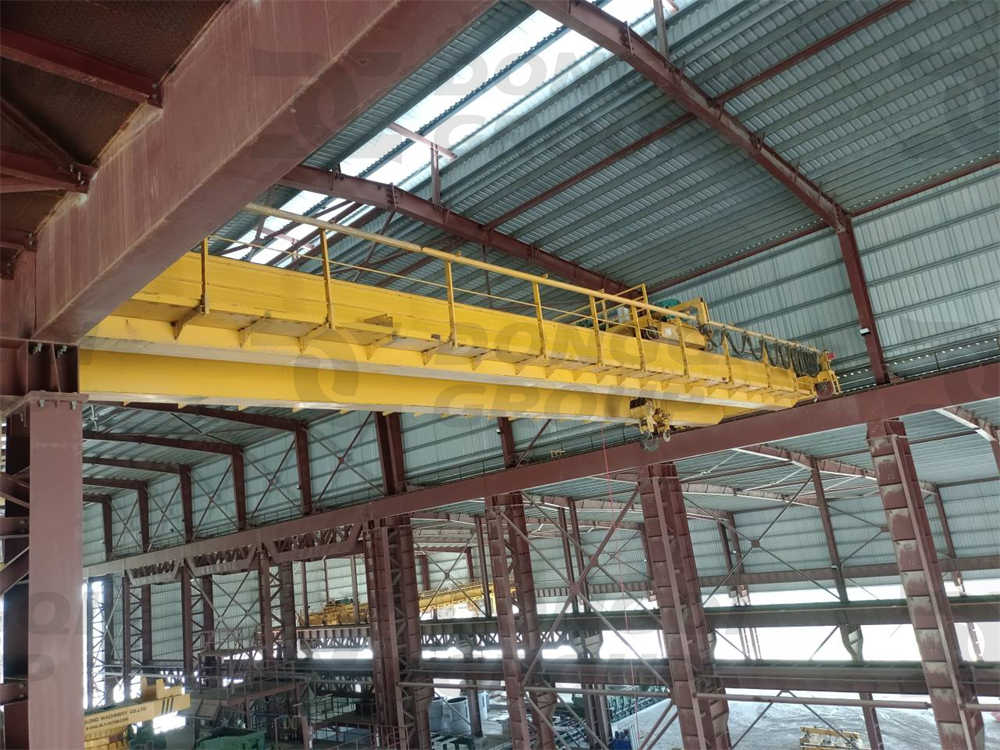
For your 40-ton double girder overhead crane, three environmental factors demand paramount attention:
- The Relentness of Heat: This goes beyond ambient temperature. Are we discussing radiant heat from nearby furnaces, or the direct handling of hot metal loads exceeding 100°C? Prolonged exposure demands a specialized defense: high-temperature epoxy paints to protect the structural girders, heat shields and class-H insulated motors for the hoist and trolley assemblies, and special high-temperature resistant cabling. The very expansion of the double girder structure under thermal stress must be calculated into the design.
- The Pervasiveness of Dust and Particulates: Metallurgical dust is more than dirt; it is an abrasive, infiltrating adversary. It seeks out bearings, gears, and electrical contacts, accelerating wear and causing electrical failures. The countermeasures must be equally thorough: fully enclosed, gasketed electrical panels (with IP65 or higher ratings), sealed cable connections, labyrinth seals on critical rotating shafts, and a planned, frequent lubrication regimen for all moving parts.
- The Insidious Nature of Corrosion: The combination of humidity, chemical vapors, and temperature fluctuations creates a corrosive atmosphere that quietly attacks steel. A standard paint job will blister and fail. The specification must call for a robust corrosion protection system—often involving abrasive blast cleaning, a high-quality zinc-rich primer, and multiple layers of chemically resistant topcoat—to protect the investment in your overhead crane’s structure.
Mapping Your Own Terrain:
To translate this into your specification, conduct a simple site audit:
- What are the peak ambient and radiant temperatures in the crane’s operational path?
- What is the primary source and composition of dust in the area?
- Are there processes nearby that emit moisture, oils, or chemical fumes?
By meticulously assessing these environmental pressures, you move from selecting a generic 40T double girder overhead crane to engineering a purpose-built asset. You are ensuring that every component, from the largest beam to the smallest seal, is chosen and designed not just to function, but to endure and triumph in the exact conditions of your steel mill workshop. This is the foundation of true reliability.
3. Determine Critical Technical Parameters: Engineering the Precision of Movement
With a clear understanding of the crane’s duty and the environment it must endure, we now turn to its core physical capabilities. These critical technical parameters are the definitive blueprints of performance. They translate your operational needs into precise engineering language, determining how effectively your 40T double girder overhead crane will integrate into and enhance your workflow. Getting these details right is the difference between a crane that merely functions and one that orchestrates seamless material flow.
Think of these parameters as the crane’s vital statistics—its reach, its vertical range, its pace, and its dexterity. Each one must be carefully matched to the unique geography and rhythm of your steel mill workshop.
Span & Hook Approach: The Canvas of Coverage
The span—the distance between the runway rails—defines the crane’s horizontal working domain. It must be meticulously calculated to cover all necessary service areas (like furnaces, processing stations, and staging yards) while navigating around fixed obstacles like columns or other equipment. A key related measurement is the hook approach: the minimum horizontal distance the hook can reach from the runway rail. This determines how close the crane can service walls or equipment, maximizing usable floor space. The inherent rigidity of the double girder design is a major advantage here, providing the structural integrity needed for long spans under full 40-ton loads with minimal deflection.
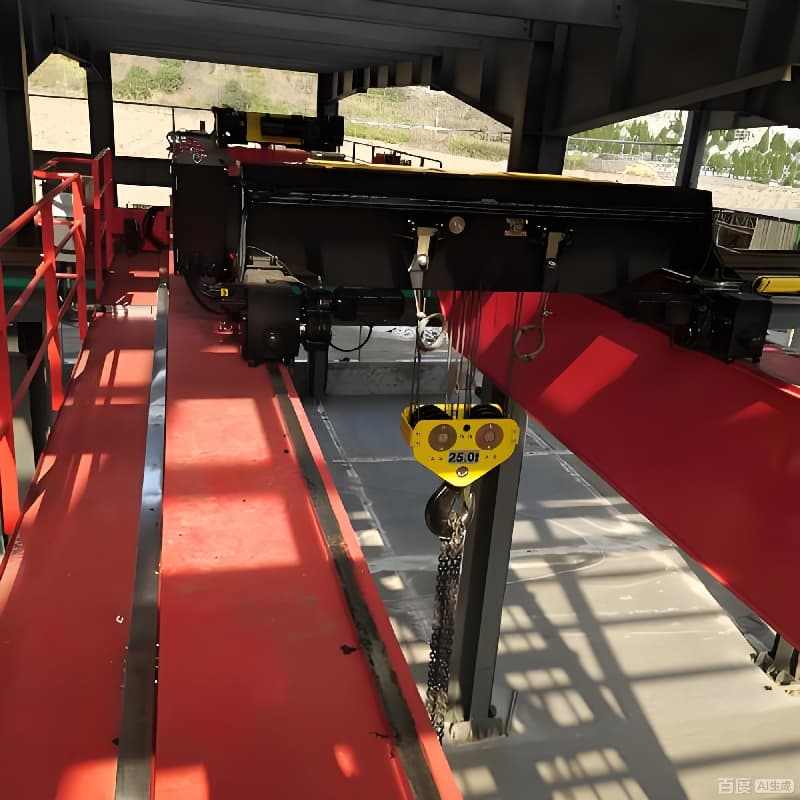
Lifting Height: Mastering the Vertical Dimension
Often underestimated in planning, the lifting height is the total vertical travel of the hook from its highest to its lowest position. It must account for the height of any underlying equipment, the required clearance for stacked materials (like coils or slabs), and safe passage for personnel and vehicles below. Insufficient height can cripple a process, forcing inefficient workarounds and creating bottlenecks.
Speed & Control: The Rhythm of Productivity
The interplay of hoisting, trolley, and bridge travel speeds dictates your operational tempo. However, in a steel mill, the goal is not always raw speed, but controlled, precise movement. This is where Variable Frequency Drive (VFD) control becomes non-negotiable for a modern 40T double girder crane. VFDs allow for:
- Soft Starts & Stops: Eliminating the jarring, stressful jerks on the crane structure and the load.
- Precise Speeding: Enabling operators to inch the load with millimeter accuracy for perfect positioning over furnaces or fixtures.
- Significant Anti-Sway: Drastically reducing dangerous and time-consuming load swing, especially critical for hot or valuable loads.
The choice of control method—pendant, cab, or radio remote—should be driven by operator visibility, safety, and the need for mobility in a large, complex workshop.
Mapping Your Operational Blueprint:
To define these parameters for your supplier, visualize and measure your process:
- What is the exact floor plan the crane must cover? Where are the pickup and drop-off points?
- What are the tallest obstacles under the crane’s path, and what is the maximum stacking height required?
- What is the target cycle time for a typical lift, and how critical is pinpoint load placement for safety and quality?
By meticulously determining these critical technical parameters, you are doing more than filling out a specification sheet. You are designing the kinematic profile of a vital partner in your production line. You ensure that your 40-ton double girder overhead crane will move with the necessary strength, reach, and—most importantly—the graceful precision required in the demanding ballet of steel production.
4. Prioritize Safety and Regulatory Compliance: Building the Unbreachable Safety Net
After defining performance and endurance, we arrive at the non-negotiable cornerstone of crane specification: safety and compliance. In the formidable environment of a steel mill, where the forces involved are immense and the margin for error is minimal, safety is not merely a list of add-on features. It must be the foundational philosophy, meticulously engineered into every system of your 40T double girder overhead crane. Think of it as the crane’s autonomic nervous system—a continuous, vigilant network designed to prevent failure, protect your most valuable assets (your people and your capital), and ensure seamless regulatory harmony.
Specifying safety goes beyond checking boxes for mandatory devices. It is about creating layered, redundant protections that account for both human operation and mechanical limits.
Engineered Safeguards: The Layers of Protection
A robust safety system for a 40-ton double girder overhead crane operates on multiple levels:
- Primary Load Protection: An overload limiter is indispensable. This system doesn’t just warn; it actively prevents the hoist from lifting a load beyond its safe capacity (with a margin for dynamics), protecting the structural integrity of the double girder, the hoist mechanism, and the runway from catastrophic stress.
- Defined Operational Boundaries: Limit switches on the hoist (for both upper and lower limits) and on the trolley and bridge travel are essential. They act as digital gatekeepers, automatically halting motion before a mechanical end-point is reached, preventing collisions and over-travel.
- Control and Emergency Response: Multiple emergency stop circuits—accessible from the pendant, cab, and often as a pull-wire along the runway—allow for immediate shutdown from any location. Furthermore, fail-safe brakes (typically spring-applied, electrically released) on the hoist and travel motions engage automatically in the event of a power loss.
- Operator Awareness and Control: Features like anti-sway technology contribute significantly to safety by minimizing uncontrolled load swing—a major hazard near personnel and equipment. For cranes handling hot metal, additional systems like redundant braking and arrester hooks become critical.
The Framework of Compliance: Speaking the Global Language of Safety
Adherence to recognized regulatory standards is your objective proof of due diligence. It is the common language of safety understood by insurers, inspectors, and safety officers. For a steel mill overhead crane, specification should mandate design and manufacture in accordance with stringent international codes such as FEM 1.001, ISO 8686, or CMAA Specification 70. For specific regional markets, compliance with local standards (e.g., GB/T in China) is equally critical. This compliance encompasses everything from weld procedures and material grades to electrical system design and safety device requirements.
Integrating Safety into Your Specification:
When discussing safety with a potential supplier, move beyond generic assurances. Ask pointed questions:
- Can you provide the detailed safety system schematic and logic for the crane control?
- Which specific design standards (FEM, ISO, CMAA) will the crane be built to, and can you provide the calculation documents?
- What is the redundancy level in critical systems like braking or power supply?
- How are the electrical components protected (IP rating) against dust and humidity?
By prioritizing safety and regulatory compliance at the specification stage, you are doing far more than meeting legal obligations. You are systematically engineering risk out of your operation. You are investing in a 40T double girder overhead crane that functions not just as a tool of production, but as a vigilant guardian of your workshop’s most fundamental priorities: the wellbeing of your team and the protection of your enterprise. This foresight is the ultimate mark of professional operational management.
5. Plan for Lifecycle Costs and Support: Investing in Long-Term Partnership
Having meticulously defined the crane’s capabilities, ruggedness, and safety protocols, we now arrive at a perspective that distinguishes a prudent, long-term investment from a mere capital expenditure. This final consideration shifts the focus from the upfront price to the total lifecycle cost and support—the complete financial and operational narrative of your 40T double girder overhead crane over its decades of service. In the relentless environment of a steel mill, the true value of a crane is not declared on the day it is commissioned, but is proven day after day, year after year, through reliability, uptime, and the quality of support behind it.
Consider this analogy: purchasing a crane based solely on the lowest initial bid can be akin to acquiring a high-performance vehicle with an elusive service network and proprietary, costly parts. The initial savings are quickly eclipsed by the first major breakdown, the extended downtime waiting for a specialist, and the exorbitant cost of a unique component. The smarter investment is in a machine supported by a transparent, robust, and accessible ecosystem of service and expertise.
The Pillars of Lifecycle Value
A strategic approach to lifecycle costs encompasses several key pillars beyond the invoice:
- Quality and Provenance of Components: The selection of core components—motors, drives, gearboxes, electrical systems—matters immensely. Industrial-grade, globally recognized brands may carry a higher initial cost but offer proven reliability, easier access to spare parts, and predictable performance curves. They are engineered for the heavy-duty service class (A7/A8) your mill demands, directly reducing the frequency and severity of failures.
- Design for Maintainability and Uptime: A well-designed 40-ton double girder overhead crane is also designed for service. This includes features like easy access platforms and ladders, centralized lubrication systems with accessible grease points, modular component design that allows for quicker replacements, and clear diagnostic indicators on electrical panels. Every hour saved in routine maintenance or troubleshooting translates directly into hours of productive uptime.
- Supplier Expertise and Partnership: The manufacturer or supplier’s depth of experience in steel mill overhead cranes is invaluable. They bring not just a product, but an understanding of your challenges. They can advise on optimal inspection schedules, common wear points specific to your duty cycle, and predictive maintenance strategies. This transforms the relationship from a transactional purchase to a technical partnership.
- After-Sales Support Ecosystem: Before finalizing a specification, critically evaluate the supplier’s support infrastructure. What is the structure and proximity of their service network? What is their guaranteed response time for critical breakdowns? Do they maintain a comprehensive stock of common and critical spare parts? Can they provide regular inspection and preventive maintenance services? The strength of this support network is your ultimate insurance policy against prolonged, costly operational disruptions.
Guiding Questions for Your Evaluation:
To make an informed decision, integrate these questions into your discussions with potential partners:
- “Can you provide a projected 10-year total cost of ownership analysis, including estimated maintenance and energy consumption?”
- “What is your standard warranty, and what extended service agreements do you offer?”
- “Walk us through your design features that specifically reduce routine maintenance time and complexity.”
- “In the event of a critical component failure, what is your documented escalation and resolution process?”
By prioritizing lifecycle costs and support in your planning, you are making a strategic declaration. You are selecting a 40T double girder overhead crane not as a standalone piece of hardware, but as a integrated, supported asset. You are investing in predictable performance, minimized risk of catastrophic downtime, and a partnership that ensures this critical piece of your material handling infrastructure remains a source of strength and productivity for the entire lifespan of your investment. This foresight is the hallmark of world-class operational stewardship.
Conclusion: A Foundation for Informed Decision-Making
Specifying a 40T double girder overhead crane for your steel mill workshop requires a systematic approach that balances technical requirements, environmental challenges, and lifecycle value. By thoroughly analyzing these key factors, you establish a clear and precise specification that forms the foundation for a reliable, safe, and productive material handling solution.
Disclaimer: This guide provides general information for educational purposes. For a precise specification, it is essential to consult with qualified engineers and crane manufacturers who can perform a detailed assessment of your specific application.
