
26-Dec-2025
2025 Market Review: Choosing the Right Workshop Overhead Crane
The right lifting solution isn’t always the heaviest or the most expensive—it’s the one that fits precisely within the geometry of your workflow and the physics of your workspace.
The global market for workshop overhead cranes experienced robust growth in 2025, driven by increasing industrial automation and infrastructure modernization. The market size for overhead cranes grew from $4.79 billion in 2024 to $5.09 billion in 2025, reflecting a strong compound annual growth rate (CAGR) of 6.2%.
For facility managers and business owners, navigating the variety of available cranes—from single girder workshop cranes for sale to massive double girder systems—is crucial for optimizing material handling. This review analyses the 2025 market through the lens of Dongqi Crane, a prominent global manufacturer, to help you make an informed decision.
2025 Market Dynamics and Dominant Trends
The overarching trend in 2025 has been a decisive shift towards smarter, more efficient lifting solutions. The integration of IoT-enabled sensors and real-time monitoring systems has moved from being a premium feature to an industry standard for many new installations. This technology allows for predictive maintenance, minimizing unplanned downtime and optimizing load handling.
Another significant driver is the global emphasis on energy efficiency and sustainability. Manufacturers are increasingly incorporating regenerative braking systems and energy-efficient motors to meet stringent environmental regulations and help clients reduce their operational carbon footprint. This trend aligns with the growing popularity of European (FEM standard) crane designs, which are engineered for higher duty cycles with optimized energy use.
Regionally, the Asia-Pacific market remained the largest, fueled by continuous industrial expansion. However, markets in North America and Europe are characterized by a strong demand for technological upgrades and retrofits of existing equipment with the latest automation and safety features.
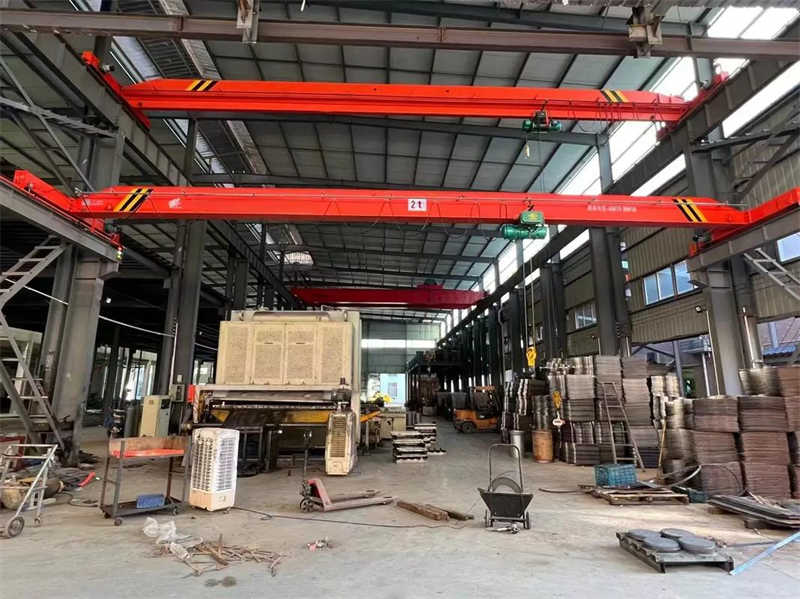
Dongqi Crane Product Analysis: Market Performance by Type
As a Sino-foreign joint venture with a significant global footprint, Dongqi Crane’s product portfolio and market performance offer a clear snapshot of industry demand. Their product range spans from light-duty equipment to heavy-duty specialized cranes, exported to over 96 countries.
The table below synthesizes estimated market performance data for Dongqi’s core workshop crane types in 2025, illustrating the classic market dynamic where high-volume, low-tonnage models drive unit sales, while high-capacity models generate a substantial portion of revenue.
| Product Type | Typical Capacity Range | Key Model Examples (Dongqi) | Estimated 2025 Market Share (Units) | Contribution to Revenue | Primary Workshop Applications |
|---|---|---|---|---|---|
| Single Girder Overhead Crane | 1 – 20 tons | LD (A3-A4), LDP (Low Headroom), LX (Suspension) | ~65% (Dominant) | Moderate | General manufacturing, assembly lines, warehouses, maintenance bays. |
| Double Girder Overhead Crane | 5 – 550+ tons | QD (General Hook), Ladle, Explosion-Proof, Insulation types | ~20% | High | Steel & metal processing, heavy machinery assembly, foundries, specialized industrial applications. |
| Gantry Crane (Workshop Use) | 1 – 50 tons (Single Girder) | Portable & Rail-Mounted Gantry Cranes | ~10% | Moderate | Workshops without supportive roof structures, outdoor storage yards, flexible indoor layouts. |
| Jib Crane | 0.5 – 10 tons | BZ Pillar Jib Crane | ~5% | Lower | Localized material handling at workstations, machining centers, loading docks within a workshop. |
Analysis of Market Performance:
- High-Volume Dominance of Light Equipment: The data shows that low to medium-capacity single girder cranes (under 20 tons) form the backbone of the market in terms of units sold. Their lower cost, easier installation, and suitability for a vast array of common lifting tasks make them the default choice for most standard workshops.
- Revenue Leadership of Heavy-Duty Cranes: Despite lower sales volume, double girder cranes and specialized heavy-duty models command a dominant share of market revenue. Their higher price point, driven by complex engineering, premium materials, and customization for demanding applications (like handling molten metal or in explosive atmospheres), makes each unit significantly more valuable.
- The Rise of European Designs: There is a clear market preference for cranes built to European (FEM) standards, prized for their compact design, lower headroom, and higher duty classifications (A5-A7). These features allow workshops to maximize usable space and ensure reliability under intensive use.
Customer Feedback and Performance Insights
Feedback from global clients highlights key operational factors that influence satisfaction and long-term value.
- Reliability and Customization: Positive feedback often centers on the long-term reliability of core components and the ability to procure customized solutions. Dongqi, for instance, collaborates with European technology partners for key parts and offers non-standard designs to fit unique workshop conditions. One project involved designing a 5-ton overhead crane for a Pakistani client with specific span and height requirements, demonstrating this tailored approach.
- Technical Support as a Decisive Factor: The quality of after-sales service is repeatedly emphasized. Manufacturers that provide comprehensive support—including 24/7 technical assistance, operator training, and availability of spare parts—see higher customer retention. This holistic service model is critical for minimizing downtime.
- Value of Safety and Smart Features: There is growing appreciation for integrated safety systems and smart features. While not always the primary purchase driver, functionalities like anti-collision devices, variable speed control, and remote monitoring capabilities are increasingly seen as essential for modern, safety-conscious operations.
A Practical Guide to Workshop Crane Selection
Choosing the right crane is a strategic investment. Here is a streamlined guide based on 2025 purchasing patterns:
1. For General Workshop Use (Light to Medium Duty):
- Focus on: Single girder overhead cranes (LD/LDP type) or European underslung cranes (NLX type).
- Why: They offer the best cost-effectiveness for capacities under 20 tons, are quick to install, and are perfect for assembly, warehousing, and repair work.
- Key Question: What is your maximum lift weight and available ceiling height? (Low headroom models like the LDP solve space constraints.)
2. For Heavy Industrial & Specialized Applications:
- Focus on: Double girder overhead cranes (QD type) or specialized models (explosion-proof, foundry, insulation).
- Why: They provide the necessary structural strength for loads over 20 tons, longer spans, and higher duty cycles (A6-A8). Specialized designs are mandatory for hazardous environments.
- Key Question: What is the nature of the material (e.g., hot metal, chemicals) and the required duty cycle?
3. For Flexible or Infrastructure-Light Spaces:
- Focus on: Workshop gantry cranes (full or semi-gantry) or jib cranes.
- Why: Gantry cranes require no permanent roof support structure, offering mobility and use in buildings not designed for crane rails. Jib cranes are ideal for precise, repetitive lifts in a confined circular area.
- Key Question: Do you need lifting mobility across a wide area (gantry) or at a fixed workstation (jib)?
4. The Non-Negotiable Considerations:
- Compliance: Ensure the crane meets CE, ISO, and relevant local safety standards.
- Total Cost of Ownership: Look beyond the purchase price. Evaluate energy efficiency, maintenance needs, and the supplier’s service network.
- Future-Proofing: Consider modularity and upgrade potential. Can the control system be updated? Can capacity be reconfigured later?
The market’s direction is clear: the future belongs to intelligent, efficient, and tailor-made lifting solutions. The most successful investments in 2026 will be those that view a crane not just as a tool for lifting, but as an integrated system for enhancing overall workflow intelligence, safety, and productivity.
