
19-Jan-2026
2025 Bridge Crane Market Trends & Buyer’s Guide: Insights from Dongqi Crane Sales Data
Introduction: Navigating Your Crane Selection
Choosing the right bridge crane is a critical decision for your operation’s efficiency, safety, and bottom line. This guide provides a clear overview of current market preferences, based on an aggregated analysis of our 2025 project data. By understanding how different industries apply various crane types, you can make a more informed choice for your specific material handling needs.
2025 Product Application Trends: What the Data Shows
Our annual data reflects how businesses across sectors are investing in lifting solutions. The distribution highlights two primary categories of demand, along with several important specialized applications.
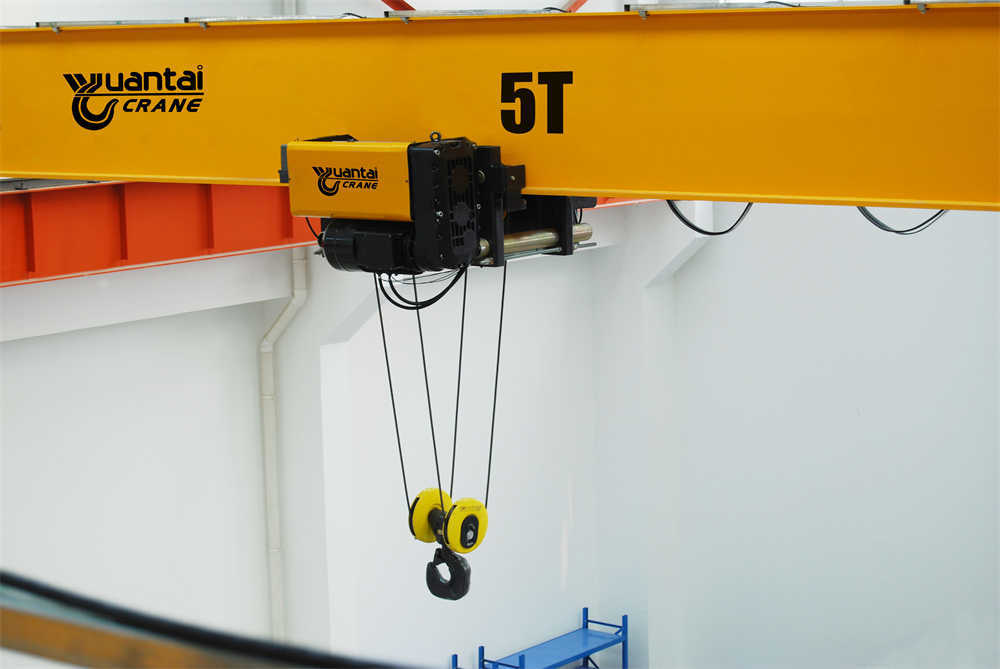
1. The Preferred Choice for Modern Facilities: European-Style Single Girder Cranes
This category represented the most common selection, accounting for roughly half of all units applied in projects last year. The popularity of the European-style single girder bridge crane stems from its design philosophy focused on efficiency and optimization.
- Key Characteristics & Best Applications:
- Space and Energy Efficiency: These cranes are built with a compact structure and lighter self-weight, which reduces the load on your building’s support structure. Their design often allows for greater hook height and better clearance, maximizing usable space within your facility. Smaller wheel loads and efficient drives can lead to lower energy consumption.
- Ideal Use Cases: They are particularly well-suited for workshops, assembly lines, and warehouses with duty cycles up to A5 (moderate use), lifting capacities generally up to 32 tons, and spans under 35 meters. They are a frequent choice for modern manufacturing plants, logistics centers, and facility upgrades where optimizing space and reducing long-term operational costs are priorities.
2. The Robust Workhorse for Heavy-Duty Applications: General Purpose Double Girder Cranes
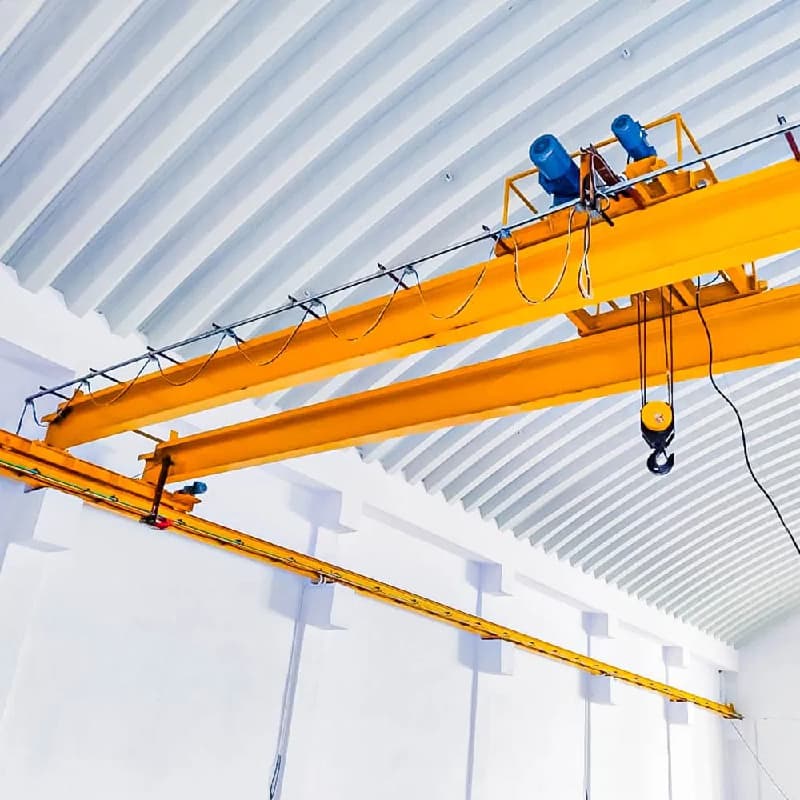
The general purpose double girder bridge crane remains a fundamental piece of industrial infrastructure, applied in approximately one-third of projects. It is the go-to solution for demanding environments.
- Key Characteristics & Best Applications:
- Strength and Durability: Known for their robust construction and inherent stability, these cranes handle heavy, frequent, or precise lifting tasks with reliability. They can be equipped with various trolley and hoist configurations to handle specialized loads.
- Ideal Use Cases: Their primary advantage is in applications requiring high capacity, long spans, and severe duty cycles (A6-A7). They are essential in steel service centers, foundries, heavy machinery workshops, and large-scale production facilities where durability and high performance are non-negotiable.
3. Practical Solutions for Standard Duty: Light Duty Single Girder Cranes
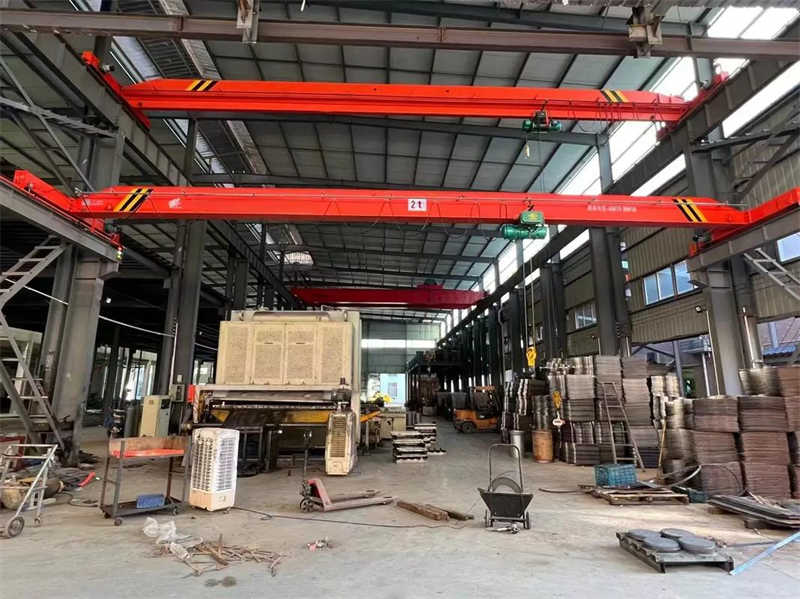
A consistent segment of demand, representing a solid portion of projects, is for standard light duty single girder cranes. These units offer a practical solution for routine material handling.
- Key Characteristics & Best Applications:
- Cost-Effectiveness and Simplicity: Designed to standard mechanical specifications, these cranes are reliable for basic lifting tasks. They are often noted for their good value and shorter lead times.
- Ideal Use Cases: Perfect for machine shops, maintenance bays, packaging areas, and storage facilities with light to moderate, intermittent lifting needs (typically duty class A3-A5). They are an economical choice for applications where a premium, high-speed crane is not required.
4. Solutions for Specific Challenges: Double Girder & Underhung Cranes
Two distinct types, each representing a focused share of projects, address unique spatial and operational requirements.
- LH Series (Double Girder Cranes): These cranes offer a balance between the robust capacity of a double girder design and a potentially simpler configuration. They are often applied in settings like metal warehouses, storage yards, and service centers that handle dense materials like steel coils or plate.
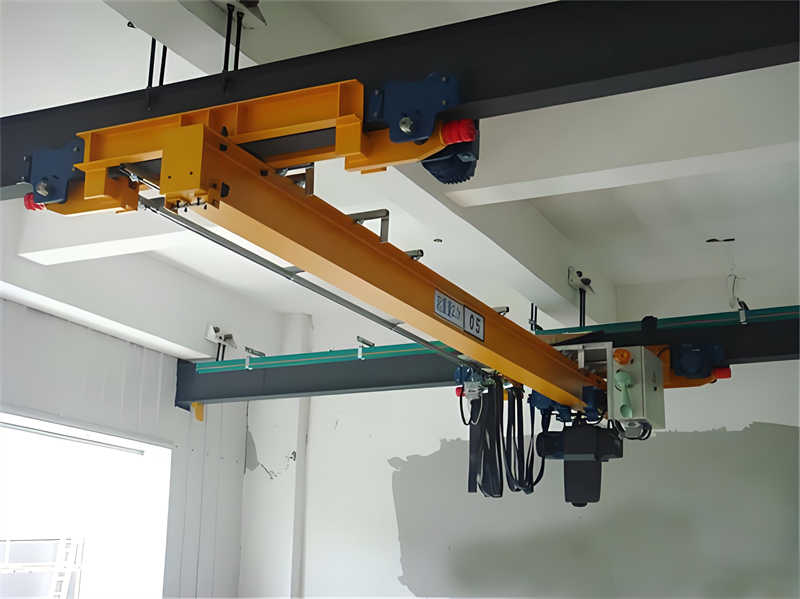
- LX Series (Underhung Single Girder Cranes): The defining feature of an underhung crane is that the beam runs on tracks attached to the roof structure, rather than on top of support rails. This is the key solution for facilities without existing runway support columns or with severe headroom limitations. Its application is specific to light-capacity lifting in retrofit or space-constrained environments.
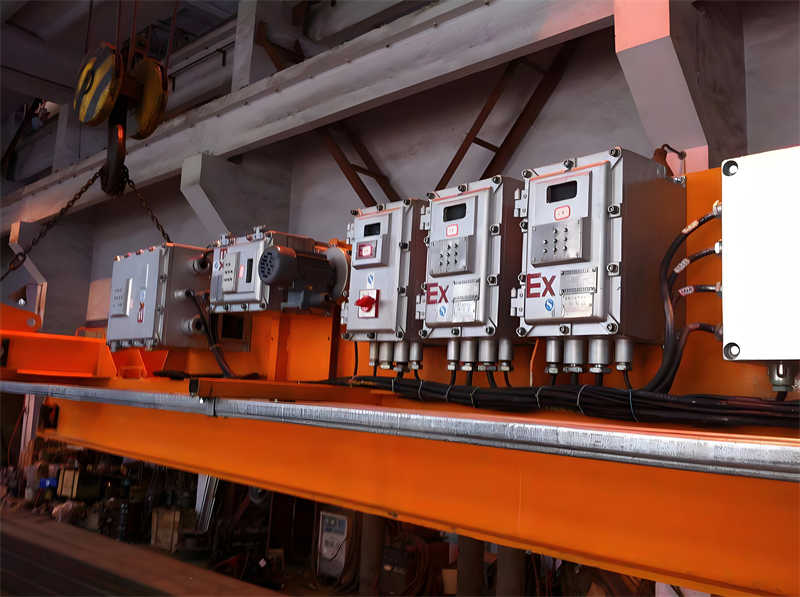
5. The Essential Tool for Hazardous Environments: Explosion-Proof Cranes
While representing a specialized segment of projects, explosion-proof double girder cranes are critical for safety in specific industries. Each application involves careful engineering to meet stringent safety standards.
- Key Characteristics & Best Applications:
- Safety by Design: These are not standard cranes; every component—from electrical motors and controls to mechanical gearboxes and brakes—is specially designed or housed to prevent ignition in flammable atmospheres.
- Ideal Use Cases: Their use is mandated in environments where combustible gases, vapors, or dusts may be present. This includes chemical processing plants, grain elevators, paint finishing facilities, fuel storage areas, and pharmaceutical production zones. Selecting this type of crane is a safety-critical decision based solely on your facility’s hazard classification.
Your Guided Selection Path: How to Choose the Right Crane
- Define Your Core Needs: Start by honestly assessing your maximum load weight, how many times per hour/day you will lift it (duty cycle), and the required span and lift height. Consider your facility’s physical constraints, like existing runway supports or available headroom.
- Identify Your Operational Environment: Is it a standard factory floor, outdoors, corrosive, or classified as a hazardous (explosive) area? This is the first filter and will immediately point you toward standard or explosion-proof equipment.
- Match the Crane Type to Your Priority:
- Prioritize Space, Efficiency, and Modernization? Begin your evaluation with a European-style single girder crane.
- Prioritize Heavy Loads, High Durability, and Severe Service? The general purpose double girder crane should be your baseline.
- Have a Standard, Low-Frequency Lifting Task with a Limited Budget? A light duty single girder crane is likely sufficient.
- Have No Overhead Runway Support or Extreme Headroom Limits? An underhung crane (LX) may be your only viable option.
- Operate in a Chemically Hazardous Location? Your process must start with a consultation on explosion-proof crane requirements.
Conclusion: Making an Informed Decision
The trends shown in our 2025 data illustrate how different crane designs solve different industrial challenges. The strong preference for European single girder cranes highlights an industry shift toward operational efficiency, while the steady demand for general double girder cranes confirms the ongoing need for brute strength in core industries.
We recommend using this overview as a starting point for your internal discussions. For the next step, our technical team is available to review your specific layout, duty cycle calculations, and operational goals to help confirm the optimal model and configuration for your project. Contact us to move from general trends to your specific solution.
