
26-Jan-2026
The Essential Guide to Bridge Speed in Overhead Crane Design: Maximizing Safety, Efficiency, and ROI
In the intricate world of industrial material handling, the specification of an overhead crane is a symphony of interdependent components, each playing a crucial role in the final performance. Among these, bridge speed—the velocity at which the entire crane travels along the runway beams—is a parameter of profound importance that is frequently underestimated or hastily defined. At Dongqi Crane, with our decades of engineering and application expertise, we have witnessed firsthand how a meticulously calculated bridge speed forms the backbone of an efficient, safe, and cost-effective lifting operation. This comprehensive guide delves beyond the basic definition, exploring the nuanced engineering principles, practical implications, and strategic considerations that make bridge speed a cornerstone of intelligent crane design.
What Is Bridge Speed on an Overhead Crane? Understanding the Core Mechanic
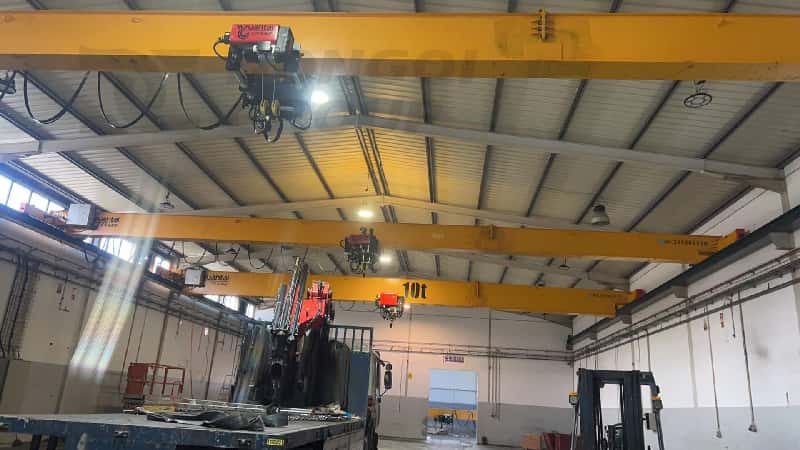
To fully appreciate bridge speed, one must first visualize the crane’s structure. An overhead crane primarily moves in three directions: hoisting (vertical), trolley travel (crosswise on the bridge beam), and bridge travel (lengthwise along the runway). The bridge, comprising the main girders, end trucks, and drive systems, is the crane’s primary mobile framework. Bridge speed, therefore, is the rate at which this entire framework transports both itself and the suspended load across the working bay.
It is typically measured in feet per minute (FPM) or meters per minute (MPM), a unit that speaks to the scale of industrial movement. This speed is distinct from and must be harmonized with hoist speed and trolley speed. A common analogy is to think of a warehouse forklift: the hoist is like the lifting mast, the trolley has no direct equivalent, and the bridge travel is the forklift driving down an aisle. The efficiency of moving cargo from “Aisle 1” to “Aisle 10” depends fundamentally on this driving speed, balanced by the need for control and precision when arriving at the destination.
Why Bridge Speed Matters in Crane Design: The Linchpin of Operational Rhythm
Bridge speed is not an isolated specification; it is the pulse of your material flow. Its impact resonates throughout the production cycle.
- Throughput and Cycle Time: In processes like manufacturing assembly lines, steel service centers, or warehouse distribution, the time to traverse the bay is a significant portion of the total lift cycle. An optimally specified bridge speed minimizes non-value-added travel time, directly increasing the number of lifts per hour and boosting overall facility throughput.
- System Synchronization: The bridge speed must be in concert with other process timings. For example, in a production line fed by a crane, if the bridge moves too slowly, it becomes the bottleneck. If it moves too fast for the downstream station to receive the load, it creates a logjam, negating any speed advantage.
- Future-Proofing: Specifying a crane involves a capital investment lasting 20-30 years. A speed chosen solely for today’s relaxed pace may cripple tomorrow’s expanded or accelerated production needs. Conversely, over-specifying for a hypothetical future can unnecessarily inflate initial costs.
How Bridge Speed Impacts Safety and Reliability: A Direct Correlation
Safety in crane operations is non-negotiable, and bridge speed is a critical safety lever. The laws of physics—specifically Newton’s laws of motion and momentum—dictate that improper speed management is a primary contributor to hazardous incidents.
- Load Sway and Pendulum Effect: This is the most visible danger. Accelerating or decelerating the bridge too quickly imparts kinetic energy to the suspended load, causing it to swing like a pendulum. This sway makes precise placement impossible, endangers personnel and equipment nearby, and places asymmetric, dynamic stresses on the crane structure and hoist ropes. Controlling sway often forces the operator to slow down or wait, ironically reducing the average effective speed.
- Precision Positioning Difficulty: High-speed travel necessitates longer braking distances. An operator hurtling towards a target at 300 FPM cannot achieve millimeter-accurate placement without a protracted and skillful slow-down period. This difficulty increases operator cognitive load and the likelihood of impact (“spotting” errors).
- Structural Fatigue and Dynamic Loading: The crane bridge and runway are designed for specific loads. A high-speed stop doesn’t just apply the static weight of the crane and load to the runway stops and building structure; it applies that weight multiplied by a dynamic impact factor. Consistently high bridge speeds, especially with harsh stops, accelerate wear on drive wheels, wheel flanges, rails, and even the building’s support columns, leading to premature failure and reduced reliability.
- Operator Ergonomics and Error: Controlling a high-inertia system at high speeds is mentally and physically taxing. Operator fatigue leads to degraded attention and increased error rates. A smooth, controllable speed reduces strain and promotes consistent, safe operation.

What Factors Determine the Right Bridge Speed? A Systematic Evaluation
Selecting the optimal bridge speed is a multi-variable engineering exercise. At Dongqi Crane, our consultation process rigorously assesses:
- Duty Cycle and Service Class (CMAA/ISO Standards): Is the crane used for infrequent, slow service (Class A) or for high-speed, near-continuous duty in a demanding environment like a scrap yard (Class D/E)? The required motor power, brake capacity, and structural fatigue resistance all scale with duty class.
- Load Characteristics:
- Weight: Heavier loads possess greater inertia, making them harder to accelerate and stop smoothly.
- Physical Nature: Is it a compact steel coil, a rigid girder, or a flimsy, large sheet metal panel? Non-rigid loads are highly susceptible to sway.
- Center of Gravity: Unbalanced loads can induce dangerous skewing during travel.
- Operational Environment and Bay Geometry:
- Travel Distance: A 200-foot bay benefits more from a higher bridge speed than a 50-foot bay.
- Obstructions and Traffic: Does the crane share the bay with other cranes, personnel, or equipment? Speed must allow for safe reaction times.
- Runway Condition and Alignment: Even the best speed is unsafe on a poorly maintained or misaligned runway.
- Control and Performance Requirements:
- Positioning Precision: Applications in turbine hall erection or glass handling demand a very slow, controllable creep speed in addition to a travel speed.
- Control Method: Is operation via pendant pushbutton, radio remote, or fully automated? Automated systems can safely handle higher, more consistent speeds than manual control in complex environments.
Typical Bridge Speed Ranges by Application: From Micro-Positioning to Megawatt Motion
- Ultra-Precision Environments (Labs, Clean Rooms, Optical Assembly): 10 – 40 FPM. Speed is secondary to absolute smoothness, minimal vibration, and sub-millimeter positioning. VFDs with sensorless vector control are essential.
- General Industrial & Warehousing (Machine Shops, Maintenance Bays): 40 – 125 FPM. The workhorse range, balancing reasonable travel time with good controllability for varied loads and tasks.
- High-Intensity Manufacturing & Fabrication (Automotive, Stamping Plants): 125 – 250 FPM. Designed for repetitive, long-distance moves of standardized loads within a streamlined process. Requires robust structures and premium controls.
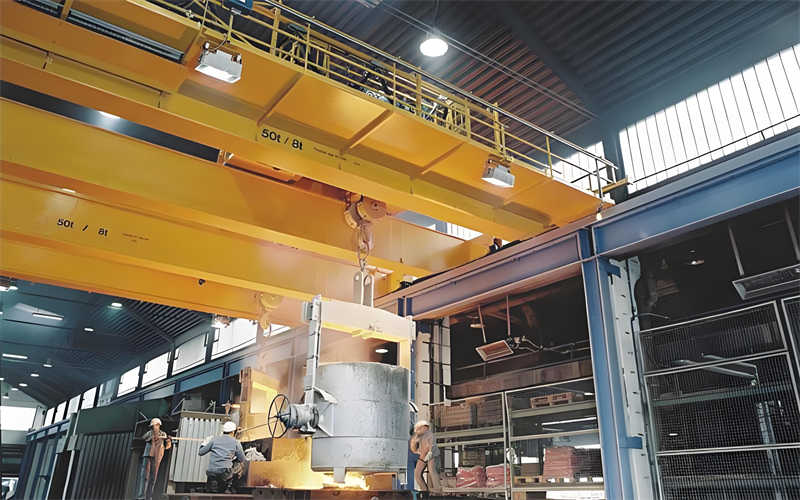
- Bulk Material Handling (Steel Mills, Foundries, Lumber Mills): 150 – 350+ FPM. These cranes move massive, often abrasive loads over vast buildings. They are engineered for durability and productivity, featuring powerful drive systems and specialized braking.
- Specialized High-Speed Cranes (Certain AS/RS, Container Handling): 400 – 600+ FPM. These are application-specific machines, often automated, where the entire system—structure, drives, controls, and load security—is designed around extreme speed as the primary performance metric.
The Role of Variable Frequency Drives (VFDs) in Bridge Speed Control: The Game Changer
The advent of Variable Frequency Drives has revolutionized bridge motion control, transforming it from a simple “on/off” affair to a nuanced, programmable dynamic performance.
- Soft Start & Stop: VFDs ramp voltage and frequency up and down smoothly, eliminating the “jerks” inherent in traditional contactor-based starts. This is the single most effective tool for mitigating load sway and reducing mechanical shock.
- Precise Speed Regulation: Operators can select any speed within the drive’s range, allowing for a perfect “creep” mode and seamless transitions between speed points.
- Torque Control: Advanced vector-control VFDs can provide high starting torque at low speeds (crucial for breaking static friction) and maintain torque for smooth operation.
- Energy Efficiency: VFDs significantly reduce inrush current and can optimize power consumption during travel, leading to tangible energy savings.
- Integrated Braking: Regenerative braking capabilities feed energy back into the system, providing smoother, wear-free deceleration compared to sole reliance on mechanical brakes.
A Dongqi Crane equipped with VFD-controlled bridge drives represents the modern standard for safety, controllability, and performance.
Does Higher Bridge Speed Increase Crane Cost? A Detailed Cost-Benefit Analysis
The unequivocal answer is yes, and the cost increase is multi-faceted. Choosing a higher bridge speed cascades through the entire Bill of Materials (BOM):
- Drive System: Requires more powerful (and costly) motors, larger-capacity gearboxes with appropriate gear ratios, and heavier-duty wheel assemblies to transmit the increased torque.
- Electrical System: Needs higher-capacity motor starters, conductors, and protection devices. If using VFDs (which is recommended for high speeds), the drive unit itself is more expensive.
- Structural Reinforcements: The bridge girders and end trucks must be designed to handle the higher dynamic forces and inertia during acceleration and braking, potentially leading to more steel and a heavier structure.
- Braking System: Requires larger, more capable brakes (disc, magnetic, or regenerative) to safely decelerate the increased momentum.
- Runway Implications: A high-speed crane may necessitate a more rigid and precisely aligned runway structure, impacting building costs.
Therefore, the decision for higher speed must be justified by a clear Return on Investment (ROI) analysis based on reduced cycle times and increased throughput. Our engineers at Dongqi Crane help clients navigate this calculus to find the most economical specification.

Can You Adjust Bridge Speed After Installation? The Realities of Retrofit
While a common question, post-installation modification is complex.
- Minor Adjustments: If the crane has a VFD, the maximum speed parameter can often be adjusted within the limits of the existing motor’s power and torque curves. However, this is not a free pass to double the speed.
- Major Increases: To significantly raise the design speed, you would likely need to replace: the drive motors, the gearboxes, the drive wheel assemblies, the brake systems, and potentially upgrade the electrical feeders. The cost and downtime of such a retrofit often approach or exceed that of a new, properly designed crane.
- The Dongqi Recommendation: Get the specification right from the start. Our design phase includes thorough scenario planning to ensure the crane’s capabilities align with both current and foreseeable future needs, protecting your investment.
How Does Bridge Speed Vary by Industry? Tailoring the Tool to the Task
- Aerospace & Defense: Low to moderate speeds (20-80 FPM) for the delicate handling of composite structures, engines, and avionics. Precision and vibration control are paramount.
- Automotive Manufacturing: Medium to high speeds (100-250 FPM) for moving body panels, engines, and dies along extensive production lines. Reliability and synchronization with takt time are critical.
- Power Generation (Turbine Halls): Very low speeds (10-30 FPM) for the millimeter-perfect alignment of multi-ton rotors, stators, and generators during installation and maintenance.
- Paper & Pulp: Moderate speeds with exceptional smoothness to handle massive, continuous paper rolls without damaging the product edges.
- Shipping & Logistics (Container Gantry Cranes): Extremely high speeds (500+ FPM) for the trolley and bridge, but these are specialized machines where speed is the primary design driver for port throughput.
Common Misunderstandings About Bridge Speed: Dispelling the Myths
- Myth 1: “The top speed on the datasheet is the average operational speed.”
- Reality: The published speed is a maximum under ideal conditions. Average effective speed is always lower due to acceleration, deceleration, and positioning. Control system quality greatly affects this efficiency gap.
- Myth 2: “We can just run it slower if we don’t need the speed.”
- Reality: While true, you have already paid the premium for the higher-capacity components (motor, gearbox, structure). This is a capital inefficiency. Furthermore, a system designed for high speed running slowly may operate at a less optimal point on its performance curve.
- Myth 3: “Bridge speed is the main factor in productivity.”
- Reality: It is one factor. Total cycle time is the sum of hoist, trolley, and bridge move times, plus load attach/detach time. An integrated design optimizing all three motions is what unlocks true productivity.
- Myth 4: “All cranes with the same speed perform identically.”
- Reality: The quality of the acceleration/deceleration profiles (dictated by controls) and structural rigidity affect performance dramatically. A Dongqi crane at 150 FPM can deliver a faster, safer, and more precise effective cycle than a poorly controlled competitor crane rated at 200 FPM.
Final Thoughts: Bridge Speed as a Strategic Design Imperative
Specifying an overhead crane is a significant capital decision with decades-long implications. Bridge speed is far more than a line on a spec sheet; it is a fundamental parameter that intertwines with safety, efficiency, maintenance costs, and total lifecycle value. Ignoring its nuances or making assumptions can lead to an underperforming asset, a safety liability, or an unnecessarily expensive purchase.
At Dongqi Crane, we approach every project with a systems-thinking mindset. We don’t just sell cranes; we engineer material handling solutions. Our process involves deep collaboration to understand your unique operational rhythm, spatial constraints, and growth trajectory. We then synthesize this data to recommend the harmonious set of specifications—including the optimal bridge speed—that will deliver reliability, safety, and maximum return on your investment for years to come.
Let’s engineer your productivity. Contact a Dongqi Crane application specialist today to begin the conversation about designing a crane system that moves at the perfect speed for your success.
FAQs About Bridge Speed on Overhead Cranes
Q: How is bridge speed typically tested and verified during commissioning?
A: Speed is measured using a tachometer or laser measuring device over a marked distance on the runway, under both no-load and rated load conditions. Dongqi Crane provides certified test reports documenting actual performance against design specifications.
Q: Does weather or ambient temperature affect bridge speed performance?
A: In outdoor or unheated facilities, extreme cold can thicken gearbox lubricants, temporarily increasing resistance. High-quality components and proper cold-weather lubricants specified by Dongqi mitigate this. VFDs also help by providing ample starting torque.
Q: What is “two-speed” bridge control, and when is it used?
A: It utilizes a two-winding motor or a pole-changing motor to offer a “High” speed (e.g., 80% of max) and a “Low” speed (e.g., 20% of max). This is a cost-effective alternative to a VFD for applications requiring a simple fast travel and a slow positioning speed.
Q: How does bridge speed relate to crane runway wheel alignment?
A: They are intimately connected. High bridge speeds magnify the effects of poor alignment. Misalignment can cause severe wheel flange wear, screeching noises, and even derailment at high speeds. A high-speed crane demands a correspondingly high-precision runway installation, which Dongqi can oversee as part of a turnkey package.
Learn More About Overhead Cranes and Proper Overhead Crane Maintenance
The journey to optimal material handling continues long after installation. The performance you gain from a perfectly specified bridge speed must be protected through a disciplined maintenance regimen. Proper overhead crane maintenance—including regular inspection of drive motors, gearboxes, wheel flanges, and rail conditions—is essential for preserving safety, reliability, and the designed performance of your crane throughout its service life.
Explore the Dongqi Crane resource center for in-depth articles, maintenance checklists, and white papers on:
- Developing a proactive crane maintenance plan.
- The critical role of professional crane inspections.
- Upgrading legacy cranes with modern control systems like VFDs.
- Case studies on how tailored crane solutions revolutionized client operations.
Your bridge to greater productivity begins with a conversation. Contact Dongqi Crane today.
