
2-Mar-2026
From Need to Delivery: Everything You Need to Know to Buy a BTH Device from DONGQI Crane
Introduction: The Critical Nature of Below-the-Hook Lifting
In the world of overhead lifting, there exists an unyielding truth: there is no margin for error. When tons of material swing suspended above a worksite, the difference between a routine operation and a catastrophic failure is measured in millimeters and milliseconds. The slightest miscalculation in any part of an overhead lift can turn an ordinary day into one that results in severe injury or death. This reality is why the industry has developed rigorous standards for safety and equipment, particularly for below-the-hook (BTH) lifting devices.
A below-the-hook lifting device—commonly referred to as a lifter—serves as the critical interface between the hoist and the load. These engineered components attach loads to hoists, coming in forms as varied as the materials they handle: structural and mechanical lifters, vacuum devices, lifting magnets (both close proximity and remotely operated), scrap and material-handling grapples, and clamps. Each variation addresses specific lifting challenges, from coils of steel to sheets of glass, from palletized goods to irregularly shaped machinery.
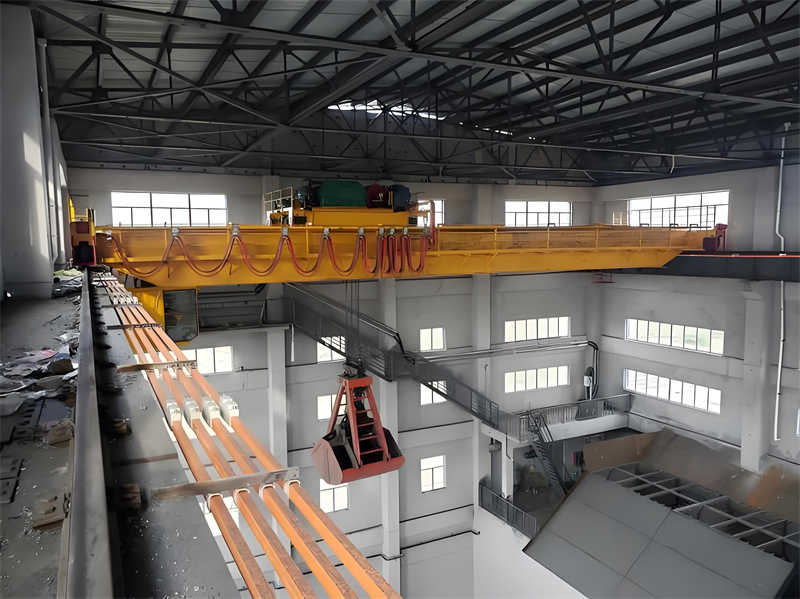
At DONGQI Crane, we understand that when conducting overhead lifts, bringing your needs to experienced professionals makes all the difference. As a Sino-New Zealand joint venture established in 1984, we have spent nearly four decades designing, manufacturing, and delivering below-the-hook devices and complete crane systems to customers in over 96 countries worldwide . Our team of 500 technical specialists and 70+ senior engineers works day-in and day-out to create solutions that give our customers peace of mind—devices expertly engineered and fabricated specifically for each unique lifting application .
This comprehensive guide walks through the entire procurement process—from initial need recognition to final delivery—covering standards compliance, ordering procedures, lead time expectations, repair protocols, and the compelling reasons to partner with DONGQI Crane for your below-the-hook lifting needs.
Part I: Understanding the Standards Governing BTH Devices
The ASME Framework: B30.20 and BTH-1
Before diving into the procurement process, one must understand the regulatory landscape that governs below-the-hook devices. The American Society of Mechanical Engineers (ASME) has established two primary standards that every compliant BTH device must meet: ASME B30.20 and ASME BTH-1.
ASME B30.20: Below-the-Hook Lifting Devices represents the safety standard for these critical components. This volume of the overarching ASME B30 standard—which has provided provisions for crane and lifting equipment construction, installation, operation, and maintenance for over a century—focuses specifically on below-the-hook devices. The standard outlines requirements for marking, construction, installation, inspection, testing, maintenance, and operation.
While B30.20 addresses the “what” of compliance—the requirements devices must meet—ASME BTH-1: Design of Below-the-Hook Lifting Devices delves into the “how.” This standard digs deeper into the engineering side, specifying safety factors, design categories, and service classes. It provides the minute details of what each lifter needs to satisfy requirements from an engineering perspective.
Scope of Coverage
ASME B30.20 specifically addresses six types of below-the-hook lifting devices:
- Structural and mechanical lifting devices: Constructed of rigid parts that move in tandem to secure loads
- Vacuum lifting devices: Using electric-powered pumps and sealed pads to create suction for attachment
- Close proximity operated lifting magnets: Magnets controlled by operators working nearby
- Remotely operated lifting magnets: Magnets controlled from a distance
- Scrap and material-handling grapples: Designed for loose or irregular materials
- Clamps: Including those used for positioning and anchoring
DONGQI’s Commitment to Standards Compliance
At DONGQI Crane, we take standards compliance seriously. Our commitment to quality is validated through comprehensive certifications, including ISO9001 international quality system certification, ISO14004 environment management system certification, and OHSAS18001 occupational health and safety certification . These certifications demonstrate our systematic approach to quality management and ensure that every below-the-hook device we manufacture meets or exceeds international requirements.
Furthermore, our strategic partnerships with renowned European machinery manufacturers—including Germany’s NORD and SIEMENS, and France’s Schneider Electric—enable us to incorporate components designed and manufactured strictly according to European standards . This ensures that the performance of our below-the-hook devices reaches and even exceeds current international advanced levels.
Part II: The Journey from Need to Order at DONGQI Crane
Recognizing the Need for a Custom BTH Device
The procurement process typically begins with recognition that standard rigging solutions are insufficient for a particular application. Safety and efficiency drive most decisions to invest in custom below-the-hook equipment. Sometimes, using traditional wire rope slings, alloy chain slings, or synthetic slings simply cannot safely and securely move a load from one location to another.
Customers often approach DONGQI Crane when they experience specific pain points:
- Excessive rigging time: When securing loads with traditional methods takes too long, impacting productivity
- Load characteristics: Unusual size, shape, or weight that makes standard slings inadequate
- Safety concerns: When loads appear unstable during lifts or when riggers feel uncertain about load security
- Near misses or accidents: Actual rigging failures that demand immediate solutions
An accident or near miss provides particularly compelling motivation for change. As our engineers often advise: “If the materials you are trying to move just don’t look right when they get up into the air, or you don’t feel that your load is secure enough—or worse yet, you’ve actually experienced a rigging failure—then it’s time to consult with the experts at DONGQI.”
Initial Consultation and Needs Assessment
Once a customer reaches out to DONGQI Crane, we initiate a thorough assessment process. Our approach is built on a customer-centric philosophy: we focus on the customer’s needs, provide competitive crane solutions and services, and continue to create value for our customers .
The process typically begins with our experienced engineers communicating directly with you to determine what lifting equipment is optimal for your situation . During this consultation, we:
- Review the lifting application: Understanding exactly what you need to accomplish
- Discuss design and engineering processes: Explaining how DONGQI approaches custom solutions
- Understand project parameters: Grasping the full scope of requirements
- Gather load measurements: Documenting precise dimensions of items to be lifted
- Identify site restrictions: Noting any spatial or environmental constraints
Engineering and Approval Drawings
With assessment information in hand, DONGQI’s technical team—supported by our research and development laboratory and advanced engineering capabilities—develops detailed CAD-generated clearance drawings for your initial approval . This step is crucial to ensuring that the final device will meet your needs for safe and efficient lifts.
The approval drawing process at DONGQI follows a systematic approach:
- Initial design: Our engineers create detailed drawings showing critical dimensions and measurements based on your specific requirements
- Technical discussion: We engage in thorough discussion with you to ensure complete understanding of your needs
- Customer review: You receive the drawings for careful examination
- Revisions if necessary: We make any required adjustments to ensure the correctness of dimensions and details
- Final approval: You sign off on the design, confirming that it aligns with your operational requirements
Only after you provide final approval and a purchase order does the manufacturing process begin. This collaborative approach ensures that you receive a device that not only meets safety standards but also performs optimally in your specific application.
Part III: DONGQI’s Manufacturing Capabilities and Lead Time
World-Class Manufacturing Infrastructure
When you partner with DONGQI Crane for your below-the-hook device, you gain access to one of the most advanced crane production complexes in Asia. Our manufacturing facility is strategically located in Changyuan, Henan Province—known as the “Cradleland of Cranes” in China . The facility spans an impressive 240,000 square meters and houses over 2,000 sets of sophisticated manufacturing and detection equipment .
With a total investment of 240 million RMB and registered capital of 108 million RMB, DONGQI Crane demonstrates a serious commitment to manufacturing excellence. Our annual comprehensive production capacity exceeds 10,000 crane sets, with output values reaching 1.5 billion RMB . This scale and capability ensure that we can handle projects of virtually any size and complexity.
Advanced Manufacturing Technologies
DONGQI’s manufacturing processes incorporate state-of-the-art technologies that distinguish us from conventional manufacturers:
- Computer-aided design (CAD) software: Optimizes structural designs before fabrication begins
- Finite element analysis (FEA): Validates load distributions and identifies potential stress concentrations
- Automated welding systems: Deliver uniform weld quality exceeding AWS D1.1 standards
- CNC machining centers: Produce components to tight tolerances essential for smooth operation
- Advanced testing equipment: Ensures every component meets rigorous quality standards
These technologies enable DONGQI to produce below-the-hook devices with exceptional precision, durability, and performance.
Factors Affecting Lead Time
Lead time for custom below-the-hook devices varies significantly based on project complexity. Understanding these factors helps customers plan effectively and set realistic expectations.
At DONGQI, our streamlined production processes and efficient project management enable us to deliver standard products efficiently. For devices that are not overly complex builds requiring extensive machining and secondary processes, manufacturing typically requires six to ten weeks from approval to delivery. These projects benefit from established designs and streamlined production processes.
However, larger, more complex devices require substantially more time. Heavy industrial applications, such as those serving steel mills, power generation facilities, or mining operations, may need ten to twenty-four weeks for completion . These devices require fabrication, outside machining, and various secondary processes before they are ready for delivery.
The DONGQI Production Process
Once engineering receives a signed purchase order, the detailed design work accelerates. Our engineers finalize all specifications, ensuring compliance with applicable international standards. Every device must meet rigorous requirements for design factors based on operational conditions.
The fabrication process at DONGQI involves multiple stages:
- Raw material receipt: Quality materials, including high-strength steel plates, are brought into our facility
- Fabrication: Skilled craftspeople construct the device according to engineering specifications, utilizing advanced welding and machining technologies
- Quality control inspection: Our dedicated quality control department conducts thorough inspections at critical stages
- Load testing: If required, the device undergoes proof testing to verify its capacity
- Finishing: After passing tests, the device receives appropriate paint or coating—with enhanced anti-corrosion treatments available for harsh environments
- Final inspection: Comprehensive functional testing covers all movements and safety systems
- Shipping: The completed device is carefully prepared for delivery to your facility
Throughout this process, a DONGQI engineer serves as conductor and supervisor, ensuring that every detail aligns with the approved design and quality standards .
Load Testing Protocols
Load testing represents a critical quality assurance step. ASME B30.20 includes specific requirements for load testing lifting devices, reflecting the industry’s commitment to ensuring equipment performance. Testing verifies that the device can safely handle its rated capacity before it ever reaches the customer’s facility.
At DONGQI, every crane and lifting device undergoes rigorous testing protocols before shipment. This includes structural load testing at 125% of rated capacity, dimensional inspection using coordinate measuring machines, electrical system verification following IEC standards, and comprehensive functional testing covering all movements and safety systems .
When devices require specialized load testing, our engineering team designs appropriate testing apparatus to properly test the fixture. This attention to detail ensures that every device leaving our factory meets or exceeds safety requirements.
Part IV: What Happens When Damage Occurs
Immediate Response Protocols
Despite best efforts in design and manufacturing, below-the-hook devices may eventually sustain damage during service. When this occurs, immediate action is required. DONGQI Crane urges customers to contact us right away if damage happens.
Our dedicated after-sales service department provides 24/7 responsive support to keep your equipment running smoothly . When you report a damaged device, our service team will typically:
- Advise you to remove the device from service immediately
- Gather detailed information about the damage and circumstances
- Conduct a preliminary analysis to understand potential causes
- Arrange for the device to be returned to our facility for thorough inspection
- Provide guidance on temporary solutions if needed
This analysis considers multiple factors:
- Product misuse: Was the device used in ways not intended by the design?
- Manufacturing flaws: Did any defect contribute to the failure?
- Application misunderstanding: Was the device poorly matched to the application?
- Unforeseen forces: Did the device encounter loads or conditions not considered during design?
For devices that have been in service for years before failing, we bring the unit back to our facility, inspect the entire lifter, repair it if possible, and return it to service with appropriate documentation.
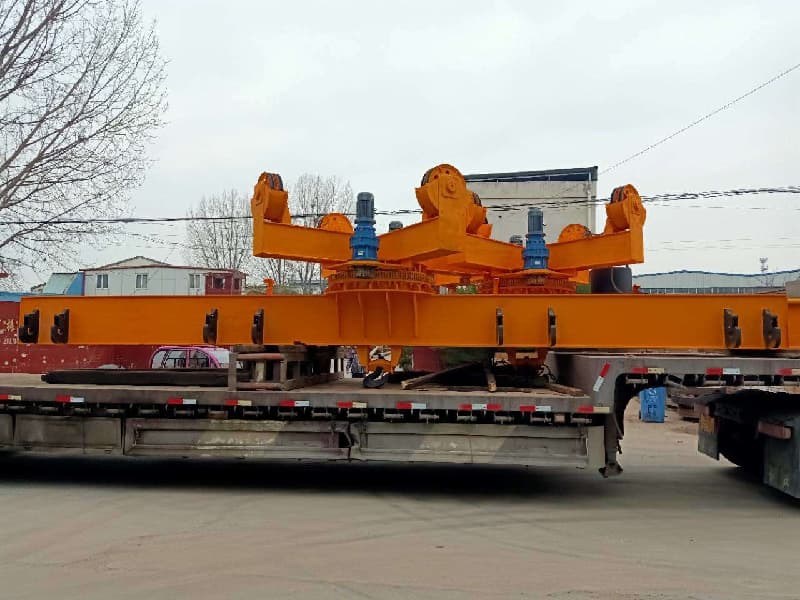
The Critical Warning: No Field Repairs
One of the most important warnings from industry experts—and one that DONGQI Crane strongly emphasizes—is this: DO NOT work on or repair below-the-hook lifting devices in the field. Attempting field repairs can have serious consequences, including voiding the manufacturer’s warranty and shifting liability to your company in case of failure.
The reasons for this prohibition are rooted in engineering reality. Proper repairs require:
- Knowledge of the original design specifications
- Access to appropriate materials
- Understanding of correct weld procedures
- Verification that repairs meet ASME standards
- Proper testing to confirm integrity
Field repairs cannot guarantee these requirements are met. When weld quality is uncertain or proper processes cannot be verified, the safety of the device is compromised.
DONGQI’s Repair and Recertification Services
For customers needing repair services, DONGQI Crane offers comprehensive repair and reconditioning services. Our dedicated after-sales service department, supported by our engineering team, stands ready to assist with all repair needs .
The repair process at DONGQI includes:
- Thorough inspection: Detailed examination of the device to assess damage and identify any underlying issues
- Engineering analysis: Evaluation of repair options and determination of proper procedures
- Professional repair: Skilled technicians perform repairs using appropriate materials and methods
- Testing and certification: Repaired devices undergo load testing to verify integrity
- Documentation: Comprehensive repair records and certification documentation are provided
Repaired or rebuilt units can provide significant cost savings compared to replacement, while maintaining the safety and reliability you expect from DONGQI equipment.
The Challenge of Reverse Engineering
When customers seek certification for existing devices without original documentation, manufacturers face challenges. At DONGQI, we approach such situations with appropriate caution. For welded or forged devices where weld quality cannot be verified through visual inspection alone, we cannot certify or provide tagging through reverse engineering alone. This is because we cannot confirm that correct weld rods or proper weld processes were used, nor do we know how many load cycles the device has experienced to understand its remaining fatigue life.
On a case-by-case basis, if customers can supply all manufacturing information—including original drawings, material certifications, and usage history—we may proceed with reverse engineering, with appropriate disclaimers regarding responsibility for original manufacturing.
For non-welded devices or those where welding is not in critical load paths, we may provide certification through reverse engineering, provided customers supply age estimates, drawings, material certifications, and intended use information.
Part V: Why Choose DONGQI Crane for Your BTH Device
Regulatory Compliance and Liability Protection
Perhaps the most compelling reason to partner with DONGQI Crane for your below-the-hook devices involves regulatory compliance and liability protection. If an accident occurs that draws OSHA or other regulatory scrutiny, inspectors will examine every detail to ensure the device meets standard requirements.
Industry experience reveals a consistent pattern: when inspectors find devices lacking proper markings required by ASME B30.20, they begin questioning and demanding documentation about the lifting device. When customers cannot produce proper documentation—including approval drawings, engineering designs, and inspection reports—fines are issued.
Beyond regulatory fines, companies face potential legal ramifications from injured individuals or other organizations whose personnel may have been affected. Perhaps most concerning, if an in-house engineer created drawings for a device that later fails, that engineer could be held personally responsible.
Documentation and Professional Engineering
When you purchase from DONGQI Crane, your device arrives with comprehensive documentation:
- Tagging and markings: Meeting all applicable standard requirements
- Engineering documentation: Demonstrating compliance with design standards
- Load test certification: Verifying capacity through actual testing
- Warning markings: Clearly indicating safe use parameters
- Material certifications: Confirming quality of materials used
- Inspection records: Documenting quality control throughout manufacturing
This documentation serves as your defense in case of incidents and your proof of compliance during inspections.
Engineering Expertise and Innovation
DONGQI Crane employs a workforce of 3,600 professionals, including 500 technical specialists and over 70 senior engineers . This depth of technical knowledge provides the expertise necessary for complex lifting systems and distinguishes DONGQI from conventional manufacturers.
Our commitment to technological innovation is demonstrated through:
- Research and development laboratories: Continuously advancing crane performance and efficiency
- Strategic European partnerships: Incorporating advanced technology from Germany’s NORD and SIEMENS and France’s Schneider Electric
- National invention patents: Protecting innovative developments in crane technology
- FEM standard cranes: Manufacturing to rigorous European specifications
Recent innovations from DONGQI include embedded planetary reduction mechanisms for superior torque transmission, integrated injection-molded crane drums for improved durability and reduced noise, and intelligent monitoring systems enabling predictive maintenance and remote diagnostics .
Global Reach and Local Support
DONGQI Crane products operate in over 96 countries worldwide, serving Southeast Asia, East Europe, the Middle East, Africa, the Americas, and Oceania . This extensive international presence demonstrates global confidence in our products and services.
Recent export destinations include established markets such as the United States, Russia, Australia, and Germany, as well as emerging economies including Pakistan, Bangladesh, Vietnam, Indonesia, and numerous African nations .
Our international project execution capabilities include:
- Experienced export departments: Handling documentation, logistics, and customs clearance efficiently
- International shipping coordination: Professional management of global logistics
- Multilingual technical support: Assistance in English, Spanish, Russian, French, and Arabic
- Authorized service partners: Local installation support and maintenance services in key markets
Proven Track Record: Case Study
DONGQI’s capabilities in custom lifting solutions are demonstrated through numerous successful international projects. In 2024, we successfully manufactured and delivered specialized overhead cranes to a customer in Indonesia for bulk material handling applications .
This project showcased our ability to provide comprehensive solutions, including:
- Customized design: QZ type double-girder overhead cranes with grabs for handling bulk materials such as coal, ore, and gravel
- Local support: Providing detailed technical drawings and installation guidance for locally sourced crane girders
- Environmental adaptation: Enhanced anti-corrosion design and high-temperature tolerance for tropical conditions with high humidity
- Fast delivery: Efficient production and logistics ensuring timely arrival of core components
- Technical support: Comprehensive installation guidance, operation manuals, and operator training
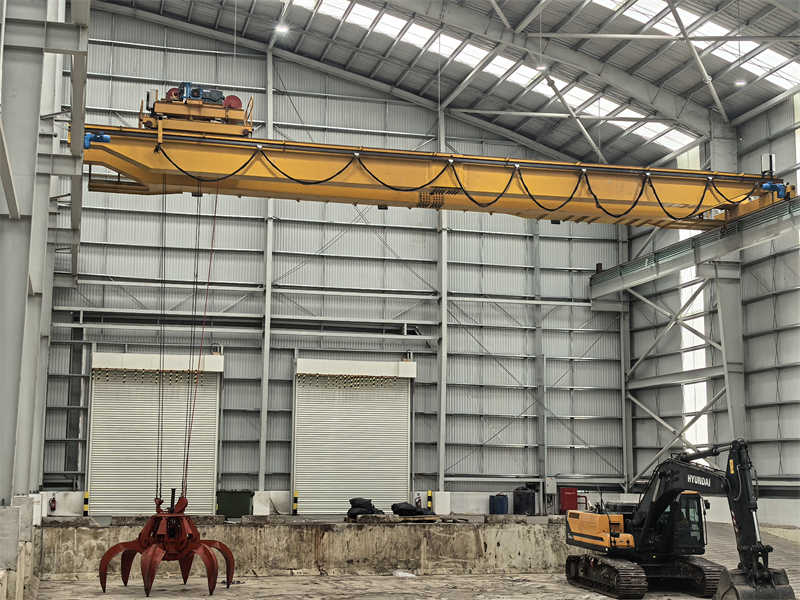
Customer feedback praised the grab efficiency and operational stability, as well as the company’s responsive after-sales service and timely problem resolution .
Comprehensive Product Portfolio
While below-the-hook devices are critical components, they typically operate as part of a complete lifting system. DONGQI Crane offers an extensive range of lifting equipment, enabling us to provide integrated solutions for virtually any material handling requirement:
- Overhead bridge cranes: Single and double girder configurations for various applications
- Gantry cranes: For indoor and outdoor use, including rubber-tired gantry (RTG) cranes for container handling
- Jib cranes: Multiple mounting options for flexible workstation coverage
- Electric hoists: Chain and wire rope technologies for diverse lifting needs
- KBK light crane systems: Modular, flexible beam cranes for loads up to 2 tons
- Mobile jib cranes: Portable solutions with heavy-duty wheels for dynamic environments
- Port and container cranes: Specialized systems for logistics applications
This comprehensive portfolio means that when you partner with DONGQI for your below-the-hook device, you’re working with a company that understands the entire lifting system—ensuring perfect integration and optimal performance.
Customer-Centric Service Philosophy
At DONGQI Crane, our service philosophy extends far beyond manufacturing. We are committed to providing best customized crane services to each of our clients with high technology and economic index .
Our customer-centric approach includes:
- Free consultation: Expert advice to help you identify the optimal solution
- Personal engineer assignment: An experienced engineer takes full responsibility for handling all your needs, supported by our entire organization
- 24/7 service: Around-the-clock support to handle your lifting requirements or problems
- Comprehensive after-sales support: Including maintenance, repairs, and on-site assistance when needed
- Long-term partnership: Focus not just on making a sale but on providing an optimal material handling solution for the life of your equipment
Part VI: Types of Below-the-Hook Devices Available from DONGQI
Understanding the range of available devices helps purchasers make informed decisions. Below-the-hook attachments come in numerous configurations designed for specific applications. DONGQI Crane offers a comprehensive selection of custom-engineered solutions.
Lifting Beams and Spreader Beams
Lifting beams consist of a beam suspended from a hoist and crane, providing multiple load lifting points to improve load security and control. Construction can be of solid or fabricated metal, or even wood for specialized applications. Spreader beams, a variation, use two or more hooks to distribute the load over multiple attachment points.
DONGQI engineers can design lifting beams for virtually any application, from simple adjustable beams to complex configurations with multiple attachment points and specialized features.
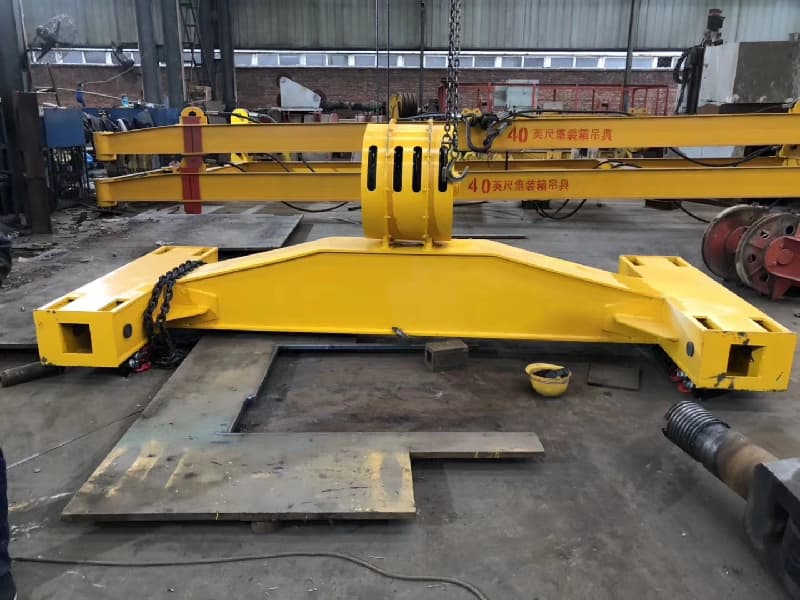
C-Hooks
Designed specifically for coil handling, C-hooks connect to coils of material for lifting and transport. The hook inserts into the coil’s inner diameter, and integrated motors can power hook rotation for additional load control. DONGQI’s C-hooks are engineered for safe, efficient coil handling in steel service centers, manufacturing facilities, and warehouses.
Gripping Lifters
Using either friction or pressure to hold loads, gripping lifters include tong grabs, coil grabs, and clamps. Their design generates scissor-type action to grip loads securely. DONGQI offers custom-engineered gripping solutions for various applications, from simple parallel jaw designs to complex multi-point systems.
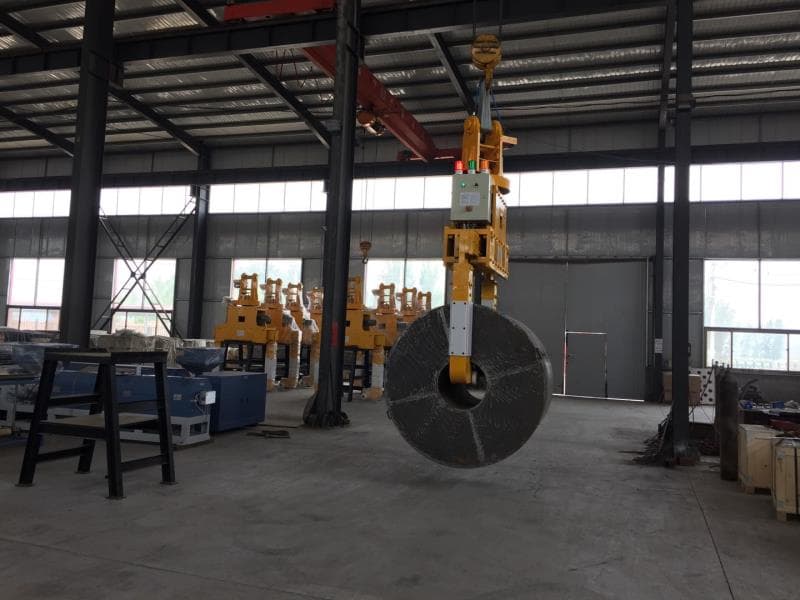
Vacuum Lifters and Magnets
Vacuum lifters utilize electric-powered extraction pumps and sealed pads to create suction for attachment. These are ideal for handling smooth, non-porous materials such as glass, metal sheets, and plastic panels.
Magnets—either with or without electrical power supply—lift, carry, or release flat or round ferrous objects. DONGQI can integrate lifting magnets into complete handling systems, with options for both close proximity and remote operation.
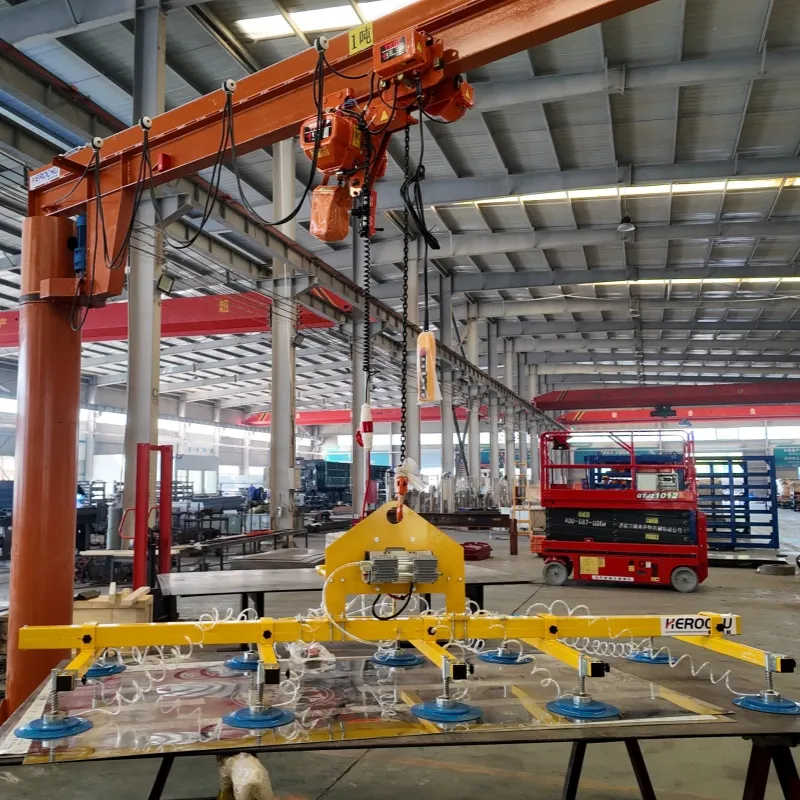
Grapples
For handling bulk materials such as coal, ore, gravel, and scrap, grapples provide efficient solutions. DONGQI’s QZ type double-girder overhead cranes with grabs, successfully delivered to Indonesian customers, demonstrate our capability in this area . These systems feature optimized grab structures, frequency conversion control for smooth operation, and robust construction for durability in demanding environments.
Specialized Devices
Other device types address specific needs:
- Sheet lifters: Using claws that wrap around sheet edges with integrated lips preventing fallout
- Pallet lifters: Incorporating forks to lift unitized loads from underneath
- Drum turners: Gripping and turning drums for filling and emptying
- Custom attachments: Engineered solutions for unique loads and applications
Part VII: Receiving and Putting Your DONGQI Device into Service
Initial Inspection
When your new below-the-hook device arrives from DONGQI Crane, conduct a thorough initial inspection before placing it into service. Verify that all required tagging and markings are present, confirming compliance with applicable standards. Review the documentation package, ensuring you have approval drawings, engineering designs, inspection reports, and certification documents for your records.
Installation Support
DONGQI provides comprehensive installation support to ensure your device is properly integrated into your lifting system. Depending on your needs and location, this support may include:
- Remote guidance: Our engineers provide detailed instructions and virtual assistance
- On-site supervision: For complex installations, we can send technical personnel to oversee the process
- Commissioning assistance: Help with initial setup and testing to ensure proper operation
Our goal is to ensure your device is up and running correctly, with minimal disruption to your operations.
Pre-Use Inspection Protocols
As with all overhead handling systems, operators should inspect below-the-hook attachments prior to lifting the first load each day. This includes verifying that all attachment clamps or brackets are in place and properly functioning and confirming that no damage has occurred during storage or between uses.
DONGQI provides detailed operation manuals and maintenance guides with every device, including specific inspection procedures and schedules tailored to the device type and application .
Training and Operator Support
Proper operator training is essential for safe and efficient use of below-the-hook devices. DONGQI offers comprehensive training programs, including:
- Operator training: Instruction on proper use, including load attachment, handling procedures, and safety protocols
- Maintenance training: Guidance on inspection procedures, lubrication requirements, and preventive maintenance
- Safety briefings: Review of critical safety features and emergency procedures
This training ensures that your team can operate the equipment safely and effectively, maximizing both productivity and safety.
Documentation Retention
Maintain all documentation throughout the device’s service life. These records prove compliance during inspections and provide essential information should questions arise about the device’s design or capacity. Should you ever need repair or recertification services, having original documentation streamlines the process significantly.
Part VIII: Maintenance and Long-Term Performance
Preventive Maintenance Programs
Regular maintenance is essential for long-term performance and safety of below-the-hook devices. DONGQI Crane provides comprehensive maintenance guidance with every device, including recommended inspection intervals, lubrication requirements, and wear limits .
Key maintenance practices include:
- Daily inspections: Visual checks before each use to identify obvious damage or wear
- Periodic inspections: Detailed examinations at regular intervals based on duty cycle and operating conditions
- Lubrication: Regular application of appropriate lubricants to moving parts
- Component replacement: Timely replacement of worn parts before they compromise safety
DONGQI also offers preventive maintenance services, with our technical team available to perform inspections and maintenance at your facility .
Service Life Expectations
With proper care and maintenance, DONGQI below-the-hook devices can provide decades of reliable service. Our QD series double girder overhead cranes, for example, are designed for 30–50 years of reliable performance . While below-the-hook devices may have different service life expectations based on duty cycle and application, our commitment to quality materials and workmanship ensures exceptional durability.
Factors affecting service life include:
- Duty cycle: Frequency and intensity of use
- Load characteristics: Consistency and severity of loads handled
- Operating environment: Exposure to temperature extremes, moisture, corrosive substances
- Maintenance quality: Regularity and thoroughness of inspections and maintenance
- Operator care: Proper use and avoidance of abuse or overloading
When to Consider Replacement
Even with excellent maintenance, all lifting devices eventually reach the end of their service life. Signs that replacement may be necessary include:
- Structural damage: Cracks, deformation, or significant wear in load-bearing components
- Excessive repairs: Frequent repairs indicating underlying deterioration
- Obsolescence: Inability to obtain replacement parts
- Changed requirements: New loads or applications beyond original design parameters
- Regulatory changes: Updated standards requiring features not present on older equipment
DONGQI’s technical team can assist in evaluating existing equipment and recommending appropriate actions, whether repair, refurbishment, or replacement.
Conclusion: The DONGQI Difference
The journey from need to delivery for a below-the-hook lifting device involves numerous steps, each critical to ensuring safe, efficient lifting operations. Understanding standards, navigating the ordering process, anticipating lead times, and knowing how to handle repairs all contribute to successful outcomes.
The overarching message for anyone considering a custom BTH device is clear: partner with an experienced, accredited manufacturer like DONGQI Crane. With nearly four decades of experience, a workforce of 3,600 professionals including 500 technical specialists, and successful project execution in over 96 countries, DONGQI brings unparalleled expertise to every project .
When you choose DONGQI, you receive:
- Standards-compliant design: Devices engineered to meet or exceed applicable international standards
- Comprehensive documentation: Complete records proving compliance and supporting safe operation
- Advanced manufacturing: State-of-the-art facilities and processes ensuring quality and precision
- Global experience: Proven success across industries and applications worldwide
- Customer-centric service: Responsive support throughout the equipment lifecycle
- Integrated solutions: Understanding of the entire lifting system, not just individual components
When loads hang in the balance—sometimes literally—the peace of mind that comes from expertly engineered and fabricated equipment is invaluable. The slight additional investment in proper procurement processes pays dividends in safety, compliance, and operational efficiency for the life of the equipment.
As you evaluate your lifting needs and consider custom below-the-hook solutions, remember that the goal extends beyond simply moving materials from point A to point B. True success means doing so safely, efficiently, and with complete confidence that your equipment will perform as designed every time it is called upon.
With DONGQI Crane as your partner and a thorough understanding of the procurement process, that level of performance is achievable.
Frequently Asked Questions
What types of below-the-hook devices does DONGQI offer?
DONGQI offers a comprehensive range of custom-engineered below-the-hook devices, including lifting beams, spreader beams, C-hooks for coil handling, gripping lifters, vacuum lifters, lifting magnets, grapples for bulk materials, sheet lifters, pallet lifters, drum turners, and specialized attachments for unique applications. Our engineering team can design solutions for virtually any lifting challenge.
How do I choose the right below-the-hook device for my application?
The right device depends on multiple factors: load weight, dimensions, shape, material characteristics, and your specific lifting environment. DONGQI provides free consultations to evaluate your needs and recommend the optimal solution. Our engineers consider all relevant factors to ensure safe, efficient handling.
Are DONGQI below-the-hook devices compliant with international standards?
Yes. DONGQI holds ISO9001 quality management system certification, ISO14001 environmental management system certification, and OHSAS18001 occupational health and safety certification . Our devices are designed and manufactured to meet applicable international standards, including ASME B30.20 and ASME BTH-1 requirements.
What is the typical lead time for a custom below-the-hook device?
Lead time varies based on project complexity. Standard products typically require 6-10 weeks from approval to delivery. Larger, more complex devices for heavy industrial applications may need 10-24 weeks for completion. DONGQI provides detailed timelines during project planning to ensure alignment with your schedule.
What after-sales support does DONGQI provide for below-the-hook devices?
DONGQI offers 24/7 after-sales service, including technical support, maintenance, and repairs . Our dedicated technical team responds quickly to issues and can provide on-site assistance when necessary. We also offer inspection services and preventive maintenance programs to extend equipment lifespan.
Can DONGQI repair or recertify existing below-the-hook devices from other manufacturers?
Yes. DONGQI’s repair and reconditioning services are available for equipment from all manufacturers. Our engineering team can inspect, repair, and test devices to ensure safe operation. For recertification, we require appropriate documentation or, in some cases, may proceed with reverse engineering with appropriate disclaimers.
How should I maintain my below-the-hook device for long-term performance?
Regular maintenance is essential. DONGQI provides comprehensive maintenance guides with every device, including inspection procedures, lubrication requirements, and wear limits. Key practices include daily visual inspections, periodic detailed examinations, regular lubrication, and timely replacement of worn parts. Our technical team is available to support your maintenance efforts.
What is the warranty period for DONGQI below-the-hook devices?
DONGQI provides warranties of 1–3 years on our products, depending on the device type and application . This warranty covers defects in materials and workmanship, providing added confidence in your equipment investment.
DONGQI Crane: Redefining Ease in Material Handling
