
31-Mar-2026
2026 Industrial Crane Selection White Paper: A Decision-Making Path from 3 Tons to 50 Tons
Introduction
Selecting an industrial crane is one of the most critical decisions a procurement professional can make. The right choice improves safety, boosts productivity, and reduces long-term operating costs. The wrong choice can lead to inefficiency, frequent breakdowns, and even safety risks.
At Dongqi Crane, we understand that every lifting application is unique. That is why we have created this white paper—to provide a clear, structured guide for selecting the right crane for loads ranging from 3 tons to 50 tons. Whether you are setting up a new facility or upgrading existing equipment, this decision-making path will help you navigate the options with confidence.
In the following pages, we will walk you through the full selection process: from understanding your operational requirements and facility constraints, to matching the correct crane type to your load range, to evaluating total cost of ownership and long-term serviceability. By the end, you will have a practical framework you can apply to your next crane procurement project.
Chapter 1: Understanding the Selection Framework
Before diving into tonnage, it is essential to establish a structured evaluation process. Too often, procurement professionals start by comparing prices without first clarifying the operational context. This can lead to either overspending on unnecessary features or—more dangerously—underspecifying critical components that will later cause downtime.
We recommend procurement professionals consider four key dimensions before issuing a request for quotation:
1. Lifting Capacity & Duty Cycle – What is the maximum weight the crane will ever need to lift? How often is the crane used? Duty cycle matters just as much as capacity: a 10-ton crane used for ten lifts per day has very different requirements than a 10-ton crane used for fifty lifts per hour.
2. Span & Lifting Height – What are the physical dimensions of your facility? Span is the distance between runway rails, which directly affects the structural requirements of the bridge. Lifting height determines whether a standard hoist is sufficient or if special reeving is required.
3. Application Environment – Is the crane installed indoors or outdoors? Will it operate in a foundry with high temperatures, a chemical plant with corrosive fumes, or a food processing facility requiring washdown construction? Environmental factors heavily influence material selection and protective coatings.
4. Control & Automation Needs – Does the operation require simple pendant control, remote operation for better visibility, or integration with a fully automated production line? As manufacturing becomes smarter, many buyers now consider future compatibility with Industry 4.0 systems.
By answering these questions early, you create a clear foundation for selecting the right crane type and configuration. This approach not only streamlines the supplier selection process but also ensures that all quotations you receive are based on comparable specifications.
Chapter 2: The Tonnage-Based Decision Path
The most common starting point for crane selection is lifting capacity. Below, we break down the decision path by tonnage range, highlighting the typical applications, recommended crane types, and key technical considerations for each.
3 to 10 Tons – Light to Medium Duty
For loads under 10 tons, the priority is typically flexibility, ease of operation, and cost-effectiveness. This range covers a wide variety of applications: maintenance shops, small assembly lines, warehousing, and light fabrication.
- Recommended Types:
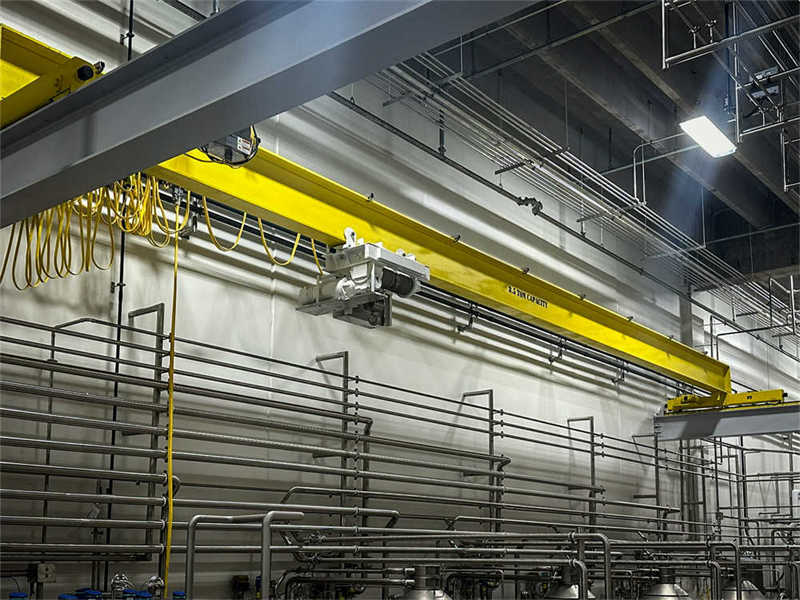
Single-girder overhead cranes and jib cranes are ideal for this range. A single-girder design uses one bridge beam with the hoist running along the bottom flange, offering a compact footprint and lower initial investment. For localized lifting needs—such as at a machining center or loading dock—a jib crane provides 180- or 360-degree coverage at a fraction of the cost of a full bridge crane. - Key Considerations:
- If the crane operates more than eight hours per day or performs more than 20 lifts per hour, consider upgrading to a dual-speed hoist or variable frequency drive (VFD) . This improves operator control, reduces load swing, and extends mechanical life.
- For facilities with multiple workstations, a light-duty workstation crane or monorail system may offer better coverage than multiple standalone units. These systems can serve several bays with a single investment.
- Dongqi Crane Insight:
Our LD series single-girder cranes are widely used in this category. They feature a modular design that simplifies installation and maintenance, with options for electric hoists from 3 tons to 10 tons. For customers requiring more frequent use, we offer an upgraded version with European-style hoists that provide smoother operation and lower energy consumption.
10 to 25 Tons – Medium to Heavy Duty
Once you exceed 10 tons, structural integrity and operational stability become more critical. This range is common in metal fabrication, automotive assembly, machinery manufacturing, and heavy equipment repair.
- Recommended Types:
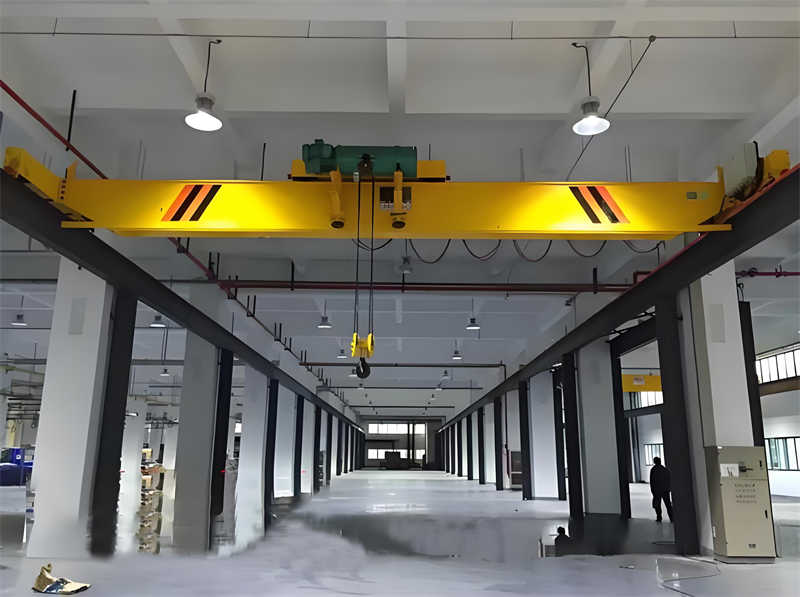
Double-girder overhead cranes are the standard choice here. A double-girder design uses two bridge beams, allowing the hoist to run on rails above the beams rather than below. This provides better load distribution, higher lifting heights (since the hoist sits above the beams), and allows for the use of more robust hoists. - Key Considerations:
- Duty class becomes a major factor. According to ISO or FEM standards, duty class is determined by the number of operating cycles and average load. For frequent use, choose at least FEM 3m (A5) . For heavy industrial applications with continuous operation, FEM 4m (A6) or higher is recommended. Underspecifying duty class is one of the most common—and costly—mistakes in crane procurement.
- Frequency control is highly recommended in this range. VFD control on both the hoist and travel motions provides smooth starts and stops, precise load positioning, and reduced mechanical stress on components. The additional upfront cost is typically recovered through reduced maintenance and increased productivity.
- Dongqi Crane Insight:
Our QD series double-girder cranes are engineered for this range. They combine robust steel construction with modular components, making them easy to maintain and upgrade. For customers who prioritize energy efficiency, we offer a European-style configuration with helical gearboxes and premium electric motors that deliver higher efficiency than traditional designs.
25 to 50 Tons – Heavy to Extra-Heavy Duty
At this level, the crane becomes a core production asset. Reliability, safety systems, and energy efficiency are paramount. Applications include heavy equipment manufacturing, steel service centers, power plant maintenance, and large-scale logistics.
- Recommended Types:
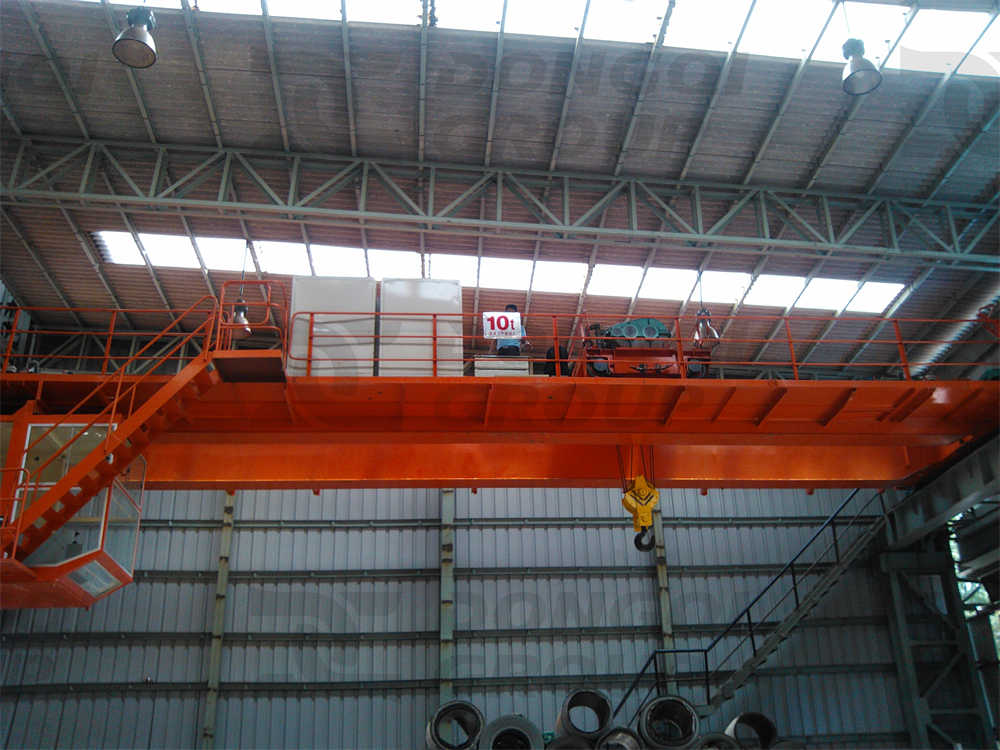
Double-girder cranes remain the primary choice, but for very heavy loads or extreme spans, European-style low-headroom cranes offer significant advantages. These designs use compact hoists and optimized girder profiles to maximize usable lifting height within the same building envelope. In many cases, a European-style crane can provide 10–20% more lifting height than a traditional design of the same capacity. - Key Considerations:
- Safety features must be prioritized. Overload limiters are mandatory in most jurisdictions, but for this tonnage range we also recommend emergency brakes, anti-collision systems, and load moment indicators for cranes with long spans. If the crane operates near personnel or sensitive equipment, consider adding proximity sensors and audible/visual warnings.
- Energy efficiency becomes a significant factor in operating costs. Regenerative drives can capture energy during braking and feed it back into the facility grid. LED lighting reduces power consumption and maintenance frequency. For cranes operating continuously, these features can reduce annual energy costs by 15–30%.
- Installation planning is critical. For cranes above 30 tons, the supporting steel structure—including runways, columns, and foundations—must be carefully evaluated. Early site assessment by a qualified engineering team is essential to avoid costly structural modifications later.
- Dongqi Crane Insight:
Our European-style E-series cranes are designed specifically for heavy-duty applications. They feature compact hoist geometry, precision-machined gearboxes, and smart control integration that allows for remote monitoring and predictive maintenance. We have delivered E-series cranes for applications up to 50 tons with spans exceeding 30 meters, and in each case, the combination of high performance and low headroom provided measurable operational advantages.

Chapter 3: Beyond Tonnage – Matching the Crane to the Application
Tonnage is only the starting point. Two cranes with the same lifting capacity can perform very differently depending on a range of application-specific factors. The table below summarizes the most important factors to evaluate:
| Factor | Consideration |
|---|---|
| Span | Larger spans require heavier end carriages and stiffer bridge beams to maintain alignment and prevent excessive deflection. Always provide accurate runway measurements and consider consulting a structural engineer for spans exceeding 25 meters. |
| Lifting Height | Higher lifts may require reeving changes (more falls of rope) or specialized hoist drums. In double-girder cranes, lifting height is a function of the distance between the hook and the bridge structure—low-headroom designs maximize this. |
| Duty Class | Under-specifying duty class leads to premature wear of wheels, bearings, motors, and wire rope. Use actual working cycles per hour—not just maximum load—to determine the appropriate class. A crane that lifts 10 tons 30 times per hour may need a higher duty class than one that lifts 30 tons 5 times per hour. |
| Control Type | Pendant, remote, or cab? Remote control improves operator safety and visibility but requires battery management and reliable signal coverage. Cab control is preferred for very high duty cycles or when the operator needs to move with the load. |
| Environmental Factors | Foundries require heat-resistant insulation and cooling systems; food processing requires stainless steel components and washdown-rated enclosures; outdoor cranes need weather-resistant coatings and corrosion protection. Dusty environments may require sealed motors and self-cleaning wheels. |
Chapter 4: Total Cost of Ownership – A Procurement Perspective
As a procurement professional, you are likely evaluated not only on purchase price but on total cost of ownership. When comparing crane options, we recommend analyzing the following components over a 10- to 15-year horizon:
- Energy Consumption
European-style hoists often consume 20–30% less energy than traditional designs due to higher-efficiency motors, helical gearboxes, and variable frequency drives. For a 20-ton crane operating 2,000 hours per year, this can translate to thousands of dollars in annual energy savings. - Maintenance Costs
Modular designs reduce spare parts inventory and downtime. When components are standardized across multiple cranes, maintenance teams can stock fewer parts and complete repairs faster. Conversely, cranes with proprietary components may require expensive factory-authorized service and long lead times for replacement parts. - Installation Time
Pre-assembled and pre-tested components can cut installation time by weeks. This reduces facility disruption and allows production to resume sooner. Some suppliers offer modular rail systems that can be installed without welding, further speeding the process. - Lifespan and Residual Value
A properly specified crane with a higher initial cost may outlast a lower-cost alternative by 10–15 years. Additionally, cranes from reputable manufacturers retain better resale value if operations change or facilities are upgraded.
At Dongqi Crane, we provide detailed TCO comparisons as part of our quotation process. We believe that procurement decisions should be based on lifecycle economics, not just initial capital expenditure.
Chapter 5: Installation, Service, and Long-Term Support
Even the best crane will underperform if not properly installed and maintained. When evaluating suppliers, consider their capabilities in the following areas:
- Pre-installation Support
A reliable supplier will conduct a site survey to verify runway alignment, column capacity, and electrical infrastructure. They will also assist with obtaining any required permits or inspections. - Installation and Commissioning
Professional installation ensures that the crane is aligned, calibrated, and tested before it enters service. Some suppliers offer turnkey solutions that include the crane, runways, and electrical work under a single contract. - Spare Parts Availability
Ask about lead times for critical spare parts such as hoist motors, gearboxes, and control boards. Suppliers with local warehousing can provide faster support than those who ship from overseas. - Preventive Maintenance Programs
Regular inspections and preventive maintenance extend equipment life and reduce the risk of unexpected breakdowns. Many suppliers offer service contracts that include periodic inspections, lubrication, and load testing.
At Dongqi Crane, we operate a global service network and maintain regional spare parts warehouses to ensure prompt support. Our preventive maintenance programs are tailored to the specific duty cycle and operating conditions of each crane.
Chapter 6: Common Mistakes and How to Avoid Them
Over years of working with procurement professionals across industries, we have observed several recurring pitfalls. Here are the most common—and how to avoid them:
Mistake 1: Selecting Based on Price Alone
The lowest-priced crane often carries the highest lifecycle cost due to inferior components, higher energy consumption, and limited service support. Solution: Evaluate total cost of ownership, not just purchase price.
Mistake 2: Overlooking Duty Class
Buying a crane with insufficient duty class leads to premature wear and unplanned downtime. Solution: Calculate actual working cycles and select a duty class with a safety margin.
Mistake 3: Ignoring Future Needs
A crane that meets today’s needs may be inadequate in three years if production volumes increase. Solution: Consider future scalability—can the hoist be upgraded? Is the runway designed for a larger capacity?
Mistake 4: Inadequate Site Preparation
In some cases, buyers assume existing runways can support a new crane without verification. Solution: Conduct a structural assessment before ordering.
Mistake 5: Neglecting Operator Training
Even the most advanced crane is unsafe if operators are not properly trained. Solution: Include operator and maintenance training in the procurement package.
Chapter 7: Making the Final Decision – A 7-Step Checklist
To bring all the factors together, here is a simple checklist for your next crane procurement:
- Define the maximum load – Verify it with actual production data, not just future speculation.
- Calculate the duty cycle – How many lifts per hour? How many hours per day? This determines duty class and component sizing.
- Measure the facility – Span, runway length, and available height. If possible, obtain certified drawings.
- Identify environmental conditions – Temperature, moisture, dust, corrosive elements, or washdown requirements.
- Select crane type – Single-girder, double-girder, or European-style. Match to both load range and application.
- Specify controls and safety features – Remote, cab, overload protection, anti-collision, etc.
- Request lifecycle cost analysis – Compare not only price but energy, maintenance, and expected lifespan.
Conclusion: Partner with Expertise
Choosing an industrial crane is a complex process, but with the right framework, it becomes manageable. At Dongqi Crane, we have been supplying reliable lifting solutions for decades. Our engineering team works alongside procurement professionals to ensure every crane is perfectly matched to its application—from 3-ton jib cranes to 50-ton heavy-duty overhead systems.
We do not just sell cranes. We provide lifelong lifting solutions backed by technical support, spare parts availability, and service networks.
For personalized guidance or to request a detailed quotation, contact our team today. Let us help you make a decision that serves your operations for years to come.
Dongqi Crane – Lifting Your Business Forward
Disclaimer: This white paper is intended as a general guide. Actual crane selection should always be conducted with professional engineering input based on site-specific conditions. Specifications and recommendations may vary by jurisdiction and application.
