
13-Apr-2026
5 Advantages and 3 Critical Risks of Sourcing Cranes from China
An Honest Procurement Guide from DONGQI CRANE for Global Industrial Buyers
Every year, thousands of factories, warehouses, ports, and construction sites around the world face the same procurement decision: Should we source our overhead crane or gantry crane from a local supplier, or should we import from China?
The Chinese crane industry has grown into the world’s largest manufacturing base for lifting equipment. Chinese manufacturers now export to over 100 countries, with products ranging from simple 1-ton workshop hoists to massive 500-ton shipyard gantry cranes. The appeal is obvious—competitive pricing, vast production capacity, and increasingly sophisticated technology.
But smart procurement requires more than chasing the lowest price. It requires understanding both the genuine advantages and the real risks of cross-border equipment sourcing. As a Sino-New Zealand joint venture with over 40 years of manufacturing experience and products operating in 96+ countries, DONGQI CRANE has witnessed both sides of this equation. We have seen clients achieve remarkable value, and we have seen others stumble into costly pitfalls that could have been avoided.
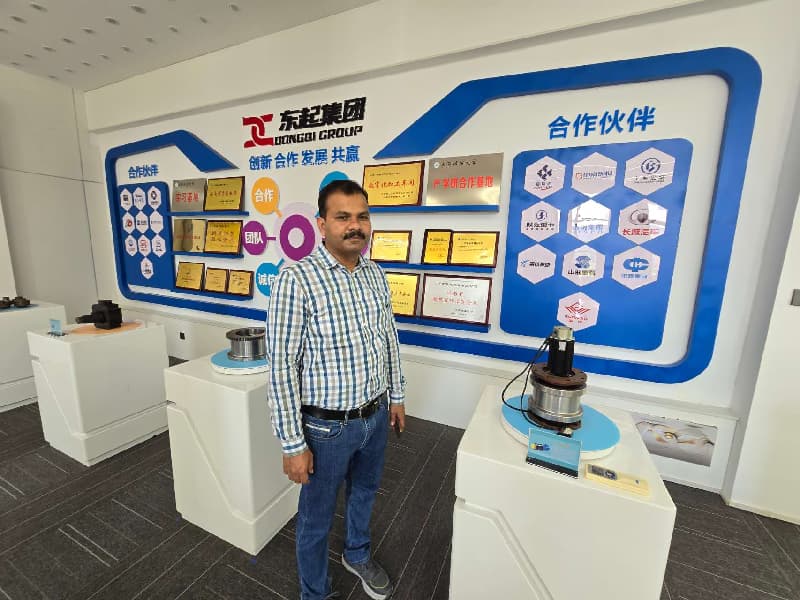
This guide offers an unvarnished look at sourcing cranes from China—the five compelling reasons why it makes strategic sense, and the three critical risks you must actively manage. Our goal is not to convince you to buy from China, but to help you buy intelligently if you choose to do so.
Part 1: Five Compelling Advantages of Sourcing Cranes from China
Advantage 1: Significant Cost Competitiveness Without Sacrificing Core Quality
The most frequently cited reason for sourcing from China is price, and the differential is real. Chinese-manufactured cranes typically offer savings of 20% to 40% compared to equivalent equipment from European, North American, or Japanese suppliers.
This cost advantage stems from several structural factors, not from cutting corners on safety or materials. China’s crane manufacturing industry is concentrated in regions like Changyuan, Henan Province—known as the “Cradleland of Cranes”—where DONGQI CRANE operates its 240,000-square-meter facility. This industrial clustering creates an efficient ecosystem of specialized component suppliers, skilled labor pools, and shared logistics infrastructure that significantly reduces production costs.
Additionally, Chinese manufacturers benefit from economies of scale that few Western competitors can match. With an annual production capacity exceeding 10,000 crane sets, DONGQI CRANE achieves purchasing efficiencies on steel, motors, gearboxes, and electrical components that translate directly to client savings.
What this means for you: A 20-ton double girder overhead crane that might cost $60,000–$80,000 from a European manufacturer can often be sourced from a reputable Chinese supplier for $35,000–$50,000 with comparable core specifications. For multi-crane projects or facility expansions, these savings multiply into substantial capital that can be redirected to other operational priorities.
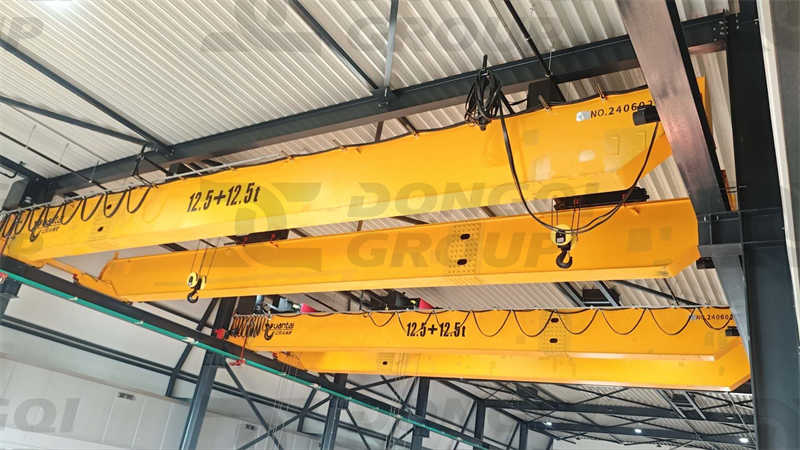
Important nuance: The lowest price is rarely the best value. Chinese manufacturers operate across a wide quality spectrum. The key is identifying suppliers who achieve cost efficiency through scale and operational excellence rather than through material substitution or quality compromises. At DONGQI CRANE, our Sino-New Zealand joint venture structure ensures we maintain European design standards while leveraging Chinese manufacturing efficiency—a combination that delivers genuine value rather than simply the lowest invoice price.
Advantage 2: Extensive Customization Capabilities and Engineering Flexibility
Many first-time buyers assume Chinese manufacturers only produce standardized, off-the-shelf equipment. The reality is quite different. Leading Chinese crane manufacturers possess substantial engineering depth and routinely deliver highly customized solutions for specialized applications.
Whether you require a crane for a chemical plant with explosion-proof requirements, a steel mill with extreme heat and dust conditions, a cleanroom with particulate control specifications, or a port with automated container handling needs, Chinese manufacturers can engineer to your exact requirements. This customization extends beyond the crane itself to include control systems integration, safety feature configuration, and compatibility with existing facility infrastructure.
At DONGQI CRANE, our R&D center includes dedicated design teams for bridge cranes, gantry cranes, hoists, and electrical control systems. With over 60 senior technical specialists, we routinely develop application-specific solutions that address unique operational challenges. Our QDX series heavy-duty double girder cranes, for example, are engineered for loads from 5 tons to over 500 tons with fully customizable spans, lift heights, and duty classifications.
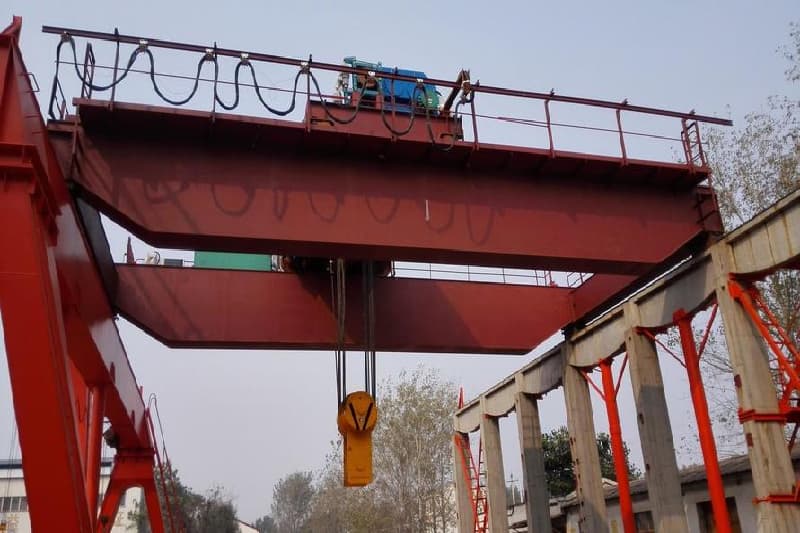
What this means for you: You are not forced to adapt your operation to fit a standard crane. The crane is adapted to fit your operation. This flexibility is particularly valuable for industries with specialized material handling requirements—foundries, automotive assembly lines, paper mills, waste-to-energy plants, and aerospace manufacturing facilities.
Advantage 3: Integrated Supply Chain and Component Quality Control
A modern overhead crane is an integrated system comprising structural steel, hoisting mechanisms, motors, gearboxes, brakes, wire ropes, electrical controls, and safety devices. The quality of the finished crane depends on both the quality of these individual components and how well they are integrated.
China’s mature crane manufacturing ecosystem means that leading manufacturers maintain direct relationships with premium global component suppliers. At DONGQI CRANE, we partner with SEW-EURODRIVE, NORD, ABB, Siemens, and Schneider Electric to ensure our cranes incorporate industry-leading motors, drives, and control systems. These are the same component brands specified by top-tier European and American crane builders.
Furthermore, vertical integration within Chinese manufacturing facilities often exceeds that of Western counterparts. At DONGQI CRANE’s 240,000-square-meter production complex, we control the entire manufacturing process—steel plate cutting and preparation, welding and structural fabrication, machining of critical components, surface treatment and painting, electrical panel assembly, and final assembly and load testing. This vertical integration ensures quality consistency and traceability throughout the production process.
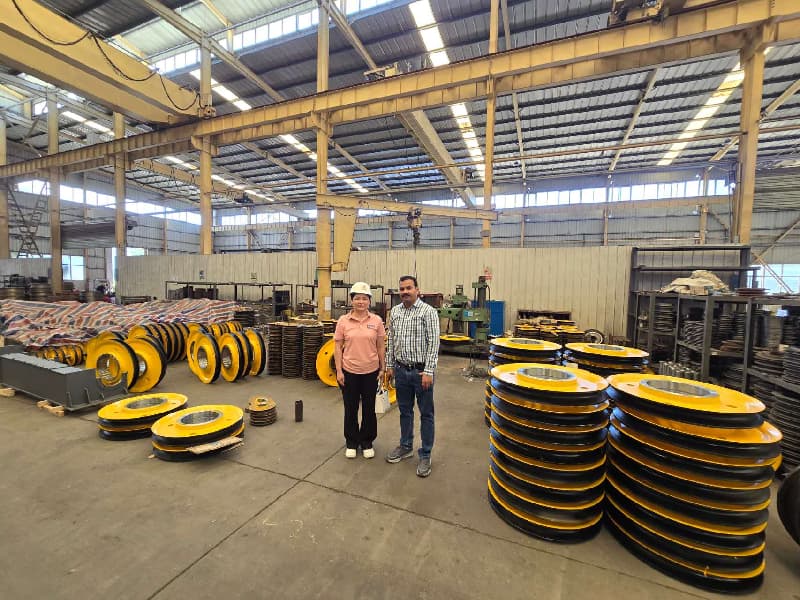
What this means for you: You can specify a crane with a SEW gearmotor, Siemens controls, and FEM-standard structural design—and receive it at a price point that reflects Chinese manufacturing economics rather than European assembly costs. The components that matter most for reliability and performance are identical to those in premium Western equipment.
Advantage 4: Expanding Global Certification and Compliance Capabilities
A decade ago, one legitimate concern about Chinese crane imports was uncertainty around international certification compliance. That landscape has transformed dramatically. Today’s leading Chinese crane manufacturers routinely achieve and maintain ISO 9001 (quality management), ISO 14001 (environmental management), ISO 45001 (occupational health and safety), and CE certification for European market access.
Beyond these foundational certifications, experienced Chinese exporters have developed sophisticated capabilities in navigating country-specific compliance requirements. Whether your destination market requires SNI certification for Indonesia, CR certification for Vietnam, TISI for Thailand, DOSH for Malaysia, SASO for Saudi Arabia, or AS 1418 compliance for Australia, established manufacturers maintain documentation systems and testing protocols to support these certifications.
DONGQI CRANE holds comprehensive international certifications. Our technical documentation team ensures that every crane shipment includes complete certification packages—material test certificates, weld procedure specifications, load test reports, and geometric survey documentation—that satisfy local regulatory authorities and insurance requirements.
What this means for you: The compliance risk that once made Chinese crane sourcing daunting has been substantially mitigated when working with qualified suppliers. The key is verifying certification capabilities before placing an order, not discovering gaps during customs clearance.
Advantage 5: Shorter Lead Times and Reliable Production Scheduling
For many industrial buyers, project timelines are as critical as equipment pricing. A crane that arrives three months late can delay an entire facility opening or production line startup, generating costs that dwarf any initial purchase savings.
Chinese crane manufacturers, benefiting from integrated supply chains and substantial production capacity, typically offer lead times that are competitive with or shorter than Western alternatives. Standard configuration overhead cranes can often be produced and shipped within 30–60 days. Even highly customized heavy-duty cranes rarely exceed 90–120 days from order confirmation to ex-factory delivery.
This production velocity stems from several factors: the concentration of component suppliers within China’s industrial regions, the availability of skilled production labor operating across multiple shifts, and the scale of manufacturing facilities designed for high-volume output. At DONGQI CRANE, our annual capacity of over 10,000 crane sets means we maintain production scheduling flexibility that smaller manufacturers cannot match.
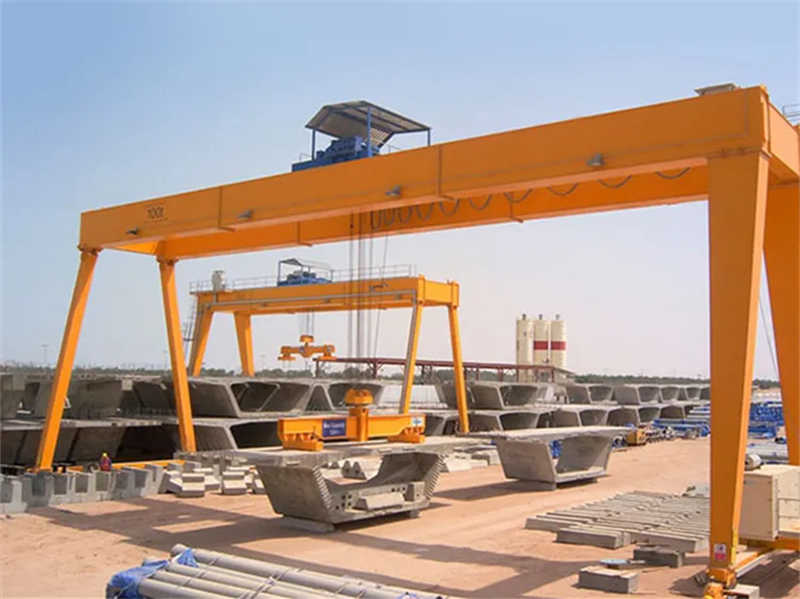
What this means for you: When project schedules are tight, Chinese sourcing can offer a compelling time-to-delivery advantage. However, this advantage depends entirely on working with a manufacturer that maintains genuine production capacity and disciplined scheduling—not a trading company that merely sources from third-party factories.
Part 2: Three Critical Risks You Must Actively Manage
The advantages of sourcing cranes from China are substantial and verifiable. But no honest assessment can ignore the risks. The following three risk categories are real, and they have caused genuine problems for unprepared buyers. The good news is that each risk can be effectively managed through proper due diligence and supplier selection.
Risk 1: Quality Variability Across the Supplier Spectrum
The Risk Explained:
China’s crane manufacturing industry spans an enormous quality range. At one end are manufacturers like DONGQI CRANE—Sino-foreign joint ventures with European design standards, premium component partnerships, and ISO-certified quality systems. At the other end are small workshops producing non-compliant equipment with substandard materials, undocumented welding procedures, and counterfeit components.
The price difference between these extremes can be substantial—sometimes 30% to 50%. For a buyer reviewing quotes remotely, distinguishing between a genuinely value-engineered crane and a dangerously underbuilt one is extremely difficult without proper due diligence.
Specific quality risks include:
- Structural steel substitution: Using lower-grade steel plate than specified, compromising long-term structural integrity
- Welding quality issues: Incomplete penetration, porosity, or lack of qualified weld procedures
- Component counterfeiting: Branded components (SEW, Siemens, Schneider) that are actually counterfeit copies
- Surface preparation shortcuts: Inadequate shot blasting and painting leading to premature corrosion
- Electrical system deficiencies: Undersized wiring, poor panel layout, inadequate protection ratings
How DONGQI CRANE Mitigates This Risk:
- Full traceability: All structural steel is sourced from certified mills with material test certificates provided in final documentation
- Qualified welding: Our welders are certified to international standards; all critical welds undergo non-destructive testing
- Genuine components: Direct partnerships with SEW, NORD, ABB, Siemens, and Schneider ensure authentic components with full manufacturer warranties
- Surface treatment excellence: Automated shot blasting lines and multi-layer painting systems ensure corrosion protection suitable for global operating environments
- Factory transparency: We welcome client inspections at our 240,000-square-meter facility and provide video documentation of production processes
Your Risk Management Checklist:
- [ ] Verify the manufacturer’s ISO 9001 certification status and scope
- [ ] Request material test certificate samples from recent shipments
- [ ] Confirm component brand partnerships directly with the component manufacturers
- [ ] Conduct a factory audit (in-person or third-party) before placing large orders
- [ ] Request references from clients in your region or industry
Risk 2: After-Sales Support and Spare Parts Availability
The Risk Explained:
A crane is a long-term operational asset with a typical service life of 15–25 years. During that lifespan, it will require routine maintenance, occasional repairs, and eventual component replacement. The most common complaint from buyers who sourced poorly from China is not about the initial equipment quality—it is about what happens when something goes wrong two or three years after installation.
The specific after-sales risks include:
- No local technical support: The manufacturer has no representative in your country, leaving you to troubleshoot problems remotely
- Spare parts unavailability: Critical components cannot be sourced locally and must be ordered from China with long lead times
- Documentation gaps: Incomplete or poorly translated manuals make maintenance difficult for local technicians
- Warranty enforcement challenges: When problems arise, the manufacturer is unresponsive or disputes responsibility
- Obsolescence issues: Proprietary components that cannot be replaced with standard industrial alternatives
For a production-critical crane, even a few days of downtime can cost more than the entire purchase price in lost output. This is the hidden cost that transforms a “bargain” crane into an expensive liability.
How DONGQI CRANE Mitigates This Risk:
- Standardized components: We design cranes using globally available industrial components (SEW, NORD, Siemens, Schneider) that can be serviced by local industrial technicians
- Comprehensive documentation: Every crane ships with detailed operation manuals, maintenance schedules, electrical schematics, and spare parts catalogs in English and local languages as required
- Remote diagnostic support: Our technical team provides video-assisted troubleshooting and diagnostic guidance
- Strategic spare parts: We recommend critical spare parts packages at the time of purchase to ensure immediate availability for high-wear components
Your Risk Management Checklist:
- [ ] Confirm the manufacturer has a verifiable local presence in your country or region
- [ ] Request the recommended spare parts list and pricing before ordering the crane
- [ ] Verify that major components (motors, drives, bearings) are standard industrial brands available locally
- [ ] Understand the warranty claim process and response time commitments
- [ ] Ask for contact information of clients in your region who can share service experience
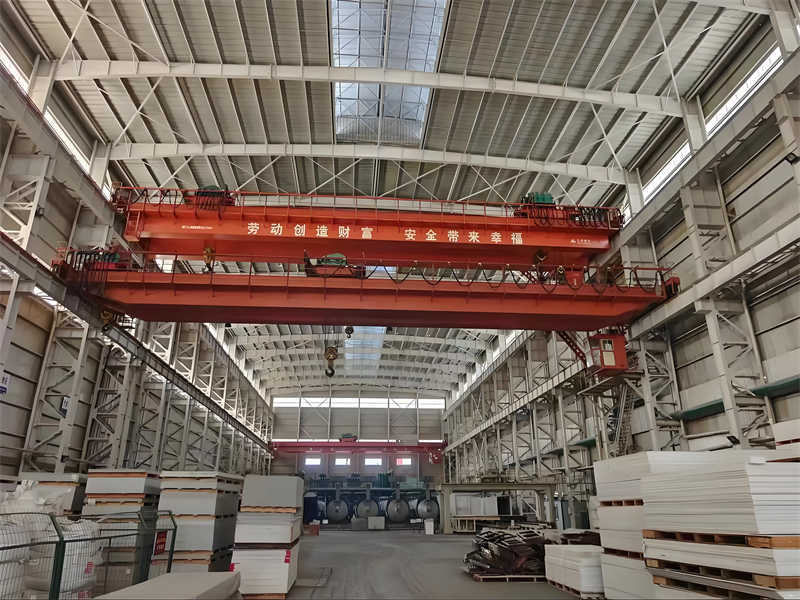
Risk 3: Communication Barriers and Specification Misalignment
The Risk Explained:
Even with perfect manufacturing quality and robust after-sales support, a crane project can fail if the equipment delivered does not match what the buyer actually needed. Specification misalignment is surprisingly common in international crane procurement, and language barriers compound the problem.
Consider this scenario: A buyer requests a “10-ton overhead crane” without specifying work duty classification. The Chinese manufacturer quotes a light-duty M3 crane suitable for occasional maintenance use. The buyer accepts the attractive price, but the crane is installed in a production environment requiring continuous operation (M6 duty). Within months, the gearbox fails, the structure shows fatigue cracking, and the manufacturer denies warranty coverage because the crane was operated beyond its design parameters.
This is not a quality failure—it is a specification and communication failure. Both parties bear responsibility: the buyer for not providing complete requirements, and the supplier for not probing to understand the true application.
Common communication-related risks include:
- Incomplete technical specifications leading to under-specified equipment
- Terminology differences between regional engineering standards (FEM vs. CMAA vs. ISO)
- Translation errors in technical documentation and operating instructions
- Assumptions about standard practices that differ between regions
- Time zone and language barriers slowing problem resolution
How DONGQI CRANE Mitigates This Risk:
- Dedicated international sales engineers: Our global sales team includes technical specialists who understand both Chinese manufacturing capabilities and international engineering standards
- Comprehensive RFQ process: We do not quote based on incomplete information. Our standard inquiry process probes for span, lift height, work duty, operating environment, electrical specifications, and certification requirements before generating a proposal
- Detailed technical proposals: Every DONGQI CRANE quotation includes a complete technical specification document that becomes part of the commercial contract, eliminating ambiguity about what is being supplied
- Design review milestone: For complex projects, we provide 3D models and detailed engineering drawings for client approval before fabrication begins
- Multilingual documentation: Manuals, schematics, and certification documents are provided in English as standard, with additional languages available upon request
Your Risk Management Checklist:
- [ ] Provide complete technical requirements using the checklist in Section 3 of this guide
- [ ] Confirm the manufacturer understands your local certification and regulatory requirements
- [ ] Require a detailed technical specification document as part of the commercial proposal
- [ ] Review and approve critical design documents before fabrication begins
- [ ] Establish a single point of contact on both sides to manage communications
Part 3: The DONGQI CRANE Difference—Managing Risk Through Partnership
The risks outlined above are real, but they are not inevitable. They are risks associated with sourcing from unqualified suppliers without proper due diligence. When you partner with an established manufacturer that has invested in quality systems, global support infrastructure, and technical communication capabilities, these risks are actively managed rather than passively accepted.
DONGQI CRANE was founded as a Sino-New Zealand joint venture specifically to bridge the gap between Chinese manufacturing efficiency and international quality expectations. Our 40+ years of manufacturing experience, 240,000-square-meter production facility, 2,000+ sets of advanced equipment, and 3,600-strong workforce represent a commitment to industrial excellence that distinguishes us from trading companies and small workshops.
Our commitment to managing your sourcing risk includes:
| Risk Area | DONGQI CRANE Mitigation |
|---|---|
| Quality Variability | ISO 9001/14001/45001 certified; full material traceability; SEW/NORD/Siemens premium components; automated production lines with COORD3 CMM quality inspection |
| After-Sales Support | Local agencies in 8+ countries; standardized industrial components; comprehensive English documentation; remote diagnostic support; strategic spare parts programs |
| Communication Barriers | Technical sales engineers; detailed specification review; design approval milestone; multilingual capabilities |
| Certification Compliance | CE, ISO, and country-specific certification support; complete documentation packages for customs and local authorities |
| Delivery Reliability | 10,000+ annual capacity; integrated supply chain; documented on-time delivery performance |
Conclusion: Making an Informed Sourcing Decision
Sourcing cranes from China offers genuine advantages: compelling cost competitiveness, extensive customization capabilities, premium component integration, robust certification support, and reliable production scheduling. For many industrial buyers, these advantages translate into substantial capital savings and operational flexibility that would be difficult to achieve with local sourcing alone.
However, these advantages are only realized when working with qualified, established manufacturers who have invested in the systems and infrastructure required to serve international clients effectively. The lowest-price supplier is rarely the best-value partner.
At DONGQI CRANE, we encourage every potential buyer to conduct thorough due diligence—including factory visits, reference checks, and detailed technical reviews—before making a sourcing decision. A crane is a long-term operational asset. The time invested in supplier qualification will pay dividends throughout the equipment’s 15–25 year service life.
Ready to explore sourcing options with a qualified Chinese manufacturer?
[Contact DONGQI CRANE’s international sales team to discuss your project requirements and receive a detailed technical and commercial proposal.]
DONGQI CRANE: Your Trusted Partner for Overhead Cranes, Gantry Cranes, and Custom Lifting Solutions Since 1985.
ISO 9001 • ISO 14001 • ISO 45001 • CE Certified
240,000m² Manufacturing Facility • 10,000+ Annual Capacity • Exports to 96+ Countries
