
6-May-2026
From Inquiry to Operation: The Complete Guide to Overhead Crane Procurement and Installation in Remote Locations
Introduction: The Project That Keeps You Awake at Night
There is a particular kind of project that separates experienced procurement managers from novices. It is not the crane ordered for a factory in an established industrial park with paved roads, reliable power, and a crane service company twenty minutes away. It is the crane destined for a new mine at 4,200 meters above sea level. Or the gantry crane for a hydroelectric dam construction site accessible only by a seasonal gravel road. Or the overhead crane for an oil and gas processing facility located six hundred kilometers from the nearest town with a hardware store.
These projects share a set of challenges that compound each other. Logistics mistakes that cause a two-day delay in an urban setting can cause a two-month delay in a remote location. Installation errors that are easily corrected with a local technician become major crises when the only qualified personnel are a continent away. Spare parts that are overnight-shipped in a developed region sit in customs for weeks on a frontier site, while production stagnates.
At Dongqi Crane, we have been delivering lifting solutions to remote and challenging locations for over two decades. Our cranes operate in the copper mines of the Andes, the oil fields of Central Asia, the cement plants of West Africa, and the hydropower stations of Southeast Asia. The accumulated experience has shaped not only how we design our cranes but how we plan, package, ship, install, and support them—a comprehensive methodology we call the Remote Site Delivery System.
This guide distills that experience into a practical, step-by-step framework for any procurement professional, project manager, or site engineer facing the prospect of sourcing a crane for a location far from established infrastructure. It covers everything from the initial inquiry to long-term after-sales support, with specific recommendations that can reduce risk, control cost, and ensure that your crane arrives, gets installed, and operates reliably—no matter where your site is located.
1. Understanding the Stakes: Why Remote Procurement Is Fundamentally Different
Before a purchase order is ever issued, the procurement team must internalize a critical truth: a remote-site crane project is not simply a standard crane purchase with a longer delivery route. It is a fundamentally different risk profile that demands a fundamentally different approach to specification, supplier selection, and project management.
1.1 The Compounding Effect of Distance
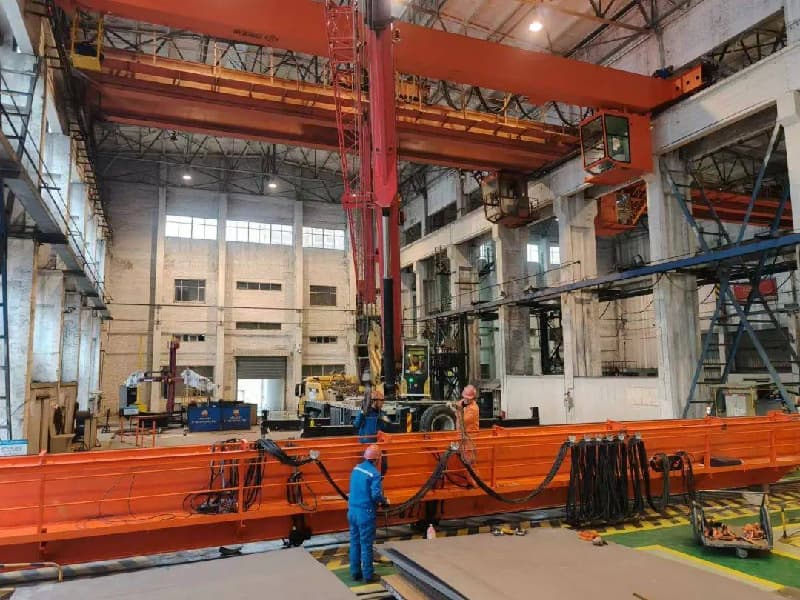
Consider a hypothetical but realistic scenario. A mining company in Central Asia orders a 50-ton double-girder overhead crane for a processing plant. The crane is manufactured in an industrial center, shipped by rail to a regional hub, then transported by truck over 800 kilometers of partially unpaved roads to the mine site. A team of installation technicians must fly in, acclimatize to an altitude of 3,500 meters, and erect the crane using a mobile crane that was itself brought to the site at considerable expense.
If the crane arrives with a single critical component missing, incorrectly specified, or damaged, the installation crew sits idle. The mobile crane rental clock continues to run. The project schedule slips. And the cost of resolving the issue—express-freighting a replacement part through customs, organizing last-mile transport, and remobilizing the installation team—can equal a significant percentage of the crane’s original purchase price.
This compounding effect means that the cost of errors in remote-site procurement is orders of magnitude higher than in well-served locations. The mitigation lies not in accepting this risk as inevitable but in selecting a crane supplier whose entire process—from engineering to packaging to documentation to support—is designed to prevent errors before they leave the factory gate.
1.2 Common Procurement Pitfalls in Remote Projects
Experience across dozens of remote installations has taught us to recognize a recurring set of pitfalls:
- Under-specifying environmental requirements. A crane rated for -10°C minimum operating temperature will not function reliably when the site winter drops to -35°C. Steel grades change, lubricants solidify, electrical components fail.
- Ignoring site access constraints. A fully assembled bridge girder that is 25 meters long cannot negotiate hairpin mountain roads. It must be segmented for transport and bolted together on site.
- Overlooking power quality issues. Remote sites often run on generator power or weak grids with significant voltage fluctuations. Standard crane electrical systems may malfunction unless designed with appropriate tolerances or conditioning equipment.
- Assuming installation expertise is available locally. Many remote sites have no crane-specific mechanical or electrical technicians. The installation plan must assume that the local workforce has general skills and provide the specialized knowledge through either an on-site specialist or exceptionally detailed remote guidance.
- Neglecting spare parts and consumables strategy. A remote site cannot call a bearing supplier for next-day delivery. It needs a carefully planned initial spare parts inventory on hand from day one.
Each of these pitfalls is avoidable. The remainder of this guide explains how.
2. Phase One: Inquiry and Specification—Getting It Right Before a Single Bolt Is Ordered
The foundation of a successful remote-site crane installation is laid long before manufacturing begins. It is laid in the quality and completeness of the inquiry documentation and the rigor of the pre-purchase technical review.
2.1 The Extended Working Condition Analysis
For standard crane procurement, we recommend completing our Working Condition Analysis Worksheet, which captures core parameters such as capacity, span, lift height, duty class, and operating speeds. For remote-site procurement, this worksheet must be extended to capture additional data points that are irrelevant in a suburban factory but critical at a mine or dam site:
Site accessibility and geography:
- What is the nearest major city with customs clearance capability?
- What are the road, rail, or waterway connections from the port of entry to the site?
- Are there any seasonal access restrictions (monsoon, snow, mud)?
- What is the maximum allowable vehicle length, width, height, and axle loading on the access route?
- Is there a bridge or tunnel with weight or dimensional limitations?
Site infrastructure:
- What is the source of electrical power (grid, generator, hybrid)? What are the voltage, frequency, and stability characteristics?
- Is there an existing overhead crane or mobile crane on site that can assist with unloading and installation? What is its capacity?
- What is the altitude of the site? (Altitude above 1,000 meters affects motor cooling and requires derating.)
- What foundation or runway rail system exists or will be constructed? Who is responsible for runway installation, and to what standard will it be built?
Environmental extremes:
- Minimum and maximum ambient temperatures (with historical extremes, not just averages).
- Maximum wind speeds for outdoor installations.
- Seismic zone classification per applicable building codes.
- Presence of corrosive agents: salt, acid rain, volcanic sulfur, industrial gases.
- Dust characteristics: particle size, conductivity, abrasiveness.
Manpower and support availability:
- Are there qualified electricians and millwrights on site? In what numbers?
- What languages do the local workforce speak? Are multilingual technical documents or translators required?
- Is reliable internet connectivity available for remote video support?
Dongqi Crane’s application engineering team uses this extended data to build a site-specific technical specification that addresses not just the lifting task but the entire operational context.
2.2 Supplier Evaluation Criteria for Remote Projects
When evaluating crane suppliers for a remote installation, procurement criteria must be weighted differently than for a conventional domestic purchase:
- Remote delivery track record: Ask for references from projects of similar logistical complexity. A manufacturer that has successfully delivered to remote mining, hydropower, or oil and gas sites in the target region or comparable environments brings invaluable experience.
- Packaging and preservation capability: The supplier’s export packaging standards and procedures should be scrutinized. Ask for photographs of previously shipped packages. Review their preservation specifications for ocean and overland transport.
- Documentation quality and completeness: Remote installations rely heavily on documentation because the factory engineer cannot simply walk to the site to answer a question. Request a sample of the supplier’s installation manual, electrical schematic, and spare parts catalog for a comparable project.
- Remote support infrastructure: Does the supplier have the capability to provide video-based installation support, remote diagnostics, and, if needed, rapid deployment of a technician? What is their guaranteed response time for after-sales inquiries?
- Warranty terms adapted to remote realities: A standard warranty that requires returning failed components to the factory for repair is impractical for a remote mine. The supplier should offer a warranty model with advanced replacement or on-site repair provisions.
Dongqi Crane’s credentials in these areas are supported by 96-country export experience, a dedicated export packaging facility, a multilingual technical documentation team, and a global service partner network.
2.3 Structuring the Inquiry and Quotation Process
We recommend that remote-site crane inquiries be structured to solicit not just a price but a comprehensive project delivery plan. The inquiry package should include:
- The extended working condition data described above.
- A clear statement of delivery terms (Incoterms 2020) and the precise delivery location (port, intermediate warehouse, or final site).
- A requirement for the supplier to propose a transport segmentation and packaging plan.
- A requirement for the supplier to confirm the proposed installation methodology, including any assumptions about on-site equipment and labor.
- A requirement for a preliminary spare parts recommendation tailored to the site’s remoteness and operational criticality.
Dongqi Crane’s commercial proposals for remote projects always include a detailed logistics and installation commentary alongside the technical and commercial terms. This ensures that all parties have a shared understanding of the project scope from the earliest stage.
3. Phase Two: Crane Selection and Design Adaptations for Remote Sites
With a robust specification in hand, the focus shifts to selecting and, where necessary, adapting the crane design for the specific demands of remote installation and operation.
3.1 Modularity and Transport-Optimized Structure
The largest single challenge in remote crane delivery is transporting the main bridge girder or gantry structure. A typical 20-meter-span double-girder overhead crane bridge, if shipped fully assembled, requires specialized heavy-haul transport that may be impossible on remote access roads.
Dongqi Crane addresses this through bolted modular girder design. Our bridge girders for spans exceeding 12 meters or export projects with constrained access can be fabricated in transport-optimized segments—typically 6 to 12 meters each—with precisely machined bolted splice connections. The bolt holes are match-drilled or line-bored at the factory using jigs to guarantee perfect alignment during on-site assembly. High-strength friction-grip bolts are supplied in clearly labeled, sealed packages with torque specifications and tightening sequence diagrams.
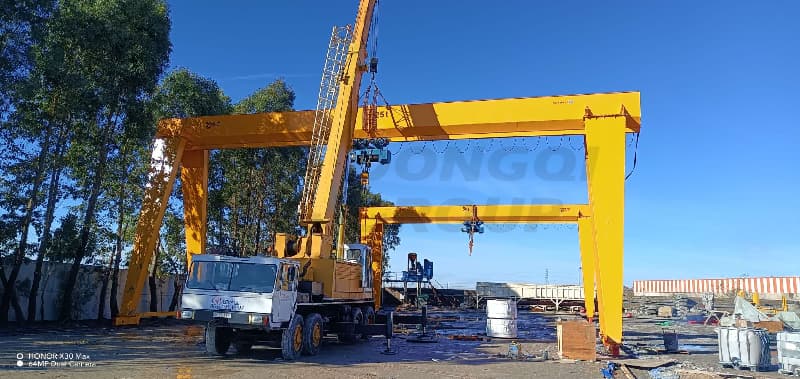
For gantry and semi-gantry cranes, leg structures are bolted to the main beam rather than welded, reducing shipping volume and allowing containerization of components that would otherwise require flat-rack or open-top containers.
3.2 Environmental Hardening
The environmental data captured during the inquiry phase translates directly into design adaptations:
- Low-temperature service: For ambient temperatures below -20°C, we specify fine-grain killed carbon steel or low-alloy steel with certified Charpy impact toughness at the minimum design metal temperature. Main load-bearing structural members are qualified with CVN testing at -40°C or -50°C as required. Lubricants are selected for low-temperature pumpability and film retention. Electric motors are specified with low-temperature grease and appropriate insulation class. Control panels may include thermostatically controlled anti-condensation heaters.
- High-temperature and high-altitude service: For ambient temperatures above +40°C or altitudes above 1,000 meters, motor current ratings are derated per IEC 60034-1 to prevent overheating in the thinner cooling air. Electrical enclosures may require forced ventilation or cooling. Hydraulic systems, if present, require larger oil reservoirs and coolers.
- Corrosion protection for aggressive environments: Our standard C3 coating is upgraded to C4 or C5-M/ C5-I per ISO 12944 based on site corrosivity. For coastal or offshore-influenced sites, stainless steel fasteners, sealed bearings, and protective boots on exposed cylinder rods (if applicable) are specified.
- Dust and ingress protection: For mining and cement sites with heavy conductive or abrasive dust, electrical enclosures are upgraded from IP54 to IP65 or higher. Motors are specified with IP55 or IP65 protection and dust-resistant shaft seals. Control cabinets may be positively pressurized with filtered, dry air.
3.3 Design for Ease of Installation
A crane designed for expert factory installation in a controlled shop is not the same as one designed for a remote site. Dongqi Crane incorporates several design features specifically to simplify field installation:
- Pre-wired and tested electrical systems. Wherever possible, electrical subassemblies—control panels, festoon cable systems, limit switch circuits on the trolley—are pre-wired, terminated, and tested at the factory. On-site wiring is reduced to connecting clearly labeled plugs or terminal blocks between major assemblies.
- Simplified alignment provisions. End carriages and bridge girder connections utilize machined registration surfaces, alignment dowels, or bolted splice plates that align the structure without requiring extensive on-site measurement and adjustment.
- Minimized field welding. Dongqi Crane designs for remote sites minimize or eliminate field welding requirements. Where welding is unavoidable for specific custom designs, we provide certified welding procedure specifications (WPS), send pre-qualified electrodes with the shipment, and can deploy a certified welder as part of the installation supervision team.
- Containerization of loose items. All small components—bolts, electrical connectors, control pendants, documentation—are packed in clearly labeled, inventory-listed boxes that are themselves packed into a designated container or crate. This prevents the common remote-site nightmare of a missing box of high-strength bolts that has disappeared among hundreds of other project shipments.
4. Phase Three: Packaging, Logistics, and Delivery—The Journey from Factory Gate to Remote Site
Even a perfectly specified and fabricated crane is worthless if it does not arrive at the site in installable condition. The logistics phase is where the remote-site procurement effort either succeeds or fails. At Dongqi Crane, packaging and logistics management is treated as an engineering discipline, not a shipping-afterthought.
4.1 Export Packaging: The First Line of Defense
Cranes destined for remote sites typically endure multiple transport modes—truck to port, ocean vessel, truck or rail from discharge port to intermediate depot, and final truck to site—with multiple handling operations at each transfer point. The packaging must protect against physical damage, corrosion, and deterioration over what may be a multi-month journey.
Dongqi Crane’s export packaging standard for long-haul and remote deliveries includes:
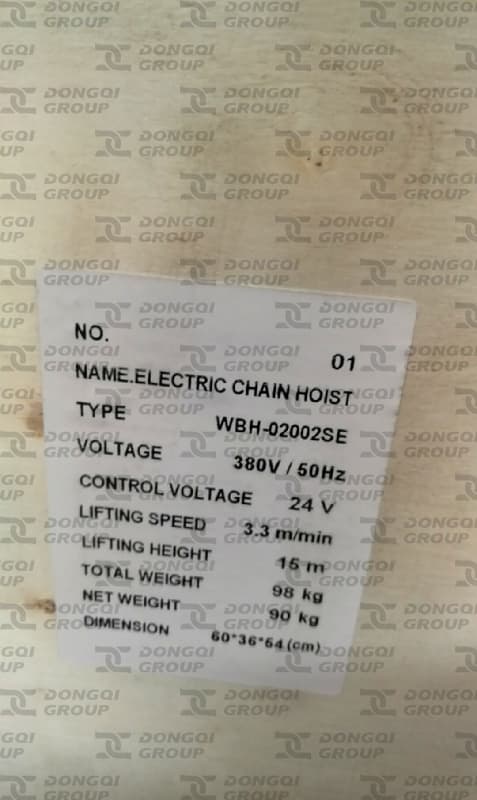
- Vacuum-sealed preservation for precision components. Electric hoists, control panels, gearboxes, and other assemblies containing precision-machined parts, bearings, or electrical equipment are sealed in heavy-duty aluminum-barrier-foil bags with desiccant and vapor-phase corrosion inhibitor (VCI) emitters, then vacuum-sealed. This method provides protection against moisture, salt spray, and condensation for up to 18 months without re-preservation.
- Fumigated timber crating compliant with ISPM 15. All timber packaging meets international phytosanitary standards for export, avoiding customs delays. Crates are structurally designed for stacking and multiple handling cycles.
- Steel-encased packaging for structural components. Large steel weldments such as girder sections are protected with edge guards, wrapped in VCI-infused film, and, for extended sea or open-deck transport, enclosed in steel-framed crates or covered with heavy-duty tarpaulins in ventilated configurations that prevent condensation accumulation.
- In-box preservation for installed spares. Spare parts shipped with the crane are individually preserved, wrapped, and labeled, and packed in lockable, weather-resistant toolboxes or crates that can serve as the site’s spares storage until needed.
- Center-of-gravity and lifting-point marking. Every package exceeding 100 kg is clearly marked with its gross and net weight, dimensions, center of gravity, and designated lifting or forklift points in standardized international symbols, eliminating guesswork during handling.
4.2 Multi-Modal Transport Planning
Dongqi Crane’s logistics team works with the client and nominated freight forwarders to develop a transport plan that sequences the dispatch of goods in alignment with the installation schedule. For remote sites, a phased delivery strategy is often optimal:
- Phase 1 delivery: Runway rail clips, foundation bolts, embedded plates, and installation toolkits—items needed early by the civil works contractor.
- Phase 2 delivery: Main structural components—bridge girder segments, end carriages, and platform structures.
- Phase 3 delivery: Mechanical and electrical assemblies—hoist, trolley, control panels, and power supply system. This sequencing prevents the most valuable and sensitive items from sitting on site exposed to weather while civil works are completed.
For sites with extreme access challenges—mountain mines, jungle sites, or island locations—Dongqi Crane can arrange for helicopter-transportable packaging, with crane components broken down to loads within helicopter sling capacity. While this represents a cost premium, it is sometimes the only feasible delivery method, and our planning ensures that the component breakdown is appropriate for airborne delivery and site reassembly.
4.3 Customs, Documentation, and Import Compliance
Documentation errors are one of the most common causes of remote-site project delays. A single incorrect customs tariff code, a missing certificate of origin, or a non-compliant wood packaging declaration can hold a shipment in port for weeks.
Dongqi Crane’s documentation package for export projects includes:
- Commercial invoice and packing list with harmonized system (HS) codes.
- Certificate of origin (typically Form E for ASEAN, Form F for Chile, or generic COO as required).
- Bill of lading or airway bill.
- ISPM 15 fumigation certificate for all wood packaging.
- Manufacturer’s test certificates and material mill certificates.
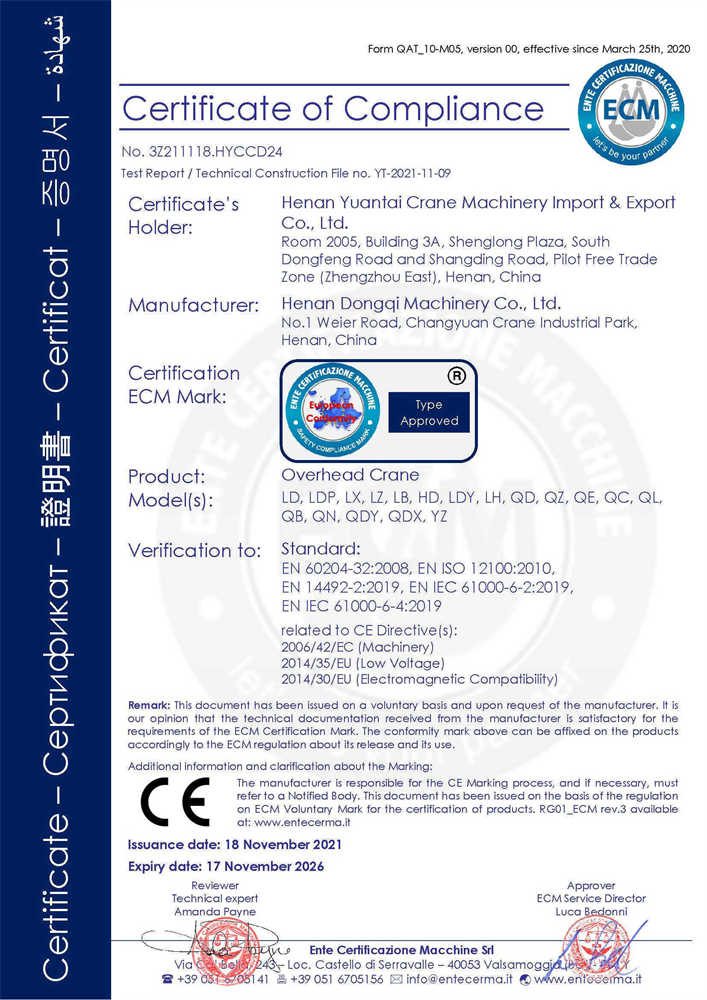
- CE Declaration of Conformity or other compliance declarations per project requirements.
- Detailed installation and maintenance manuals in the required language(s).
We recommend that clients engage a customs broker with specific experience in heavy industrial equipment for the destination country. Dongqi Crane can coordinate directly with the nominated broker, providing pre-shipment documentation for advance customs clearance preparation—a practice that has materially reduced port demurrage and storage charges on our projects.
5. Phase Four: Installation and Commissioning on a Remote Site
The crane has arrived. It is intact, corrosion-free, and sitting on the ground at your remote site. Now it must be lifted, assembled, aligned, wired, and made operational—possibly by a team that has never assembled a crane before. Dongqi Crane’s remote installation support model is designed to meet this challenge through three tiers of service.
5.1 Tier 1: Dongqi-Supervised Installation (Recommended)
For remote projects with high value, critical schedule, or limited on-site experience, we deploy one or more Dongqi installation supervisors to the site for the duration of the mechanical and electrical installation and commissioning. The supervisor’s role is to:
- Direct the local labor and crane operators through the assembly sequence.
- Verify all structural bolted connections for proper assembly and torque.
- Supervise the electrical wiring, termination, and initial power-up.
- Perform pre-commissioning checks: insulation resistance testing, motor rotation verification, limit switch function testing, brake adjustment, and load testing.
- Conduct operator and maintenance training with the local workforce.
- Certify the installation and commissioning in writing.
Our installation supervisors are experienced in remote-site conditions. They carry their own personal protective equipment, safety certifications, and, importantly, a comprehensive installation toolkit that includes specialty tools the site is unlikely to possess: torque wrenches with calibrated multipliers for structural bolts, alignment lasers for runway and rail verification, insulation testers, and Dongqi-specific diagnostic interfaces for smart crane systems.
5.2 Tier 2: Remote-Guided Installation with Local Contractor
Where budget constraints, visa restrictions, or client preference make on-site supervision impractical, Dongqi Crane provides a comprehensive remote installation support package:
- Installation manual customized to the project. Not a generic manual, but a project-specific document with photographs of the actual crane components, step-by-step assembly sequences, torque value tables for each bolt size, wiring termination diagrams that reference the panel and motor labels visible on the equipment, and a commissioning checklist.
- Pre-installation video briefing. Before the installation team mobilizes, a Dongqi engineer conducts a video conference walkthrough of the entire installation process, highlighting critical steps, common errors to avoid, and safety considerations.
- On-call remote support during installation. Our engineering team is available via video call (WhatsApp, WeChat, Zoom, or Microsoft Teams) during the agreed installation period. Site technicians can point their phone camera at a component, and our engineer can see what they see and guide them in real time. For complex electrical troubleshooting, we can remotely connect to the crane’s PLC (if so equipped) to diagnose issues.
- Pre-configured plug-and-play systems. To minimize on-site wiring errors, our remote-site cranes increasingly employ fool-proofed electrical connections: different connector sizes for different voltage levels, color-matched cable and terminal markings, and harnesses that can only physically connect to the correct mating part.
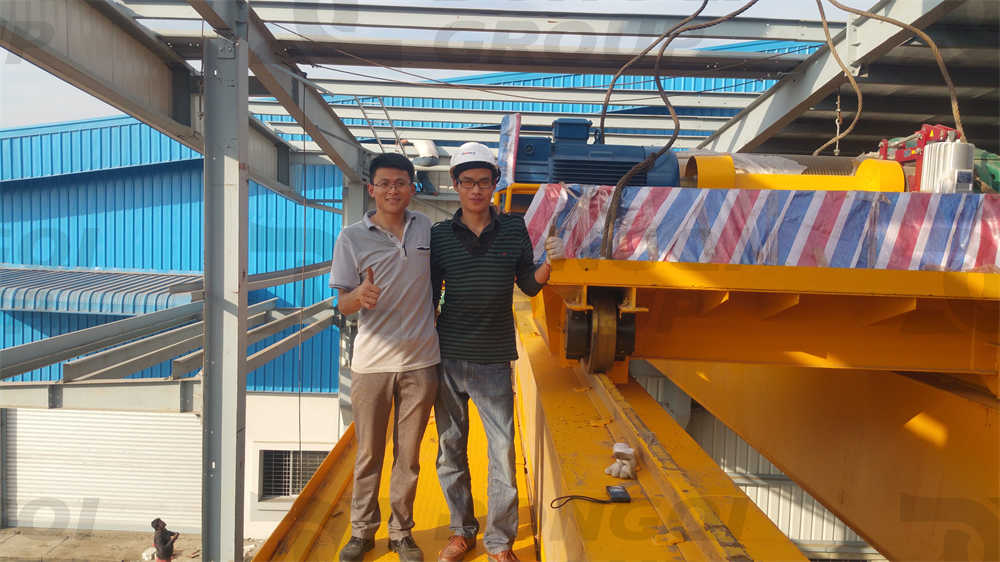
5.3 Tier 3: Fully Contracted Turnkey Installation
For clients who prefer a single point of responsibility from factory to operation, Dongqi Crane can structure the supply contract to include installation and commissioning. In this model, we subcontract a specialized industrial installation firm—often a partner with whom we have worked on previous projects—or deploy our own installation crew, managing the entire process through to final handover. This option is particularly attractive for very remote sites where the client has no established construction or maintenance infrastructure.
5.4 Commissioning and Load Testing
Regardless of the installation tier, the commissioning process includes mandatory verification steps:
- No-load functional test: All motions are operated through full travel at all speeds to verify smooth operation, limit switch function, and absence of abnormal noise or vibration.
- Rated load test: The crane is loaded to 100% of its rated capacity and operated through all motions. Deflection is measured at mid-span and compared to the design allowable (typically L/800 for overhead cranes per FEM/ISO standards).
- Overload test: Per applicable standards (typically 125% of rated capacity for overhead cranes), the crane is subjected to a static overload test to verify structural integrity and brake holding capacity. The load is lifted just clear of the ground and held for a specified period; after removal, the structure is inspected for permanent deformation.
- Dynamic load test: The crane is operated with 110% of rated capacity through repeated cycles to verify proper function under load.
Dongqi Crane provides a detailed commissioning test procedure, and the completed, signed test report becomes part of the crane’s permanent documentation. For jurisdictions that require third-party inspection, we coordinate with the nominated inspection agency.
6. Phase Five: Training, Handover, and the First Critical Weeks
A remote site cannot afford a learning curve that involves damage to the crane or injury to personnel. Dongqi Crane’s training and handover process is structured to transfer genuine competence, not just familiarity.
6.1 Operator Training
Training is delivered on the actual crane, after commissioning, covering:
- Pre-start inspection procedures.
- Correct operation of all control modes (pendant, remote, cabin).
- Interpretation of any display screens, warning lights, or alarms.
- Load handling best practices—avoiding shock loading, side pulling, and over-lifting.
- Emergency procedures: what to do in the event of power failure, load sway, or unusual crane behavior.
- Shutdown and lockout procedures for maintenance access.
All operators are given supervised operating time under load conditions before being signed off as competent. A laminated quick-reference operating card is affixed to the crane control station, providing key reminders in the local language.
6.2 Maintenance Training
Maintenance personnel receive separate, hands-on training covering:
- Daily, weekly, monthly, and annual inspection points.
- Lubrication types, frequencies, and methods for each lubrication point.
- Brake adjustment procedure.
- Wire rope inspection and discard criteria (with a go/no-go gauge provided).
- Electrical troubleshooting: how to identify and reset tripped motor protection, how to read fault codes on VFDs or PLCs.
- Spare parts identification and ordering procedure.
A maintenance logbook is provided, and the maintenance team is trained to record all inspections, findings, and corrective actions.
6.3 Structured Handover Documentation
At handover, the client receives a comprehensive documentation package, stored in a weather-resistant container on site:
- As-built technical documentation (not generic, but reflecting the crane as actually built and configured).
- Full electrical schematics and PLC ladder logic printouts (if applicable).
- Commissioning test reports and certificates.
- Spare parts catalog with ordering codes and exploded-view diagrams.
- Dongqi Crane service contact information, including emergency support numbers.
7. Phase Six: Long-Term Support for an Isolated Asset
The crane is now operational. The installation team has demobilized. The ongoing challenge is keeping the crane running reliably in an environment where replacement parts and expert advice are not easily obtained.
7.1 Strategic Spare Parts Planning
Dongqi Crane provides every remote-site client with a Recommended Spares List differentiated by criticality and lead time:
- Commissioning spares: Shipped with the crane, these cover items that might be damaged or lost during installation—seals, gaskets, connectors, fuses.
- Operational spares (2-year recommendation): Consumables and wear items with predictable replacement intervals—brake linings, contactors, limit switch elements, carbon brushes (if applicable), filters, lubricants. For remote sites, we recommend maintaining at least a full set of operational spares on hand.
- Strategic spares: Items with long lead time but low failure probability—a complete gearbox, a spare motor, a set of wire ropes. Whether to stock these depends on the cost of downtime versus the cost of holding inventory. Dongqi Crane’s Lifecycle Cost Calculator can model this trade-off.
We offer a spare parts consignment stock arrangement for clients with multiple cranes or critical single-crane installations: Dongqi Crane places a pre-agreed spares inventory at the site, charges the client only for items as they are consumed, and replenishes the consignment stock periodically.
7.2 IoT Remote Monitoring: Bridging the Distance
Dongqi Crane’s smart crane platform, introduced across our product range, is particularly valuable for remote sites. The onboard monitoring unit continuously tracks:
- Motor operating hours and starts-per-hour (a leading indicator of duty class exceedance).
- Motor current signatures (can detect mechanical degradation, misalignment, or partial phase loss before failure).
- Gearbox vibration spectra (trending toward known failure patterns).
- Brake wear (sensed via position switches or electrical load monitoring on thruster-type brakes).
- Overload occurrences and load spectrum data.
Alerts are transmitted via satellite or cellular network (depending on site connectivity) to the Dongqi monitoring platform and to the client’s maintenance team. This means that a vibration trend indicating a bearing that will fail in six weeks is detected when it can still be addressed during a scheduled maintenance window, not after it has failed catastrophically at 2 a.m.
For sites with no connectivity, the system stores data locally for periodic download during maintenance visits, still enabling trend analysis.
7.3 Service Agreements and Periodic Inspections
Dongqi Crane offers service agreements tailored to remote sites:
- Annual remote inspection: Our engineers review the crane’s operating data (from the IoT platform or maintenance logs), conduct a video inspection with the site team, and issue a condition report with prioritized recommendations.
- Biennial or triennial on-site inspection: We deploy an inspector to the site to perform a hands-on structural, mechanical, and electrical inspection, load test verification, and detailed condition assessment.
- Rapid-response repair crews: For critical breakdowns, we maintain the capability to deploy a repair technician to the site within an agreed response time, with pre-arranged visa facilitation, travel logistics, and a pre-packed repair toolkit.
8. Case Example: Delivering Certainty to a Hydroelectric Project
The following case, drawn from Dongqi Crane’s project archives, illustrates the remote-site delivery system in action.
Project: A new run-of-river hydroelectric station in a mountainous region of Southeast Asia. The powerhouse required two 80-ton overhead bridge cranes for turbine and generator installation and future maintenance.
Challenges identified during inquiry:
- Site accessible only via a 140-kilometer unpaved mountain road with tight switchbacks and a 4-meter width restriction in one section.
- No local crane of sufficient capacity to unload the components at site; a mobile crane had to be mobilized from the capital city.
- Monsoon season renders the access road impassable for heavy transport from June through September.
- Altitude of 1,400 meters required motor derating.
- Site power was from a temporary diesel generator with significant voltage fluctuation.
Dongqi Crane’s response:
- The 80-ton capacity, 18-meter span bridge girders were designed as three bolted segments each, with the largest segment not exceeding 4 meters in width and 12 meters in length—transportable on standard low-bed trailers on the access road.
- The crane was delivered in early May, before monsoon closure. Dongqi’s logistics team coordinated with the freight forwarder to prioritize the crane shipment in the limited dry-season transport window.
- Motor selections were derated for 1,500-meter altitude and 40°C ambient. Voltage fluctuation tolerance was addressed by specifying VFDs with wide input voltage tolerance (±15%) and installing a line reactor upstream of the crane’s main disconnect.
- Dongqi dispatched a two-person installation supervision team to the site for a planned six-week mechanical and electrical installation period. The team coordinated with the mobile crane provider to plan exact lift sequences for the girder segments.
- The client’s local workforce received on-the-job training during the installation, supplemented by formal classroom sessions during commissioning.
- An IoT condition monitoring system was installed with data-logging capability and local Wi-Fi access for the site engineer’s tablet, circumventing the lack of cellular connectivity.
Outcome: The crane was commissioned on schedule, passed all load tests, and has been in continuous reliable operation since. The client has subsequently ordered three additional cranes for associated projects, all structured under the same remote-site delivery model.
Conclusion: Remote Is Not a Barrier—It Is a Requirement for a Different Kind of Partner
Remote-site crane procurement is demanding, but it is not impossibly complex. The key is recognizing that a remote project requires a different supplier evaluation framework, a more detailed planning process, and a more robust execution methodology than a conventional installation. The cheapest quotation is rarely the most reliable choice for a remote site, because the cost of error correction is exponentially higher than the upfront savings.
Dongqi Crane has invested deliberately in the capabilities that remote-site delivery demands: modular bolted structures, export-grade packaging, multi-modal logistics expertise, multilingual documentation, remote diagnostic technology, and a service network that extends to the edges of industrial infrastructure.
We view remote projects not as logistical headaches to be endured but as demonstrations of the depth of our engineering and project management capability. When your site is a thousand kilometers from the nearest crane service company, you need a manufacturer that plans and delivers with the thoroughness to make that distance irrelevant.
To discuss a remote-site crane requirement with Dongqi Crane’s Global Projects Team, please contact us through your regional sales representative or our international inquiry channel. We will respond within 24 hours with a preliminary assessment and, upon receipt of your working condition data, a comprehensive project delivery proposal.
Henan Dongqi Machinery Co., Ltd. (Dongqi Crane) is a Sino-New Zealand joint venture with a 240,000-square-meter manufacturing center, an annual production capacity exceeding 10,000 crane units, and a global delivery footprint in over 96 countries. We hold CE, ISO 9001, ISO 14001, ISO 45001, ISO 50001, and GJB9001C certifications and specialize in engineered lifting solutions for standard and extreme industrial environments.
