
7-May-2026
The Procurement Director’s Perspective: The Five Dimensions I Use to Qualify a Crane Manufacturer
Preface: Why This Article Is Different
Most articles about crane procurement are written by manufacturers for an audience they hope to convert into customers. This article is different. While it is published by Dongqi Crane, it draws extensively on structured interviews conducted with eighteen senior procurement and supply chain executives across heavy manufacturing, mining, power generation, and logistics companies in Asia, the Middle East, Europe, and South America. These professionals—each responsible for capital equipment budgets exceeding $5 million annually—shared candidly how they evaluate crane suppliers, what separates the contenders from the pretenders in the first ten minutes of a supplier meeting, and what ultimately drives their recommendation to award or reject a bid.
We have synthesized their insights into a five-dimensional evaluation framework. For procurement professionals reading this article, it offers a mirror: a chance to compare your own evaluation methodology against that of your peers and potentially identify blind spots. For crane manufacturers, it is offered in the spirit of transparency that these directors consistently told us they value above all else.
Each dimension is explored in depth, with direct quotations (anonymized where requested), real evaluation questions procurement directors ask, and concrete examples of what “good” looks like in practice. At the end, we include a self-assessment scorecard that any procurement professional can use on their next crane supplier evaluation.
1. Dimension One: Engineering Competence—The Non-Negotiable Foundation
“If I sense the salesperson knows more about discount percentages than deflection limits, I mentally disqualify them.”
—Procurement Director, Middle Eastern Oil & Gas Operator
Every procurement director interviewed placed engineering competence at the top of their evaluation hierarchy. This is not surprising. An overhead crane is not a commodity; it is an engineered system whose performance, safety, and longevity depend on design decisions made long before a single steel plate is cut. The procurement director’s challenge is that they are evaluating engineering depth without necessarily being an engineer themselves. The best have developed sophisticated proxy assessments.
1.1 The First-Meeting Test
Several directors described a remarkably consistent first-meeting evaluation technique. Within the first fifteen minutes of a supplier presentation, they introduce a deliberately specific technical scenario:
“Walk me through what happens if I need this 20-ton crane to handle a 24-ton load once a month during maintenance shutdowns. Can the standard model handle it, or do I need an upgrade, and what exactly gets upgraded?”
The way the supplier responds reveals everything. A salesperson who deflects—“Our standard crane can handle overload easily”—without referencing duty class, structural fatigue accumulation, or the difference between occasional overload and continuous rated capacity has just flagged themselves as technically unserious. An engineer who responds with specifics—“Under FEM standards, occasional overload up to 125% of rated capacity is permitted for static load tests, but if you plan this as a regular operational occurrence, we need to upgrade the hoist gearbox service factor, verify the girder fatigue life under the modified load spectrum, and possibly increase the rope diameter, which cascades to the drum and sheave dimensions”—has just earned a second meeting.
1.2 The Drawing Review Test
If the supplier progresses to the detailed proposal stage, several directors request a review of the actual manufacturing drawings for a comparable previous project—not the general arrangement drawings that go into brochures, but the fabrication drawings that show weld details, stiffener spacing, and connection design.
A supplier that cannot or will not share such drawings, citing “proprietary information,” raises a flag. A supplier that shares them and walks through the engineering logic—“Here you see the diaphragm spacing is closer in the high-shear zone near the end carriage; here the full-penetration weld is specified because this joint sees fatigue stress reversal”—builds significant credibility.
Dongqi Crane maintains a library of sanitized reference drawings from completed projects specifically for this purpose. We have found that clients who review these drawings proceed to order with higher confidence and fewer subsequent technical queries than those who skip this step.
1.3 The Design Philosophy Question
Beyond specific technical answers, procurement directors told us they look for evidence of a coherent design philosophy—a set of engineering principles that guide the manufacturer’s decisions rather than a reactive approach of assembling components from catalogs.
Sample questions that reveal design philosophy:
- “When do you recommend a double-girder configuration over a single-girder, and why? Where is the breakeven point?”
- “What is your standard D/d ratio for wire rope drums, and would you ever deviate from it to save cost or weight? Under what circumstances?”
- “Walk me through your fatigue analysis process for a crane specified for A6 duty. How many design cycles do you analyze to? What safety factor do you apply?”
A manufacturer whose answers are instant, specific, and supported by reference to recognized standards (FEM, ISO, CMAA) is demonstrating embedded engineering culture. One that needs to “check with the technical department” for every second question is revealing that engineering is not present in the commercial interface—a separation that procurement directors consistently flagged as a source of future problems in project execution.
1.4 The Engineering Depth Benchmarks
Based on the interviews, the following concrete indicators of engineering depth emerged as universally valued:
| Indicator | What Procurement Directors Look For | Red Flag |
|---|---|---|
| In-house structural analysis capability | Finite element analysis competence; ability to discuss girder deflection and stress distribution; knowledge of local building codes that influence wheel loads | Reliance on “standard designs” with no ability to customize or analyze deviations |
| Application of recognized standards | Familiarity with FEM 1.001, ISO 4301, CMAA 70/74; ability to discuss the differences between standards | Inability to cite the standards their cranes are designed to |
| Fatigue life methodology | Documented process for calculating structural fatigue life based on load spectrum; ability to discuss cumulative damage (e.g., Miner’s Rule) | Claims of “infinite life” or inability to discuss fatigue at all |
| Value engineering skill | Ability to offer cost-reduction options with clear explanation of trade-offs (“We can reduce span weight by 8% using this optimized section, saving you building steel cost, but your wheel loads increase slightly”) | Cost reduction only through component substitution downward |
| Problem-solving creativity | Track record of engineering unusual solutions (extreme span, low headroom, synchronized multi-hook, explosion-proof combined with cleanroom) | “We only do standard” |
2. Dimension Two: Manufacturing Maturity—The Factory Visit Tells All
“I have walked onto factory floors and decided within five minutes that I would not place an order. Everything I needed to know was visible before a word was spoken.”
—Procurement Director, European Industrial Group
Every procurement director we interviewed emphasized that a factory visit is non-negotiable before awarding a significant crane contract. But they also emphasized that the visit must be conducted with specific observational objectives, not as a guided tour orchestrated by the sales team.
2.1 The Unprompted Walk Test
Several directors described a technique they call the “unprompted walk.” After the factory tour, they request permission to walk the shop floor alone or with one colleague for fifteen minutes, without the sales escort. The objective is to observe the factory in its natural state.
What they look for:
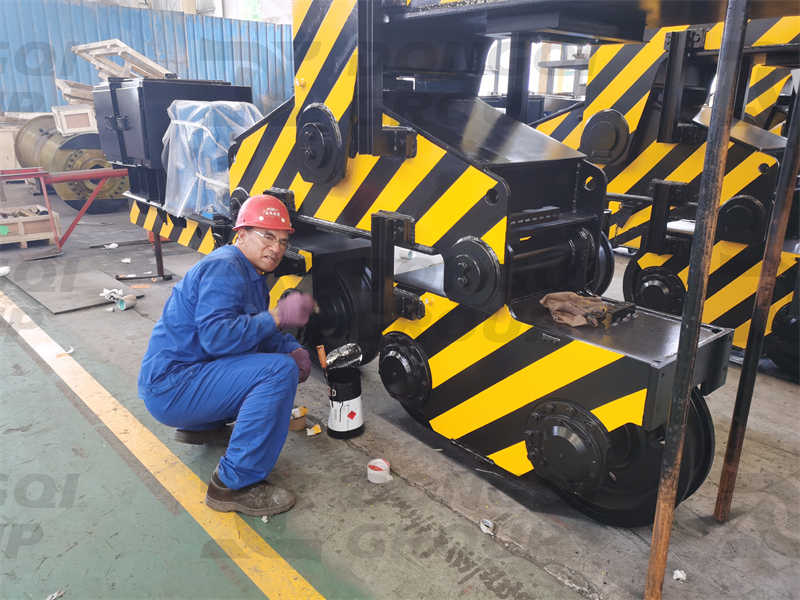
- Housekeeping and organization. Is the floor clean and orderly, or are there piles of scrap, unmarked components, and trip hazards? Housekeeping discipline correlates strongly with manufacturing discipline in general.
- Work-in-progress quality. Pick a random welded structure and inspect the weld appearance. Are the welds uniform, properly profiled, and free of spatter, undercut, and porosity? Or are they rough, inconsistent, and indicative of rushed work?
- Worker behavior. Are workers wearing proper PPE? Are they focused on their tasks, or idling, or on phones? Is there a sense of purposeful activity? Do workers acknowledge visitors with confidence or avoid eye contact?
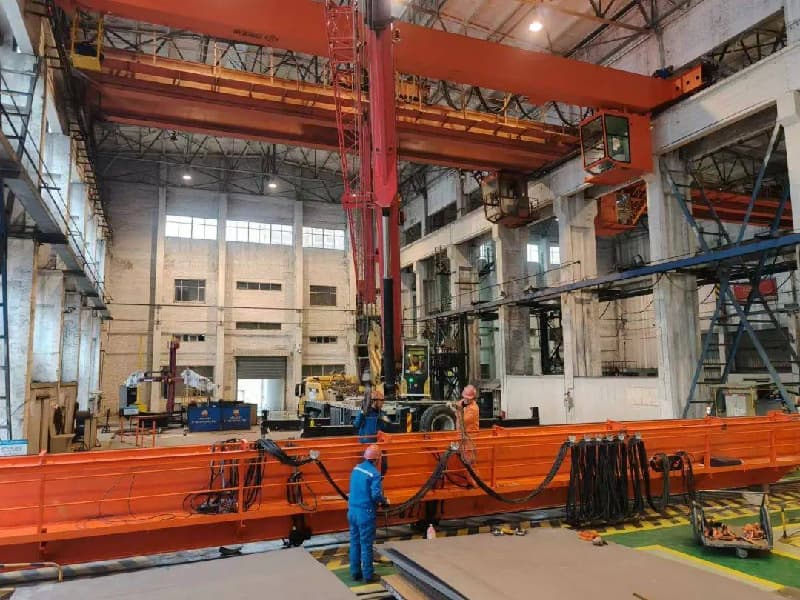
- Equipment condition. Are machine tools clean and well-maintained? Are overhead cranes on the shop floor operating smoothly? A manufacturer that neglects its own lifting equipment is unlikely to build yours properly.
- Inspection evidence. Are there visible quality control stations with calibrated instruments? Do components show inspection stamps, weld maps, or traveller documents?
2.2 The Quality System Probe
Beyond visual observation, procurement directors probe the quality management system with specific questions:
“Show me a non-conformance report from the last month. Walk me through what was found, what root cause analysis was performed, what corrective action was taken, and how you verified it was effective.”
A manufacturer that cannot produce a recent NCR, or that claims to have none, is either not inspecting or not being truthful. A manufacturer that produces a well-documented NCR with rigorous root cause analysis demonstrates that its quality system is genuinely operational, not just a certification on the wall.
Dongqi Crane’s quality management system operates under ISO 9001, ISO 14001, ISO 45001, and ISO 50001 integrated certification, with an additional GJB9001C certification reflecting defense-industry-grade quality discipline. Our non-conformance tracking, corrective action, and preventive action systems are audited internally monthly and externally semi-annually. We welcome client review of these systems during factory visits.
2.3 Manufacturing Capacity and Critical Equipment
Procurement directors also assess whether the factory has the physical capability to manufacture their crane to specification. Key questions include:
- Steel preparation: Do they have an automatic shot-blasting and priming line, or is surface preparation done manually with hand tools? For large structures, automatic blast cleaning to SA 2.5 standard is critical for coating adhesion and corrosion protection.
- Cutting capability: Are plates cut on CNC plasma, laser, or flame-cutting machines with programmed nesting to optimize material usage? Or is cutting done manually, with variable accuracy?
- Welding qualification: Are welders certified to relevant standards (ISO 9606, AWS)? Are welding procedure specifications (WPS) documented and qualified? Is there a dedicated welding engineer on staff?
- Stress relief: For large welded structures, do they have a stress-relieving furnace, or is vibratory stress relief available? Is stress relief applied per a documented schedule?
- Machining: Do they have large-capacity horizontal boring mills, plano-mills, or gantry-type machining centers capable of machining gearbox housings, drum flanges, and end carriage mounting surfaces in a single setup for accuracy?
- Test and validation: Do they have a dedicated load test area with calibrated test weights up to 125% or 150% of the maximum crane capacity they offer? Can they perform full-function testing before shipping?

Dongqi Crane operates a 240,000-square-meter manufacturing facility equipped with over 2,000 sets of precision manufacturing and inspection equipment, including automated shot-blasting lines, CNC plate processing centers, robotic welding stations, large-capacity machining centers, and dedicated load test bays. Our annual production capacity exceeds 10,000 crane units, and our engineering workforce includes over 70 senior engineers and 500 technical staff.
2.4 The Supply Chain Transparency Test
Crane manufacturers are integrators as well as fabricators. The quality of the gearboxes, motors, bearings, electrical components, and wire ropes they procure from third parties directly determines the quality and lifecycle cost of your crane.
Procurement directors ask:
- “Who are your key component suppliers? May I have a list?” A transparent manufacturer names names: SEW, Siemens, ABB, SKF, FAG, CASAR, Diepa. A manufacturer that deflects may be sourcing from unbranded, untraceable suppliers.
- “What are your incoming inspection procedures for purchased components?” Is there a documented receiving inspection process, or do components go straight to stock or assembly?
- “What is your policy on supplier qualification and auditing?” Does the manufacturer audit its key suppliers, or does it simply purchase from the open market?
Dongqi Crane maintains long-term strategic relationships with a global supply chain of premium component manufacturers. We publish our key supplier list to clients upon request and conduct regular supplier audits as part of our ISO 9001 quality management obligations. Our incoming inspection includes dimensional verification, documentation review, and, where specified, functional testing before components are released to production.
3. Dimension Three: Project Execution Capability—From Order to Operation
“The best crane in the world is useless if it arrives six months late and the installation documentation is in a language my team can’t read.”
—Procurement Director, African Mining Conglomerate
Engineering competence and manufacturing maturity are necessary conditions for supplier qualification, but they are not sufficient. Procurement directors also need confidence that the supplier can manage the project from contract signature to operational handover—a sequence that involves logistics, documentation, installation, commissioning, and training. Failures in project execution are the most common source of procurement director career regret.
3.1 The Project Management Structure Probe
“Who will be my single point of contact from contract signature to handover? May I meet that person? What is their span of control—how many concurrent projects are they managing?”
A supplier that designates a named project manager with a manageable project load demonstrates organizational maturity. A supplier that says “your salesperson will handle everything” does not.
The project manager should be able to describe:
- The project schedule in detail, including engineering release, procurement, fabrication, assembly, testing, packaging, shipping, installation, commissioning, and handover milestones.
- The critical path and the risk mitigation strategies for key dependencies (long-lead components, shipping windows, client site readiness).
- The communication protocol: frequency of progress reports, format of reports, escalation procedures.
At Dongqi Crane, every contract exceeding a threshold value is assigned a dedicated project manager from our Project Management Office. This individual is the client’s single interface for all technical, commercial, scheduling, and quality matters. Progress reports are delivered bi-weekly as standard, with real-time dashboards available for monitored projects.
3.2 The Logistics and Packaging Assessment
The procurement directors we interviewed who had experienced projects in remote or international locations were emphatic about the importance of packaging and logistics. Damage discovered at site after a long journey is a project-killer.
Key questions:
- “Describe your export packaging standard for a project like ours. May I see photographs of how you packaged a similar shipment?”
- “What preservation method do you use for precision components during sea freight? What is the maximum period before re-preservation is required?”
- “How do you manage the logistics documentation? Do you have an in-house logistics specialist, or do you rely entirely on the freight forwarder?”
- “Have you ever delivered to our country or region before? May I have the contact of that client as a reference?”
Dongqi Crane’s export packaging standard—including vacuum-sealed preservation with VCI protection, ISPM 15-compliant fumigated timber, and sequenced shipping plans—is detailed in our Remote Site Delivery Guide. Our logistics team coordinates directly with the client’s nominated freight forwarder or can recommend experienced partners for specific trade lanes.
3.3 The Installation and Training Plan
“Assume my site has competent but non-specialist technicians. Walk me through how you will get them from receiving the crates to operating the crane safely.”
The supplier’s response should cover:
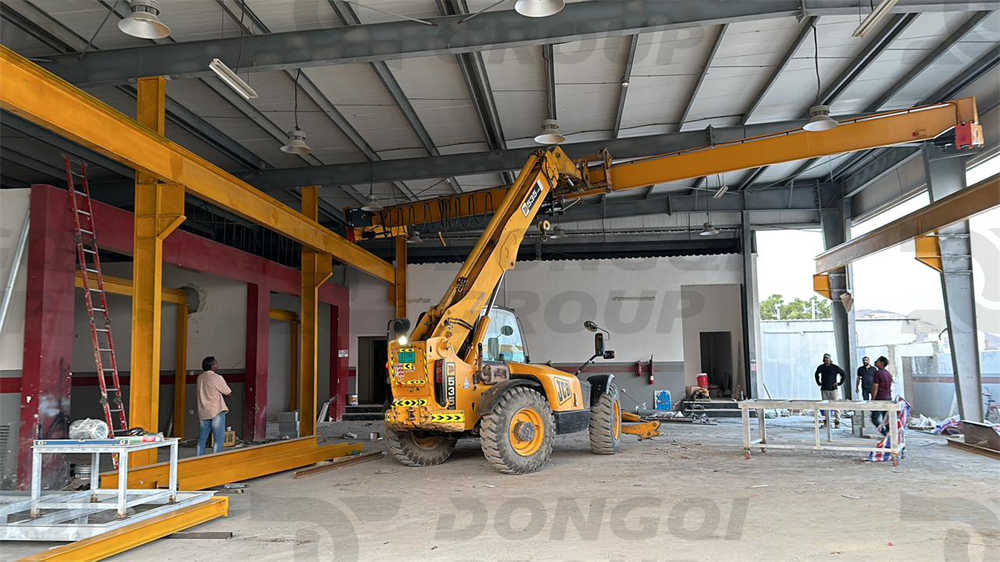
- Installation methodology: Sequence of assembly, major lifting requirements, duration estimate, number of specialists required from the manufacturer’s side.
- Tooling and equipment: What the manufacturer provides (specialty tools, alignment jigs, torque wrenches) and what the site must provide (mobile crane, power, scaffolding).
- Documentation: The installation manual—is it a generic document or project-specific? Is it available in the site’s working language? Does it include clear diagrams, torque tables, wiring terminations, and commissioning checklists?
- Training: Does the manufacturer provide operator and maintenance training as a distinct, structured activity with defined curriculum, duration, and handouts? Or is it an informal “show them as we go”?
- Commissioning and load testing: What tests will be performed, to what standard, and who will witness and sign off?
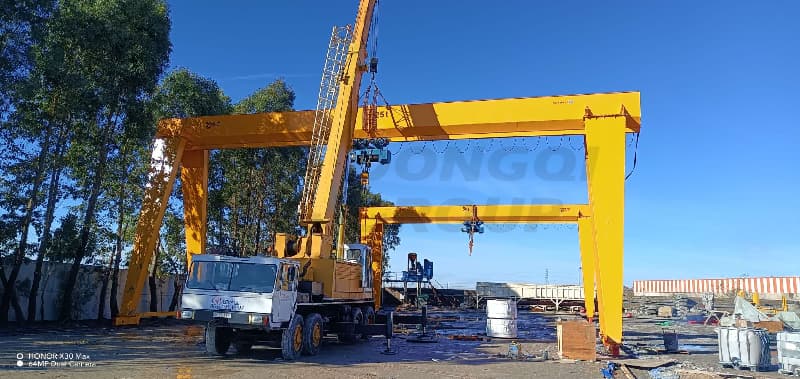
Dongqi Crane’s standard project execution includes a detailed installation method statement, project-specific installation manual, on-site or remote supervision options, formal operator and maintenance training modules, and a documented commissioning procedure conforming to ISO/FEM standards.
4. Dimension Four: After-Sales Support—The True Test of Partnership
“I don’t buy a crane. I buy a twenty-five-year relationship. The relationship after the warranty expires tells me everything about the company I chose.”
—Procurement Director, Asian Steel Producer
After-sales support is the dimension where procurement directors say the gap between manufacturer promises and manufacturer performance is widest. Everyone promises “comprehensive after-sales service” in their brochure. The evaluation challenge is distinguishing genuine commitment from marketing language before a contract is signed.
4.1 The Spare Parts Litmus Test
Procurement directors described a simple and highly effective test:
“Give me the part number, price, and lead time for a standard brake lining set and a complete wire rope assembly for a 10-ton hoist you would supply to me. I want an answer within 48 hours. If you can’t give me that for a hypothetical order, I don’t trust you to supply spare parts in an emergency five years from now.”
The response reveals:
- Does the manufacturer have a structured spare parts catalog with unique identifiers for every component?
- Are spare parts priced transparently, or are they treated as a “gotcha” revenue stream?
- Can the parts organization respond quickly, or is it dependent on checking with the factory, which is in a different time zone and slow to respond?
- Are parts for older models still available, or does the manufacturer orphan its legacy products?
Dongqi Crane operates a centralized spare parts division with cataloged parts for every model we have produced. We maintain a formal commitment to spare parts availability for a minimum of 20 years from the date of crane delivery. Emergency parts inquiries receive a response within 24 hours, and standard wear parts can be dispatched within 24 hours for clients covered by our service agreements.
4.2 The Service Response Test
“Imagine it’s 2 a.m. local time, and my crane has stopped production. The fault is electrical and my technicians cannot diagnose it. What happens next? Be specific.”
Critical points in the supplier’s response:
- Emergency contact: Is there a genuine 24/7 emergency support number, or does the call go to voicemail outside business hours?
- Remote diagnostic capability: Can the manufacturer’s engineer remotely access the crane’s control system (with appropriate cybersecurity protocols) to diagnose the fault, or does a physical visit have to be scheduled before anyone even knows what the problem is?
- Technician dispatch: If a technician needs to travel to the site, what is the guaranteed response time? Is this guarantee contractual or aspirational? What are the visa, travel, and mobilization logistics for international sites?
- While-you-wait parts supply: Can critical parts be shipped immediately, before the fault cause is fully determined, to minimize downtime? Is there a regional spare parts inventory that can serve the site faster than shipping from the factory?
Dongqi Crane’s IoT-enabled crane systems address this challenge directly. For cranes equipped with our smart monitoring platform, remote diagnostics can identify the probable cause of a fault within minutes of the alarm being received. Our service team can often guide site technicians through corrective action without dispatching personnel. When physical intervention is required, our global service partner network provides local or regional response capability in major industrial centers.
4.3 The Warranty Substance Test
Not all warranties are created equal. Procurement directors know to read the fine print.
Key questions:
- “What exactly is covered—parts only, parts and labor, or parts, labor, and consequential costs like crane hire for the repair period?”
- “What are the warranty exclusions? Is ‘normal wear’ defined, or is it a subjective judgment you will use to deny claims?”
- “What is the process for making a warranty claim? How fast will you respond, and how fast will you supply replacement parts?”
- “What happens if a warranty repair fails? Is there a re-warranty period?”
Several procurement directors shared a pointed observation: a supplier that is reluctant to discuss warranty terms in detail during the negotiation phase is likely to be even more reluctant to honor them in the claims phase. A supplier that proactively proposes clear, fair warranty terms, with defined claim response times and escalation paths, is demonstrating confidence in its product quality.
Dongqi Crane’s standard warranty covers all manufacturing defects for a defined period with clearly documented claim procedures and response commitments. Extended warranty and service agreement options are available, and we are prepared to discuss warranty terms that align with the client’s specific operational requirements and risk tolerance.
4.4 The Long-Term Relationship Indicators
Beyond the contractual terms, procurement directors look for evidence that the supplier views the relationship as long-term:
- Does the manufacturer maintain contact after commissioning, or does communication end when the final payment is cleared?
- Does the manufacturer proactively inform clients of product updates, service bulletins, or safety advisories?
- Does the manufacturer invest in understanding the client’s evolving needs—expansions, modernization, new processes—and offer relevant support?
These “soft” indicators, procurement directors note, are remarkably predictive of how cooperative the supplier will be when problems arise.
5. Dimension Five: Commercial Integrity—Transparency That Builds or Destroys Trust
“If I catch a supplier hiding something—anything—the relationship is over. I will never trust their crane, no matter how good the engineering looks.”
—Procurement Director, South American Mining Company
The fifth dimension is the least technical but perhaps the most decisive. Commercial integrity encompasses pricing transparency, honesty about capabilities and limitations, and consistency between promises made during sales and what is delivered in the contract and the machine.
5.1 The Hidden Cost Test
Experienced procurement directors actively probe for hidden costs:
“Your price is $X. Before I take this to my capital approval committee, I need to know: is this the price I will actually pay, or are there additional charges that will surface later? What is not included that I might assume is included?”
The answer reveals commercial character. A transparent supplier will list:
- What is included (scope of supply, delivery terms, installation support, documentation, training, warranty).
- What is explicitly excluded (civil works, runway installation, site power supply, mobile crane for installation, import duties, taxes).
- What optional items are available and what they cost (extended warranty, additional training days, commissioning spares package, remote monitoring system).
A supplier that gives a vague, all-encompassing answer—“It includes everything you need”—is not being transparent. A supplier that provides a detailed scope matrix with inclusions, exclusions, and options clearly marked is demonstrating commercial integrity.
Dongqi Crane’s commercial proposals include a scope-of-supply matrix that itemizes every element of the quotation with an inclusion/exclusion/option notation. This document is developed jointly with the client during the technical clarification phase to ensure shared understanding before the commercial proposal is finalized.
5.2 The Limitation Honesty Test
No crane manufacturer can do everything equally well. The procurement directors we interviewed expressed far more respect for a supplier who openly acknowledges limitations than for one who claims universal capability.
“This crane we are quoting—what is the largest span you have actually built in this configuration? What is the most extreme temperature environment you have equipment operating in? Can I speak to the client?”
A supplier that says “we can do everything” without providing evidence is bluffing. A supplier that says “this push the boundaries of our standard capability; here is how we would manage the additional engineering risk, and here is a reference for a similar project we completed successfully” is building trust.
5.3 The Contract Fairness Test
Commercial integrity is also reflected in the contract terms. Procurement directors noted these specific indicators:
- One-sided limitation of liability. Does the contract cap the manufacturer’s liability at the value of the contract regardless of the damage caused by a defect? While some liability limitation is standard commercial practice, clauses that effectively exclude all meaningful liability for product failure are a red flag.
- Unilateral change order provisions. Does the contract allow the manufacturer to change specifications, materials, or delivery dates without client approval?
- Force majeure scope. Is the force majeure clause balanced, or is it written so broadly that the manufacturer can escape almost any delayed-performance claim?
- Dispute resolution. Does the contract provide for fair, practical dispute resolution (arbitration in a neutral venue), or does it require litigation in the manufacturer’s local courts?
Procurement directors emphasized that they do not expect manufacturers to accept unlimited liability. But they do expect fair, balanced terms that reflect a genuine partnership rather than an adversarial zero-sum posture.
5.4 The Reference Fatigue Test
Finally, procurement directors validate commercial integrity through references—not just the two or three carefully curated references the supplier provides, but independent investigation:
- “Give me a reference for a project that had problems and how you resolved them. Not a perfect project—a difficult one.”
- “I see you delivered to Company X. I know someone in their procurement team. Would you have any objection to my contacting them independently?”
A supplier that welcomes this depth of reference checking—that is, in fact, proud of its problem-resolution track record—confirms its commercial integrity. A supplier that hesitates or restricts reference contact signals that there are stories it does not want told.
6. The Procurement Director’s Supplier Evaluation Scorecard
Drawing together the five dimensions, the procurement directors we interviewed converged on a remarkably consistent set of evaluation criteria. We have compiled these into a scorecard that any procurement professional can use during their next crane supplier evaluation.
| Dimension | Criteria | Weight | Scoring (1–5) | Weighted Score |
|---|---|---|---|---|
| Engineering Competence | Technical depth demonstrated in meeting | 15% | ||
| Engineering qualification of key personnel | 5% | |||
| Familiarity with applicable standards (FEM, ISO, CMAA) | 5% | |||
| Value engineering capability | 5% | |||
| Manufacturing Maturity | Factory condition, organization, and housekeeping | 10% | ||
| Quality system evidence (NCR, audit, certifications) | 5% | |||
| Manufacturing equipment capability and capacity | 5% | |||
| Supply chain transparency and quality | 5% | |||
| Project Execution | Project management structure and staffing | 5% | ||
| Export packaging and logistics capability | 5% | |||
| Installation methodology and support model | 5% | |||
| Training and commissioning plan | 5% | |||
| After-Sales Support | Spare parts organization, pricing, and availability | 10% | ||
| Service response capability (remote & on-site) | 5% | |||
| Warranty terms and claims process | 5% | |||
| Long-term relationship indicators | 2.5% | |||
| Commercial Integrity | Pricing transparency and scope clarity | 5% | ||
| Honesty about capabilities and limitations | 2.5% | |||
| Contract fairness and balance | 2.5% | |||
| Reference quality and willingness to be verified | 2.5% | |||
| Total | 100% | /5.00 |
Scoring Guide:
- 5: Exceeds expectations; demonstrated with specific evidence; no material gaps identified.
- 4: Meets expectations; capable and credible; minor gaps that can be addressed.
- 3: Adequate; meets minimum requirements but lacks distinction; some concerns noted.
- 2: Below expectations; significant gaps or concerns; requires substantial improvement before award consideration.
- 1: Unacceptable; fundamental deficiencies; do not proceed.
Interpretation of Total Weighted Score:
- 4.50–5.00: Exceptional supplier; recommended for award with high confidence.
- 4.00–4.49: Strong supplier; recommended for award with minor conditions or clarifications.
- 3.50–3.99: Acceptable supplier; may be considered if no stronger alternative exists and identified gaps are addressed contractually.
- 3.00–3.49: Marginal supplier; not recommended unless project circumstances create no alternative; significant risk management required.
- Below 3.00: Unacceptable; do not award.
Conclusion: The Decision That Lasts Decades
The procurement directors who contributed their insights to this article share a common conviction: selecting a crane supplier is qualitatively different from selecting suppliers for most other industrial equipment. A wrong choice in office furniture, raw materials, or even machine tools can be corrected within months or at moderate cost. A wrong choice in overhead crane supplier results in a machine that may operate inadequately for decades at the heart of a production process, draining maintenance budgets and disrupting operations year after year. Replacing a poorly chosen crane requires capital expenditure that most organizations cannot justify while the existing crane is still nominally functional.
This is why evaluation depth matters. It is why the five dimensions—engineering competence, manufacturing maturity, project execution, after-sales support, and commercial integrity—must all be satisfied. A crane manufacturer that excels in four dimensions but fails in the fifth is not a safe choice, because the failed dimension will, over twenty years of operation, become the dominant experience of ownership.
At Dongqi Crane, we have structured our organization, our processes, and our client relationships to deliver across all five dimensions. We do not claim to be the cheapest manufacturer in every bid, and we respect procurement professionals who need to achieve budget targets. What we offer is a transparent, evidence-backed proposition: a crane engineered for its specific duty, manufactured under disciplined quality systems, delivered and installed with professional project management, and supported for decades by a global service infrastructure.
We invite you to evaluate us against the scorecard above. Bring your most demanding questions. Ask for the drawings. Walk the factory floor unescorted. Call the references we provide—and the ones you find yourself. Test our parts response. Scrutinize our contract terms.
Because a procurement decision that lasts twenty-five years deserves twenty-five hours of due diligence. The directors we interviewed spend that time. So should you.
Dongqi Crane—Henan Dongqi Machinery Co., Ltd.—is a Sino-New Zealand joint venture headquartered in Xinxiang, Henan Province, China’s historic center of crane manufacturing. With a 240,000-square-meter facility, over 3,600 employees including 500+ technical professionals, and an annual production capacity exceeding 10,000 crane units, we serve clients in over 96 countries across the metallurgy, power generation, petrochemical, mining, manufacturing, port logistics, and construction sectors. Our management system certifications include ISO 9001, ISO 14001, ISO 45001, ISO 50001, and GJB9001C, and our products carry CE marking for the European market. To initiate a supplier evaluation process or to request a technical and commercial proposal for your upcoming project, contact Dongqi Crane’s global sales and application engineering team.
