
14-May-2026
Intelligent Manufacturing New Era: How a 2-Ton KBK Flexible Crane Empowers Automotive Parts Production Line Upgrades
Introduction: The Quiet Revolution Overhead
Walk through any automotive parts plant today, and the most visible sign of modernization is not a new CNC machine or a gleaming robot arm—it is what hangs overhead. A network of enclosed aluminum rails snakes across the ceiling, carrying engine blocks, transmission housings, dashboard assemblies, and battery modules from station to station with an operator lightly guiding a 2-ton load with fingertip pressure. This is the KBK flexible crane system, and it is rapidly becoming the backbone of material flow in the world’s most advanced automotive component factories.
The automotive parts industry is in the midst of a structural transformation that goes deeper than the well-publicized shift from internal combustion to electric vehicles. Production lines must now handle multiple vehicle platforms simultaneously, accommodate frequent model changeovers, and respond to volatile demand patterns—all while meeting increasingly stringent targets for productivity, quality, and worker safety. In this environment, the material handling system that connects workstations, feeds assembly cells, and moves components between processes is no longer a peripheral utility. It is a strategic asset that directly determines whether a production line can meet its throughput targets and adapt to changing requirements.
Dongqi Crane has been at the forefront of deploying KBK flexible crane systems in automotive manufacturing environments across multiple continents. Our experience spans engine assembly lines, transmission sub-assembly cells, dashboard installation stations, battery module handling, and quality inspection areas. This guide draws on that experience to explain why the 2-ton KBK system has become the preferred material handling solution for automotive parts producers undertaking production line upgrades in 2026, and how the right configuration can deliver transformative improvements in productivity, flexibility, and worker ergonomics.
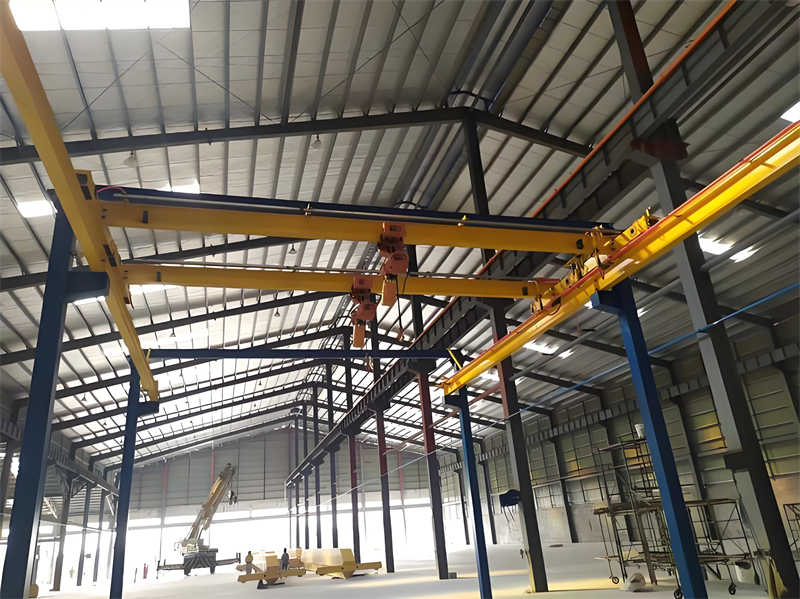
About Dongqi Crane: As a Sino-New Zealand joint venture headquartered in China’s “Cradleland of Cranes” in Changyuan, Henan Province, Dongqi Crane operates a 240,000-square-meter manufacturing facility with over 3,600 employees including more than 70 senior engineers. Certified to ISO 9001, ISO 14001, ISO 45001, and CE standards, we deliver over 10,000 crane sets annually to 96 countries. Our KBK flexible crane systems span capacities from 125 kg to 3,200 kg, with each system custom-configured to the client’s specific production layout, duty requirements, and integration needs.
Part 1: The Automotive Parts Industry at a Crossroads
1.1 A Sector Under Transformation
The global automotive parts industry is experiencing simultaneous pressures from multiple directions. Product complexity is increasing as vehicles incorporate more electronic systems, sensors, and software-driven components. The transition to electric vehicles is reshaping entire supply chains—eliminating demand for traditional engine and transmission components while creating massive new demand for battery modules, electric drive units, power electronics, and thermal management systems. Production volumes are becoming more fragmented as vehicle manufacturers proliferate models and variants to serve diverse regional markets.
In China, which produces approximately one-third of the world’s vehicles, the government’s Implementation Plan for the Digital Transformation of the Automotive Industry—jointly issued in late 2025 by the Ministry of Industry and Information Technology and three other national agencies—has set quantified targets that directly affect every automotive parts supplier in the country. By 2027, the popularization rate of R&D design tools must exceed 95%, the rate of numerical control in key processes must exceed 70%, and the industry’s overall labor productivity must increase by 10% compared to 2025. The plan explicitly identifies “digital transformation for small and medium sized enterprises of parts and components” as a priority action area.
These mandates, combined with market pressure from vehicle manufacturers demanding shorter delivery cycles and higher quality consistency, are driving an unprecedented wave of investment in production line modernization among automotive parts makers.
1.2 The Material Handling Bottleneck
In many automotive parts plants, the production machines themselves—CNC machining centers, presses, welding cells, injection molding machines—have already been upgraded to late-model, digitally controlled equipment. The bottleneck has shifted to material handling: how components move between processes, how subassemblies are transferred to final assembly, how finished parts are presented to quality inspection stations.
Traditional material handling methods in automotive parts plants include forklifts, fixed roller conveyors, column-mounted jib cranes, and manual handling with chain blocks or lifting straps. Each of these has well-documented limitations:
- Forklifts occupy aisle space, generate emissions (if internal combustion), require licensed operators, and pose collision risks in congested production areas. They are also inflexible—each route change requires reorganizing floor-level traffic patterns.
- Fixed conveyors are efficient but rigid. Adding a new workstation or changing product flow requires cutting, welding, and extended downtime. The capital cost of modifying a fixed conveyor system often approaches the cost of the original installation.
- Column jib cranes serve a limited radius and create floor obstructions. Covering a full production bay with jib cranes requires multiple columns and still leaves coverage gaps at the boundaries between jib zones.
- Manual handling of components weighing 15–50 kg or more—common in automotive parts such as brake calipers, steering knuckles, differential housings, and suspension arms—poses well-documented ergonomic risks, contributing to worker fatigue, musculoskeletal injuries, and quality problems from inconsistent positioning.
The KBK flexible crane system addresses all of these limitations simultaneously by moving material handling to the overhead space, providing continuous coverage across multiple workstations, and reducing the physical demands on operators to near-zero.
Part 2: Understanding the KBK Flexible Crane System
2.1 What KBK Means
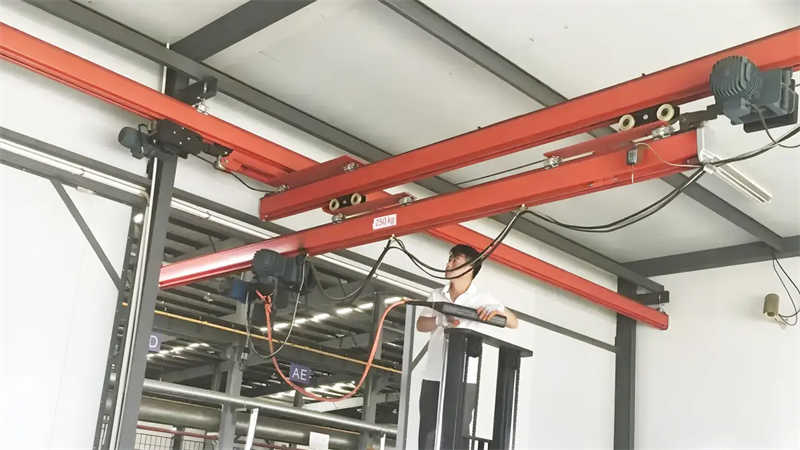
KBK is the abbreviation for the German term Kombiniertes Brückenkransystem—Combined Bridge Crane System. This technology was first introduced to the global market approximately 50 years ago and has since achieved market leadership in the light crane sector through its modular construction kit approach. The core philosophy is simple but powerful: standardized, interchangeable components—enclosed profile rails, suspension brackets, trolleys, hoists, and control elements—that can be freely combined to create material handling solutions matching the exact geometry and flow patterns of any production line.
Dongqi Crane’s KBK system is manufactured from high-strength steel, precision-engineered to ensure interface consistency and smooth operation of every module. The system supports configurations ranging from simple straight monorails connecting two workstations to complex multi-axis bridge crane layouts with curved track sections, switches, turntables, and automated control integration.
2.2 System Architecture and Components
The KBK system is built from a set of standardized modules that work together as an integrated system:
| Component | Function | Key Features |
|---|---|---|
| Enclosed Profile Rails | Provide the travel path for trolleys and hoists | Cold-rolled steel or extruded aluminum profiles; sealed design protects rolling surfaces from dust and debris |
| Suspension Brackets | Connect the rail system to the building structure | Adjustable height; accommodate varying ceiling conditions and beam spacing |
| Connector Modules | Join rail sections, create curves and switches | Standardized interface; available in straight, curved (multiple radii), and switch configurations |
| Trolley Assemblies | Carry the hoist and load along the rails | Precision sealed bearings; articulating design eliminates binding at extreme positions |
| Electric Chain Hoists | Provide vertical lifting | Capacities from 125 kg to 2,000 kg; variable frequency drive for smooth acceleration and precise positioning |
| End Carriages | Support the bridge beam and enable cross-travel | Low-friction design for manual push or motorized operation |
| Control Systems | Manage hoist motion, travel drives, and safety functions | Pendant control or radio remote; optional integration with plant automation networks |
The lightweight enclosed track design reduces dead weight by approximately 50% compared to traditional structural steel crane systems. This weight reduction is significant for automotive parts plants—it means lower structural loading on the existing building, often eliminating the need for roof reinforcement when retrofitting an older facility.
2.3 Dongqi Crane KBK Technical Specifications
Dongqi Crane’s standard KBK light crane system offers the following performance envelope:
| Parameter | Specification |
|---|---|
| Maximum Load Capacity | Up to 2 tons (2,000 kg) |
| Load Capacity Range | 125 kg to 3,200 kg across the full product line |
| Span (Single Girder) | Up to 8.5 m |
| Span (Double Girder) | Up to 9 m |
| Lifting Height | Customizable, typically 2.5 m to 12 m |
| Working Class | A3 standard; higher classifications available on request |
| Ambient Temperature Range | -20°C to +40°C |
| Rotation Angle | 360° (full flexibility) |
| Power Supply | 3-phase 380V/50Hz (adaptable to local requirements) |
For automotive applications requiring higher duty cycles, our KBK system can be configured with frequency conversion control technology that reduces energy consumption by more than 30% while meeting the requirements of M4–M7 working levels.
2.4 Configuration Options
Dongqi Crane offers the KBK system in four primary configurations, each suited to different automotive production scenarios:
KBK-I Monorail System: A single rail providing linear material transport between two or more points. Ideal for connecting loading/unloading stations, feeding components from a storage area to an assembly cell, or moving finished parts to a quality inspection station.
KBK-II Single Girder Bridge Crane: Two parallel runway rails with a traveling bridge beam spanning between them. The hoist travels along the bridge, covering a full rectangular work area. This configuration is the workhorse of automotive assembly cells, enabling coverage of an entire workstation zone from overhead.
KBK-III Double Girder Bridge Crane: Two parallel bridge beams supported by end carriages on runway rails. Provides higher rigidity and stability, suitable for spans exceeding 6 meters or applications requiring high positioning accuracy. In automotive parts production, this configuration is frequently specified for engine marriage stations and dashboard assembly where precise alignment is critical.
KBK Ring Track System: A closed-loop track layout using straight rails, curved sections, and switches to create continuous circular material flow. Particularly effective for automated assembly lines where components need to circulate through multiple process stations and return to the starting point.
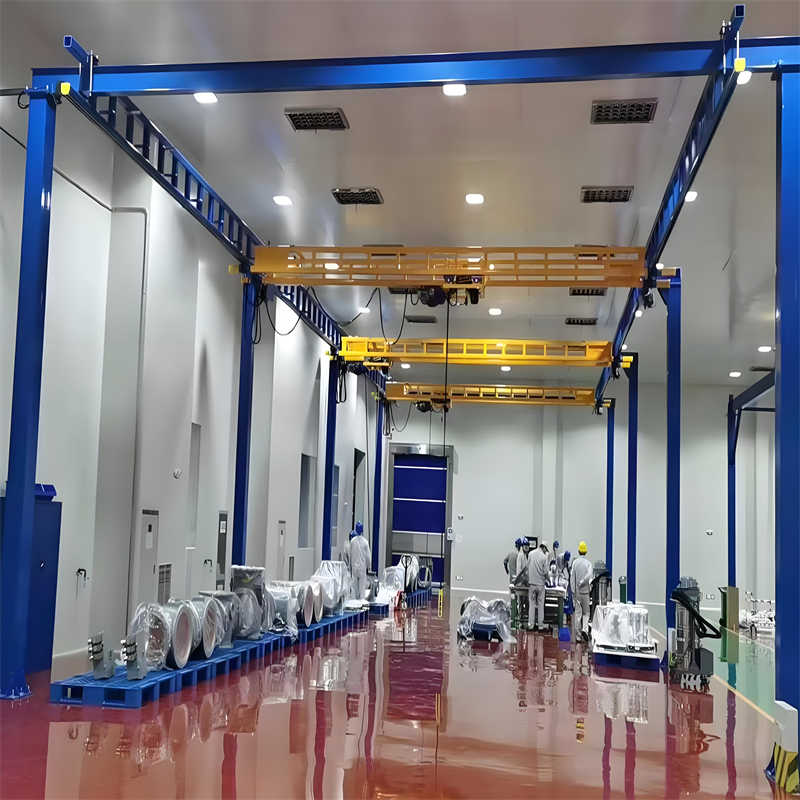
KBK-D Aluminum Alloy System: An all-aluminum rail system that is lightweight and corrosion-resistant. This configuration is specified for cleanroom environments in electronics manufacturing, battery cell assembly, and precision sensor production—growing segments within the automotive supply chain.
Part 3: How KBK Flexible Cranes Address Automotive Parts Production Pain Points
3.1 The Flexibility Imperative
The defining characteristic of modern automotive parts production is the need for frequent reconfiguration. Vehicle manufacturers now refresh models every 3–5 years (down from 6–8 years historically) and introduce numerous mid-cycle updates. A production line tooled for a specific engine block design or dashboard assembly may need to accommodate a completely different component within months.
Traditional material handling systems fail this flexibility test. A fixed roller conveyor designed for one product flow pattern requires cutting, welding, and extended downtime to modify. A conventional overhead crane with welded runway beams is effectively permanent—relocation means scrapping the existing structure and starting over.
The KBK system transforms this equation. All modules are bolted together—no welding or hot work is required on site. Track layouts can be reconfigured by adding or removing modules, changing switch positions, or extending the system to new workstations. An electronics manufacturer that deployed Dongqi’s KBK system reported: “When we needed to add a new inspection station, we simply added a section of track and a switching device to the existing rail system. The entire expansion process took less than a day”.
In automotive welding and painting lines specifically, transfer routes need frequent adjustment as vehicle models change. The KBK system’s modular design makes track modifications quick and simple, significantly reducing production line retrofit time and improving production responsiveness.
3.2 Workstation Coverage Without Floor Obstruction
Automotive parts plants are space-constrained by nature. Every square meter of floor area represents invested capital, and any fixed obstruction—a column, a jib crane base, a conveyor support structure—reduces the usable production area and constrains layout options.
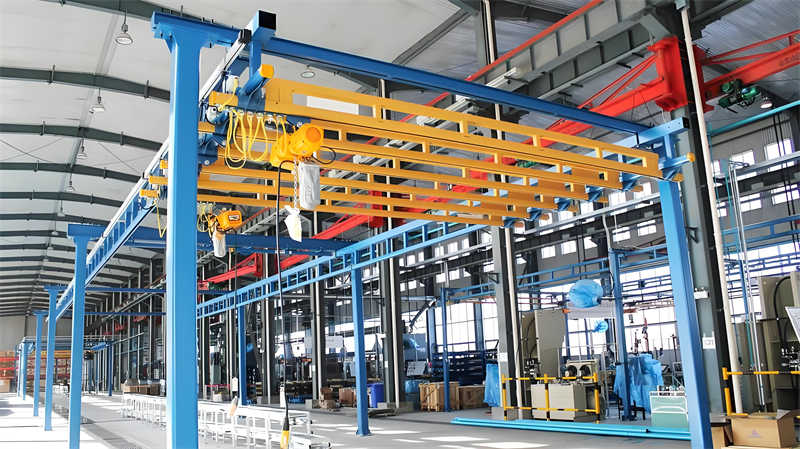
KBK systems are suspended directly from the factory roof structure or from freestanding support columns positioned at the perimeter of the work area. This ceiling-mounted installation occupies zero floor space. The entire material handling function moves overhead, freeing the floor for production equipment, material staging, and operator movement.
The practical impact is substantial. In a typical automotive parts machining cell producing brake components, replacing three column-mounted jib cranes (each occupying approximately 1.5 square meters of floor area with their base plates and creating operator obstacles) with a single KBK bridge system covering the same workstations can reclaim 4–5 square meters of productive floor area. More importantly, it eliminates the dead zones at jib radius boundaries where no crane can reach.
3.3 Ergonomic Load Handling
Musculoskeletal injuries from manual material handling remain one of the most persistent challenges in automotive parts production. Components such as brake rotors (8–15 kg each), steering knuckles (5–12 kg), CV joint assemblies (5–10 kg), and turbocharger units (10–20 kg) are routinely lifted, positioned, and aligned by production operators multiple times per shift. Over weeks and months, the cumulative strain leads to injuries, absenteeism, and reduced productivity.
KBK systems address this problem at its root by providing powered lifting assistance for every load. The lightweight design and low-friction trolleys enable operators to easily push loads manually along the rail system, while the electric chain hoist handles the vertical lifting. An operator who previously exerted significant physical effort to lift a 15 kg brake caliper onto a machining fixture can now guide the suspended load into position with light hand pressure.
The ergonomic benefit extends beyond injury prevention. Operators who are not fatigued by physical lifting maintain higher concentration, make fewer positioning errors, and sustain consistent productivity throughout their shift. For automotive parts manufacturers, this translates to lower workers’ compensation costs, reduced absenteeism, and improved product quality—all directly measurable on the balance sheet.
3.4 Precision Positioning for Quality-Critical Assembly
Many automotive assembly operations require sub-millimeter positioning accuracy. Installing an engine into a chassis, mating a transmission to an engine block, aligning a dashboard module with mounting points—these operations demand that the lifted component can be moved smoothly and stopped precisely at the target position.
KBK systems equipped with variable frequency drive (VFD) electric chain hoists provide stepless speed control from full-speed travel down to inching speeds for final positioning. The smooth start-stop characteristics of VFD control eliminate the abrupt load swing that characterizes traditional contactor-controlled hoists. Combined with the low rolling resistance of precision trolleys running on enclosed profile rails, operators achieve positioning accuracy that is simply not attainable with forklifts, jib cranes with pendant push-button controls, or manual chain blocks.
In engine assembly applications specifically, the KBK system provides the precise, controllable movement needed to lower an engine into its mounting position without risking damage to surrounding components or the engine itself. The suspended configuration keeps the load balanced and stable throughout the travel path.
Part 4: Application Scenarios Across the Automotive Parts Production Chain
4.1 Engine and Transmission Assembly Lines
Engine assembly represents one of the most demanding material handling applications in automotive production. Components arriving at the assembly line include heavy castings (engine blocks can weigh 50–200 kg, depending on configuration), rotating assemblies, cylinder heads, and numerous smaller sub-components. The assembly sequence requires components to be presented at specific stations in the correct orientation, at the correct height, and at the correct moment.
Dongqi Crane’s KBK systems serve engine assembly lines by providing overhead transport that connects sub-assembly stations to the main line and positions heavy components directly above the assembly fixture, where the operator can lower the load into precise alignment with mounting points using controlled inching speed. The system’s ability to incorporate curves and switches means that component flow can follow the actual assembly sequence rather than a straight-line path dictated by the handling equipment.
In facilities producing multiple engine variants on the same line, KBK systems with electrically actuated switches enable components to be routed to different assembly stations based on the variant being produced. This routing flexibility supports the mixed-model production that is increasingly standard in the automotive industry.
4.2 Dashboard and Interior Module Assembly
Dashboard assembly is characterized by the handling of large, relatively lightweight components (complete dashboard assemblies typically weigh 30–80 kg) that are awkward to maneuver manually due to their dimensions and must be installed with precise alignment to mounting points. Any scratching or damage during handling is immediately visible to the end customer, making controlled, damage-free material handling essential.
KBK single-girder bridge cranes provide the overhead coverage needed to pick up a dashboard module from its sub-assembly station, transport it across the bay to the vehicle assembly position, and lower it precisely into the installation location. The smooth travel and controlled lowering prevent the impacts and abrasions that occur when dashboards are manually carried or forklift-positioned.
4.3 Press Shop and Stamping Line Support
Automotive stamping operations produce body panels, structural components, and brackets from sheet metal in high volumes. The tooling—stamping dies—can weigh several hundred kilograms to several tons and must be periodically changed as different parts are produced. While a 2-ton KBK system cannot handle the largest stamping dies, it is ideally suited for handling smaller die sets, tooling components, and the raw material and finished part containers at stamping line workstations.
In blank feeding stations, KBK systems with vacuum lift attachments enable operators to pick up individual sheet metal blanks and present them to the press without manual lifting. At the exit side, similar configurations can handle finished stampings for transfer to welding or assembly operations.
4.4 Quality Inspection and Testing Stations
Every automotive component undergoes quality inspection at some point in the production process—dimensional checks on coordinate measuring machines (CMM), functional testing of assembled sub-systems, visual inspection of surface finish. These inspection stations often handle a wide variety of part types and sizes, making flexibility essential.
KBK systems at inspection stations allow inspectors to lift components onto measurement fixtures without physical strain, position them precisely for optical or contact measurement, and transfer them to the next station after inspection. The ability to reconfigure the KBK layout when inspection requirements change avoids the cost and disruption of modifying fixed handling equipment.
4.5 Battery Module and EV Powertrain Assembly
The rapid growth of electric vehicle production has created entirely new material handling requirements in automotive parts plants. Battery modules, electric drive units, power electronics, and high-voltage cabling all require careful handling to prevent damage to sensitive components and to protect workers from electrical hazards.
KBK systems are particularly well-suited to battery module assembly, where individual cells or modules weighing 15–50 kg must be precisely positioned into battery pack housings. The controlled, smooth motion of the KBK system reduces the risk of impacts that could damage battery cells—a critical consideration given the safety implications of lithium-ion battery damage. The enclosed track design also prevents contamination from rail wear particles, which is important in the clean assembly environments increasingly specified for battery production.
Part 5: Real-World Results—Dongqi Crane KBK Deployments
5.1 Slovenia: Automotive Maintenance Workshop Transformation
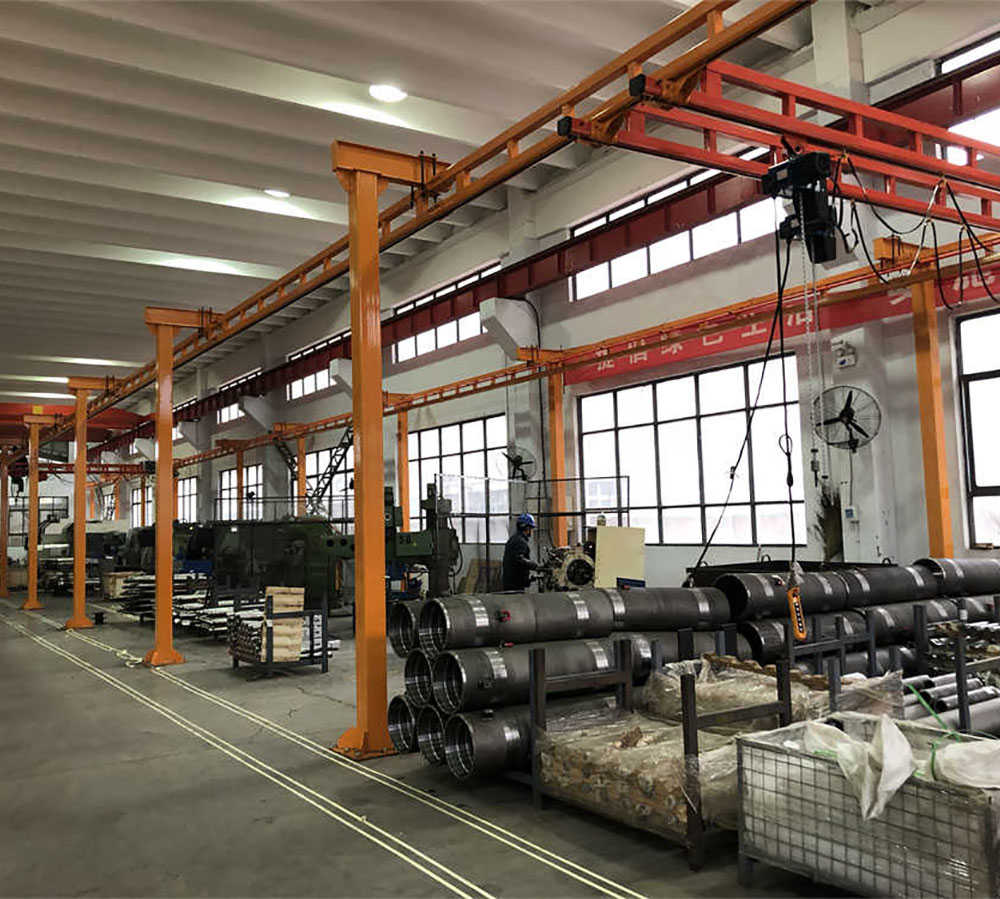
A leading industrial maintenance workshop in Ljubljana, Slovenia, specializing in servicing heavy machinery for the automotive and manufacturing sectors, faced a critical material handling challenge. Their existing infrastructure—a combination of outdated column jib cranes and manual chain blocks—was creating operational bottlenecks, safety risks, and inefficiencies in handling heavy components weighing up to 2,000 kg.
The workshop presented multiple constraints: low ceilings, narrow aisles, fixed machinery limiting floor space, and a building structure that could not support the load of a ceiling-mounted crane system. Installation had to be completed within a 7-day window to avoid disrupting ongoing projects.
Dongqi Crane’s Solution: We designed a modular, freestanding KBK workstation crane system with 2,000 kg load capacity, 4.65-meter span (customizable tracks covering three workstations), 19.9-meter track length, and 4-meter lifting height. The freestanding design used a self-supporting steel structure with floor-mounted columns, eliminating reliance on building walls or ceilings. The system featured ergonomic electric chain hoists with trolley for precise load positioning and a flexible track system allowing reconfiguration as workshop layouts evolve.
The modular KBK approach enabled complete installation within the client’s 7-day constraint, and the workshop achieved immediate improvements in material handling efficiency and operator safety.
5.2 Automotive Assembly: KBK in High-Volume Production
KBK crane systems have been used to perform various assembly tasks in automotive production for more than five decades worldwide. In modern automotive assembly plants, KBK systems are deployed across the full production chain—from stamping and body-in-white through paint shop and final assembly—providing overhead material handling that adapts to different component types, weights, and assembly sequences.
A specific application documented by industry sources demonstrates the effectiveness of KBK in engine assembly: the system functions as an overhead “rail plus hoist” arrangement positioned above the engine assembly line, effectively giving each workstation a “traveling hoist” that moves with the operator along the assembly sequence. This eliminates the waiting time and positioning difficulties associated with shared overhead cranes or floor-level material handling.
Production data from KBK deployments in automotive environments consistently shows efficiency improvements: assembly operations using KBK systems for component handling have reported production efficiency improvements exceeding 30% compared to manual handling methods.
Part 6: The Investment Case—Cost, Implementation, and Payback
6.1 Total Installed Cost
One of the most compelling advantages of the KBK system for production line upgrades is its cost-effectiveness compared to alternative material handling solutions. All KBK modules are precision-machined and quality-inspected before leaving the factory, and on-site assembly uses bolt-together connections without welding or hot work.
Statistics from Dongqi Crane’s project database show that compared to traditional custom rail systems, KBK modular systems reduce installation time by over 50% and lower installation costs by more than 30%. A typical 2-ton KBK system covering a standard automotive assembly cell of approximately 20 meters by 8 meters can often be installed over a weekend or during a planned production pause, minimizing disruption to ongoing operations.
The modular design also means that future expansions or modifications cost a fraction of what equivalent changes to a fixed conveyor or traditional crane system would require. Track sections, switches, and additional trolleys are available as standard catalog items, enabling incremental investment as production needs evolve.
6.2 Productivity Payback
The productivity gains from KBK deployment in automotive parts production come from multiple sources:
- Reduced cycle time per operation: Powered lifting and smooth travel reduce the time required to transfer components between stations compared to manual handling or forklift transport. Electric KBK systems achieve fast and accurate handling capabilities, with material handling efficiency increased by more than 50% compared to traditional manual handling.
- Reduced operator fatigue and injury: Eliminating manual lifting of components weighing 15–50 kg reduces fatigue-related productivity decline over the course of a shift and eliminates the lost time and costs associated with musculoskeletal injuries.
- Faster changeover between product variants: The KBK system’s reconfigurability means that production line changeovers can be accomplished without modifying the material handling infrastructure. This directly supports the mixed-model production strategies that automotive parts manufacturers are increasingly adopting.
- Improved quality: Precise, controlled positioning of components during assembly reduces the incidence of damage, misalignment, and rework.
For a typical automotive parts plant producing 200,000–500,000 components annually, the cumulative productivity impact of a well-designed KBK system typically delivers full investment payback within 12–18 months—and often faster when injury-related cost savings are included.
6.3 Future-Proofing the Production Line
Perhaps the most significant economic benefit of the KBK system is its role in future-proofing the production line against unknown requirements. An automotive parts manufacturer that installs a KBK system today knows that when the next vehicle platform arrives, when a new process needs to be inserted into the production flow, or when production volumes require rebalancing across workstations, the material handling system can be adapted quickly and at modest cost.
This future-proofing is particularly relevant in the context of the accelerating transition to electric vehicles. A production line currently producing internal combustion engine components may need to transition to electric drive unit components within 3–5 years. The component geometries, weights, and assembly sequences will be different—but a KBK system can be reconfigured to accommodate the new requirements without replacement.
Part 7: Implementation Roadmap—How Dongqi Crane Supports Your Upgrade
7.1 Needs Analysis and Engineering Assessment
Every Dongqi Crane KBK project begins with a structured analysis of the client’s material handling requirements. Our engineering team works with your production engineers to document:
- Component weights, dimensions, and handling characteristics for all parts moving through the target area.
- Current material flow patterns, workstation locations, and process sequence.
- Production volume and cycle time requirements.
- Building structural characteristics, including roof truss or beam locations, load capacity, and ceiling height.
- Future production plans and anticipated changes to the production line layout.
This analysis produces a formal recommendation document that specifies the KBK system configuration, load ratings, span dimensions, control features, and integration points with existing equipment.
7.2 3D Layout Design and Simulation
Using the data gathered during needs analysis, we create a 3D model of the proposed KBK system integrated with the client’s production line layout. This model verifies coverage across all workstations, confirms clearance from overhead obstructions and production equipment, and validates that the specified components will deliver the required lifting height and positioning accuracy.
For complex applications, we offer virtual simulation of material flow to identify potential bottlenecks and optimize the track layout before any hardware is ordered.
7.3 Manufacturing and Pre-Assembly
All KBK components are manufactured in our 240,000-square-meter Changyuan facility under ISO 9001 quality management. Key components—rails, trolleys, hoists, and control systems—undergo pre-assembly and functional testing before shipment, ensuring that site installation proceeds without compatibility issues or missing parts.
7.4 Installation and Commissioning
Site installation is performed by Dongqi Crane’s trained installation teams, working to a pre-agreed schedule that minimizes production disruption. Because the KBK system uses bolted connections throughout, installation is clean, fast, and does not require hot work permits or production area evacuation. We typically target completion within planned maintenance windows or weekend shutdowns.
Commissioning includes load testing at 125% of rated capacity (static) and 110% of rated capacity (dynamic), functional verification of all hoist and travel motions, and safety system testing. We train your operators and maintenance personnel on system operation, daily inspection procedures, and reconfiguration techniques.
7.5 Ongoing Support and Reconfiguration Services
Dongqi Crane’s relationship with KBK clients is ongoing. As your production requirements evolve, our engineering team provides reconfiguration planning, additional component supply, and installation support to adapt your KBK system to new production line layouts. Our 36-person multilingual overseas service team, with presence in Pakistan and support capability across 96 countries, ensures responsive assistance when you need it.
Conclusion: The Strategic Choice for Automotive Parts Modernization
The automotive parts industry’s transformation toward flexible, digitally enabled production is not a future prospect—it is a present reality, driven by market demands, regulatory mandates, and the fundamental shift in vehicle technology. Material handling systems that were adequate for the relatively stable production environment of a decade ago are now constraints on productivity, quality, and adaptability.
The 2-ton KBK flexible crane system represents a strategically sound investment for automotive parts manufacturers undertaking production line upgrades in 2026. It delivers immediate productivity gains through faster, more ergonomic material handling. It provides the flexibility to accommodate product changeovers and production line reconfigurations without capital-intensive equipment replacement. And it supports the digital integration and worker safety objectives that are central to modern manufacturing standards.
At Dongqi Crane, we bring European-standard design philosophy to every KBK system we deliver—precision-engineered components, rigorous factory testing, and application-specific configuration that ensures your material handling investment performs as promised for years to come. With over 3,600 employees, 70+ senior engineers, and a global installation footprint, we have the capacity and expertise to support automotive parts manufacturers at every stage of their modernization journey.
Take the Next Step:
- Website: pk.craneyt.com
- Engineering Consultation: Submit your production line layout and material handling requirements for a customized KBK system proposal—response within 24 hours
- Factory Visit: Inspect our KBK component manufacturing and testing processes at our 240,000-square-meter Changyuan facility
- Contact: Reach our international sales team through our website to discuss your specific automotive parts production challenges
Choose Dongqi Crane’s KBK flexible crane systems—where modular intelligence meets industrial strength, empowering the automotive parts production lines of tomorrow.
© 2026 Dongqi Crane. All rights reserved. The configurations and performance data described are based on standard product specifications. Final system design should be based on a detailed engineering evaluation of your specific production requirements.
