
15-May-2026
From Bangkok to Lahore: The Practical Playbook for Chinese High-End Crane Exports — Equipment Commissioning, Overseas Delivery, and Service Network Building
Introduction: Beyond the Factory Gate
The numbers command attention. In the first quarter of 2026, China‘s construction machinery industry achieved export revenues of USD 16.066 billion, a year-on-year increase of 24.3%, continuing a high-growth trajectory that has seen annual export volumes surge past the USD 60 billion mark. Crane products are exhibiting particularly strong momentum: tracked crane exports in January–February grew 56.6% year-on-year, while truck crane exports in January alone surged by as much as 128%. Henan Province, home to Dongqi Crane’s manufacturing base, recorded crane exports of RMB 1.244 billion in 2025, up 44% year-on-year across 149 countries and regions.
Headline figures, however, tell only part of the story. For any crane manufacturer, the real work begins the moment a signed contract leaves the commercial desk. A crane is not a consumer product that ships in a standard box. It is heavy, dimensionally complex, electrically sensitive, and mechanically precise. Transporting a 30-meter girder across the Indian Ocean, commissioning a 50-ton gantry crane in a Pakistani cement plant, or synchronizing electrical standards between a Chinese factory and a Thai port facility—these are not abstract logistical challenges. They are the daily operational realities of crane export, and they separate companies that genuinely serve international markets from those that merely ship products abroad.
Industry observers note that the competitive landscape for Chinese crane exports has undergone three fundamental shifts: from price competition to value competition, from single-product export to integrated solution delivery, and from passive standards adaptation to active participation in shaping international technical rules. For crane manufacturers specifically, these shifts carry practical implications. A crane exported today is expected to meet FEM, ISO, CMAA, or ATEX standards; to be supported by comprehensive engineering documentation in the client’s language; to be installed and commissioned by trained personnel; and to be backed by a service commitment measured in decades, not months.
At Dongqi Crane, we have spent years building the systems, teams, and infrastructure to manage these challenges at scale. With a 240,000-square-meter manufacturing facility in Changyuan, Henan Province—the renowned “Cradleland of Cranes”—over 3,600 employees including more than 70 senior engineers, a dedicated 36-person multilingual overseas service team, a permanent office in Pakistan, and export coverage across 96 countries, our international delivery capability is not an afterthought—it is woven into the fabric of how we operate.
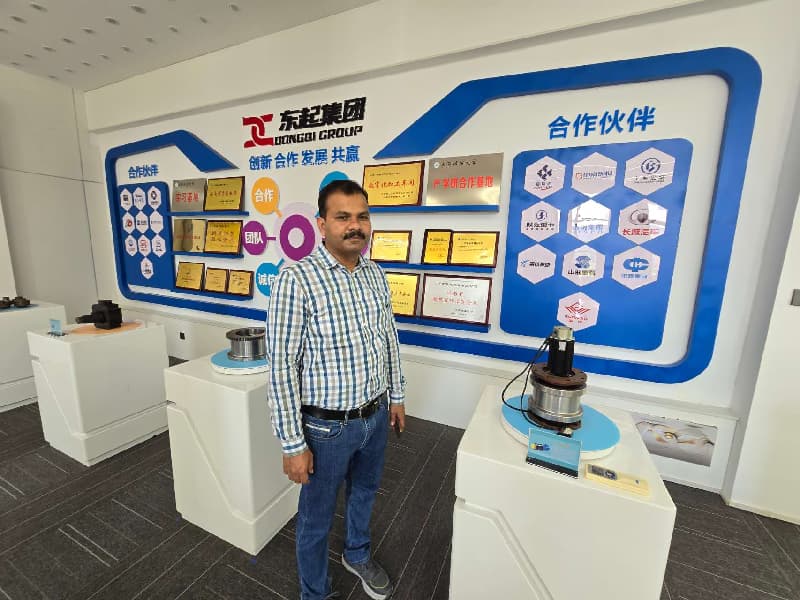
This article draws on real project experience—from Thailand to Pakistan, from Southeast Asia to the Middle East, from Africa to Latin America—to provide a candid, technically grounded account of what Chinese high-end crane export actually involves. It covers equipment commissioning, overseas logistics and delivery, and service network building, illustrated with Dongqi Crane project cases that demonstrate how theory meets practice on the ground.
Part 1: The New Geography of Chinese Crane Exports
1.1 A Market Transformed
The export landscape for Chinese cranes has undergone a structural transformation. What was once a market dominated by price-driven competition in commodity product categories has evolved into a sophisticated global trade in which Chinese manufacturers compete on technical merit, reliability, and service quality. Chinese construction machinery now covers 230 countries and regions worldwide, with market share in Belt and Road Initiative countries exceeding 25%.
This transformation is supported by deep industrial foundations. Changyuan City—Dongqi Crane‘s home base—is the epicenter of China’s crane manufacturing cluster, hosting over 1,200 complete crane and supporting enterprises, with products covering 17 series and more than 200 varieties, commanding over 70% of the domestic market and exported to more than 170 countries and regions globally. The city has achieved product testing mutual recognition agreements with over 70 countries and regions, providing a strong certification foundation for the international trade of locally manufactured cranes.
1.2 The Belt and Road Demand Engine
Infrastructure investment along Belt and Road corridors continues to generate consistent demand for overhead cranes, gantry cranes, and specialized lifting equipment. Construction materials yards require rail-mounted gantry cranes for precast concrete handling. Port expansion projects need rubber-tyred gantry cranes for container handling. Steel mills being built or upgraded across South Asia need heavy-duty overhead cranes for production material flow. Power plant construction requires turbine hall cranes.
At Dongqi Crane, we have witnessed this demand evolution firsthand. Our products have been exported to 96 countries worldwide, and we have established a growing presence in key Belt and Road markets including Pakistan, where we maintain a permanent overseas office, as well as in Southeast Asia, the Middle East, Africa, and South America.
1.3 The Export Realities No Marketing Brochure Covers
Behind the growth narrative lie operational realities that every crane manufacturer must master to succeed internationally. The challenges fall into three broad categories:
Technical commissioning—ensuring a crane performs to specification in an environment often different from the factory test bay, with different power quality, different ambient conditions, and different operator skill levels.
Overseas logistics and delivery—moving a heavy, oversized, structurally critical machine across oceans, through customs, and over sometimes marginal roads to a site that may not have adequate unloading equipment.
Service network building—establishing a sustainable local presence that can provide spare parts, technical support, maintenance, and operator training over the 15- to 25-year life of the equipment.
These are the topics the remainder of this article addresses in depth.
Part 2: Equipment Commissioning—Where Engineering Meets Reality
2.1 The Universal Truth of Overseas Commissioning
No overseas installation goes exactly as planned. Weather, shipping delays, local bureaucracy, or unexpected machine quirks will happen. The most successful commissioning teams are patient, flexible, and solution-oriented. This observation, drawn from broad experience in heavy equipment export, is confirmed by every crane manufacturer that has commissioned equipment outside its home country.
Overseas installations often reveal environmental challenges that are invisible in the factory or lab. A crane that performed flawlessly during factory testing at 25°C and 50% humidity may behave differently at 45°C ambient in a Middle Eastern summer, or in the high humidity and salt-laden air of a coastal Southeast Asian port. Power supply quality—voltage fluctuations, frequency instability, harmonic distortion—can affect VFD-driven crane controls in ways that the factory test bay never revealed.
2.2 Commissioning as a Structured Process
At Dongqi Crane, we approach overseas commissioning not as a single event but as a structured, multi-phase process that begins long before the crane reaches the customer‘s site.
Phase 1: Pre-Shipment Preparation
Every Dongqi crane undergoes factory assembly and testing before disassembly for shipment. Load testing is performed at 125% of rated capacity (static) and 110% of rated capacity (dynamic). All mechanisms, controls, and safety devices are functionally verified. This rigorous factory testing means that when our commissioning engineers arrive at the overseas site, they are working with equipment whose baseline performance characteristics are fully known.
Phase 2: Pre-Arrival Site Readiness Assessment
Before the crane ships, our engineering team works with the client to verify that the site is ready to receive it. Runway beams are checked for alignment, level, and span tolerance. Power supply is verified for voltage, phase, frequency, and capacity. Unloading equipment is confirmed available. For projects involving locally fabricated components—such as the main girders that a Pakistani steel plant client fabricated to our engineering drawings—we review the fabrication quality through photographs and video before our commissioning team departs.
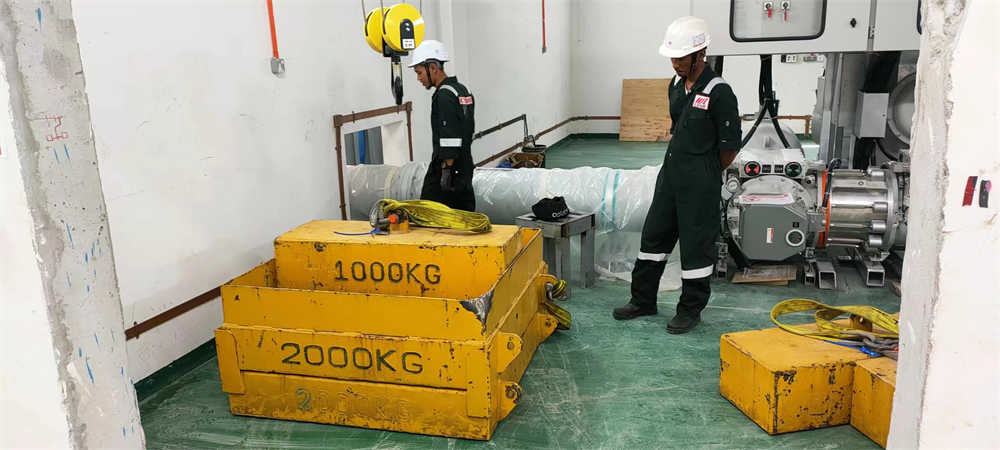
Phase 3: On-Site Commissioning
Dongqi Crane deploys experienced commissioning engineers to the overseas site. For complex projects, we may send a team that stays on site for the full installation and commissioning period. For simpler installations, we provide comprehensive installation manuals, electrical diagrams, and remote video guidance support.
The on-site commissioning process typically includes:
- Mechanical assembly verification: Checking that all bolted and welded connections are to specification, that wheels are properly seated on rails, and that all safety clearances are maintained.
- Electrical system commissioning: Verifying that wiring conforms to the electrical diagrams, that all control signals function correctly, that limit switches are properly positioned, and that overload protection is calibrated.
- No-load testing: Operating all motions—hoisting, cross-travel, long-travel—through their full range without load, verifying smooth operation, correct speeds, and limit switch function.
- Load testing: Static load test at 125% of rated capacity, held for a specified duration while deflection is measured and compared to design predictions. Dynamic load test at 110% of rated capacity, with all motions operated through their full range. Brake holding tests.
- Operator training: Before handover, our engineers train the client’s operators on safe operating procedures, control functions, emergency protocols, and daily inspection requirements.
Phase 4: Post-Commissioning Monitoring
After handover, we maintain contact with the client to monitor the crane’s early operational performance. Any issues are addressed promptly. For cranes equipped with Dongqi Crane‘s AICrane smart monitoring system, our engineering team can access operational data remotely to verify that the crane is performing within its design envelope.
2.3 Case Study: Commissioning Across Pakistan’s Industrial Landscape
Pakistan’s industrial economy has been a significant market for Dongqi Crane‘s commissioning expertise. Our installations include bridge cranes for tunnel construction projects, RTG cranes for precast beam factories, rubber tire gantry cranes for cement plants, and overhead crane systems for steel mills.
The diversity of these applications illustrates the range of commissioning challenges encountered in a single market. A cement plant environment presents dust challenges that require enhanced sealing and more frequent filter changes. A steel mill environment exposes the crane to radiant heat and requires verification that thermal expansion allowances are functioning as designed. A tunnel construction site may have unstable power supply that requires commissioning of the crane’s electrical system to tolerate wider voltage fluctuations.
In July 2025, Dongqi Crane delivered four sets of 5-ton European-standard double girder overhead cranes without main beams to a steel processing plant in Lahore, Pakistan. The client faced multiple constraints: low ceiling clearance, limited installation space, and a desire to fabricate main beams locally to reduce shipping costs. Our solution was a complete crane kit—FEM-standard double girder hoist trolleys, end carriages with drive mechanisms, advanced control systems, and all electrical components—with the main girders fabricated by the client to Dongqi engineering drawings.
Commissioning for this project included remote video guidance supplemented by comprehensive documentation. Our engineers reviewed the client’s girder fabrication, confirmed that the trolley rail installation met specifications, and guided the local team through electrical commissioning and load testing. The project demonstrated that with proper preparation and documentation, effective commissioning can be achieved even when travel constraints prevent full on-site deployment of the manufacturer’s engineering team.
In another significant project, Dongqi Crane delivered a customized lifting system portfolio to a Pakistani partner that included explosion-proof double girder and single girder overhead cranes. Following the supply contract finalization, the client conducted a factory acceptance visit—a critical project milestone that allowed thorough on-site inspection of custom-manufactured equipment. The delegation’s detailed technical walkthrough of manufacturing processes and successful acceptance testing of completed explosion-proof cranes provided tangible confirmation of equipment build quality, performance, and strict adherence to agreed technical specifications before the equipment shipped.
Part 3: Overseas Logistics and Delivery—Mastering the Physical Supply Chain
3.1 The Dimensional Challenge
A crane’s main girder is the single largest component in most overhead crane shipments. For a double-girder crane of 20-meter span, each girder is a welded steel box section that may be 21 meters long, 1.5 meters deep, and weigh 6–10 tons or more. This is not a component that fits in a standard 40-foot container. Specialized logistics are required at every step.
The dimensional challenge directly impacts shipping economics. Main beams are large, heavy, and difficult to ship efficiently. By adopting creative delivery models, such as crane kits without main beams, customers can significantly reduce container volume and weight, cutting shipping costs by 30–50%, especially for long-distance exports.
3.2 Dongqi Crane’s Multi-Modal Delivery Models
Drawing on years of export experience across 96 countries, Dongqi Crane has developed a flexible set of delivery models matched to project characteristics, client capabilities, and logistical constraints.
Model A: Complete Crane Delivery (Fully Assembled and Tested)
For standard overhead cranes where the span permits containerized or flat-rack shipping, we deliver the complete crane—main girders, end carriages, hoist trolley, electrical panels, and all accessories—factory-assembled and tested. This model minimizes site assembly work and is ideal for projects where the client has limited fabrication capability and the crane dimensions permit economic transport. Documentation includes full installation manuals, electrical diagrams, and load test certificates from factory testing.
Model B: Crane Kit Delivery (Components without Main Girders)
For projects where main girder shipping would be disproportionately expensive or logistically complex—particularly long-span cranes, remote destinations, or clients with local fabrication capability—Dongqi Crane supplies a complete crane kit excluding the main girders. The kit includes hoist trolleys, end carriages with drive mechanisms, control systems, electrical components, connection hardware, and detailed fabrication drawings for the main girders.
The Pakistan steel plant project described in Part 2 is a clear example of this model in practice: the four 5-ton European-standard double girder overhead crane kits were delivered to Lahore in 45 days from order to shipment, with the client fabricating the 14.1-meter span main girders locally to Dongqi‘s engineering specifications. This approach delivered substantial freight savings while ensuring that the performance-critical components—hoist, drives, controls—were manufactured and tested in Dongqi’s factory.
Model C: Turnkey Delivery with Installation Supervision
For complex projects—heavy-duty cranes, explosion-proof cranes, specialized applications—Dongqi Crane offers turnkey delivery that includes not only the crane equipment but also on-site installation supervision by our engineering team. This model applies to large-scale installations where the client requires manufacturer oversight of every aspect of installation and commissioning.
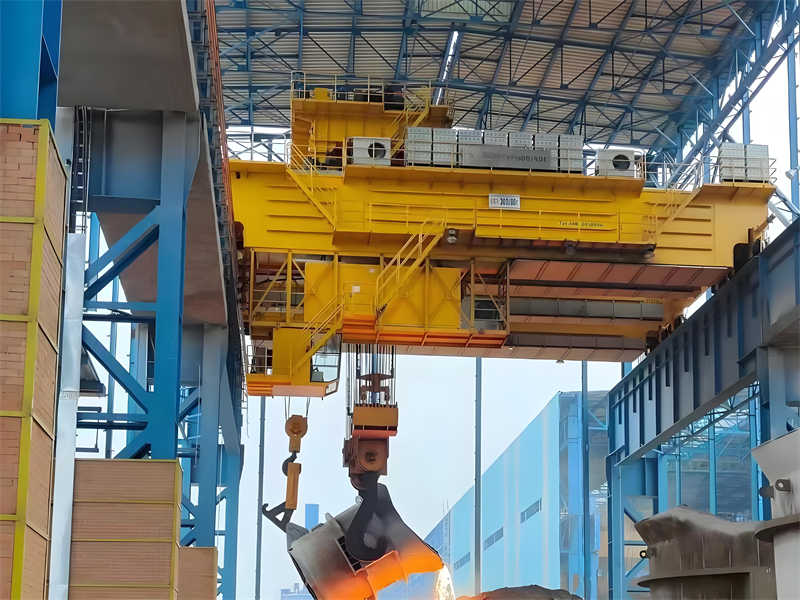
In 2020, Dongqi Crane manufactured and supplied two QN type grab-and-hook dual-purpose overhead cranes for a steel mill in Pakistan. The project demonstrated the full process: structural fabrication, packaging and dispatch to the port, arrival in Pakistan, and on-site installation supervision by our team. The cranes—one of 20-ton capacity with 21.5-meter span and one of 20-ton capacity with 12-meter span—were used for handling both bulk materials with grabs and general loads with hooks.
Model D: Component Supply for Local Crane Builders
In markets where established local crane builders exist, Dongqi Crane supplies high-quality components—European-standard hoist trolleys, end carriages, drives, and controls—that the local builder integrates into their own crane structures. This model leverages the local builder’s market knowledge and installation capability while ensuring that the performance-critical components meet international standards.
3.3 Packaging, Documentation, and Customs
Overseas commissioning often exposes gaps in spare parts planning. Successful crane export requires meticulous attention to packaging, documentation, and customs compliance—areas where inexperience can cause costly delays.
Packaging: All Dongqi Crane export shipments are packed for ocean freight with appropriate corrosion protection. Electrical panels are sealed in moisture-barrier bags with desiccant. Machined surfaces are coated with rust-preventive compound. Bolted connections and small parts are organized in clearly labeled containers with packing lists cross-referenced to assembly drawings.
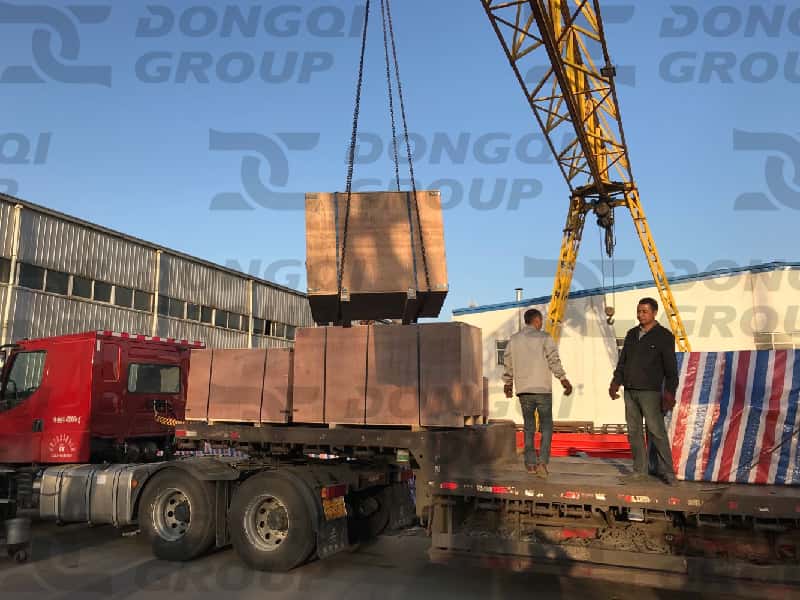
Documentation: Every export shipment includes a complete documentation package: commercial invoice, packing list, bill of lading, certificate of origin, and where required, fumigation certificates for wooden packaging. Technical documentation—installation manuals, electrical diagrams, load test certificates—is provided in the client’s language or in English.
Customs: Dongqi Crane works with experienced freight forwarders and customs brokers in each destination market. We classify crane components under the appropriate Harmonized System (HS) codes to minimize customs delays and duty costs. For markets with preferential trade arrangements—such as China-Pakistan Free Trade Agreement provisions—we ensure that documentation supports the reduced duty rates available under those agreements.
Part 4: Service Network Building—From Delivery to Lifetime Partnership
4.1 The Service Imperative
In international crane markets, after-sales support—localized services such as installation, commissioning, and spare parts supply—determines the customer repurchase decision. A crane that arrives on time and performs to specification is an engineering success. A crane that is supported for its full 15- to 25-year service life, with spare parts available when needed, with technical support accessible when issues arise, with upgrade paths available as production requirements evolve—that is a commercial partnership.
Industry data underscores the economic significance of service. In the global crane industry, the service business typically generates significantly higher margins than equipment sales and provides recurring revenue that stabilizes the manufacturer’s business through economic cycles. For buyers, the availability of responsive local service directly affects equipment uptime, maintenance costs, and operational safety.
Leading global manufacturers have long recognized this dynamic. Konecranes, the industry’s clear market leader in crane service with the world‘s most extensive service network, has continued expanding its Asia-Pacific service footprint through targeted acquisitions in Thailand and New Zealand. The company’s service sales growth outpaces the market, with a comparable EBITDA margin of 20.1% and a target of 20–24% by 2027, demonstrating the economic value of a well-built service infrastructure.
For Chinese crane manufacturers expanding internationally, service network building is both a competitive necessity and a strategic opportunity. The manufacturers that invest in local service infrastructure will progressively differentiate themselves from those that rely on ad-hoc support or expect customers to manage their own maintenance.
4.2 Dongqi Crane‘s Multi-Tier Service Architecture
Dongqi Crane has developed a multi-tier service architecture designed to provide responsive support to international clients while building toward deeper local presence over time.
Tier 1: Centralized Remote Support
Our headquarters-based multilingual service team of 36 professionals operates in English, Arabic, Spanish, Russian, Korean, and other languages, providing 24/7 rapid after-sales response and technical support. For routine inquiries, troubleshooting, and spare parts identification, this centralized team is the first point of contact. The team can diagnose many issues remotely using photographs, video, and operational data from AICrane-equipped cranes.
Tier 2: Permanent Overseas Offices
Dongqi Crane has established a permanent overseas office in Pakistan, providing convenient service and cost-effective crane equipment to the Pakistani market. A permanent in-country presence enables faster response to service requests, local spare parts inventory, relationship-building with key accounts, and deeper understanding of market-specific requirements. In Pakistan, our installations span bridge cranes for tunnel construction projects, RTG cranes for precast beam factories, rubber tire gantry cranes for cement plants, and overhead crane systems for steel mills.
The Pakistan office represents our model for international market development: begin with project deliveries that establish product credibility, follow with a dedicated local presence that ensures service quality, and build toward a self-sustaining operation that can pursue new business, manage installations, and provide lifetime support.
Tier 3: Service Partnerships and Local Agents
In markets where Dongqi Crane does not yet maintain a direct office, we work with carefully selected local agents and service partners. These partners are typically established industrial equipment service providers or local crane builders who understand the market, have technical capability, and can provide first-line support to Dongqi Crane customers. Dongqi Crane provides training, technical documentation, and spare parts supply, while the local partner provides on-site presence.
Tier 4: Factory-Direct Support for Complex Issues
For complex technical issues, Dongqi Crane’s 70+ senior engineers at our Changyuan headquarters provide direct support. This includes remote diagnostics, engineering analysis, and when necessary, deployment of specialist engineers to the customer site. Our engineering depth—encompassing structural, mechanical, electrical, and control system expertise—enables us to resolve issues that local service providers may not be equipped to handle.
4.3 Spare Parts: The Operational Backbone of Service
Overseas commissioning often exposes gaps in spare parts planning. For crane operators in overseas markets, spare parts availability is the single most important service attribute—more important than phone support, more important than warranty terms. A crane that is idle waiting for a replacement brake coil or VFD module is costing the operator production output that dwarfs the cost of the part itself.
Dongqi Crane‘s approach to spare parts includes:
- Commissioning spares: Every crane shipment includes a recommended set of commissioning and first-year spares—brake linings, contactors, limit switches, fuses, filters, seals—items that may be needed during installation or early operation.
- Critical component inventory: For key electrical and mechanical components—motors, gearboxes, VFDs, control modules—we maintain inventory that can be shipped on short notice to any of our 96 export destinations.
- Local stocking: In Pakistan, where we maintain a permanent office, we stock common spare parts locally to enable same-day or next-day availability. This is the model we aim to extend as our international network grows.
- Component interchangeability: Our European-standard product line is designed for high component commonality across models, reducing the variety of spare parts that customers need to maintain.
4.4 Training and Capability Transfer
A service network is only as effective as the people who operate it. Dongqi Crane invests in training and capability transfer at multiple levels:
Operator Training: During commissioning, our engineers train client operators on safe operating procedures, daily inspection routines, and basic troubleshooting. This training is documented and repeated as needed.
Maintenance Personnel Training: For clients with in-house maintenance teams, we provide more advanced training covering preventive maintenance schedules, wear component replacement, electrical system diagnostics, and safety system verification.
Local Partner Training: For our service partners and agents, we provide comprehensive technical training on Dongqi Crane products, enabling them to handle first-line service and maintenance independently.
Part 5: Case Studies—Export Excellence in Practice
5.1 From Bangkok: Serving Southeast Asian Manufacturing Growth
Southeast Asia has been a sustained growth market for Dongqi Crane, with demand driven by manufacturing expansion, infrastructure development, and port modernization. Our products have been exported to countries across the region, and we have been steadily building our service relationships through successful project deliveries.
The 2026 Dongqi Crane Global Gantry Crane Market Outlook highlights the strategic importance of the Southeast Asian market, where our RTG (Rubber-Tyred Gantry) cranes and European-standard overhead cranes serve manufacturing facilities, logistics centers, and construction material yards. Our MG Series rail-mounted gantry cranes, with their optimized cost structure and rapid commissioning capability (typically 8-10 weeks for standard configurations), are particularly well-suited to the budget-conscious yet quality-sensitive Southeast Asian market.
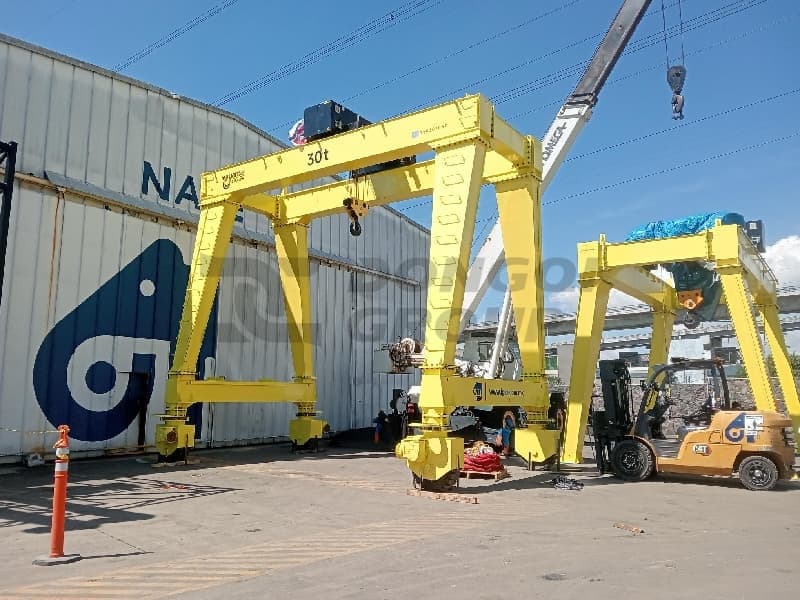
5.2 To Lahore: Deep Partnership in Pakistan
Dongqi Crane’s Pakistan operations represent our most developed international market presence and our model for deep market engagement. Our permanent office in Pakistan provides local service capability, and our project portfolio spans multiple industrial sectors:
Steel and Metallurgy: Multiple bridge crane installations serving steel mills and metallurgical plants, including the customized 5-ton European-standard double girder crane kits to a Lahore steel plant, heavy-duty 20-ton dual-purpose cranes for a Pakistani steel mill, and high-performance bridge cranes supplied to a large metallurgical plant equipped with container rotating hoists, grab hoists, and monorail hoists with lifting capacities of 65 tons, 35 tons, and 10 tons respectively.
Infrastructure and Construction: RTG cranes for precast beam factories, bridge cranes for tunnel construction projects, and gantry cranes for cement plants.
Paper Manufacturing: Bridge cranes designed and manufactured for a paper mill in Pakistan, supporting equipment installation and commissioning at the new mill.
Heavy Forging: A landmark 350-ton overhead crane delivered to a Pakistani steel forging factory, with a span of 33 meters and an auxiliary 50-ton hoist, demonstrating Dongqi Crane‘s capability to engineer and deliver extreme-capacity lifting solutions internationally.
Customized Lifting Systems: A comprehensive portfolio of explosion-proof cranes—including double girder and single girder configurations—delivered to a Pakistani partner, with capacities and spans tailored to specific hazardous area applications.
5.3 Latin America: Emerging Growth, Consistent Delivery
In Latin America, Dongqi Crane has established itself as a trusted supplier with dozens of completed projects across mining operations, manufacturing facilities, warehouse complexes, and port installations from Chile to Colombia. The region’s mining sector, in particular, demands robust, reliable cranes capable of operating in challenging environments—high altitude, dust, temperature extremes—conditions that test both equipment quality and after-sales support capability.
Our Mexico market analysis reveals the scale of opportunity: Mexico’s import of lifting equipment from China saw remarkable growth from 2024 to 2025, with gantry crane import volume surging by over 216% and overhead bridge crane import value growing by approximately 53%. This trend reflects a strategic move by Mexican industries toward investing in higher-value, more efficient, and reliable equipment to enhance productivity and global competitiveness.
5.4 Africa: Building on Growing Trade Ties
In Africa, Dongqi Crane has been serving customers with tailored lifting solutions that combine Chinese engineering efficiency with international standards. Zambia provides a representative example: Chinese gantry crane imports jumped from 8 units (USD 61,000) in 2024 to 15 units (USD 217,000) in 2025—an 87.5% increase in volume and more than tripling in value—while overhead crane imports remained strong at 65 units in 2025 valued at USD 1.578 million. These numbers reflect growing recognition across African industries that high-quality overhead and gantry cranes from Chinese manufacturers deliver proven reliability, modern safety features, and long service life at competitive pricing.
Part 6: The Dongqi Crane Export Advantage
6.1 Manufacturing at Scale
The foundation of Dongqi Crane’s international competitiveness is manufacturing at scale from our 240,000-square-meter facility in Changyuan, Henan Province—the heart of China’s crane manufacturing cluster. With over 3,600 employees, more than 70 senior engineers, and annual production exceeding 10,000 crane sets, we combine European-standard design capability with the cost efficiency of China’s most concentrated crane industrial ecosystem.
Our manufacturing facility is equipped with over 2,000 sets of manufacturing and detection devices, including four-gun air protection portal-shaped automatic welding machines, impeller blasting descaling equipment, digital-control plant drills, and automated spray-paint lines. Every crane undergoes factory assembly and testing—static load test at 125% of rated capacity, dynamic test at 110%—before disassembly for shipment.
6.2 Certification and Compliance
Dongqi Crane holds ISO 9001 (Quality Management), ISO 14001 (Environmental Management), and ISO 45001 (Occupational Health & Safety) certifications, as well as CE certification for products destined for European and other regulated markets. For explosion-proof applications, we provide ATEX/IECEx-certified equipment. For specialized applications—cleanroom cranes, nuclear facility cranes, high-temperature cranes—we engineer to the applicable standards.
This certification portfolio is essential for international market access. Buyers in regulated markets require documented evidence of quality management, environmental responsibility, and occupational safety. Our certifications are available for client review at any time.
6.3 Multilingual Capability and Cultural Competence
Effective international service requires more than technical skill—it requires communication. Dongqi Crane‘s 36-person multilingual overseas service team includes professionals fluent in English, Arabic, Spanish, Russian, Korean, and other languages. This linguistic capability, combined with experience working across diverse cultural contexts, enables our team to communicate effectively with clients, understand their requirements accurately, and resolve issues efficiently.
Cultural competence extends beyond language. Understanding local business practices, respecting cultural norms around communication and negotiation, and adapting our service delivery to local expectations—these are integral to building trust and long-term partnerships.
6.4 Long-Term Commitment
The commercial logic of crane export is straightforward: the real value is not in the initial sale but in the service relationship over the equipment’s 15- to 25-year life. At Dongqi Crane, we structure our international operations with this logic in mind. Our permanent office in Pakistan, our 96-country export reach, our 24/7 service response commitment, and our ongoing investment in international service capability all reflect a long-term commitment to supporting our customers throughout their equipment’s service life.
Part 7: Lessons Learned—Practical Guidance for Buyers
7.1 Evaluate the Total Delivery Chain, Not Just the Product Specification
When evaluating crane suppliers for international projects, look beyond the product specification. Examine the supplier’s track record in your region. Ask about their export packaging standards, their customs documentation experience, their commissioning process, and their spare parts availability model. A technically excellent crane supported by weak logistics and service infrastructure will underperform compared to an adequate crane delivered and supported by a well-organized supplier.
7.2 Verify Service Commitment Before Purchase
Service promises are easy to make and hard to verify. Request evidence: contact information for existing customers in your region who can speak to the supplier’s service performance; documentation of spare parts delivery times for recent orders; details of the supplier’s local presence—office, personnel, inventory. If a supplier cannot provide credible evidence of service capability in your region, consider whether that supplier is the right partner for a 20-year equipment investment.
7.3 Plan for Commissioning from the Outset
Commissioning should be addressed during contract negotiation, not after the crane arrives. Agree on the commissioning scope, duration, and responsibility allocation before the order is placed. Confirm that the supplier’s commissioning engineers have the necessary visas, vaccinations, and site safety certifications to work at your facility. Prepare the site—runway alignment, power supply, unloading equipment—before the crane arrives. Well-planned commissioning is typically smooth; poorly planned commissioning is almost always expensive and stressful.
7.4 Consider the Full Spectrum of Delivery Models
The four delivery models described in this article—complete crane, crane kit, turnkey with supervision, and component supply—exist because different projects have different requirements. If your organization has strong local fabrication capability, a crane kit model can save substantial freight costs. If you require manufacturer assurance on every aspect of installation, a turnkey model with full on-site supervision may be the right choice. Discuss these options with your supplier early in the procurement process.
7.5 Build a Partnership, Not a Transaction
The most successful crane export relationships are partnerships, not transactions. Choose a supplier that demonstrates long-term commitment to your market. Invest the time to build a relationship with the supplier’s technical and service teams. Provide feedback on what works and what could be improved. A partnership approach benefits both parties: the buyer receives more responsive, better-tailored support, and the supplier gains market intelligence that improves their future offerings.
Conclusion: From Export Products to Export Excellence
Chinese crane exports have entered a new era. The days when international buyers chose Chinese cranes solely on price are over. Today, buyers evaluate Chinese manufacturers on design standards, manufacturing quality, delivery reliability, commissioning capability, and service commitment—the same criteria they apply to European or North American suppliers. The manufacturers that meet these criteria win not just orders but long-term partnerships. Those that fail to meet them discover that price advantage alone is not a sustainable competitive strategy.
At Dongqi Crane, we have built our international operations on the understanding that export is not a sales activity—it is an operational discipline. It requires manufacturing quality that meets international standards, logistics capability that delivers complex equipment reliably to challenging destinations, commissioning expertise that ensures performance from day one, and service infrastructure that supports the equipment for decades.
From Bangkok to Lahore, from Southeast Asia to the Middle East, from Africa to Latin America, Dongqi Crane is executing this vision every day—one project, one installation, one satisfied customer at a time.
Contact Dongqi Crane:
- Website: pk.craneyt.com
- Engineering Inquiry: Submit your project requirements for a customized proposal with delivery and service plan—response within 24 hours
- Factory Visit: Inspect our 240,000-square-meter manufacturing facility in Changyuan, Henan, China—the “Cradleland of Cranes”
- International Sales & Service: 36-person multilingual team with permanent presence in Pakistan and export coverage across 96 countries
- After-Sales Support: 24/7 rapid response and technical support for all Dongqi Crane products worldwide
With Dongqi Crane, you gain more than lifting equipment—you gain a partner who has mastered the practical realities of international crane delivery, commissioning, and lifetime service.
© 2026 Dongqi Crane. All rights reserved. The project cases and delivery models described in this article are based on Dongqi Crane’s operational experience. Specific delivery and service arrangements should be confirmed during contract negotiation for each individual project.
