
21-May-2026
Locking In Crane Production Capacity and Avoiding Delivery Delays Amid Global Delivery Volatility
Introduction: When Delivery Certainty Becomes the Scarce Resource
In early 2026, a construction materials manufacturer in Southeast Asia placed an order for a 20-ton overhead crane with a 90-day delivery commitment. The crane was a critical-path item for a new production line scheduled to begin operation in June. In March, the manufacturer received notice that delivery would be delayed by six weeks due to a shortage of rare earth magnets used in the crane’s permanent magnet motors. The production line launch was postponed. The revenue impact, calculated by the manufacturer’s finance team, exceeded the entire purchase price of the crane.
This scenario is not hypothetical. It is a composite of real situations that Dongqi Crane’s international clients have navigated over the past 18 months. And it reflects a broader structural shift in global industrial equipment supply chains that every crane procurement team must now contend with.
The global supply chain landscape in 2026 is characterized by a paradox. On one hand, headline indicators suggest recovery from the severe disruptions of 2021–2022. On the other, beneath the surface, structural stress persists—manifesting in constrained manufacturing capacity, allocation imbalances, and geopolitical volatility that reverberate through lead times, pricing, and fulfillment rates. For buyers of overhead cranes, gantry cranes, and specialized lifting equipment, the most critical question in procurement has shifted: it is no longer simply “what crane should I buy?” but “how can I ensure it arrives when my project needs it?”
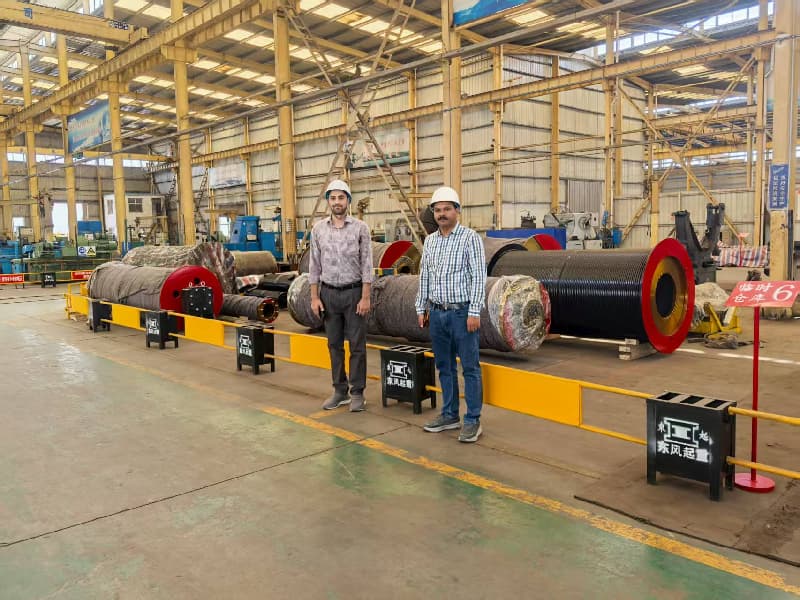
At Dongqi Crane, we have managed thousands of international crane deliveries across 96 countries. We have seen the impact of supply chain disruptions firsthand and, more importantly, have developed practical strategies to protect our clients’ project timelines. This guide shares those strategies—explaining the forces behind today’s delivery volatility, providing a framework for evaluating supplier production capacity, and outlining the concrete steps procurement teams can take to lock in capacity and avoid delivery delays.
About Dongqi Crane: As a Sino-New Zealand joint venture headquartered in China’s renowned “Cradleland of Cranes” in Changyuan, Henan Province, Dongqi Crane operates a 240,000-square-meter manufacturing facility with over 3,600 employees including more than 70 senior engineers. Certified to ISO 9001, ISO 14001, ISO 45001, and CE standards, we produce over 10,000 crane sets annually. Our 36-person multilingual overseas service team supports operations across 96 countries. The strategies described in this guide are drawn from our direct operational experience managing crane production capacity, component supply chains, and international logistics in a volatile global environment.
Part 1: The 2026 Supply Chain Landscape—Why Delivery Volatility Is Structural, Not Temporary
1.1 The Order Surge That Caught Supply Chains Off Guard
The industrial automation and heavy equipment sectors entered 2026 carrying a hidden backlog. Throughout 2025, a dramatic shift in US trade policy created widespread uncertainty, leading many industrial buyers to delay capital equipment orders rather than cancel them outright. As trade tensions showed signs of resolution and interest rate cuts materialized, these delayed orders coalesced into a surge in early 2026—a “pop” in order volumes that supply chains were not adequately resourced to absorb.
The consequences are now visible across the industrial equipment landscape. Average delivery delays have shortened from the extreme peaks of the pandemic era, but industrial buyers still report multiple-month delays on critical parts—particularly semiconductors, memory, and specialty controllers. This persistence reflects a deeper structural problem: semiconductor manufacturing capacity is increasingly allocated to AI-driven and high-performance computing segments, diverting resources away from the legacy DRAM and embedded chips that industrial automation and crane control systems depend on. Global memory supply continues to be tight, with legacy DDR4/DDR5 shortages expected into at least the first half of 2026.
1.2 The Rare Earth Magnet Bottleneck
For crane manufacturers, a particularly acute supply risk centers on rare earth permanent magnets—critical components in the variable frequency drive motors that power modern hoists, trolleys, and bridge drives. In 2025, China expanded export restrictions on rare earth materials, requiring manufacturers to apply for and receive approval before purchasing these materials. China produces approximately 60% of many rare earth inputs and processes nearly 90%, giving these restrictions outsized impact across global value chains.
The restriction has already affected motor availability. Industry reports indicate that motor manufacturers are struggling to secure adequate supplies of rare earth materials for permanent magnet motor production. While slower order volumes in 2025 masked the severity of the problem, the 2026 order surge has exposed it. For crane procurement teams, this translates to a specific and actionable risk: any crane specification that depends on rare earth permanent magnet motors should be evaluated for supply chain exposure, and alternative motor technologies should be considered where feasible.
1.3 Shipping Costs and Route Instability
Even when a crane is manufactured on schedule, delivery to the customer site faces its own set of challenges. In the first half of 2026, global shipping markets have experienced significant volatility. The Baltic Dry Index—a key benchmark for bulk shipping costs—rose approximately 49% from March to May 2026, reaching levels not seen since 2021. While the index has since moderated somewhat, freight costs on some routes have surged by 30% or more in a matter of weeks, with even small disruptions at a single port creating domino effects that cascade through delivery schedules across continents.
The heavy equipment and project cargo sector faces additional pressures. Fuel supply uncertainty, Middle East conflicts, rising protectionism, and declining global economic visibility are compressing operational flexibility for bulk and project cargo transport. For crane shipments—which involve large, heavy, dimensionally complex components requiring specialized handling—the availability of suitable vessels and the predictability of freight costs have become genuine procurement concerns.
1.4 The Broader Pattern: From Efficiency to Resilience
These disruptions are not random events. They reflect a fundamental restructuring of global supply chains away from efficiency-optimized, single-source models toward resilience-focused, diversified networks. The World Economic Forum has characterized this as a shift from “efficiency-driven systems to resilience-focused networks, with fragmentation, geopolitical tensions, and regionalization becoming the new normal.”
For crane procurement, the practical implication is clear: delivery certainty can no longer be assumed. It must be actively secured through supplier selection, contract structuring, production monitoring, and logistics planning. The remainder of this guide explains how.
Part 2: Evaluating Supplier Production Capacity—The Foundation of Delivery Certainty
2.1 Factory Scale as a Leading Indicator
The single most reliable predictor of a crane manufacturer’s ability to meet delivery commitments is the physical scale and utilization rate of its production facilities. A factory with adequate production capacity reduces the risk of delivery delays not because delays are impossible, but because capacity provides buffer—when unexpected demand surges or component shortages occur, a manufacturer with surplus capacity can re-sequence production to protect committed delivery dates.
At Dongqi Crane, our 240,000-square-meter manufacturing facility in Changyuan is equipped with over 2,000 sets of manufacturing and detection devices, with an annual production capacity exceeding 10,000 crane sets. This scale means that when a client places an order with a committed delivery date, the order is absorbed into a production system with genuine capacity reserves—not one already operating at or beyond its practical limits.
Procurement teams evaluating potential crane suppliers should ask direct, quantitative questions about capacity: What is the total factory floor area? How many crane units are produced annually? What is the current capacity utilization rate? A supplier unwilling or unable to provide specific answers to these questions should be viewed with caution.
2.2 Standard vs. Custom: Understanding Lead Time Realities
Crane lead times vary significantly based on configuration complexity. Based on Dongqi Crane’s operational data and broader industry benchmarks, standard lead time expectations in 2026 are as follows:
| Crane Type | Standard Lead Time | With Customization | Factors Affecting Lead Time |
|---|---|---|---|
| Single-Girder EOT Crane | 30–45 days after deposit | Add 10–15 days for design validation and prototyping | Span, capacity, control options, special environment requirements |
| Double-Girder EOT Crane | 45–60 days | Add 15–25 days for custom engineering | Box girder fabrication, complex control integration, heavy-duty classification |
| Gantry Crane (Standard) | 8–10 weeks | Add 2–4 weeks for non-standard span or capacity | Main beam fabrication, rail interface, outdoor protection packages |
| Specialized Crane (Cleanroom, Explosion-Proof, Ladle) | 12–20+ weeks | Case-specific | Certification requirements, specialized materials, third-party inspection |
These lead times assume the supplier has available production capacity and component inventory. When capacity is constrained—which is increasingly the case in 2026—lead times can extend significantly. A supplier operating near capacity may quote 60 days but need 90 or more to complete production, particularly if component shortages create unplanned delays.
2.3 Automation and Digital Manufacturing: The New Standard
Manufacturers that have invested in automated production systems and digital process control demonstrate measurably better delivery reliability. Advanced crane manufacturers now use automated welding lines, laser-guided cutting systems, and powder coating finishes that reduce production variability while maintaining consistent quality.
Dongqi Crane’s Changyuan facility incorporates four-gun air protection portal-shaped automatic welding machines, CNC-controlled plant drills and machining centers, impeller blasting descaling equipment for surface preparation, and automated spray-paint lines for uniform corrosion protection. This automation investment means that production processes are repeatable, quality is consistent, and throughput is predictable—all essential characteristics for reliable delivery scheduling.
Part 3: Strategies for Locking In Production Capacity
3.1 Early Engagement and Capacity Reservation
The most effective strategy for securing crane delivery is also the simplest: engage the supplier early and formally reserve production capacity. In an environment where manufacturing slots fill weeks or months in advance, a procurement team that waits until the project’s detailed engineering is complete before contacting crane suppliers will inevitably find itself competing for limited remaining capacity.
At Dongqi Crane, we work with clients to reserve production capacity based on preliminary project specifications. A capacity reservation does not require a finalized purchase order—it requires sufficient project definition (approximate capacity, span, lift height, duty classification, and quantity) to allocate manufacturing resources, and it typically involves a modest deposit that is credited against the final purchase order.
For example, a client in Pakistan developing a new steel processing facility contacted Dongqi Crane six months before the planned equipment installation date. Although the final crane specifications were still being refined, we were able to reserve production slots for four European-standard double-girder overhead cranes, with delivery timed to coincide with the client’s site readiness. By the time the purchase order was formally issued, the cranes were already in production. This approach is far more effective than issuing a purchase order to a supplier whose production schedule is already fully committed.
3.2 The Factory Visit as Due Diligence
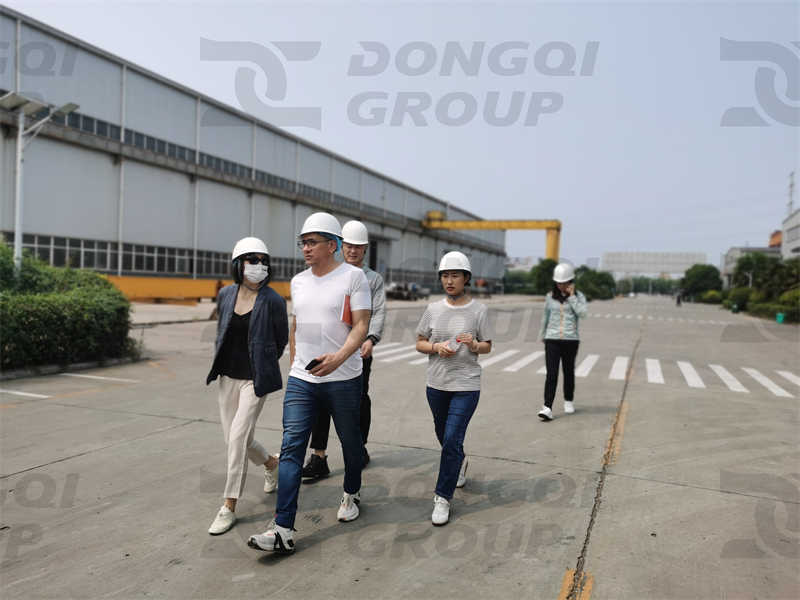
A factory visit is the most reliable way to verify a supplier’s production capacity and quality systems. What you see during a visit—the actual state of the factory floor, the condition of equipment, the organization of work in progress, the professionalism of quality control processes—provides more actionable information than any brochure or sales presentation.
During a factory inspection at Dongqi Crane’s Changyuan facility, prospective clients can observe production throughput on the factory floor, verifying that the scale and pace of manufacturing align with the supplier’s claims. They can review quality control processes that penetrate every stage from design through manufacturing to testing, including weld inspection, dimensional verification, and surface treatment quality. They can witness load testing of completed cranes at 125% of rated capacity (static) and 110% of rated capacity (dynamic), confirming that every crane performs to specification before shipment. And they can verify certification documentation—ISO 9001, ISO 14001, ISO 45001, CE, and where applicable, ATEX or other specialized certifications.
A supplier that welcomes factory visits and provides unrestricted access to its production floor is demonstrating confidence in its operations. A supplier that resists or limits factory access should raise procurement concerns.
3.3 Structured Payment and Milestone Management
Well-structured payment terms serve a function beyond cash flow management—they create mutual accountability for delivery performance. A payment schedule tied to clearly defined production milestones gives the buyer visibility into manufacturing progress and the supplier a commercial incentive to maintain schedule.
Dongqi Crane’s standard payment structure for international orders includes an initial deposit to reserve capacity and initiate engineering, a progress payment triggered by completion of main structural fabrication (verified by photographs or on-site inspection), a pre-shipment payment triggered by successful factory load testing, and a final payment upon delivery and commissioning. Each payment milestone is linked to a specific, verifiable production achievement. If a milestone is delayed, the buyer and supplier can address the root cause early, before the delay compounds into a missed delivery date.
This approach contrasts with payment structures that require full or substantial upfront payment without production milestone verification. Such structures transfer financial risk to the buyer without creating corresponding delivery accountability.
3.4 Long-Term Framework Agreements
For organizations with recurring crane requirements—plant expansions, multiple facilities, standardized equipment specifications—a long-term framework agreement provides the most robust delivery assurance. Framework agreements establish pre-negotiated pricing, production capacity allocation, and delivery schedules over a multi-year period, insulating the buyer from short-term capacity crunches and price volatility.
Dongqi Crane has entered into framework agreements with clients across multiple industries, including steel producers, port operators, and construction companies. These agreements provide clients with guaranteed production slots and fixed or index-linked pricing, while enabling Dongqi Crane to plan production capacity and component procurement with greater certainty. This model is increasingly prevalent in an environment where spot-market crane procurement carries delivery risk that many organizations are unwilling to accept.
Part 4: Building Supply Chain Resilience Into Your Procurement
4.1 Evaluate Component Supply Risk, Not Just Finished Product Risk
A crane is an assembly of hundreds of components sourced from dozens of suppliers. The reliability of the crane manufacturer’s delivery commitment depends on the reliability of every critical component in its supply chain. The most common source of crane delivery delays in 2026 is not structural steel fabrication—which most manufacturers can control in-house—but electronic and electromechanical components subject to global supply constraints.
Key component categories requiring specific supply chain evaluation include variable frequency drives (VFDs) and motor controllers, which are semiconductor-intensive and subject to the legacy chip shortages described earlier. Permanent magnet motors using rare earth materials face supply risks that should be explicitly assessed with the crane manufacturer—are alternative motor technologies available? What is the current lead time for rare earth magnet motors, and is it likely to improve or worsen? Specialized electrical enclosures for explosion-proof or cleanroom applications also require attention, particularly regarding certification lead times. Specialized bearings, seals, and other components with limited manufacturing sources represent additional risk points.
At Dongqi Crane, we maintain visibility into our critical component supply chains and communicate potential supply risks to clients during the quotation phase, not after the order is placed. When a component category is experiencing supply constraints, we present alternative solutions—for example, substituting an asynchronous motor with VFD control for a permanent magnet motor in applications where the performance trade-off is acceptable.
4.2 Diversification and the “China+1” Supply Model
The “China+1” approach—maintaining primary production in China while developing secondary manufacturing or component sourcing capabilities in other regions—has moved from theory to practice across industrial supply chains in 2026. For crane procurement, this means evaluating suppliers that offer manufacturing flexibility across multiple facilities.
Dongqi Crane’s primary manufacturing base in Changyuan, Henan Province provides the cost efficiency and production scale of China’s largest crane manufacturing cluster—an ecosystem of over 1,200 crane and supporting enterprises producing products covering 17 series and more than 200 varieties, commanding over 70% of the domestic market and exporting to more than 170 countries and regions globally. At the same time, our permanent overseas office in Pakistan provides local service capability that reduces dependency on long-distance logistics for in-market clients.
For international buyers, evaluating a supplier’s multi-facility capability and logistics flexibility is increasingly important. A supplier with manufacturing concentrated in a single location—however efficient—carries concentrated supply risk. A supplier with the ability to shift production or source components from multiple locations provides inherent delivery resilience.
4.3 Logistics Planning as a Procurement Discipline
A crane that is manufactured on schedule but delayed in transit produces the same project impact as a crane that is manufactured late. Logistics planning must be integrated into crane procurement from the earliest stages, not treated as an afterthought once production is complete.
Key logistics considerations include evaluating shipping routes and their associated risks—routes through the Red Sea, the Panama Canal (subject to water level restrictions), and the Taiwan Strait carry documented disruption risks in 2026. Determining whether the crane shipment is best suited to containerized shipping (for smaller components), flat-rack or open-top containers (for medium-sized components), or breakbulk/ project cargo (for large girders and complete assemblies) is essential. Planning for customs clearance, including HS code classification, documentation requirements, and potential duty implications under applicable trade agreements, should occur before the order is placed. Finally, confirming that the destination site has adequate unloading equipment—a crane arriving at a port or site without the means to offload it creates a delay that no amount of supplier performance can prevent.
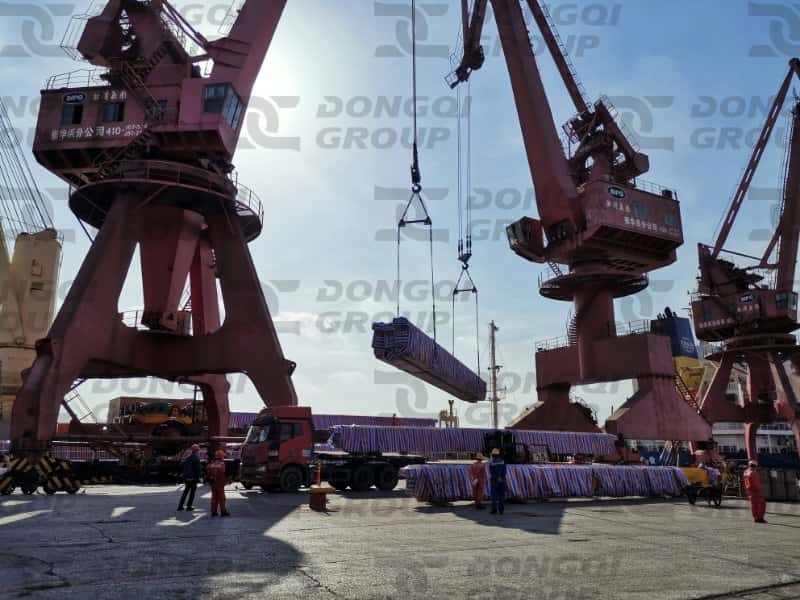
Dongqi Crane’s export logistics experience across 96 countries has taught us that the most common logistics delays are preventable with adequate planning. Our standard practice includes providing clients with a detailed logistics plan during the quotation phase, including shipping route, estimated transit time, customs requirements, and site readiness checklist.
Part 5: The Dongqi Crane Advantage—How We Deliver Certainty
5.1 Vertically Integrated Manufacturing
Vertical integration—controlling critical production processes in-house rather than outsourcing them—is a key determinant of delivery reliability. At Dongqi Crane, our 240,000-square-meter Changyuan facility integrates structural steel fabrication, machining, electrical assembly, surface treatment, and final assembly and testing under one roof. This integration means that production bottlenecks in one area can be addressed by reallocating internal resources, rather than waiting for an external supplier to resolve its own constraints.
Our manufacturing equipment includes four-gun air protection portal-shaped automatic welding machines for deep, consistent weld penetration on fatigue-critical joints; impeller blasting descaling equipment achieving SA 2.5 grade surface preparation; CNC-controlled plant drills and machining centers for exact component geometry; and automated spray-paint lines for uniform corrosion protection. This comprehensive in-house capability reduces our dependency on external suppliers for critical manufacturing processes and enables us to maintain control over production scheduling.
5.2 Component Inventory and Supplier Management
Dongqi Crane maintains strategic inventory of critical components—VFDs, motors, gearboxes, bearings, control modules—to buffer against supply chain disruptions. This inventory is sized based on demand forecasting and supply risk assessment, with higher inventory levels maintained for components with longer lead times or higher supply risk.
For key suppliers, we have established framework agreements that provide preferential access to constrained components. Our supplier qualification process evaluates not just component quality and price, but also the supplier’s own production capacity, financial stability, and supply chain resilience. We do not single-source any critical component category—every essential component has at least one qualified alternative supplier.
5.3 Transparent Production Monitoring
Dongqi Crane provides clients with visibility into their crane’s production status throughout the manufacturing process. For each order, we establish a production schedule with defined milestones, and we provide regular updates—including photographs and, where agreed, video documentation—showing progress against those milestones.
For large or critical projects, we encourage clients to conduct interim inspections during production, not just a final inspection before shipment. An interim inspection allows the client to verify structural fabrication quality, component authenticity, and assembly precision at a stage when any issues can be addressed without delaying delivery. This transparency builds trust and provides early warning of any production issues that could affect the delivery schedule.
5.4 Case Example: Delivering Against Tight Deadlines
In July 2025, a steel processing plant in Lahore, Pakistan required four 5-ton European-standard double-girder overhead cranes to support a production line expansion. The project had a hard deadline: the cranes needed to be installed and commissioned before the new production line began operation, and any delay would have resulted in significant revenue loss.
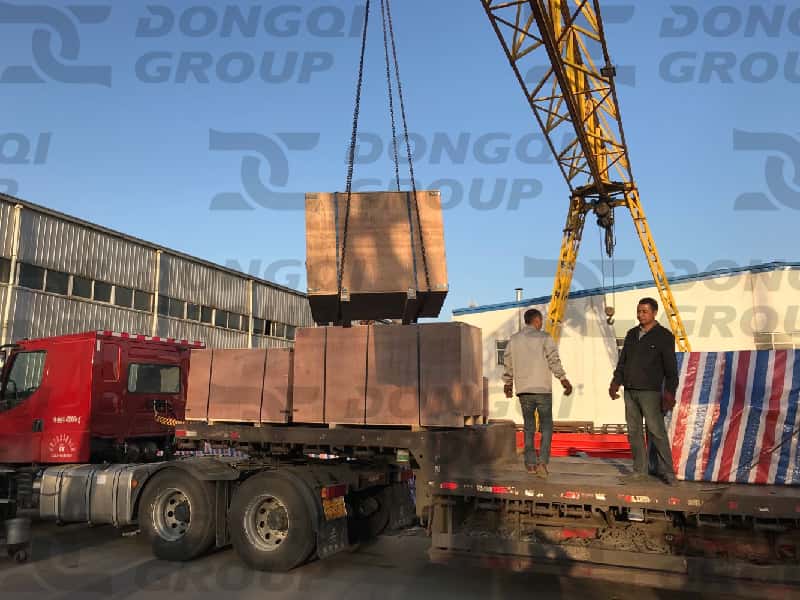
Dongqi Crane’s approach to this project illustrates several of the strategies described in this guide. We allocated production capacity immediately upon receiving the preliminary requirements, before the final purchase order was issued, ensuring that the cranes entered the production queue without delay. The cranes were delivered as complete kits—FEM-standard double girder hoist trolleys, end carriages with drive mechanisms, advanced control systems, and all electrical components—with the main girders fabricated locally by the client to Dongqi engineering drawings. The kit approach reduced shipping complexity and cost while accelerating delivery of the performance-critical components. Our commissioning team provided remote video guidance supplemented by comprehensive documentation, enabling the client to manage installation with local resources while maintaining Dongqi engineering oversight. The delivery achieved a 45-day timeline from order to shipment, meeting the client’s project schedule and enabling the production line to begin operation as planned.
Part 6: Procurement Checklist—Securing Crane Delivery in a Volatile Environment
6.1 Pre-Order Due Diligence
Before placing a crane order, verify the following:
| Due Diligence Item | What to Look For | Why It Matters |
|---|---|---|
| Factory scale and capacity | Total floor area; annual production volume; current capacity utilization | Adequate capacity provides buffer against unexpected surges or delays |
| Vertical integration | In-house steel fabrication, machining, electrical assembly, testing | Reduces dependency on external suppliers for critical processes |
| Component supply strategy | Multiple qualified suppliers for critical components; strategic inventory | Protects against single-supplier disruptions and component shortages |
| Production automation | Automated welding, CNC machining, automated surface treatment | Automation improves consistency and reduces production variability |
| Certification and quality systems | ISO 9001, ISO 14001, ISO 45001, CE; documented quality processes | Systematic quality management supports predictable production |
| Factory visit policy | Welcomes and facilitates factory visits; provides unrestricted access | Transparency indicates confidence in operations |
6.2 Contract and Payment Structure
| Contract Element | Recommended Practice | Why It Matters |
|---|---|---|
| Delivery date | Specify exact date, not a range; define consequences of delay | Creates clear accountability and commercial incentive |
| Payment milestones | Link payments to verifiable production achievements | Provides visibility and mutual accountability |
| Capacity reservation | Secure production slot with deposit at preliminary specification stage | Avoids competing for limited capacity late in the procurement cycle |
| Force majeure provisions | Define clearly; exclude foreseeable supply chain risks | Prevents abuse of force majeure to excuse poor planning |
| Alternative component provisions | Authorize substitution of equivalent components if specified parts are unavailable | Enables supplier to maintain schedule when specific components are constrained |
6.3 Logistics and Site Readiness
| Planning Element | Action Required | Why It Matters |
|---|---|---|
| Shipping route assessment | Identify route risks (conflict zones, canal restrictions, port congestion) | Enables selection of lower-risk alternatives |
| Customs documentation | Prepare HS codes, certificates of origin, compliance documentation | Prevents customs delays at destination |
| Site readiness verification | Confirm unloading equipment, runway readiness, power supply | A crane that arrives to an unprepared site is still a delayed crane |
| Installation and commissioning planning | Schedule installation team, confirm visas and site access | Prevents post-delivery delays in achieving operational status |
Conclusion: Delivery Certainty as a Competitive Advantage
In 2026’s volatile supply chain environment, the ability to deliver cranes on committed schedules is not merely an operational capability—it is a competitive advantage that distinguishes serious manufacturers from those who ship products without genuine delivery accountability. For procurement teams, securing delivery certainty requires moving beyond price comparison and technical specification to evaluate the supplier’s production capacity, component supply chain resilience, and logistics capability.
At Dongqi Crane, we have built our international operations on the understanding that a crane that arrives late is a crane that has failed its purpose, regardless of how well it is engineered. Our 240,000-square-meter manufacturing facility, vertically integrated production processes, strategic component inventory, and experienced logistics management provide the foundation for reliable delivery performance. Our transparent production monitoring and milestone-based payment structures give clients visibility and confidence throughout the manufacturing process.
The volatility described in this guide is not expected to diminish in the near term. Supply chain resilience is now a permanent procurement consideration, not a temporary concern. The procurement teams that adapt their supplier evaluation and contracting practices accordingly will be the ones whose projects proceed on schedule and on budget.
Contact Dongqi Crane:
- Website: pk.craneyt.com
- Engineering Inquiry: Submit your project requirements for a customized proposal with delivery plan—response within 24 hours
- Factory Visit: Inspect our 240,000-square-meter manufacturing facility in Changyuan, Henan, China, and verify our production capacity firsthand
- Capacity Reservation: Discuss preliminary project requirements with our engineering team to secure production slots before final specifications are complete
Choose Dongqi Crane—where delivery certainty is engineered into every order.
© 2026 Dongqi Crane. All rights reserved. The supply chain data and strategies presented in this guide are based on Dongqi Crane’s operational experience and publicly available information as of May 2026. Specific delivery commitments should be confirmed through contract negotiation for each individual project.
