
22-May-2026
Extreme Operating Conditions: Long-Life Anti-Corrosion Configurations for Cranes in High-Temperature, High-Humidity, and High-Salt-Spray Environments
Introduction: When the Environment Becomes the Enemy
A crane is designed to lift. But in many industrial and marine environments, the crane itself is under continuous attack—not from the loads it handles, but from the atmosphere in which it operates. Heat that softens structural steel and degrades protective coatings. Humidity that condenses on every surface, seeping into crevices and accelerating electrochemical corrosion. Salt spray that deposits corrosive chloride ions on exposed components, attacking metal at rates that can reduce unprotected steel to rust in a matter of months.
These three environmental factors—high temperature, high humidity, and high salt spray—rarely occur in isolation. A coastal steel mill in Southeast Asia experiences all three simultaneously: radiant heat from the furnace, ambient humidity exceeding 80%, and salt-laden air from the nearby ocean. An offshore platform in the Middle East combines extreme solar heating with some of the most corrosive marine conditions on the planet. A paper mill in the tropics operates in a perpetual fog of warm, humid, chemically active air.
When standard cranes are deployed in such environments without appropriate protective measures, the consequences unfold predictably and rapidly. Within two to three years, paint systems blister and peel, exposing bare steel. Bolted connections rust and seize, making maintenance access impossible. Electrical enclosures corrode from the inside, causing control failures and unplanned downtime. Wire ropes degrade prematurely, creating safety hazards. The crane that was purchased as a 20-year asset requires major structural rehabilitation within five to seven years—or replacement entirely.
At Dongqi Crane, we have engineered corrosion-resistant crane solutions for some of the world’s most aggressive operating environments, with installations across 96 countries. Our experience spans coastal ports in Southeast Asia, paper mills in tropical regions, offshore platforms in the Middle East, chemical plants handling corrosive media, and metallurgical facilities with combined high-temperature and high-humidity challenges. This guide distills that experience into a comprehensive framework for specifying, configuring, and maintaining cranes that achieve their full design life even under extreme environmental exposure.
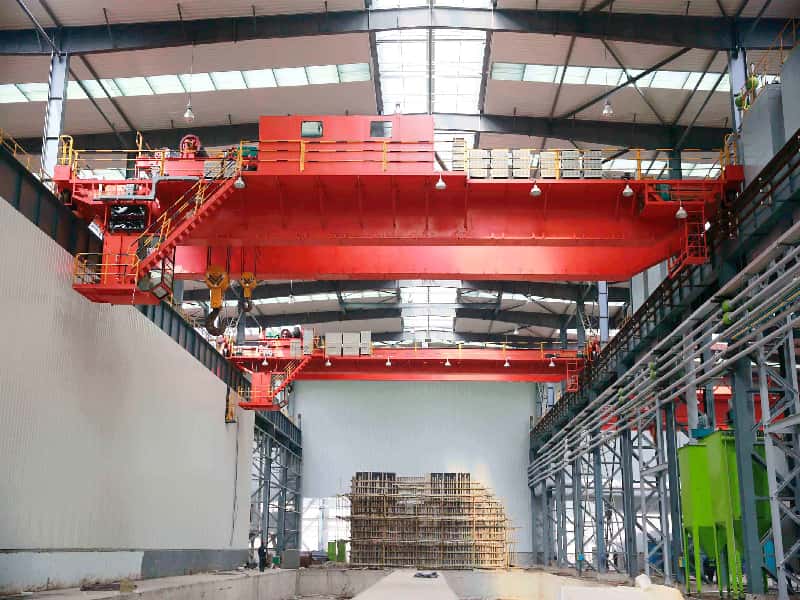
About Dongqi Crane: Dongqi Crane is a Sino-New Zealand joint venture headquartered in China’s renowned “Cradleland of Cranes” in Changyuan, Henan Province. We operate a 240,000-square-meter manufacturing facility with over 3,600 employees including more than 70 senior engineers, and deliver over 10,000 crane sets annually. Certified to ISO 9001, ISO 14001, ISO 45001, and CE standards, our products serve industries ranging from steel and petrochemical to paper manufacturing and marine engineering across 96 countries. Our corrosion-resistant crane configurations are engineered to ISO 12944 corrosion protection standards, with coating systems and material selections verified through salt spray testing per ASTM B117 and ISO 9227.
Part 1: Why Extreme Environments Are a Growing Market
1.1 The Geographic Concentration of Industrial Growth
The global crane market is expanding most rapidly in precisely those regions where extreme environmental conditions are most prevalent. The Asia-Pacific crane market was valued at USD 26.52 billion in 2025 and is expected to grow at a CAGR of 6.30% through 2035, reaching USD 48.85 billion. This region encompasses Southeast Asia’s tropical coastal industrial zones, the Middle East’s high-temperature marine environments, and South Asia’s monsoon-affected manufacturing clusters—all areas where standard crane configurations without appropriate environmental protection will fail prematurely.
The Asia-Pacific region is not only the largest regional crane market but is also expected to be the fastest-growing region in the forecast period, driven by rapid urbanization, population growth, and large-scale industrialization particularly in India and Southeast Asia. This concentration of growth in environmentally challenging regions means that corrosion-resistant crane configurations are no longer a niche requirement—they are rapidly becoming a mainstream procurement consideration.
1.2 The True Cost of Environmental Degradation
The cost of deploying a standard crane in an extreme environment without adequate protection extends far beyond the visible surface rust. Consider the following failure chain:
A standard paint system specified for indoor industrial use (ISO 12944 C2–C3) is installed on a crane operating in a coastal facility. Within 18 months, salt-laden moisture penetrates the coating at edges and fasteners. Corrosion undercuts the paint film, causing blistering and delamination. Bare steel is exposed. The corrosion accelerates. Structural thickness is reduced. Bolted connections seize, making maintenance access difficult. Electrical enclosures develop internal corrosion, causing intermittent control failures. The crane, which should operate reliably for 15–25 years, requires major structural and electrical rehabilitation at year 7—or replacement.
Industry studies confirm the severity of corrosion-related costs. Corrosion in the offshore sector can account for over 60% of total maintenance expenditure. Advanced protective coatings and appropriate material selection can reduce maintenance costs by as much as 40% over two decades of operation, underscoring the economic significance of getting the corrosion protection strategy right from the initial procurement stage.
Part 2: Understanding the Operating Environment—Corrosion Classification
2.1 The ISO 12944 Corrosion Classification Framework
Before specifying any corrosion protection measures, the operating environment must be accurately classified. ISO 12944—the international standard for protective paint systems for steel structures—provides the most widely accepted framework for this classification. It defines atmospheric corrosivity categories from C1 (very low) to CX (extreme), based on environmental factors including humidity, temperature, airborne contaminants, and salt deposition rates.
| ISO Category | Corrosivity | Typical Outdoor Environment | Typical Indoor Environment | Approx. Steel Corrosion Rate |
|---|---|---|---|---|
| C3 (Medium) | Moderate | Urban and industrial atmospheres, moderate SO₂ pollution; low-salinity coastal areas | Production rooms with high humidity and some air pollution, e.g., food processing plants, laundries, breweries, dairies | 1.3–25 µm/year |
| C4 (High) | High | Industrial areas and coastal areas with moderate salinity | Chemical plants, swimming pools, coastal shipyards | 25–50 µm/year |
| C5-I (Very High, Industrial) | Very High | Industrial areas with high humidity and aggressive atmosphere | Buildings or areas with almost permanent condensation and high pollution | >50 µm/year |
| C5-M (Very High, Marine) | Very High | Coastal and offshore areas with high salinity | — | >50 µm/year |
| CX (Extreme) | Extreme | Offshore areas with high salinity; subtropical and tropical industrial areas with extremely high humidity and aggressive atmosphere | Industrial areas with extreme humidity and aggressive atmosphere | — |
Source: ISO 12944-2
Understanding this classification is the starting point for any corrosion-resistant crane specification. A crane operating in a coastal paper mill in a tropical climate (C5-M or CX) requires a fundamentally different corrosion protection strategy than a crane in an inland warehouse (C2). The difference is not incremental—it is categorical.
2.2 The CX Category: When Standard Protection Is Insufficient
The CX (extreme) classification, introduced in the 2018 revision of ISO 12944, is particularly relevant to many of the environments discussed in this guide. CX environments are characterized by the combination of high salinity, extremely high humidity, and aggressive industrial atmospheres—precisely the conditions found in tropical coastal industrial zones, offshore platforms, and certain chemical processing facilities.
For CX environments, standard epoxy-based coating systems are inadequate. The standard requires specialized high-performance coating systems—typically multi-layer systems incorporating zinc-rich primers, high-build epoxy intermediates, and specialized topcoats such as polysiloxane or fluoropolymer—with total dry film thicknesses often exceeding 320 µm for high-durability applications.
At Dongqi Crane, we classify every project environment during the inquiry phase using the ISO 12944 framework, and we specify coating systems accordingly. This is not optional—it is the engineering foundation upon which all subsequent corrosion protection decisions are built.
Part 3: High-Temperature Environments—Material Degradation and Protection Strategies
3.1 The Physics of Heat-Driven Deterioration
High temperatures attack crane components through multiple degradation mechanisms operating simultaneously. When ambient temperatures exceed 40°C—and particularly in the presence of radiant heat sources such as furnaces, molten metal, or hot process equipment—the following effects compound:
- Material softening and strength reduction: Structural steel grades, including common carbon steels, experience measurable reductions in yield strength and modulus of elasticity at elevated temperatures. A crane structure designed with standard room-temperature material properties may be operating below its intended safety margin when subjected to sustained high-temperature exposure.
- Thermal fatigue: Cyclic heating and cooling—common in metallurgical facilities where cranes move between furnace areas and cooler zones—generates thermal stresses that can initiate fatigue cracking at welded connections, stiffener terminations, and other stress concentration points.
- Accelerated coating degradation: Standard organic coatings degrade through multiple temperature-driven mechanisms including accelerated oxidation, thermal embrittlement, and differential thermal expansion between coating and substrate. At sustained temperatures above 80°C, many conventional epoxy and polyurethane coatings begin to fail rapidly.
- Lubricant breakdown: Standard industrial greases and oils oxidize and lose viscosity at elevated temperatures, reducing their protective film strength and leading to accelerated bearing and gear wear.
- Electrical component degradation: Motor insulation classes, electronic component ratings, and cable jacket materials all have maximum service temperature limits. Exceeding these limits—even intermittently—dramatically shortens component life.
3.2 Material Selection for High-Temperature Service
For crane components exposed to sustained elevated temperatures, standard material selections must be upgraded:
Structural steel: For cranes operating in steel mills, foundries, and other high-temperature environments, Dongqi Crane specifies structural steel grades with verified elevated-temperature properties. Q355R steel maintains stable strength characteristics at temperatures up to 300°C, while 15CrMo offers enhanced high-temperature oxidation resistance. Standard Q235 steel—adequate for normal-temperature applications—is prohibited in high-temperature structural applications due to strength degradation beyond approximately 200°C.
Electrical insulation: Motors exposed to elevated ambient temperatures require upgraded insulation classes. H-class insulation, rated for continuous operation at 180°C, replaces the standard F-class (155°C) or B-class (130°C) insulation commonly specified for normal-temperature crane motors. Silicone rubber-insulated cables replace standard PVC-jacketed cables, which embrittle and crack at sustained elevated temperatures.
Lubricants: High-temperature environments require synthetic lubricants specifically formulated for elevated-temperature service. Mineral-based lubricants—adequate for normal industrial applications—oxidize rapidly above 80°C and must be replaced with synthetic alternatives. For the most demanding applications, such as ladle cranes handling molten metal, solid lubricant additives or specialized high-temperature greases rated for 200°C or higher may be specified.
Seals and flexible components: Standard nitrile rubber seals degrade rapidly at elevated temperatures. EPDM (ethylene propylene diene monomer) rubber, modified PVC, or fluorocarbon elastomers provide significantly better high-temperature performance. Dongqi Crane specifies seal materials based on the specific temperature range and chemical exposure of each application.
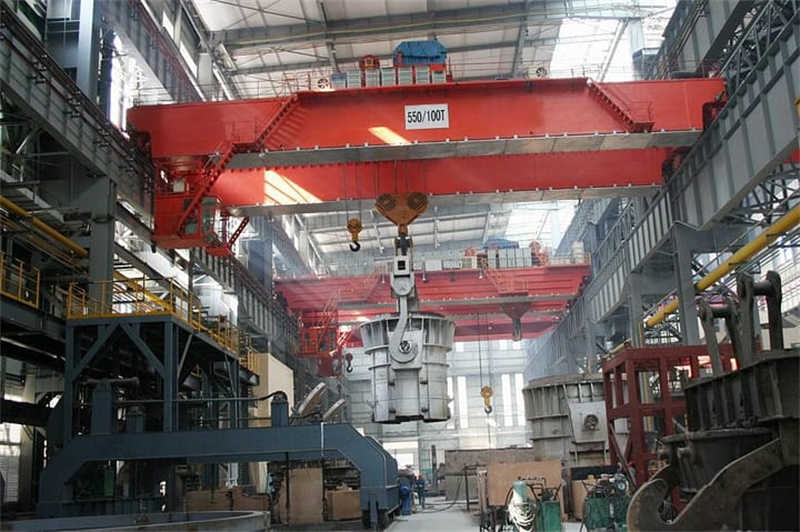
3.3 Heat Shielding and Thermal Management
Beyond material selection, physical heat shielding is often the most effective protection for crane components in high-temperature environments. For ladle cranes, furnace charging cranes, and other cranes operating directly above or adjacent to heat sources, Dongqi Crane incorporates:
- Reflective heat shields: Multi-layer reflective barriers mounted beneath the main girder to deflect radiant heat away from the crane structure and hoist mechanism.
- Ventilated enclosures: Electrical panels and control cabinets designed with forced-air ventilation or heat exchanger cooling to maintain internal temperatures within component ratings.
- Remote lubrication systems: Grease lines extended to accessible locations away from the heat source, enabling safe re-lubrication of bearings without personnel entering high-temperature zones.
- Thermal insulation: Where components must be located near heat sources, insulation materials rated for the specific temperature range protect sensitive equipment.
Part 4: High-Humidity Environments—Moisture Penetration and Prevention
4.1 The Paper Mill Paradigm
The paper mill environment exemplifies the challenges of high-humidity crane operation—and illustrates the solutions that Dongqi Crane has developed through extensive project experience. Paper mill production environments, particularly in the wet section, dry section, and rewinding areas, impose extremely demanding requirements on crane equipment, with ambient temperatures reaching 40–45°C and relative humidity levels as high as 90–95%.
Dongqi Crane has extensive experience in the pulp and paper industry, having designed and manufactured bridge cranes for paper mills in Pakistan, the United States, and other international locations. For a paper mill in Pakistan, Dongqi Crane customized 45-ton, 20-ton, and 10-ton overhead cranes according to the actual needs of the customer, with the equipment supporting key production links including water extraction, paper fiber collection, and spindle winding. The cranes were equipped with advanced load control functions, a lifting synchronization system enabling coordinated actions between the two cranes, and a remote monitoring system that collects equipment running status, usage, and operation data in real time to provide comprehensive maintenance plans and failure predictions.
4.2 Motor Protection Levels for Humid Environments
One of the most critical—and most frequently overlooked—specifications for cranes in high-humidity environments is the Ingress Protection (IP) rating of electrical components. The IP rating system classifies the degree of protection provided by enclosures against solid objects, dust, and water, with the second digit (ranging from 0 to 9K) indicating water protection level.
For high-humidity paper mill environments, crane motors must meet at least IPX4 protection (splash-proof). However, for areas subject to washdown cleaning, direct water spray, or heavy condensation, IPX5 or higher is strongly recommended. Specifically, for cranes operating near paper machine wet sections where moisture levels are extreme, motors with IPX6 or higher ratings should be selected.
Dongqi Crane’s standard practice for humid environment specifications includes:
| Environment | Minimum IP Rating | Recommended Rating | Additional Measures |
|---|---|---|---|
| General high-humidity indoor (RH >70%) | IP54 | IP55 | Anti-condensation heaters in electrical enclosures |
| Paper mill wet section | IP55 | IP65 | Stainless steel enclosure hardware; conformal coating on circuit boards |
| Washdown areas | IP65 | IP66 | Sealed cable entries; stainless steel conduit and fittings |
| Outdoor tropical (monsoon) | IP65 | IP66 | Sun shields; drainage provisions; anti-corrosion terminal treatments |
4.3 Condensation Management
In high-humidity environments, the most insidious threat is not direct water exposure but condensation. As ambient temperatures fluctuate—particularly during shift changes when equipment cools overnight—moisture condenses on internal surfaces of electrical enclosures, motor housings, and control panels. This condensation, repeated daily over months and years, causes corrosion of electrical contacts, degradation of insulation, and eventual equipment failure.
Dongqi Crane addresses condensation risk through multiple complementary measures:
- Anti-condensation heaters: Electrical enclosures are fitted with thermostatically controlled heaters that maintain internal temperature slightly above ambient, preventing condensation formation during cooling periods.
- Breather drains: Enclosures rated IP55 and above are equipped with breather drains that allow any accumulated moisture to escape while preventing ingress of external water.
- Conformal coating: Printed circuit boards and sensitive electronic components in control systems are coated with moisture-resistant conformal coating that provides protection against both humidity and salt spray.
- Stainless steel enclosure hardware: For paper mill and chemical plant applications, Dongqi Crane specifies 304 or 316L stainless steel for control cabinet construction, eliminating the corrosion vulnerability of painted carbon steel enclosures.
Part 5: High-Salt-Spray Environments—Coastal and Offshore Protection
5.1 The Marine Corrosion Challenge
Salt spray represents the most aggressive atmospheric corrosion threat to crane equipment. The combination of salt spray and persistently high humidity creates a highly corrosive atmosphere that rapidly degrades standard metals and finishes. Components like lifting chains, wire ropes, structural steel, and even basic fasteners are under continuous attack, leading to rust, material thinning, and premature failure if not specifically protected.
The mechanism is electrochemical: chloride ions from airborne salt particles deposit on metal surfaces, forming a conductive electrolyte film when combined with atmospheric moisture. This film enables galvanic corrosion between dissimilar metals, pitting corrosion on passive surfaces, and crevice corrosion in joints and fasteners. Standard carbon steel without protection corrodes at rates exceeding 50 µm per year in C5-M marine environments—a rate that, if unchecked, would consume a 10 mm steel plate in less than 20 years.
5.2 The Three-Layer Defense Strategy
Effective salt spray protection requires a three-layer defense strategy: material selection, surface preparation, and coating system specification. Each layer addresses a different aspect of the corrosion threat, and all three must be correctly specified and executed for the protection system to function as designed.
Layer 1: Material Selection
For crane components in C5-M and CX marine environments, material selection provides the foundation for corrosion resistance. Dongqi Crane’s approach includes:
- Weathering steel for primary structures: Weathering steel grades, such as Q355NH and Q345GNHL, contain alloying elements (copper, phosphorus, chromium) that promote the formation of a dense, adherent oxide patina. This patina, once fully developed, provides corrosion resistance 2–8 times greater than ordinary carbon steel in atmospheric exposure. Dongqi Crane specifies weathering steel for primary structural components in coastal and marine crane applications where appropriate.
- 316L stainless steel for critical components: For components requiring the highest level of corrosion resistance—hooks, pins, shafts, fasteners, and components in the splash zone—316L stainless steel provides exceptional resistance to chloride pitting and crevice corrosion. Dongqi Crane has developed comprehensive material specifications for chemical plant and marine crane applications using full-structure 316L stainless steel compliant with ASTM A240 standards.
- Super duplex stainless steel for extreme marine applications: For the most demanding offshore environments—platform cranes, shipboard cranes, and subsea handling equipment—super duplex stainless steel grades such as 2507 (S32750) offer PREN (Pitting Resistance Equivalent Number) values exceeding 42, providing exceptional resistance to chloride pitting, stress corrosion cracking, and crevice corrosion even in warm seawater up to 50–60°C, where standard 316L would fail rapidly. Super duplex stainless steels combine approximately 25% chromium, 4% molybdenum, and 0.3% nitrogen, delivering mechanical strength double that of 316L while maintaining superior corrosion resistance.
- Spark-resistant and corrosion-resistant mechanical components: For hazardous area cranes in corrosive marine environments—such as offshore oil and gas platforms—Dongqi Crane supplies cranes with spark-resistant components including bronze hooks, bronze trolley wheels, and stainless steel wire rope, combined with anti-corrosive treatments that hold up in salt-water environments while meeting explosion protection requirements.
Layer 2: Surface Preparation
The most sophisticated coating system will fail prematurely if applied to an inadequately prepared surface. Surface preparation is not merely a prerequisite for coating—it is an integral part of the corrosion protection system.
ISO 12944 and related standards specify surface preparation grades by abrasive blasting, with Sa 2½ (near-white metal blast cleaning) being the minimum requirement for high-durability coating systems in C4 and above environments. Sa 2½ requires that at least 95% of the surface area be free of visible contaminants—mill scale, rust, paint, and foreign matter—with any remaining traces appearing only as slight stains.
Dongqi Crane’s surface preparation process for corrosion-resistant cranes includes:
- Impeller blasting descaling equipment: Our Changyuan manufacturing facility is equipped with automated impeller blasting systems that achieve consistent Sa 2½ surface preparation across large structural components.
- Surface profile verification: Blast profile depth is measured and documented to ensure optimal coating adhesion. For high-build epoxy systems, a profile of 50–75 µm is typically specified.
- Pre-blast cleaning: All surfaces are degreased and cleaned of soluble salts prior to blasting to prevent contamination from being driven into the steel surface.
- Environmental controls: Blasting and coating operations are conducted under controlled environmental conditions, with surface temperature maintained at least 3°C above the dew point to prevent condensation on the freshly blasted surface.
Layer 3: Coating System Specification
The coating system provides the primary barrier between the steel substrate and the corrosive environment. For C5-M and CX marine environments, Dongqi Crane specifies multi-layer high-performance coating systems engineered to ISO 12944-5 requirements.
A typical CX marine coating specification for Dongqi Crane structures comprises:
| Coating Layer | Product Type | Nominal DFT (µm) | Function |
|---|---|---|---|
| Primer | Zinc-rich epoxy (Zn(EP)) | 60–80 | Cathodic protection; zinc sacrifices itself to protect steel at coating defects |
| Intermediate | High-build epoxy | 150–200 | Barrier protection; builds film thickness for extended diffusion path |
| Topcoat | Polysiloxane or fluoropolymer | 80–100 | UV resistance; chemical resistance; color retention; aesthetic finish |
| Total System | 290–380 | Designed for H (high) durability: 15–25 years to first major maintenance |
For applications in the most extreme environments—CX classification with combined high temperature, high humidity, and salt spray—additional coating technologies may be specified:
- Glass flake epoxy coatings: Incorporating glass flakes into the epoxy matrix creates a tortuous path for moisture and ion diffusion, significantly extending the coating’s barrier performance. These coatings are particularly effective for immersion service and splash zone applications in marine environments.
- Fluorocarbon topcoats: For applications combining high UV exposure with salt spray—such as outdoor cranes in tropical coastal locations—fluorocarbon topcoats provide superior UV resistance and weatherability compared to standard polyurethane finishes.
- Duplex stainless steel weld transition layers: At welded joints between different material grades, Dongqi Crane employs duplex stainless steel transition layers to prevent intergranular corrosion that can occur at dissimilar metal welds in corrosive environments.
5.3 Corrosion Performance Verification
Specifying a coating system is necessary but not sufficient—the applied coating must be verified to meet the specified performance requirements. Dongqi Crane’s quality assurance program for corrosion-resistant cranes includes:
- Dry film thickness (DFT) measurement: Every coated surface is checked with calibrated DFT gauges, with measurements recorded and documented. Individual spot measurements must meet the specified minimum, and average values across measurement areas must fall within the specified range.
- Holiday (pinhole) detection: For immersion service and critical coating applications, high-voltage holiday detection identifies pinholes and thin spots in the coating that would become corrosion initiation points.
- Adhesion testing: Pull-off adhesion testing (per ISO 4624 or ASTM D4541) verifies that the coating system achieves the required bond strength to the substrate, typically ≥5 MPa for epoxy-based systems.
- Salt spray resistance testing: For qualification of new coating systems, accelerated salt spray testing per ASTM B117 or ISO 9227 provides comparative corrosion resistance data. Neutral salt spray tests use a 5% NaCl solution at approximately 35°C chamber temperature, with standardized specimens exposed for durations ranging from 240 to over 2,000 hours depending on the corrosivity category and durability requirement.
Part 6: System-Level Integration—The Dongqi Crane Corrosion-Resistant Configuration
6.1 Beyond Individual Components
Effective corrosion protection in extreme environments requires more than specifying the correct coating for the main girder. Every component, every interface, and every detail contributes to—or compromises—the overall protection system. Dongqi Crane’s approach is to engineer the complete crane as a corrosion-resistant system, with every component selection and design detail evaluated for environmental compatibility.
Structural Design for Corrosion Prevention:
Good structural design is the first line of defense against corrosion. Dongqi Crane’s design practices for corrosion-resistant cranes include:
- Elimination of water and debris traps: All structural members are designed to shed water rather than collect it. Horizontal surfaces are minimized or sloped. Box sections are sealed or provided with drainage holes at low points. Lap joints that can trap moisture are avoided in favor of butt welds or sealed interfaces.
- Accessibility for inspection and maintenance: All surfaces requiring periodic inspection or coating maintenance are designed to be accessible without disassembly. Confined spaces that cannot be accessed for coating repair are eliminated.
- Avoidance of dissimilar metal contact: Where different metals must be joined, insulating gaskets or coatings prevent direct electrical contact and eliminate galvanic corrosion cells. Stainless steel fasteners in carbon steel structures are installed with appropriate isolation measures.
Electrical System Protection:
Electrical systems are particularly vulnerable to corrosion in extreme environments. Dongqi Crane’s standard practices include:
- IP65 or IP66 rated enclosures for all control panels, junction boxes, and motor terminal boxes in C4 and above environments.
- 316L stainless steel enclosure construction for C5-M and CX marine applications.
- Conformal coating of all printed circuit boards and exposed electronic components for moisture, salt spray, and mold resistance.
- Anti-condensation heaters with thermostatic control in all electrical enclosures.
- Gold-plated contacts for critical control connectors to prevent corrosion-induced high-resistance connections.
Mechanical Component Protection:
- Wire ropes: High-performance wire ropes with independent steel cores (IWRC) and enhanced lubrication provide extended service life. For marine environments, galvanized or stainless steel wire ropes offer additional corrosion protection. Rotation-resistant rope constructions minimize internal wear.
- Bearings: Sealed or shielded bearings prevent contaminant ingress. For washdown and high-humidity environments, stainless steel bearings with food-grade or marine-grade grease provide maximum corrosion resistance.
- Wheels and rails: Wheel materials are selected for compatibility with the operating environment. For corrosive environments, alloy steel wheels with appropriate hardness balance wear resistance with corrosion resistance. Rail surfaces in marine environments may receive additional corrosion protection treatment.
6.2 A Configurable Framework
Dongqi Crane’s corrosion-resistant crane configurations are organized into three tiers, corresponding to the ISO 12944 corrosivity categories most commonly encountered in industrial applications:
| Configuration Tier | ISO Category | Environment | Key Protection Features |
|---|---|---|---|
| Standard Industrial | C3 | Indoor manufacturing; low-humidity warehouse | Standard epoxy primer + polyurethane topcoat; IP54 electricals; carbon steel fasteners |
| Enhanced Corrosion Protection | C4 | Coastal industrial; paper mills; general chemical exposure | Zinc-rich epoxy primer; high-build epoxy intermediate; polysiloxane topcoat; IP65 electricals; stainless steel fasteners |
| Extreme Environment | C5-I / C5-M / CX | Offshore marine; tropical coastal; heavy chemical; combined high-temperature + high-humidity + salt spray | Multi-layer CX-specification coating; IP66 electricals with stainless steel enclosures; weathering or stainless steel for critical structural components; anti-condensation systems; enhanced seal and lubricant specifications |
For each tier, Dongqi Crane’s engineering team conducts a detailed environmental assessment during the quotation phase, matching the protection configuration to the specific conditions of the installation site. This ensures that clients receive appropriate protection without incurring unnecessary costs for protection levels beyond their actual requirements.
Part 7: Case Studies—Extreme Environment Crane Solutions in Practice
7.1 Pakistan Paper Mill: High-Humidity Customization
When a paper mill in Pakistan required crane systems capable of operating in a high-temperature, high-humidity production environment, Dongqi Crane delivered a comprehensive solution. The project involved customizing 45-ton, 20-ton, and 10-ton overhead cranes to support water extraction, paper fiber collection, and spindle winding operations—all processes conducted in environments where ambient humidity consistently exceeds 80% and temperatures routinely reach 40–45°C.
The customized cranes incorporated multiple features specifically engineered for the humid environment: motors with IP55 or higher protection ratings depending on proximity to the wet section, anti-condensation systems in all electrical enclosures, enhanced coating specifications for structural components, and a remote monitoring system that provides real-time data on equipment running status, enabling predictive maintenance scheduling that prevents corrosion-related failures before they occur. The paper mill’s spare parts technical coordinator subsequently cited Dongqi Crane’s proven track record in the paper industry as a decisive factor in the selection, specifically noting the reliability and repairability of the customized cranes.
7.2 Chemical Plant Cranes: Combined Corrosion and Chemical Resistance
For chemical plant applications, where cranes face the combined challenges of corrosive chemical atmospheres and high humidity, Dongqi Crane has developed optimized material selection protocols. Chemical plant crane environments demand full-structure 316L stainless steel compliant with ASTM A240 standards for critical components, with duplex stainless steel transition layers at welded joints to prevent intergranular corrosion. These material selections are complemented by chemical-resistant coating systems and sealed electrical enclosures designed to prevent ingress of corrosive vapors.
The approach in chemical environments illustrates a broader principle that applies across all extreme environment crane configurations: material selection, surface preparation, coating specification, and electrical protection must be engineered as an integrated system, not specified as independent components. A failure in any single element compromises the entire protection strategy.
7.3 Offshore and Marine: Salt Spray Defense in the World’s Most Corrosive Environments
For offshore and marine crane applications—platform cranes, shipboard cranes, port and harbor cranes—salt spray protection requires the most comprehensive defense strategy. The marine environment is arguably the most hostile operational setting for heavy-duty lifting equipment globally, with constant exposure to saltwater, extreme temperature fluctuations, and dynamic vessel motion.
Dongqi Crane’s marine crane configurations incorporate the full three-layer defense strategy described in Part 5: material selection appropriate to the specific marine exposure zone (atmospheric, splash, or submerged), surface preparation to Sa 2½ standard, and CX-specification multi-layer coating systems designed for 15–25 year durability to first major maintenance. For the most aggressive offshore environments, where standard stainless steels would suffer pitting and crevice corrosion, super duplex stainless steel grades provide the necessary chloride resistance even in warm seawater conditions.
Part 8: Maintenance—Sustaining Corrosion Protection Over the Service Life
8.1 The Inspection Imperative
Even the most robust corrosion protection system requires regular inspection and maintenance to achieve its design life. The coating system is a consumable—designed to degrade sacrificially over time to protect the underlying steel. When the coating reaches the end of its useful life, it must be replenished through maintenance painting. The key to cost-effective corrosion management is to perform this maintenance at the right time—before corrosion of the substrate has begun, but not so early that coating life is wasted.
ISO 12944 defines the durability range of a coating system not as a “guarantee period” but as the expected time until first major maintenance is required, typically defined as the point at which approximately 10% of the surface has reached rust grade Ri3 per ISO 4628-3. Regular inspection against this standard enables maintenance planning based on actual coating condition rather than arbitrary calendar intervals.
8.2 Dongqi Crane’s Corrosion Management Recommendations
For cranes operating in extreme environments, Dongqi Crane recommends:
- Quarterly visual inspections of all accessible coated surfaces, with particular attention to edges, fasteners, welds, and areas of coating damage or discoloration.
- Annual comprehensive coating surveys with documented DFT measurements, adhesion testing at representative locations, and photographic documentation of coating condition.
- Immediate touch-up of localized coating damage to prevent underfilm corrosion propagation.
- Scheduled maintenance painting based on coating condition assessment rather than arbitrary time intervals.
- Electrical enclosure integrity verification during each inspection, including verification of seal condition, drain function, and anti-condensation heater operation.
- Bearing re-lubrication on schedules appropriate to the environmental severity, with more frequent intervals for high-humidity and washdown environments.
Conclusion: Longevity Through Engineering, Not Hope
The difference between a crane that achieves its full 20–25 year design life in an extreme environment and one that requires major rehabilitation at year seven is not a matter of chance. It is a matter of engineering—specifically, the engineering decisions made during specification and procurement, before the crane is manufactured.
At Dongqi Crane, we approach every extreme-environment project with the understanding that corrosion protection is not an accessory to the crane design—it is integral to it. The material selections, coating specifications, electrical protection levels, and design details that determine a crane’s environmental resilience are specified during the initial engineering phase, not added as afterthoughts. This integrated approach is backed by our ISO 9001 quality management system, our ISO 14001 environmental management commitment, and our manufacturing capability that includes automated surface preparation, controlled-environment coating application, and comprehensive quality verification.
For procurement professionals specifying cranes for extreme environments, the guidance is clear: classify the environment accurately using the ISO 12944 framework, select a corrosion protection configuration matched to that classification, verify that all components—not just the main structure—are appropriately protected, and establish an inspection and maintenance program that sustains the protection system throughout the crane’s service life. A crane that is correctly specified for its environment is an asset that delivers decades of reliable service. A crane that is under-specified for its environment is a liability from the day it is installed.
Contact Dongqi Crane:
- Website: pk.craneyt.com
- Engineering Inquiry: Submit your project requirements and environmental conditions for a customized corrosion protection proposal—response within 24 hours
- Factory Visit: Inspect our 240,000-square-meter manufacturing facility in Changyuan, Henan, China, including our automated surface preparation and coating application systems
- International Support: 36-person multilingual service team with permanent presence in Pakistan and export coverage across 96 countries
Choose Dongqi Crane—where extreme environment protection is engineered in, not added on.
© 2026 Dongqi Crane. All rights reserved. The corrosion protection configurations described in this guide are general recommendations based on ISO 12944 standards and Dongqi Crane’s operational experience. Specific protection specifications should be confirmed through engineering assessment of each project’s environmental conditions.
