
26-May-2026
Export Orders Are Surging – Is Your Material Handling Efficiency Keeping Pace?
Introduction: When Export Growth Exposes the Weakest Link
The global trade landscape is shifting dramatically in 2026. After years of supply chain disruptions, manufacturers worldwide are facing a new challenge—not a lack of demand, but an overwhelming surge of export orders. In China alone, the total import and export value of goods reached 43.85 trillion yuan in 2024, up 5% year-on-year, with exports surging 7.1% to a record 25.45 trillion yuan. By 2025, this momentum accelerated, with Q1 exports jumping 6.9% and certain sectors like electromechanical products surging 8.7%. For factories producing everything from machinery to consumer goods to renewable energy components, the question has shifted from “How do we find customers?” to “How do we fulfill these orders on time?”
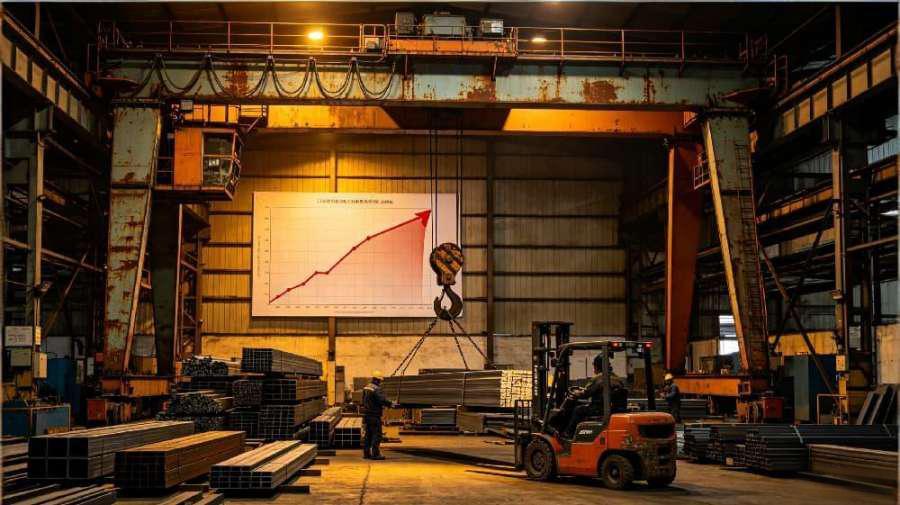
Yet beneath this wave of opportunity lies a quiet bottleneck that many plant managers and procurement directors overlook: material handling efficiency. When an export container needs to be loaded by Friday to meet a vessel cutoff, the entire production chain depends on one piece of equipment working perfectly—the overhead crane. If that crane is slow, imprecise, or, worse, broken down, the ripple effects cascade through the entire operation. Late shipments mean penalty clauses, damaged customer relationships, and lost competitive advantage in a global market where reliability is currency.
This is not hypothetical. Across factories in Asia, Europe, and the Americas, outdated lifting equipment is silently eroding productivity at the very moment when every minute of uptime counts. The export boom demands a new approach to material handling—one that is faster, smarter, and engineered for the relentless pace of 2026 global trade.
At Dongqi Crane, we understand this urgency. With over 30 years of manufacturing excellence, a 240,000-square-meter production facility in Changyuan, China’s “Crane Hometown,” annual output exceeding 10,000 crane units, and international certifications including CE, ISO 9001, ISO 14001, ISO 45001, and SGS, we have supplied intelligent lifting solutions to customers in 96 countries. Our technology partnerships with SEW, ABB, Siemens, and Schneider Electric ensure that every crane we build meets the demands of modern export-driven manufacturing.
This article explores why material handling efficiency is the hidden determinant of export success, and how upgrading to smart overhead cranes from Dongqi can transform your operations from a bottleneck into a competitive advantage.
Part 1: The True Cost of Slow Material Handling in Export Manufacturing
When export orders pile up, most manufacturers focus on increasing production speed—adding shifts, accelerating machining centers, or optimizing assembly lines. Rarely do they audit the material handling systems that feed and connect these processes. Yet in many factories, it is the crane that sets the ultimate pace.
1.1 Production Delays That Ripple Downstream
Consider a typical export-oriented heavy machinery plant. Raw steel plates arrive by truck and must be unloaded into the stockyard by an overhead crane. These plates then move to cutting, welding, and painting stations—each transfer relying on crane lifts. Finally, the finished machine is loaded into a container or onto a flatbed trailer. Every lift is a potential delay point.
Traditional cranes with two-speed motors and contactor controls introduce several sources of delay: slow travel and hoist speeds during positioning, load sway that requires operators to wait for stabilization before final placement, and abrupt starts and stops that stress both the load and the equipment. Over hundreds of lifts per shift, these seconds add up to hours of lost productive time each week. When an export vessel cutoff is imminent, those lost hours translate directly into missed shipments and airfreight penalties that can erase profit margins on an entire order.
1.2 Unplanned Downtime: The Shipment Killer
Worse than slow operation is no operation. A crane breakdown during peak export season can be catastrophic. If a crane fails while loading an urgent container, production halts. Workers wait. The truck queues. The shipping deadline passes. In multi-shift operations running near capacity, even four hours of unscheduled downtime can mean the difference between on-time delivery and a customer’s production line stoppage.
Traditional cranes lack predictive maintenance capabilities. They run until something breaks, and then maintenance teams scramble to diagnose and repair. With global supply chains for spare parts still subject to occasional delays, a failed gearbox or motor can sideline a crane for days—not hours. For an export manufacturer, the financial impact includes not only lost production but also contractual penalties, expedited shipping costs, and reputational damage in markets where reliability is a key supplier selection criterion.
1.3 Safety Risks That Threaten More Than Productivity
In the rush to meet export deadlines, safety can be compromised. Operators may push equipment beyond its rated capacity, skip pre-shift inspections, or work faster than safe operating procedures allow. Older cranes without overload protection, anti-collision systems, or emergency braking create an environment where one mistake can result in a serious accident. Beyond the human cost, a safety incident can shut down operations entirely for investigation, trigger insurance claims, and damage a company’s reputation with international buyers who increasingly audit supplier safety records as part of their ESG due diligence.
1.4 The Space Efficiency Factor
Export manufacturers handling large or bulky products—machinery, structural steel, prefabricated components—often find themselves constrained by factory space. Traditional bulky crane designs consume excessive headroom and require heavy-duty building structures that drive up construction costs. When export volumes increase, the natural response is to add more production area. But if the crane design wastes vertical space or imposes large hook approach distances, the factory is not using its available footprint efficiently. Every square meter of underutilized space is a missed opportunity to stage more export inventory or add another production line.
Part 2: How Intelligent Cranes From Dongqi Transform Export Material Handling
The solution to these challenges is not simply working harder or hiring more operators. It is equipping your facility with overhead cranes engineered for the speed, reliability, and precision that modern export manufacturing demands.
2.1 Automation and Precision for Faster Lift Cycles
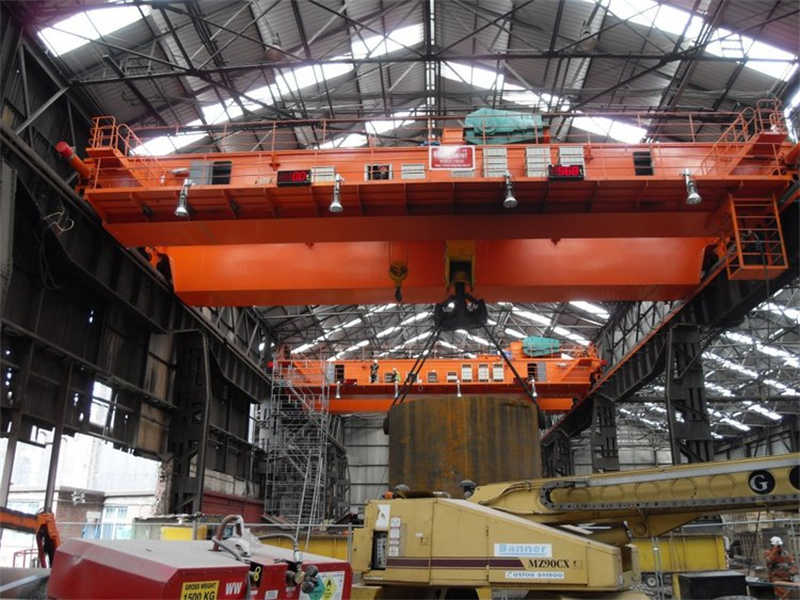
Dongqi Crane‘s European-style overhead cranes integrate variable-frequency drives (VFDs) that enable stepless speed control across the full operating range. Unlike traditional two-speed motors that force operators to choose between “too slow” and “too fast,” VFD-equipped cranes accelerate and decelerate smoothly, moving quickly through non-productive travel distances and slowing precisely as the load approaches its destination. This alone can reduce lift cycle times by 20–30%.
Electronic anti-sway systems eliminate the pendulum effect that plagues traditional crane operation. When a crane accelerates or stops, the load naturally swings—requiring the operator to pause and wait for it to stabilize. Dongqi’s anti-sway control actively counteracts this motion, keeping the load steady even during rapid movements. Operators can position loads with millimeter accuracy in a fraction of the time, which is particularly valuable when loading heavy machinery into containers with minimal clearance.
Wireless remote control and ergonomic pushbutton pendants allow operators to position themselves for optimal visibility without being tethered to the crane. This improves both safety and speed, as operators can move around the load to confirm clearances and alignment points during critical lifts.
2.2 Predictive Maintenance: Keeping Export Lines Moving
Dongqi Crane’s smart cranes incorporate IoT sensors that continuously monitor load, motor temperature, gearbox vibration, brake wear, and operating cycles. This data feeds into predictive algorithms that identify anomalies before they become failures. Instead of reacting to breakdowns, maintenance teams receive early warnings—a bearing running hotter than normal, a brake showing increased wear—and can schedule interventions during planned downtime.
For an export manufacturer operating on tight delivery schedules, the benefit is profound. Unplanned downtime drops dramatically. Maintenance resources are deployed efficiently based on actual equipment condition rather than arbitrary calendar intervals. And because Dongqi’s systems support remote monitoring, maintenance managers can oversee multiple crane systems across different facilities from a single dashboard—a valuable capability for multi-site export operations.
2.3 Lightweight Design Maximizes Space and Reduces Building Costs
Dongqi’s European-style cranes feature compact box-girder designs that reduce the crane‘s dead weight by 20–30% compared to traditional models. This weight reduction translates into lower wheel loads, which means existing building runways may not require reinforcement—a significant cost and time saving when upgrading an operating factory.
More importantly, the compact design provides superior hook approach dimensions, meaning the hook can reach closer to the building walls and columns. This maximizes usable floor space, allowing export manufacturers to store more finished goods, stage more shipping containers, or add production equipment within the same building envelope. For factories handling large export products like agricultural machinery or construction equipment, this space efficiency directly enables higher throughput without facility expansion.
2.4 Energy Efficiency: Lower Operating Costs, Greener Exports
Export buyers are increasingly scrutinizing the carbon footprint of their supply chains. The European Union’s Carbon Border Adjustment Mechanism (CBAM) and similar initiatives in other markets mean that energy-intensive manufacturing processes face additional costs when exporting to regulated markets. Overhead cranes are significant electricity consumers in many factories.
Dongqi’s VFD-equipped cranes reduce energy consumption by 30–40% compared to traditional constant-speed models. Regenerative drive options can capture the potential energy released during load lowering and feed it back into the facility‘s electrical grid, further reducing net energy draw. For an export manufacturer, lower electricity costs improve operating margins, while documented energy efficiency supports compliance with buyer sustainability requirements and may qualify for green export incentives.
Part 3: The Dongqi Crane Difference for Export Manufacturers
When export volumes are surging, you need a crane supplier who understands international markets—not just in terms of equipment performance, but in certifications, compliance, logistics, and support.
3.1 Globally Certified Quality
Dongqi Crane’s products hold CE, ISO 9001, ISO 14001, ISO 45001, ISO 50001, SGS, and GJB9001C certifications. For export manufacturers, this matters because international buyers and auditors expect production equipment to meet recognized safety and quality standards. CE certification is particularly important for manufacturers exporting to Europe, as it demonstrates compliance with EU machinery directives and facilitates acceptance by local authorities and insurers.
Our quality management system ensures that every crane undergoes rigorous testing before shipment—including load testing at 125% of rated capacity, function testing of all motions and safety devices, and dimensional inspection to confirm compliance with specifications. The result is equipment that installs quickly, commissions smoothly, and operates reliably from day one.
3.2 Integration With Export Logistics Systems
Modern export manufacturers rely on Enterprise Resource Planning (ERP) and Manufacturing Execution Systems (MES) to track production, inventory, and shipments in real time. Dongqi’s smart crane platforms support integration with these systems, enabling automatic data exchange on material movements, production progress, and equipment status. When a crane loads a finished machine into a container, the event can automatically update the ERP system, trigger shipping documentation, and notify logistics coordinators—eliminating manual data entry and reducing the risk of shipment errors.
3.3 Proven Performance in Export-Driven Industries
Dongqi Crane has supplied lifting solutions to some of the world‘s most demanding export manufacturers. Our cranes serve Shanghai Gas Group, China Railway Corporation, CRRC Group, China Aerospace Group, and China National Petroleum Corporation—organizations where equipment reliability directly impacts project timelines and international commitments.
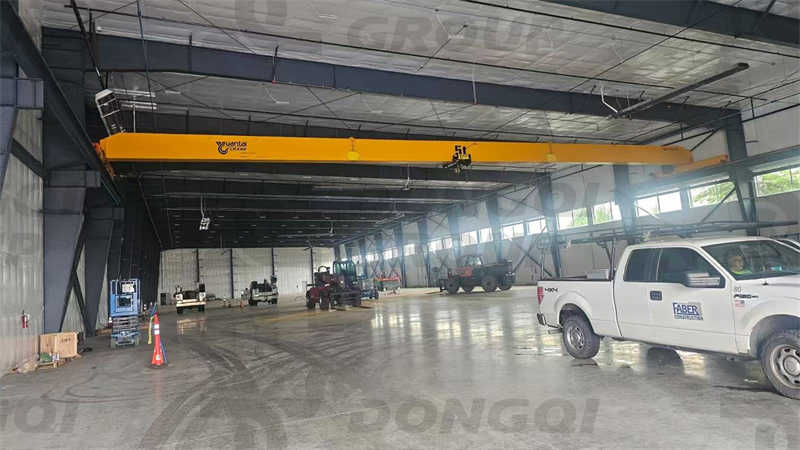
In one notable project, a large logistics center in Thailand handling over 500 tons of export cargo daily faced a critical challenge: limited space but rapidly growing throughput requirements. Dongqi deployed MGO-type 10-ton single-girder gantry cranes with compact design (main girder height just 1.2 meters) and variable-frequency drives enabling stepless speed control from 0.8 to 8 m/min. The result: cargo handling efficiency improved by 40%, equipment energy consumption decreased by 15%, and the payback period was just 18 months—a direct demonstration of how intelligent cranes translate export growth into profitable operations.
3.4 Global Service and Support
Export manufacturing does not stop for holidays or time zones. Dongqi Crane’s global service network spans 96 countries, providing spare parts, technical support, and on-site service to keep your cranes operational wherever your factories are located. For manufacturers with production sites in multiple countries, this means consistent support and genuine OEM parts regardless of geography. Our remote monitoring capabilities also enable off-site diagnostics, reducing the need for service visits and minimizing response times when issues arise.
Part 4: The ROI of Upgrading for Export Efficiency
For procurement leaders and plant directors evaluating the business case for crane modernization, the numbers are compelling. While the purchase price of a high-quality European-style crane may be 15–20% higher than a traditional Chinese model, the total lifecycle cost is substantially lower due to energy savings, reduced maintenance, and higher productivity.
Consider the following calculation for a medium-sized export factory with five overhead cranes, each operating two shifts per day:
- Energy savings: 30% reduction on an annual crane electricity bill of $50,000 equals $15,000 per year
- Productivity gains: 25% improvement in material handling throughput, enabling additional export orders worth $500,000 in annual revenue at 15% margin, contributing $75,000 in additional profit
- Downtime reduction: Avoiding just two days of unplanned downtime per crane per year, at a cost of $20,000 per day of lost production, saves $200,000
- Maintenance reduction: 40% lower maintenance costs on an annual budget of $30,000 saves $12,000
The combined annual benefit of approximately $302,000 on a crane upgrade investment of $500,000 yields a payback period of roughly 20 months—and that is before accounting for the intangible benefits of improved safety, enhanced reputation with international buyers, and reduced management stress during peak export seasons.
More fundamentally, the question for export manufacturers in 2026 is not “Can we afford to upgrade our cranes?” but “Can we afford not to?” With export orders surging and global competition intensifying, factories that operate with unreliable, slow, or unsafe lifting equipment will increasingly find themselves unable to meet customer expectations. Those that invest in intelligent material handling will capture market share, build stronger customer relationships, and position themselves for sustained export growth.
Conclusion: Don’t Let Your Crane Be the Bottleneck
The global export boom of 2026 represents a generational opportunity for manufacturers. But opportunity without execution is merely potential. Every day that a factory operates with outdated lifting equipment, it accumulates hidden costs: slower order fulfillment, higher energy bills, avoidable maintenance expenses, and the ever-present risk of a catastrophic failure that misses a critical shipment.
The connection between export growth and material handling efficiency is direct and measurable. A faster, more reliable crane means faster container loading, higher throughput, lower operating costs, and greater confidence in meeting delivery commitments. In an era when international buyers can switch suppliers with a single email, reliability and speed are competitive advantages that compound over time.
Dongqi Crane is ready to partner with you. Whether you need a single overhead crane for a new export packaging line, a factory-wide modernization program, or integrated lifting solutions for multiple production sites across different countries, our engineering team brings the expertise, manufacturing scale, and global service infrastructure to deliver results.
Visit sg.craneyt.com to discuss your material handling challenges with our team. Let’s ensure your export growth isn’t held back by yesterday’s lifting equipment.
About Dongqi Crane
Henan Dongqi Machinery Co., Ltd. is a leading manufacturer of European-standard overhead cranes, gantry cranes, electric hoists, and intelligent lifting solutions. With over 30 years of experience, a 240,000-square-meter manufacturing facility, annual production exceeding 10,000 units, and exports to 96 countries, Dongqi Crane delivers quality, reliability, and innovation to manufacturers worldwide. Our certifications include CE, ISO 9001, ISO 14001, ISO 45001, ISO 50001, SGS, and GJB9001C. Technology partners include ABM, SEW, ABB, NORD, Siemens, and Schneider Electric. Contact us at pk.craneyt.com.
