
16-Apr-2026
8 Common Crane Procurement Mistakes in Southeast Asia (90% of Buyers Make at Least 3)
A Must-Read Procurement Guide from DONGQI CRANE for Factory Owners, Project Managers, and Procurement Directors
If you are responsible for purchasing an overhead crane or gantry crane for a facility in Southeast Asia, you are probably navigating a complex landscape of technical specifications, cross-border logistics, and unfamiliar certification requirements. The appeal of sourcing from China is clear: compelling pricing, extensive customization capabilities, and a mature manufacturing ecosystem. But the journey from initial inquiry to a fully operational crane is filled with potential pitfalls—and the data shows that the overwhelming majority of Southeast Asian buyers encounter at least several of them along the way.
At DONGQI CRANE, a Sino-New Zealand joint venture with over 40 years of manufacturing experience and products operating in 96 countries worldwide, we have witnessed firsthand the recurring mistakes that turn what should be a strategic investment into a source of frustration, delay, and unexpected cost. This article identifies the eight most common procurement mistakes we see Southeast Asian buyers make—and provides actionable guidance on how to avoid them.
Before diving in, consider this: A crane is not a commodity purchase. It is a long-term operational asset with a typical service life of 15 to 25 years. The choices you make during procurement will echo through your facility’s productivity, safety record, and maintenance budget for decades. Getting it right matters.
Mistake #1: Judging a Crane Solely by Its Lifting Capacity
Of all the mistakes made during crane procurement, this is the most common—and the most consequential. Many buyers approach the process with a single number in mind: “We need a 10-ton crane.” They send RFQs with only tonnage specified, receive quotes ranging from $8,000 to $26,000, and cannot understand the disparity.
The truth is that lifting capacity is merely the starting point. What truly defines a crane’s suitability—and drives its cost—is its work duty classification. This is the single most overlooked factor by first-time buyers across Southeast Asia. Many buyers overlook the importance of duty classification, judging suitability based only on lifting capacity while ignoring lifting frequency, load ratio, running speed, and daily cycles.
Work duty classification (expressed through FEM, ISO, or CMAA standards) determines the crane’s structural strength, fatigue life, motor and gearbox configuration, and safety margin. Selecting a crane with an inappropriate service class rating can lead to premature failure, costly repairs, and even significant safety risks.
The consequences of this mistake are severe:
- Choosing too low a class: If you install an M3 (light duty) crane in an application requiring M6 (heavy duty) continuous operation, the gearbox will wear prematurely, the steel structure may develop fatigue cracks, and the warranty will be voided—often within the first year of operation.
- Choosing too high a class: You will overpay for capacity and structural reinforcement you do not need.
How DONGQI CRANE helps you avoid this: Our engineering team conducts a thorough duty cycle analysis before quoting. We ask the right questions: How many lifts per day? What is the average load as a percentage of capacity? Is operation single-shift or continuous? With this data, we specify the correct FEM/ISO classification—ensuring you pay for exactly what you need, not more and not less.
Your action item: Before requesting a quote, document your daily operating hours, number of lifts per shift, and typical load weights. This information is as critical as the tonnage itself.
Mistake #2: Overlooking Total Cost of Ownership and Hidden Expenses
The initial price tag on an overhead crane is just the entry fee. Over 10 years, overhead crane lifecycle cost can reach $200,000 to $500,000. Factory managers and procurement teams who ignore total cost of ownership risk severe budget overruns.
Many decision-makers treat cranes like a one-time capital expense. They negotiate hard on the quote sheet but overlook the silent bleed of daily operation, unexpected breakdowns, and escalating repairs. A $60,000 crane can easily generate $288,000 in additional costs over a decade—nearly five times its purchase price.
The true cost of owning and operating a crane encompasses far more than the equipment itself. Buyers often underestimate expenses like runway preparation, power upgrades, installation, operator training, and long-term maintenance.
Hidden costs that consistently blow budgets in Southeast Asia:
| Cost Category | What Buyers Often Miss |
|---|---|
| Civil Works & Runway | Runway beams, support columns, and foundation reinforcement are rarely included in crane quotes. Older buildings may need structural reinforcement to handle dynamic loading. |
| Installation & Commissioning | Installation equals 25–50% of crane price and covers runway beams, power rails, anchoring, and load testing. |
| Energy Consumption | A 10-ton crane running 120 cycles per day consumes approximately $10,080 in electricity annually. Older fixed-speed motors waste 30–40% through heat and mechanical shock. |
| Maintenance & Downtime | Low-bid cranes spike maintenance costs 2.2× after Year 6. A 10-year TCO model prevents 40% of surprise expenses. |
| Certification & Compliance | Country-specific certifications (SNI, TISI, CR, DOSH) add thousands in documentation and testing costs. |
| Freight & Duties | Import duties range from 0% under RCEP/ACFTA preferential agreements to 10%+ in some markets. |
How DONGQI CRANE helps you avoid this: We provide complete TCO transparency. Our European-standard crane series, while typically commanding a 15–20% higher initial investment, delivers 30–40% annual electricity savings and 50% lower failure rates—typically recovering the price difference within 2–3 years through reduced operating costs. We also help clients navigate RCEP and ACFTA tariff preferences, which can reduce or eliminate import duties entirely.
Your action item: When comparing quotes, build a 10-year TCO model that includes energy, maintenance, and estimated downtime. A “cheaper” crane with IE2 motors may cost $15,000–$20,000 more in electricity over a decade than a premium crane with IE4/IE5 high-efficiency motors.
Mistake #3: Ignoring Country-Specific Certification Requirements
Southeast Asia is not a single market. It is a collection of distinct nations, each with its own mandatory certification regimes, import documentation requirements, and safety standards. A crane that clears customs smoothly in Vietnam may be held for weeks at an Indonesian port if documentation is incomplete.
Country-specific certification realities:
| Country | Mandatory Certification | Key Requirements |
|---|---|---|
| Indonesia | SNI (Standar Nasional Indonesia) | Mandatory SNI certification covering cranes, electric hoists, and lifting accessories. Importers must obtain SNI certificate before market entry and pass authorized performance testing. The process includes document review, sample testing, and factory audits, typically lasting 15–25 working days. |
| Thailand | TISI (Thai Industrial Standards Institute) | Strict compliance reviews on imported machinery. Products involving lifting or power systems must pass TISI certification. Companies are advised to complete TISI certification before shipment to avoid customs delays. Engineering equipment needs TISI certification; some parts require third-party testing reports. Prepare 3–6 months in advance. |
| Vietnam | CR (Conformity Certification) | Equipment involving electrical or lifting systems must comply with national regulation QCVN. Customs conducts detailed document verification, emphasizing translation accuracy and parameter consistency. |
| Malaysia | DOSH (Department of Occupational Safety and Health) | DOSH oversees crane safety and operation permits. Importers must submit invoices, packing lists, import permits (AP), certificates of origin, manuals, drawings, and inspection reports. |
| Philippines | BPS (Bureau of Product Standards) | Imported industrial equipment may require Product Standard Certification depending on application and end-user sector. |
| Singapore | MOM (Ministry of Manpower) | Workplace Safety and Health regulations require equipment registration and periodic inspection. CE certification generally accepted. |
The consequences of ignoring certification requirements can be severe: goods held at customs for weeks or months, unexpected storage fees, rejection of equipment at port, and in the worst cases, equipment that cannot be legally operated at all.
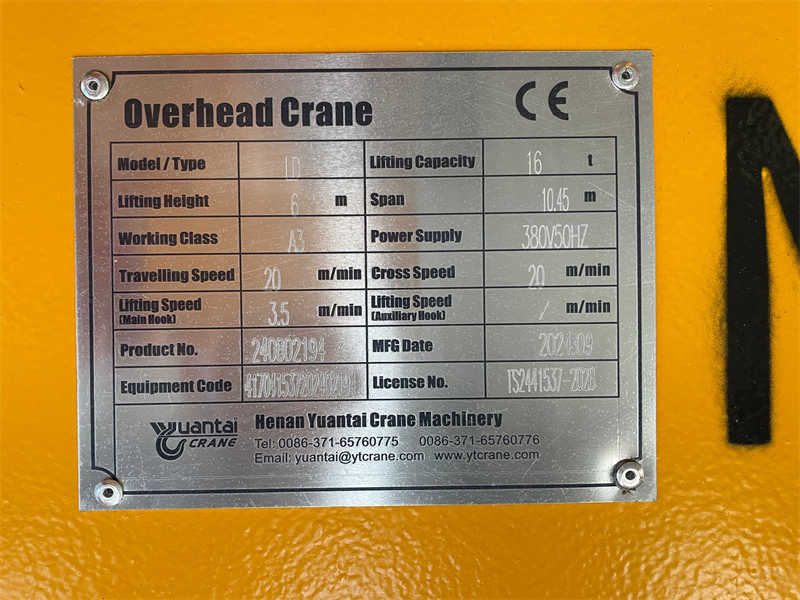
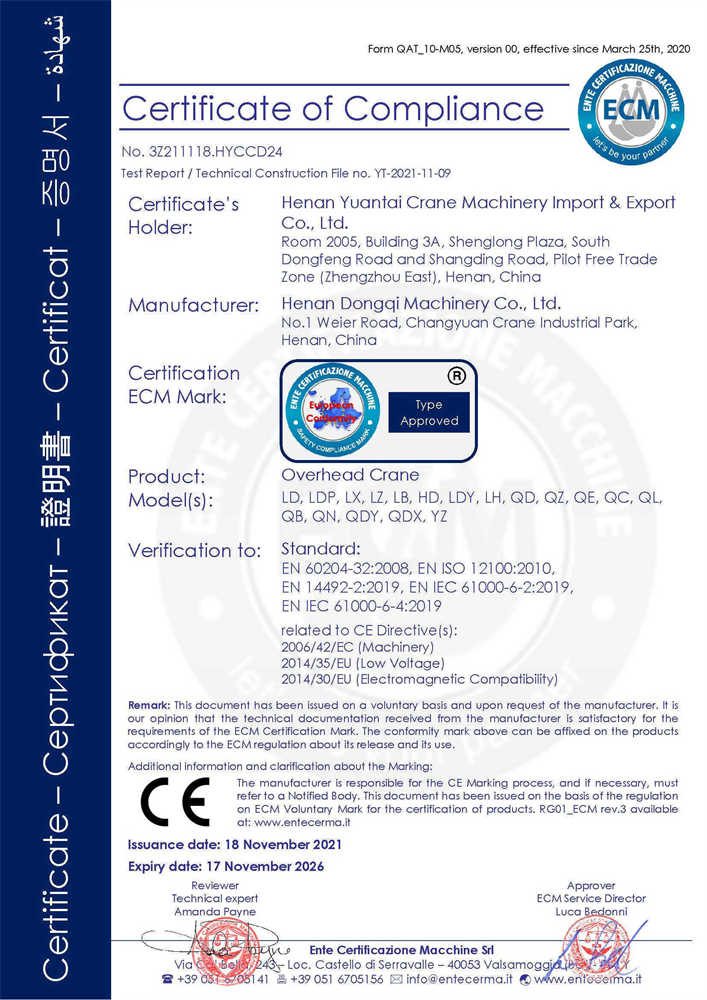
How DONGQI CRANE helps you avoid this: We hold comprehensive international certifications including ISO 9001, ISO 14001, ISO 45001, and CE certification. Our technical documentation team ensures that every crane shipment includes complete certification packages—material test certificates, weld procedure specifications, load test reports, and geometric survey documentation—that satisfy local regulatory authorities. With extensive export experience to all major Southeast Asian markets, we understand exactly what each destination requires before equipment ships.
Your action item: Verify certification requirements with your destination country’s authorities before placing an order. Request a complete list of required documentation from your supplier and confirm they have proven experience shipping to your specific country.
Mistake #4: Assuming All Chinese Suppliers Offer Comparable Quality
The Chinese crane manufacturing industry spans an enormous quality range. At one end are manufacturers like DONGQI CRANE—Sino-foreign joint ventures with European design standards, premium component partnerships, and ISO-certified quality systems. At the other end are small workshops producing non-compliant equipment with substandard materials, undocumented welding procedures, and counterfeit components. The price difference between these extremes can be 30% to 50%, but the long-term cost differential is far greater.
Many buyers sourcing from China face issues in product quality, compliance with local safety standards, delivery timelines, and after-sales support. These challenges can lead to delays, higher costs, or even operational risks if not properly managed.
Specific quality risks that trap unwary buyers:
- Material differences: Steel grades, wire ropes, or structural elements may not match the specifications provided.
- Welding variations: Improper welding can affect the strength and stability of crane structures.
- Electrical component reliability: Motors, controllers, and hoists may vary in reliability, especially if sourced from third-party brands.
- Durability concerns: Components may wear faster under heavy-duty use, and electrical systems may fail in Southeast Asia’s high-humidity or outdoor conditions.
For a buyer reviewing quotes remotely, distinguishing between a genuinely value-engineered crane and a dangerously underbuilt one is extremely difficult without proper due diligence.
How DONGQI CRANE helps you avoid this: As a Sino-New Zealand joint venture with a 240,000-square-meter manufacturing facility in Changyuan—China’s “Cradleland of Cranes”—we combine advanced European technology with Chinese manufacturing excellence. We maintain direct technical partnerships with SEW, NORD, ABB, Siemens, and Schneider Electric, ensuring our cranes incorporate industry-leading motors, drives, and control systems. Our ISO 9001 quality management system certification validates our systematic approach to quality control and continuous improvement. We welcome client inspections and provide full material traceability documentation.
Your action item: Verify the manufacturer’s ISO 9001 certification status and scope. Request material test certificate samples from recent shipments. Confirm component brand partnerships directly with the component manufacturers. If possible, conduct a factory audit—in-person or third-party—before placing large orders.
Mistake #5: Underestimating Installation Complexity and Civil Works
One of the biggest surprises for first-time crane buyers is the realization that a crane does not simply arrive, get unpacked, and start working. There is extensive preparation required before the crane is even lifted into place—and these pre-installation requirements often come with costs that are not included in the supplier’s base quote.
Installation equals 25–50% of crane price and covers runway beams, power rails, anchoring, and load testing. Skimp on alignment or undersize supports and you will face structural stress and early wear. One misaligned rail can cause wheel flange wear, leading to $12,000 in premature wheel replacements within three years.
Civil works that buyers frequently overlook:
- Runway beams and support columns: If your building does not already have built-in runways, you will need to install structural steel to support the crane.
- Foundation reinforcement: Heavier loads or longer spans may require reinforced foundations and anchor bolts.
- Building modifications: Trimming wall sections, relocating machinery, rerouting utilities—all add cost and time.
- Power supply upgrades: A large crane may require a dedicated electrical feed or transformer upgrade.
How DONGQI CRANE helps you avoid this: We provide detailed pre-installation documentation including runway design recommendations, wheel load calculations, and power supply specifications. For clients who require on-site technical guidance, DONGQI CRANE dispatches experienced engineers directly from our China headquarters to your facility anywhere in Southeast Asia. Our engineers work alongside your local installation team to supervise alignment, commissioning, and load testing—ensuring the crane is installed to factory specifications and performs as designed.
Your action item: Before ordering, have a structural engineer evaluate your building’s capacity to support the proposed crane. Request complete wheel load data from your crane supplier and share it with your civil works contractor.
Mistake #6: Neglecting After-Sales Support and Spare Parts Planning
A crane is a long-term operational asset. During its 15–25 year service life, it will require routine maintenance, occasional repairs, and eventual component replacement. Many buyers focus entirely on the initial purchase and fail to establish a clear plan for ongoing support—only to face operational disruptions when the first issue arises.
Common after-sales challenges Southeast Asian buyers encounter:
- Spare parts unavailability locally: Critical components cannot be sourced from local distributors.
- Long lead times for replacement parts: Ordering parts from overseas without a clear process can take weeks or months.
- Limited local technical expertise: Finding technicians familiar with specific crane models can be difficult.
- Warranty claim complexity: Unclear processes for documenting and validating warranty issues.
How DONGQI CRANE supports your long-term operation:
We operate a fundamentally different support model than what many buyers expect—and we are completely transparent about it. DONGQI CRANE does not maintain local agencies or spare parts warehouses in Southeast Asia. Instead, we provide direct-from-factory support that leverages China’s unmatched manufacturing and logistics capabilities:
- Engineer Dispatch Service: When your crane requires expert attention beyond routine maintenance, we dispatch qualified DONGQI CRANE engineers directly from our China headquarters to your facility. Our engineers provide on-site technical support, troubleshooting, and repair guidance. This direct model ensures you receive support from the engineers who actually designed and built your crane—not third-party contractors with limited product knowledge.
- Rapid Spare Parts Delivery: Need a replacement part? We ship it directly from our factory to your door via international express courier (DHL, FedEx, UPS). Because we maintain comprehensive parts inventory at our 240,000-square-meter manufacturing facility, most standard components ship within 24–48 hours of order confirmation. Express delivery to major Southeast Asian cities typically takes 3–7 business days.
- Strategic Spare Parts Recommendation: At the time of purchase, we provide a recommended critical spares list tailored to your crane’s configuration and duty cycle. Many clients choose to purchase these spares with the initial crane order, ensuring immediate on-site availability for high-wear items like contactors, brake pads, and limit switches.
- Remote Diagnostic Support: Our technical team provides video-assisted troubleshooting and diagnostic guidance via WeChat, WhatsApp, or Zoom. Many issues can be resolved remotely, avoiding unnecessary engineer dispatch.
Why this model works for Southeast Asian buyers:
China’s express logistics network is world-class. A part shipped from our factory in Henan Province often reaches Jakarta, Bangkok, or Ho Chi Minh City faster than a part sitting in a regional warehouse with limited inventory. And when you need hands-on expertise, a DONGQI engineer arrives with complete knowledge of your specific equipment—something no local agent can match.
Your action item: Before purchasing, ask your supplier to provide:
- A recommended critical spares list with lead times and pricing
- The warranty claim process and response time commitments
- Confirmation of engineer dispatch availability for your region
- Remote support contact information and available hours
Mistake #7: Failing to Define Technical Specifications Completely
Even with perfect manufacturing quality and robust after-sales support, a crane project can fail if the equipment delivered does not match what the buyer actually needed. Specification misalignment is surprisingly common in international crane procurement, and language barriers compound the problem.
Consider this scenario: A buyer requests a “10-ton overhead crane” without specifying work duty classification. The manufacturer quotes a light-duty M3 crane suitable for occasional maintenance use. The buyer accepts the attractive price, but the crane is installed in a production environment requiring continuous operation. Within months, the gearbox fails, the structure shows fatigue cracking, and the manufacturer denies warranty coverage because the crane was operated beyond its design parameters.
This is not a quality failure—it is a specification and communication failure.
Critical specifications that buyers often omit from initial inquiries:
| Specification | Why It Matters |
|---|---|
| Span (center-to-center of runway rails) | Determines bridge girder length and structural design. A 100mm error can cause derailment or severe wheel flange wear. |
| Lift Height (clear height from floor to highest hook position) | Affects hoist selection and building clearance requirements. Must account for hook approach dimensions and safety margins. |
| Work Duty Classification (FEM/ISO/CMAA) | Dictates structural fatigue life, motor sizing, and component selection. The single most important specification beyond tonnage. |
| Operating Environment | Determines corrosion protection, electrical enclosure ratings, and motor insulation class. Coastal salt spray requires C5-M coating; foundries require high-temperature rated components. |
| Electrical Specifications | Voltage, phase, and frequency must match your facility. Mismatched motors will burn out. |
| Control Preferences | Pendant, radio remote, or automated PLC integration? Retrofitting later is expensive. |
How DONGQI CRANE helps you avoid this: Our standard inquiry process uses a comprehensive technical questionnaire that captures all critical specifications before we generate a proposal. We do not quote based on incomplete information. For complex projects, we provide 3D models and detailed engineering drawings for client approval before fabrication begins. Every quotation includes a complete technical specification document that becomes part of the commercial contract, eliminating ambiguity about what is being supplied.
Your action item: Use the following checklist when preparing your RFQ:
- [ ] Exact lift capacity (including below-the-hook equipment weight)
- [ ] Span (center-to-center of runway rails, measured on-site)
- [ ] Lift height (clear height from floor to highest hook position)
- [ ] Work duty classification (consult our engineers if uncertain)
- [ ] Operating environment (indoor/outdoor, temperature range, humidity, corrosive conditions)
- [ ] Electrical specifications (voltage, phase, frequency)
- [ ] Control preferences (pendant, radio remote, automation)
- [ ] Certification requirements (SNI, TISI, CR, DOSH, etc.)

Mistake #8: Choosing the Lowest Price Without Verifying Value
The final mistake is perhaps the most predictable—and the most expensive in the long run. In a competitive bidding environment, the temptation to select the lowest-priced quote is strong. Procurement teams are often measured on cost savings, and a 20% lower equipment price looks like a clear win.
But in the crane industry, the lowest price rarely represents the best value. The initial savings are frequently erased—many times over—by higher operating costs, increased maintenance, premature component failures, and production downtime.
What the lowest bid often means:
| What You Might Get | What It Costs You Later |
|---|---|
| IE1 or IE2 motors | 30–40% higher electricity consumption annually |
| Standard gearboxes with lower service factor | Premature failure under continuous duty |
| Basic pendant control (no VFD) | Jerky load handling, increased mechanical wear, operator fatigue |
| Minimal corrosion protection | Structural rust in humid climates within 3–5 years |
| Undocumented welding procedures | Certification rejection, insurance complications |
| No engineer dispatch support | Extended downtime when problems arise |
The DONGQI CRANE value proposition:
We do not compete to be the lowest-priced supplier. We compete to be the lowest total cost of ownership supplier. Our cranes typically command a modest premium over entry-level alternatives—and deliver that premium back to you many times over through:
- IE4/IE5 high-efficiency motors from SEW and NORD that reduce electricity costs by 30–40% annually
- Variable frequency drives (VFD) that provide smooth acceleration, reduce mechanical shock, and extend component life
- C5-M marine grade coating options for coastal Southeast Asian environments
- Fully documented materials and welding procedures that satisfy certification requirements in every market
- Direct engineer dispatch support from our China headquarters when you need expert assistance
Your action item: When evaluating quotes, calculate the 10-year total cost of ownership, not just the invoice price. Include estimated energy consumption, typical maintenance costs, and a contingency for downtime. The result will often reveal that a moderately higher initial investment delivers substantially lower lifetime costs.
Conclusion: Smart Procurement Starts with Smart Questions
Procuring a crane for a Southeast Asian facility is a complex undertaking—but it does not have to be a painful one. The eight mistakes outlined in this guide are common precisely because they are easy to make. But they are also entirely avoidable with proper planning, thorough due diligence, and partnership with a manufacturer committed to transparency and long-term value.
At DONGQI CRANE, we believe that an informed buyer is the best client. We encourage every potential customer to ask hard questions, verify our certifications, speak with our references, and challenge our technical recommendations. A crane is a multi-decade investment. The time you invest in getting procurement right will pay dividends throughout the equipment’s entire service life.
Ready to start your crane procurement journey with a partner committed to your success?
[Contact DONGQI CRANE’s international sales team today to discuss your project requirements and receive a detailed technical and commercial proposal.]
DONGQI CRANE: Your Direct-from-Factory Partner for Overhead Cranes, Gantry Cranes, and Custom Lifting Solutions Since 1985.
ISO 9001 • ISO 14001 • ISO 45001 • CE Certified
240,000m² Manufacturing Facility • 10,000+ Annual Capacity • Exports to 96+ Countries
Direct Engineer Dispatch to Southeast Asia • Express Spare Parts Delivery Worldwide
