
24-Dec-2025
Beyond the 10-Ton Mark: Why Your Next Crane Should Be a Dialogue, Not Just a Purchase
For over two decades at Dongqi Crane, I’ve had countless conversations that start the same way: “We need a 10-ton double girder crane. What’s your price?”
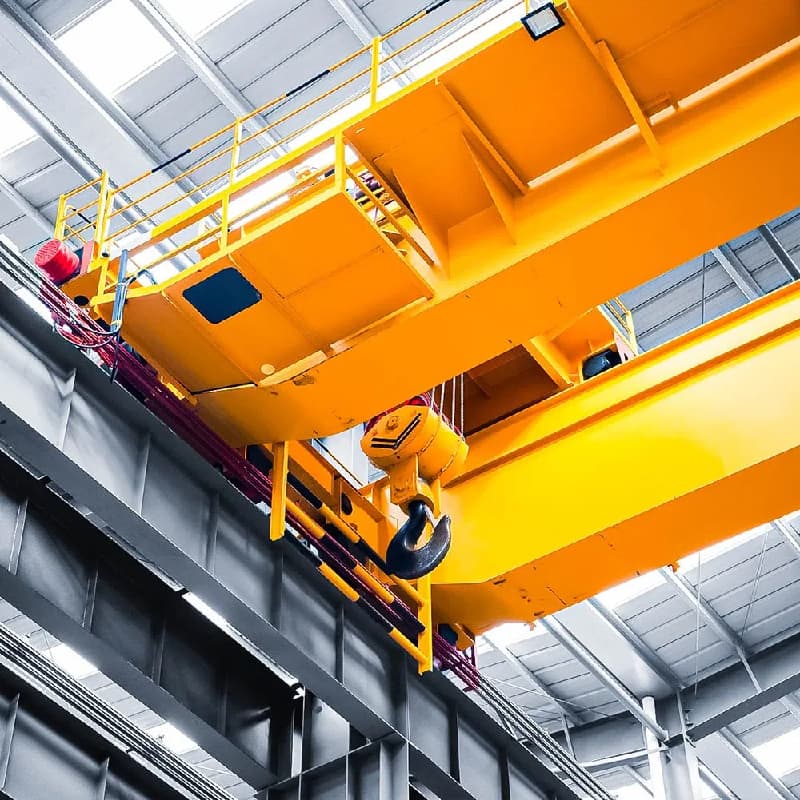
It’s a logical starting point. The 10-ton double girder overhead crane is, without a doubt, the workhorse of modern industry. It’s the sweet spot for machine shops, steel service centers, assembly halls, and warehouse logistics—powerful enough for serious work, yet versatile enough for daily tasks. In 2025, it remains our top-selling category for a reason.
But early in my career, I made the mistake of just answering that price question. I’d quote a standard model. Sometimes we’d get the order. Often, we wouldn’t. And sometimes, we’d get the order, only to hear back a year later with operational headaches we could have prevented.
I learned that when you ask for a “10-ton double girder,” you’re not really asking for the crane itself. You’re asking for a solution to a complex set of challenges: a bottleneck on your production line, a safety concern with manual handling, a space constraint in your new facility extension, or the need to future-proof your operation.
So now, my first response to that question is another question: “Tell me about the work it needs to do.” This isn’t sales talk. This is the lesson learned from delivering cranes to 96 countries, from the steel mills of Bangladesh to the automated factories in the Netherlands.
The “Standard” Trap and the Power of “Why”
Consider two recent 2025 projects:
- A U.S. manufacturing plant needed a crane for precision positioning of delicate, expensive fabrications.
- A Nigerian oil and gas processor needed a crane to handle volatile materials in a hazardous, explosive atmosphere.
Both initially asked for a “10-ton double girder.” But shipping them the same machine would have been a profound failure. The U.S. plant required variable frequency drives (VFD) for micro-speed control, anti-sway technology, and perhaps a wireless remote for one-man operation. The Nigerian facility needed a full explosion-proof (Ex-proof) build—with specially housed motors, brakes, and electrical components to prevent any spark.
This is the core of the European design philosophy we embrace: it starts with a modular, optimized platform that is meant to be customized. The goal is not to sell you the heaviest frame, but the most intelligent and efficient one. We focus on reducing the crane’s dead weight—which reduces the strain on your building’s support structures—and then integrate the exact components your duty cycle demands.
Your Facility, Your Rules: The Customization Conversation
This is where our conversation becomes a collaboration. We’ll delve into details you might not have considered part of a “crane quote”:
- The True Load Spectrum: Is it always a full 10 tons? Or is it mostly 3-4 tons with occasional peak loads? This might allow for a more economical motor choice or suggest a main/auxiliary hoist combination (like a 10/3 ton setup) for incredible flexibility.
- Your Dance Floor (The Span & Height): We’ll look at your bay’s exact width and clear height. The compact design of our European-style cranes can often provide more hook height in low-clearance buildings, turning “impossible” spaces into productive ones.
- The Intensity (Duty Class): Does it run 2 hours a day or 20? Is movement smooth and constant or jerky and hectic? This determines the required Duty Classification (A3 to A7), which dictates the robustness of every gear, wheel, and bearing. An underspec’d crane will wear out prematurely; an overspec’d one is an unnecessary capital drain.
- The Brain (Control & Operation): Should it be operated via a pendant, from an ergonomic cab with air conditioning, or with a wireless remote for optimal visibility and safety?
- The After-Sales Lifeline: Who will be there when you need service? We structure our global support so that a technical query gets a response within 4 hours, and critical on-site support can be mobilized within 24. Our engineers are available around the clock because a stopped crane means a stopped production line.
The Dongqi Process: Partnership from Blueprint to Liftoff
This consultative approach is embedded in our process. When a serious client from Belarus visited us last year, they didn’t just see a catalog. They walked our 240,000 sq.m. workshop, saw our 500 sets of production and detection equipment, and sat with our engineers to dissect technical drawings. For us, a successful visit isn’t just a signed contract; it’s a customer leaving with complete confidence that we can build what’s in their mind’s eye.
That’s the journey we offer:
- Deep-Dive Consultation: We become students of your operation.
- Collaborative Design & 3D Modeling: We provide clear layouts so you can visualize the solution.
- Transparent Manufacturing: You are welcome to witness key production and testing stages, including the critical 125% static load test.
- Turnkey Delivery & Commissioning: We handle the complexities of logistics, professional installation, and final certification.
- Lifetime Support: The relationship transitions to our service team, ensuring decades of reliable performance.
So, let’s return to your original question. When you ask for a 10-ton double girder crane from Dongqi, you’re not just getting a price. You’re initiating a partnership to engineer a key piece of your productivity. You’re getting a machine that fits your facility like a key fits a lock, because it was made for it.
Let’s start the conversation. Tell me about the work it needs to do.
Dongqi Crane
Engineered to Fit. Built to Last.
