
13-May-2026
Custom vs. Standard Crane Procurement Decision Model: Which Operating Conditions Demand Customization?
Introduction: The Fork in the Procurement Road
Every crane purchase eventually confronts a fundamental choice: select a standard, catalog-model crane or invest in a custom-engineered solution. At first glance, the decision seems straightforward—standard equals lower cost and faster delivery, so any deviation from standard must be justified by exceptional circumstances. But the reality is more complex.
In many industrial environments, choosing a standard crane where a custom solution is genuinely required can lead to chronic downtime, safety compromises, and structural fatigue that cuts the equipment’s service life in half. Conversely, commissioning a fully bespoke crane for a simple warehouse application wastes capital that could have been better deployed elsewhere. The procurement decision is not simply a preference; it is a risk-management equation with multi-decade consequences.
At Dongqi Crane, we have designed, manufactured, and commissioned thousands of cranes across 96 countries, from standard 5-ton workshop hoists to highly specialized ladle cranes, explosion-proof units, and cleanroom handling systems. Our engineering team frequently guides clients through this exact decision—helping them identify which aspects of their application truly demand customization, and which can be addressed by a well-chosen standard product.
This guide provides a structured decision model for procurement teams. It explains the clear indicators that mandate a custom crane, the conditions under which a standard crane is perfectly adequate (and economically advantageous), and the gray areas where a partial customization, or “configured” solution, offers the optimal balance. At Dongqi Crane, we believe that clear decision criteria help clients avoid both the false economy of forced standardization and the unnecessary expense of over-customization.

About Dongqi Crane: As a Sino-New Zealand joint venture with a 240,000-square-meter manufacturing facility, 3,600+ employees (including more than 70 senior engineers), and ISO 9001, ISO 14001, and ISO 45001 certifications, Dongqi Crane produces over 10,000 crane sets annually. Our portfolio ranges from standard single-girder overhead cranes to fully engineered systems for steel, petrochemical, nuclear, and cleanroom applications.
Part 1: Defining “Standard” and “Custom” in Crane Procurement
Before evaluating when customization is necessary, we must clarify what these terms mean in an industrial crane context.
1.1 What Is a Standard Crane?
A standard crane is a pre-engineered, production-line model with a defined range of parameters: capacity, span, lifting height, lifting speed, travel speeds, and duty classification. Its structural design, mechanisms, and controls have been optimized for a broad range of common applications and are manufactured in volume, often with components kept in inventory. Examples include:
- 5-ton single-girder overhead crane with electric hoist, 10–20 m span, A4 duty
- 10-ton European-style double girder crane, 15–25 m span, A5 duty, standard VFD control
- 20-ton gantry crane with standard cantilevers, A5 duty
At Dongqi Crane, our catalog includes dozens of such pre-engineered designs for overhead, gantry, and jib cranes, available with standard options such as radio remote control, different hoist speeds, or outdoor weather protection packages. These “configured” models offer some flexibility within a defined envelope, without crossing into custom engineering.
1.2 What Is a Custom Crane?
A custom crane is one where the primary structure, mechanisms, or control system must be engineered specifically for the client’s operating conditions. Customization can range from a single subsystem (e.g., a special grab or spreader beam) to a complete, ground-up design for a unique combination of capacity, dimensions, environment, duty cycle, and regulatory requirements.
Custom cranes are typically required when one or more of the following factors falls outside the standard design envelope:
- Capacity beyond standard structural designs
- Span or hook path that exceeds catalog modules
- Duty classification (A6, A7, A8) demanding fatigue-optimized structure and heavy-duty mechanisms
- Extreme environment (high temperature, corrosive, explosive, cleanroom)
- Special load handling (coils, slabs, molten metal, nuclear components)
- Integration with existing building where standard runway interfaces cannot be used
- Unique control and automation requirements (synchronized multiple hoists, anti-sway systems)
Dongqi Crane’s engineering department has designed custom solutions including 300-ton ladle cranes, explosion-proof cranes for Zone 1 and Zone 21 hazardous areas, cranes with dual synchronized hoists for turbine maintenance, and cleanroom cranes with particle-emission controls.
Part 2: The Customization Decision Model
We propose a four-zone decision model to guide procurement teams. The model assesses the application against key criteria in four areas: operating environment, load handling character, duty cycle and fatigue, and interface/integration constraints. Each area is scored on a scale from “standard” to “custom required.”
| Zone | Description | Recommendation |
|---|---|---|
| Zone 1: Clearly Standard | All criteria fall within standard catalog parameters | Purchase standard crane with optional configurable features |
| Zone 2: Configurable Standard | Most criteria standard; one or two non-critical parameters slightly outside | Discuss with manufacturer—may be addressable with options without full customization |
| Zone 3: Partial Customization | Several criteria push boundaries; customization needed in one or two subsystems | Target a partial custom design: e.g., standard bridge with custom hoist, or standard mechanism with environmental adaptation |
| Zone 4: Fully Custom Engineered | Fundamental parameters (capacity, duty, environment, span) outside catalog | Invest in fully engineered crane; cost of standard crane failure exceeds custom premium |
We now examine each evaluation dimension in detail.
Part 3: Red Flags—Application Characteristics That Mandate Customization
Certain operating conditions create technical demands that no standard crane can safely or economically meet. Recognizing these “red flags” early in procurement avoids costly mistakes.
3.1 Extreme Duty Classification: A6, A7, A8 and Beyond
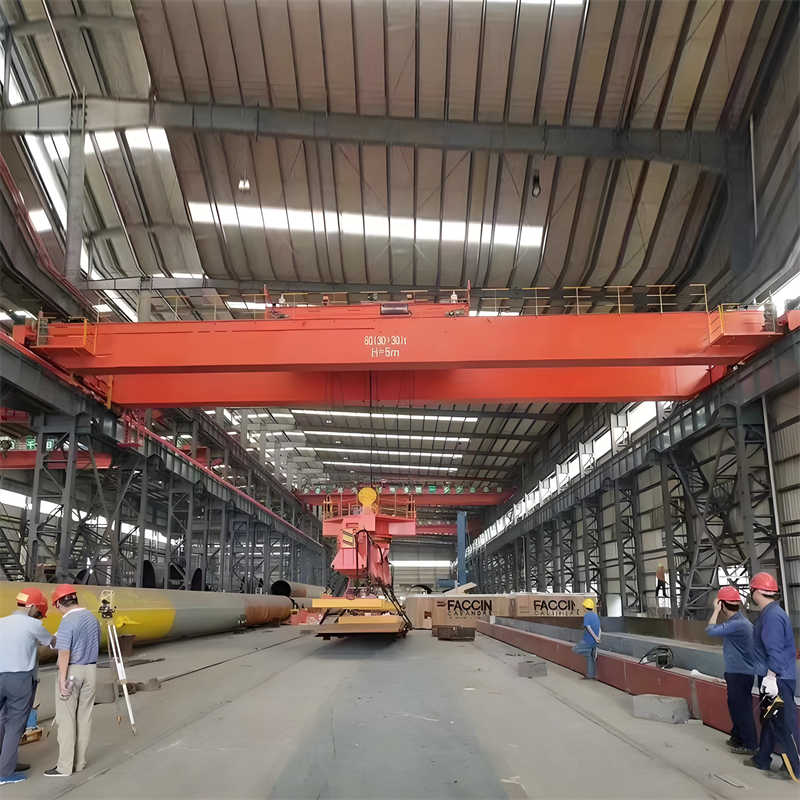
As detailed in our companion guide on duty classification, standard cranes are typically designed for ISO A3–A5 (FEM 1Bm–2m), corresponding to light-to-moderate usage in general manufacturing and warehousing. When your operation demands A6 (Severe), A7 (Continuous Severe), or A8 (Extreme)—characterized by constant full-capacity lifts, 16–24 hour operation, and millions of stress cycles—a standard crane is fundamentally inadequate.
What customization is required at these higher classes:
- Fatigue-optimized structural design using FEA to eliminate stress concentrations at welded connections.
- Upgraded steel grades (S420ML or higher) with appropriate fatigue detail categories.
- Larger-diameter drums and sheaves to extend rope life under high cycles.
- Heavy-duty gearboxes rated for continuous starts (e.g., M6/M7 mechanism class).
- Redundant braking systems.
- Possibly a four-girder or other non-standard bridge configuration to handle high-capacity demands.
Dongqi Crane’s approach: Every A6+ crane we deliver is custom-engineered, with a fatigue life calculation package submitted to the client during design review. Standard production designs do not extend into these high duty classes.
3.2 Extreme Temperature Environments
Standard crane designs assume an ambient temperature range typically from -10°C to +40°C. Operations in steel mills, foundries, and certain process plants expose cranes to radiant heat, molten splash risk, or ambient temperatures exceeding 60°C (and locally much higher). Conversely, cold storage and outdoor Arctic applications may reach -30°C or below.
Indicators that temperature demands customization:
- High heat: Radiant heat from molten metal or slabs can degrade structural steel properties, soften seals, and cause electrical component failure. Standard cranes near a furnace may suffer girder deformation within months.
- Deep cold: Standard structural steels can become brittle below -20°C. Standard lubricants congeal, and standard electrical cables crack.
Typical customizations for high temperature:
- Heat shields or reflective barriers under the main girder.
- High-temperature-resistant paint systems (up to 400°C or more).
- Fire-resistant hydraulic fluids and high-temperature grease.
- Components rated for elevated ambient temperatures (motors with Class H insulation, temperature-resistant cables).
- Solid forged wheels rather than pressed-tire wheels to prevent loosening during thermal cycling.
- For ladle cranes, redundant load-bearing paths and sometimes a four-girder design for additional safety.
Typical customizations for low temperature:
- Low-temperature rated structural steel (e.g., S355NL or similar with Charpy impact testing at specified temperature).
- Synthetic lubricants rated to -40°C.
- Heated electrical enclosures and cold-rated cables.
- Special bearing materials.
Dongqi Crane’s experience: We have supplied cranes for steel melt shops in hot climates and cold storage facilities in northern regions—both required custom material specifications, insulation, and component selection.
3.3 Hazardous Areas (Explosive Atmospheres)
Any crane operating in an environment with flammable gases, vapors, or combustible dusts—typical in petrochemical plants, refineries, paint shops, grain silos, and chemical processing facilities—must meet stringent ATEX (Europe), IECEx (international), or local explosion-proof standards. Standard cranes are never acceptable in these areas; a custom, certified explosion-proof crane is mandatory.
Customization elements for explosion-proof cranes:
- ATEX-certified motors, brakes, and electrical enclosures for the relevant zone (Zone 1, 2, 21, or 22).
- Brass-plated or stainless steel hooks and other spark-resistant components.
- Anti-static belts and conductive wheels to prevent static charge buildup.
- Special explosion-proof control panels with purged or pressurized enclosures.
- Restricted operating speeds to prevent friction-induced sparks.
- Rigorous documentation and third-party inspection.
Dongqi Crane manufactures ATEX/IECEx-certified explosion-proof cranes engineered to the specific zone and gas/dust group present in the customer’s facility. Each such delivery is a custom project involving close coordination with certification bodies.
3.4 Cleanroom and Contamination-Sensitive Environments
Cranes in semiconductor fabrication, pharmaceutical production, food processing, and optical manufacturing must not generate particles, shed lubricants, or introduce contaminants. Standard cranes with open gears, greased wire ropes, or painted surfaces that can chip are completely unsuitable.
Custom cleanroom crane features:
- Enclosed belt or chain hoists rather than wire rope (if possible) with dry, sealed lubrication.
- Stainless steel or fully encapsulated structural components.
- Special non-shedding, non-outgassing coatings or electropolished surfaces.
- Totally enclosed drives with labyrinth seals.
- ISO 14644-compliant particle emission testing.
At Dongqi Crane, cleanroom cranes are always custom-engineered to the required cleanliness class, from general Grade D down to ISO Class 5.
3.5 Corrosive and Marine Environments
Facilities on the coast, in chemical plants, or in fertilizer production expose cranes to salt spray, acids, or alkaline dust. Standard paint systems and unprotected fasteners will corrode rapidly, compromising structural integrity and causing mechanism seizure.
Customization for corrosive environments:
- SA 2.5 blasting to near-white metal with multi-layer epoxy/urethane coating systems rated for C4 or C5 corrosivity categories per ISO 12944.
- Stainless steel or high-grade galvanized hardware for all fasteners and small components.
- Sealed electrical enclosures (IP65 or IP66).
- Special corrosion-resistant materials for bearings and exposed machined surfaces.
3.6 Severe Space Constraints and Building Integration
When a crane must fit within a very low ceiling, navigate around obstructions, or operate in a building not originally designed for crane loads, standard designs often cannot be adapted.
Indicators of space-driven customization:
- Available headroom is extremely limited, requiring a special “low-headroom” trolley design that maximizes hook height.
- The runway span exceeds typical single-girder limits and requires a specially stiffened box girder, or columns are irregularly spaced.
- The existing runway beams are not parallel or are at different elevations, necessitating an articulated or compensated end carriage.
- The lifting path must curve (as in monorail systems) or branch.
Dongqi Crane’s approach: Our engineering team models the exact building geometry and crane envelope in 3D to verify clearances. For extreme cases, we have supplied cranes with “side-running” wheels picking up on one column flange to squeeze into tight aisles. Every such spatial solution is custom.
3.7 Special Load Handling Requirements
Standard cranes assume a single hook lifting a freely suspended load. When the load is not a simple dead weight—when it is a coil on a “C” hook, a stack of plates handled by a tong grab, a spreader beam for long or flexible loads, a rotating load, or a container—the lifting attachment and often the crane itself must be custom-designed.
Examples of load-driven customization:
- Coil handling: Requires an electro-hydraulic or mechanical coil grab, and the crane must resist the overturning moments produced by the load when the grab rotates.
- Slab and plate handling: Require multiple lifting points, often with self-leveling spreaders.
- Molten metal ladles: Demand completely redundant hoisting systems, heat shielding, and fail-safe brakes.
- Turbine/generator service: May require two synchronized hoists on a single trolley, each with micro-speed positioning.
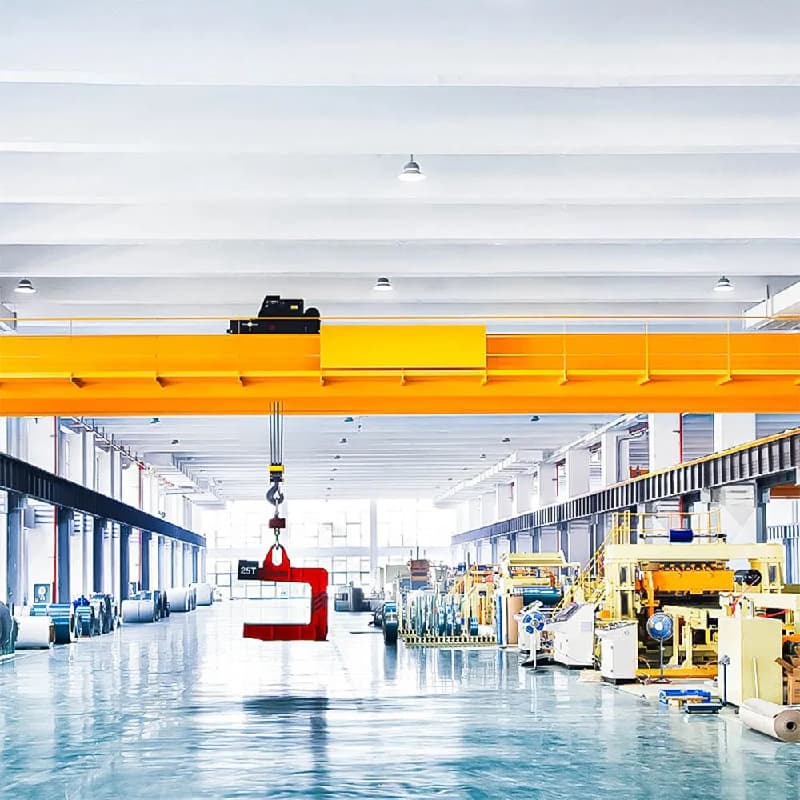
Dongqi Crane’s experience: We have developed specialized grabs and spreaders for steel coil handling in Pakistan, waste-to-fuel grab cranes for an Indonesian plant, and dual-trolley synchronization for power station maintenance—all custom-engineered around the load.
3.8 High-Speed and High-Positioning-Accuracy Operations
If your process requires a crane to move loads rapidly and stop with millimeter precision—common in automotive assembly, aluminum coil stacking, or paper roll handling—standard crane controls (even with VFD) may not deliver the required anti-sway and positioning performance.
Custom features:
- Closed-loop anti-sway control using vision or laser sensors.
- Encoder-based positioning with fine-inching capability.
- Dynamic load cells for real-time weight feedback.
- Special cross-travel and long-travel drives with minimal backlash.
Dongqi Crane’s AICrane automation options provide these capabilities, but truly high-accuracy systems always require custom tuning and system integration.
Part 4: When a Standard Crane Is the Right Choice
It is equally important to recognize when customization is unnecessary. Standard cranes are pre-engineered, production-refined, and cost-effective. They are ideal when:
- The capacity, span, lift height, and duty class fall within the manufacturer’s catalog range.
- The environment is a normal indoor industrial setting (0°C to +40°C, dry, non-corrosive, non-explosive).
- Lifting is done with a standard hook, and loads are stable and well-rigged.
- The building has conventional runway beams within normal alignment tolerances.
- The crane operation does not require special synchronizations, anti-sway beyond what VFD provides, or data integration beyond basic I/O.
In such cases, opting for a custom design can actually increase project risk—introducing unproven details, extending lead time, and adding cost with no corresponding performance benefit. Dongqi Crane always advises clients when a standard model fits the bill, and we can often propose a “configured” standard with a few selected options (e.g., radio control, upgraded paint, optional wireless monitoring) rather than a full custom build.
Part 5: The Cost-Benefit Equation of Customization
Procurement teams are understandably cautious about custom crane costs. A fully engineered custom crane can cost 30% to 100% more than an equivalent-capacity standard machine. However, the relevant comparison is not the purchase price—it is the total cost of ownership over the crane’s 15–25 year life.
Consider a steel service center that runs A6 duty, lifts heavy plates 16 hours a day. Installing an A4 standard crane would save perhaps 25% on upfront equipment cost. But the standard crane would likely suffer fatigue cracks within 3–5 years, require unplanned outages for weld repairs, wear out hoist gearboxes rapidly, and ultimately need replacement at year 7. The lifetime cost, including production losses during downtime, could be three to five times higher than investing properly from the start.
Conversely, a general engineering workshop operating a crane at A3 duty for 2 hours a day would never recover the premium of a custom A5 design. The standard unit will provide 20+ years of economical service.
Dongqi Crane’s approach to transparent cost evaluation:
- We provide a total installed cost estimate that includes crane, runway design or verification, installation, and any building modifications.
- We present lifetime maintenance cost projections based on operating conditions, enabling you to compare the lifecycle cost of a standard vs. customized solution.
- We never upsell to custom when standard suffices—our reputation depends on delivering appropriate solutions, not maximizing short-term revenue.
Part 6: Dongqi Crane’s Custom Engineering Process
When a project enters the custom engineering domain, Dongqi Crane follows a disciplined, collaborative process to ensure the final design meets every performance, safety, and regulatory requirement.
6.1 Application Analysis and Feasibility Study
Our engineering team begins with a detailed questionnaire and, whenever possible, an on-site visit or virtual survey. We document:
- All capacity, dimensional, and speed requirements.
- The complete load spectrum and expected annual cycles.
- Environmental conditions (temperature, humidity, dust, chemicals).
- Available building drawings and runway details.
- Regulatory and certification requirements.
- Automation or integration needs (PLC type, communication protocols).
This phase establishes the technical envelope and identifies the specific features that must be customized.
6.2 Conceptual Design and Client Review
We develop a 3D model and general arrangement drawing of the proposed crane, including major customized elements such as special trolleys, grabs, heat shielding, or runway modifications. Finite element analysis is run on the primary structure to predict stress and deflection under all loading cases. The client reviews and approves the conceptual design before detailed engineering begins.
6.3 Detailed Engineering and Certification Documentation
The detailed design phase produces fabrication drawings, material specifications, welding procedure documents, and mechanism sizing calculations. For cranes that must meet FEM, ISO, ATEX, or other standards, we generate the complete compliance documentation package. Third-party inspections are arranged where required.
6.4 Manufacturing and Factory Testing
Even fully custom cranes undergo the same rigorous testing as our standard models: static load test at 125% of rated capacity, dynamic test at 110%, and full functional verification of all mechanisms and safety devices. For custom cranes, this often includes specialized tests—e.g., heat shield effectiveness, grab cycle testing, or ATEX gas-tightness tests.
6.5 Installation Support and Commissioning
Dongqi Crane provides installation supervision and commissioning by our field service team. We verify that the crane performs as engineered on the customer’s runway, and we train the operators and maintenance staff on the customized features.
Part 7: Case Study—Customization in Action
Case: 6.3-Ton Grab Bridge Crane for Indonesian Waste-to-Fuel Plant
Challenge: A waste processing plant in Indonesia required three QZ grab bridge cranes to handle municipal and industrial waste in a highly corrosive, dust-laden environment. The cranes needed 6.3-ton capacity, 24-meter span, and 17-meter lifting height—but standard QZ designs could not accommodate the corrosive atmosphere, nor the special multi-flap grab required for irregular waste. Additionally, the client wanted to fabricate the main girders locally to reduce freight costs, demanding a “kit” delivery.
Dongqi Crane’s Custom Solution:
- Corrosion Protection: All exposed components were coated with a C4-rated multi-layer epoxy system after SA 2.5 blasting. Electrical enclosures were upgraded to IP65. Fasteners were stainless steel.
- Special Grab: We engineered a custom electro-hydraulic grab with hard-faced tines and a sealed, corrosion-resistant hydraulic unit.
- Kit Approach: Dongqi supplied fully engineered drive and control packages—hoist trolleys, end carriages, drives, control panels—while the client fabricated main girders and cross beams to our drawings. We provided full welding specifications and inspection criteria.
- Outcome: The cranes have operated reliably in the corrosive environment without structural or mechanism failure, meeting the client’s unique combination of technical and logistical requirements.
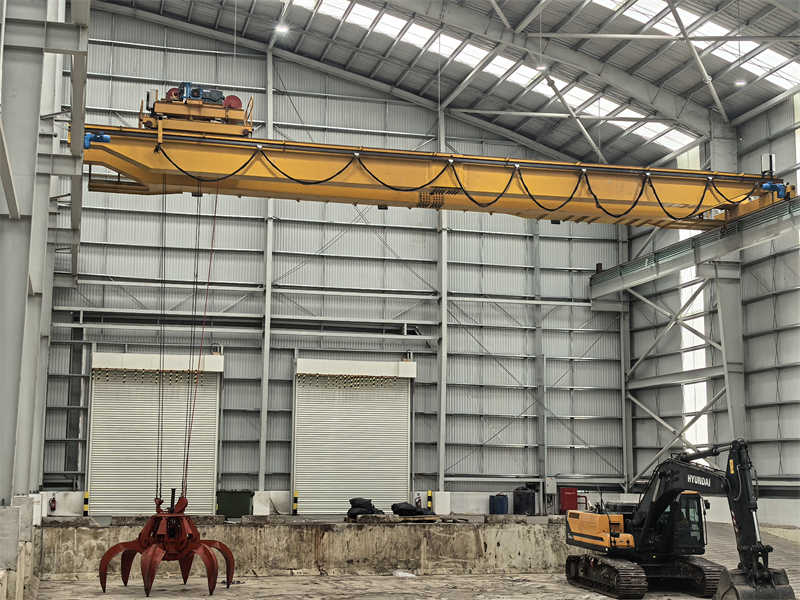
This project illustrates the multi-dimensional customization that complex industrial applications demand—and that Dongqi Crane has the engineering breadth to deliver.
Part 8: Decision Flowchart for Buyers
To simplify your evaluation, use the following questions as a decision flowchart:
| Question | If Yes → | If No → |
|---|---|---|
| Is the required duty classification ISO A6 or higher? | Custom engineering likely required | Proceed |
| Is ambient temperature outside -10°C to +50°C, or are there radiant heat sources? | Custom environmental protection needed | Proceed |
| Is the crane to operate in an explosive or flammable atmosphere? | Explosion-proof design is mandatory | Proceed |
| Must the crane handle a special load (coils, slabs, liquid metal, bulk with grab)? | Custom lifting attachment or trolley design required | Proceed |
| Does the building require non-standard interfaces (very low headroom, unusual column spacing, weak runway)? | Structural adaptation likely custom | Proceed |
| Is the required level of automation, accuracy, or integration beyond standard VFD/RF control? | Control customization needed | Proceed |
| Are there regulatory or certification needs beyond ISO/CE? | Custom documentation and possibly testing | Proceed |
| Is the required capacity, span, or lift height outside published catalog? | Extended engineering required | Proceed |
| Do you require extreme noise limits or cleanroom ISO classification? | Custom material and enclosure design | Proceed |
If you have answered “No” to all of the above, a standard or configured crane will likely meet your needs. If you have one or two “Yes” answers, engage Dongqi Crane’s engineering team to discuss whether a partial customization can address them economically. If you have multiple “Yes” answers, you are in fully custom territory—and early engagement with our engineers will save time and cost downstream.
Conclusion: Customization as a Strategic Investment
The choice between a standard and custom crane is fundamentally a matter of matching the equipment to the real-world conditions it will face for decades. At Dongqi Crane, we approach every inquiry with this question: “What does this crane actually need to do, and what conditions will it live in?” The answer dictates whether we point to a standard model or launch an engineering project.
We never customize for the sake of customization. But when the application demands it, our 70+ senior engineers, 3,600-person workforce, and 240,000-square-meter manufacturing facility have the capability to deliver a crane that is precisely right—not just in capacity, but in every aspect of its design, materials, controls, and environmental resistance.
Recommendations for Buyers:
- Document your actual operating conditions—not just the capacity and span, but the load spectrum, environment, and building details.
- Apply the decision flowchart in this guide to identify whether customization is indicated.
- Engage Dongqi Crane early—our application engineers can carry out a free preliminary assessment and recommend the most cost-effective approach.
- Think in total lifecycle cost, not just initial purchase price.
Contact Dongqi Crane:
- Website: pk.craneyt.com
- Engineering Inquiry: Submit your project specifications for a rapid, no-obligation assessment
- Factory Visit: Inspect our manufacturing and testing capabilities in Changyuan, Henan, China—the “Cradleland of Cranes”
- After-Sales: Our 36-person multilingual overseas team stands ready to support your installation and operation
With Dongqi Crane, you gain a partner whose engineering depth ensures you never pay for unnecessary customization—nor suffer the consequences of under-specifying a critical lifting system.
© 2026 Dongqi Crane. All rights reserved. The decision model provided is a general guide; final selection should be made in consultation with qualified engineers considering your specific project requirements.
