
15-Oct-2025
Enhancing Steel Mill Efficiency with Heavy Duty Double Girder Overhead Cranes
1 Introduction: The Backbone of Modern Steel Production
In the demanding environment of a steel mill, where extreme temperatures, heavy loads, and continuous operation are the norm, the overhead bridge crane stands as an indispensable piece of equipment. Among these lifting solutions, the heavy duty double girder overhead bridge crane has emerged as the preferred choice for critical steel production applications. These cranes serve as the workhorse of steel workshops, handling everything from raw materials to molten metal with precision and reliability. The double girder configuration, characterized by two primary beams spanning the workshop, provides the structural integrity necessary for the most demanding lifting tasks found in steel production facilities.
Steel mills represent one of the most challenging environments for any industrial equipment. With temperatures fluctuating dramatically, airborne contaminants present, and operations running 24/7, the overhead cranes must be engineered to withstand conditions that would quickly degrade lesser equipment. Dongqi Crane has specialized in developing robust lifting solutions specifically designed to thrive in these harsh conditions, incorporating advanced materials engineering, sophisticated control systems, and redundant safety features that ensure continuous operation despite the extreme demands of steel production.
The evolution of double girder cranes for steel mills has been driven by the industry’s relentless pursuit of greater efficiency, enhanced safety, and increased productivity. Modern steel facilities require lifting equipment that not only moves heavy loads but does so with precision, reliability, and minimal downtime. As steel production technologies have advanced, so too have the overhead cranes that support these operations, transforming from simple lifting devices to sophisticated integrated handling systems that contribute significantly to the overall production workflow.
2 Key Design Features for Mill Durability and Performance
2.1 Structural Components and Configuration
The fundamental advantage of the double girder design lies in its superior structural characteristics. Unlike single girder cranes that suspend the hoist below a single beam, double girder cranes position the hoist and trolley between two parallel girders, creating a more balanced load distribution and significantly increased hook height. This configuration is particularly valuable in steel mills where maximizing lift height in buildings with limited headroom is essential for efficient material handling. The double girder design offers enhanced stability and reduced deflection even under extreme loads, critical factors when handling valuable ladles of molten metal or expensive manufacturing equipment.
Dongqi Crane employs advanced fabrication techniques in constructing their double girder cranes, utilizing high-strength steel grades such as Q235B and Q345B to ensure structural integrity while minimizing overall weight . The main girders are fabricated using submerged arc automatic welding processes followed by non-destructive testing to verify weld integrity, adhering to international standards such as ISO 15614 and AWS D14.1 . This meticulous approach to construction results in girders with deflection characteristics ranging from 1/700 to 1/1000 of the span, exceeding typical industry standards and ensuring precise load handling capabilities.
The end trucks and travel mechanisms represent another critical component where durability is paramount. Dongqi designs these components with sealed wheel bearings and high-strength steel wheels that resist wear from continuous operation on crane rails. For severe service conditions found in steel mills, optional storm locking devices and rail deviation correction systems can be incorporated to maintain operational safety even in challenging circumstances. These features demonstrate how Dongqi’s design philosophy prioritizes longevity and reliability in environments where equipment failure is not an option.
2.2 Electrical Systems and Power Supply
The electrical systems in steel mill cranes must be engineered to withstand not just routine operation but also the environmental challenges specific to steel production, including high temperatures, metallic dust, and moisture. Dongqi addresses these challenges through IP55-rated control panels as standard, with options for IP65 or IP66 protection in areas with excessive dust or water exposure . This level of ingress protection ensures that critical electrical components remain operational despite the challenging environmental conditions typical of steel workshops.
Advanced control systems represent another area where Dongqi cranes excel. By incorporating Intelligent Frequency Control (IFC) across all crane motions—hoisting, cross travel, and long travel—these cranes achieve exceptionally smooth acceleration and deceleration . This precise control is particularly important in steel mill applications where sudden movements can cause dangerous load sway, especially when transporting ladles containing molten metal. The IFC system allows operators to make minute adjustments to load position, enabling precise placement that enhances both safety and production quality.
Power supply systems in Dongqi cranes are designed with flexibility in mind, accommodating various national electrical standards while maintaining consistent performance. The cranes can operate with main power sources ranging from 220V to 580V, 3-phase, 50/60Hz, with control voltages from 24V to 220V depending on application requirements . This flexibility ensures that Dongqi cranes can be integrated into existing steel mill infrastructure with minimal modifications, reducing both installation time and cost. Additionally, festoon systems for cable management are available in multiple configurations including C-track, I-beam, and wire rope designs, with options for stainless steel or plastic coating in corrosive environments.
3 Customized Solutions for Specific Steel Mill Applications
Steel manufacturing encompasses a wide range of material handling requirements, each demanding specialized crane solutions. Dongqi Crane recognizes that no two steel mills have identical needs, and offers comprehensive customization options to ensure each crane is optimally configured for its specific duties. From raw material handling to molten metal transfer, different areas of a steel plant require distinct crane features and capabilities.
3.1 Ladle Handling and Molten Metal Operations
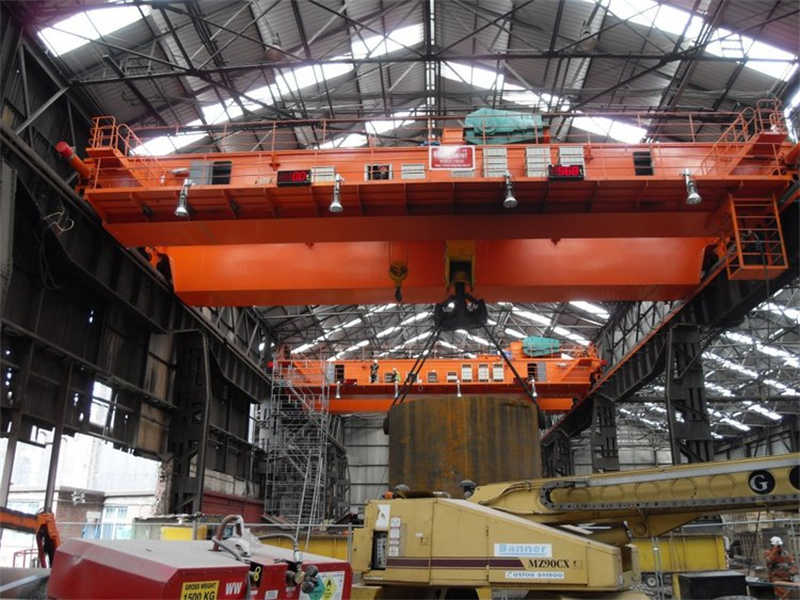
The most critical application in any steel mill is undoubtedly the handling of molten metal, which requires specially designed ladle cranes. These cranes feature redundant safety systems, advanced heat protection, and precision controls to ensure safe transportation of liquid steel throughout the production process. Dongqi’s ladle cranes are rated for A7 duty class,
indicating their suitability for the most severe service conditions . Key features include:
- Motorized grabbing hooks specifically engineered for secure lifting of ladles, with fail-safe locking mechanisms that prevent accidental release
- Heat shielding and refractory protection for critical components exposed to radiant heat from ladles
- Advanced PLC-based control systems with anti-sway technology that minimizes molten metal sloshing during transport
- Redundant braking systems on all motions, with emergency backup power for controlled stopping in the event of primary power failure
These specialized cranes represent the pinnacle of overhead lifting technology, where failure is not an option and precision directly impacts both safety and product quality.
3.2 Coil, Slab, and Finished Product Handling
Beyond molten metal operations, steel mills require robust solutions for handling finished and semi-finished products including coils, slabs, billets, and other steel products. For these applications, Dongqi provides cranes equipped with specialized below-hook devices such as:
- C-hooks for efficient coil handling without damaging the product
- Vacuum lifters for handling sheet steel without surface marring
- Rotating hooks with precision positioning capabilities for accurate load orientation
- Electromagnetic devices for handling ferrous materials without physical contact
Each of these specialized attachments integrates seamlessly with the crane’s control system, allowing operators to handle products efficiently while minimizing damage. The cranes for these applications typically feature A5 to A6 duty classes, reflecting the heavy-duty but less severe service compared to ladle operations .
3.3 Scrap and Raw Material Handling
The initial stages of steel production involve handling substantial volumes of raw materials and scrap metal, which presents its own set of challenges. For these applications, Dongqi offers scrap handling cranes often equipped with electromagnetic devices or motorized grabs . These cranes feature:
- Enhanced protection systems for components exposed to abrasive dust and contaminants
- Heavy-duty trolley designs capable of withstanding shock loads from grabbing operations
- Dust exclusion systems for critical electrical and mechanical components
- Advanced weighing systems for accurate batch measurement
These cranes enable efficient transfer of raw materials from storage yards to processing areas, optimizing the first step in the steel production chain.
4 Safety Systems and Control Technologies
4.1 Integrated Safety Features
In the high-risk environment of a steel mill, crane safety systems are not optional extras but essential requirements. Dongqi Crane integrates multiple layers of protection into their double girder cranes, ensuring compliance with international safety standards while addressing the specific hazards present in steel production facilities. These safety systems work in concert to create a comprehensive safety framework that protects both personnel and valuable assets.
Primary safety devices include:
- Overload protection systems that prevent the crane from lifting loads beyond its rated capacity, with both mechanical and electronic safeguards
- Limit switches on all motions including hoisting, lowering, and travel, preventing accidental overtravel
- Emergency stop systems with multiple activation points including pendant, remote control, and cabin locations
- Anti-collision systems that prevent interference between multiple cranes operating in the same bay
- Anomaly detection systems that monitor critical components like brakes, motors, and bearings for early signs of malfunction
For particularly hazardous applications such as ladle handling, additional specialized safety systems are implemented. These include ladle fall-prevention devices, thermal imaging systems to monitor component temperatures, and redundant load path components to ensure that no single point of failure can lead to a catastrophic accident. This comprehensive approach to safety demonstrates Dongqi’s commitment to protecting both personnel and production assets in the challenging steel mill environment.
4.2 Control and Operation Options
The method of crane control significantly impacts both safety and operational efficiency. Dongqi offers multiple control options designed to suit different steel mill applications and operator preferences:
- Pendant control stations with ergonomic designs that reduce operator fatigue during extended operation
- Radio remote control systems that allow operators to position themselves for optimal visibility while avoiding hazardous areas
- Enclosed operator cabins with climate control and air filtration for applications where the operator needs an elevated vantage point
- Fully automated operation with programmable lift cycles for repetitive tasks
The radio remote control systems deserve special attention for their contribution to both safety and efficiency in steel mill applications. By allowing operators to position themselves at the safest and most advantageous location for each lift, rather than being confined to a fixed control station, these systems significantly enhance operational precision while reducing exposure to hazards such as heat and fumes. Dongqi’s remote control systems offer multiple frequency channels to prevent interference between adjacent cranes, battery status monitoring to prevent unexpected power loss, and fail-safe communication protocols that automatically stop crane motion if signal interruption occurs.
For specialized applications, dual-control systems can be implemented, allowing operation from either a cabin and remote control, or from two separate remote controls for complex tandem lifting operations. This flexibility ensures that regardless of the specific requirements of a steel mill application, Dongqi can provide a control solution that optimizes both safety and productivity.
5 Case Study: Dongqi Crane Implementation in a Southeast Asian Steel Plant
5.1 Project Background and Challenges
In 2023, a major integrated steel plant in Southeast Asia faced a critical operational challenge in their melt shop facility. Their existing overhead crane, responsible for handling 120-ton ladles of molten steel, was approaching the end of its service life. The aging equipment suffered from frequent breakdowns that disrupted continuous casting operations, inconsistent performance that complicated precise ladle positioning, and mounting safety concerns that risked both personnel and production assets. The maintenance costs had increased by 45% over the preceding two years, while availability had dropped to unacceptable levels, threatening the facility’s overall production targets.
The steel plant management established clear objectives for the replacement crane system. The new equipment needed to guarantee exceptional reliability in the demanding melt shop environment, enhance operator safety during critical metal transfer operations, improve positioning precision for accurate pouring, and achieve所有这些都通过minimal disruption to their 24/7 production schedule during the installation phase. After a comprehensive evaluation process that included multiple international crane manufacturers, the contract was awarded to Dongqi Crane based on their technical proposal, track record with similar applications, and competitive commercial terms.
5.2 Technical Solution and Implementation
Dongqi’s engineering team conducted a thorough site assessment that included evaluation of the existing crane runway system, structural support capacity, power supply infrastructure, and operational workflow analysis. Based on this assessment, they proposed a customized QD-type Double Girder EOT Crane with the following key specifications:
- Capacity: 120/30 Ton (Main Hoist / Auxiliary Hoist)
- Span: 28 Meters
- Duty Class: A7 (Heavy-Duty Service according to FEM standards)
- Lifting Height: 24 Meters
- Power Supply: 3PH 400V 50Hz
- Control System: Intelligent Frequency Control with radio remote operation
The crane incorporated several custom-designed features specifically for this application:
- Advanced motorized grabbing hook with redundant safety mechanisms for ladle handling
- Enhanced heat protection including refractory shields, high-temperature resistant wire ropes, and thermal barriers for critical electrical components
- Redundant braking systems on all motions with emergency backup power
- Anti-sway technology integrated with the IFC system to minimize ladle oscillation
- Ladle weighing system with real-time display and data logging capabilities
- Advanced remote control system with dual-transmitter capability for operation from multiple locations
The installation phase was carefully planned to minimize production disruption. Dongqi project managers coordinated with the steel plant maintenance team to execute the installation during a scheduled 10-day maintenance window. The project involved:
- Demolition and removal of the existing crane
- Reinforcement of the crane runway system where required
- Assembly and installation of the new crane components
- Electrical integration with the plant’s power and control systems
- Comprehensive testing including no-load tests, 125% static load test, and 110% dynamic load test
- Operator and maintenance training programs
Despite the tight schedule, the project was completed within the planned 10-day window, with the crane commissioned and operational for production immediately following the maintenance period.
5.3 Operational Results and Benefits
Since its commissioning in early 2024, the Dongqi double girder crane has delivered exceptional operational performance across multiple metrics:
- Reliability: The crane has achieved 99.2% availability over its first 18 months of operation, completing more than 20,000 ladle transfers without a single unscheduled downtime event. This represents a dramatic improvement over the previous crane’s 87% availability.
- Safety Performance: The melt shop safety committee reported a 65% reduction in safety incidents related to crane operations in the first year following installation. Operators specifically praised the smooth control and excellent visibility provided by the remote control system.
- Production Impact: The precision of ladle positioning has improved significantly, reducing pouring-related defects by 18% and contributing to an overall 7% increase in continuous casting machine utilization due to more reliable metal delivery.
- Maintenance Metrics: Routine maintenance hours have been reduced by 40% compared to the previous crane, while consumption of spare parts has decreased by approximately 60% due to the crane’s more robust design and higher quality components.
- Energy Efficiency: Despite its higher capacity, the new crane consumes 15% less energy per ton lifted, attributable to the efficiency of the IFC system and more modern mechanical components.
The project has been deemed so successful that the steel plant has since placed orders with Dongqi for two additional cranes for other areas of their operation, solidifying Dongqi’s position as their preferred lifting equipment supplier.
6 Maintenance and Support Services for Long-Term Reliability
6.1 Comprehensive Maintenance Protocols
The extreme operating conditions in steel mills necessitate rigorous maintenance protocols to ensure crane reliability and longevity. Dongqi Crane provides detailed maintenance manuals specifically tailored to the demanding environment of steel production . These documents outline comprehensive maintenance schedules divided into daily inspections, weekly checks, monthly evaluations, and annual overhauls, each designed to identify potential issues before they lead to unscheduled downtime.
Preventive maintenance procedures form the cornerstone of Dongqi’s maintenance philosophy. Key elements include:
- Regular inspection of structural components for signs of fatigue, cracking, or deformation, with particular attention to high-stress areas
- Brake system verification including adjustment, lining thickness measurement, and performance testing
- Electrical system inspection including contactors, limit switches, and safety devices
- Mechanical component assessment including gears, bearings, and shafts for wear or misalignment
- Wire rope examination for broken wires, corrosion, or reduction in diameter beyond acceptable limits
For each of these components, Dongqi provides clear acceptance criteria that enable maintenance personnel to quickly determine whether a component requires adjustment, repair, or replacement. This proactive approach to maintenance has been shown to reduce unexpected failures by up to 75% compared to run-to-failure strategies commonly employed with less critical equipment.
6.2 Technical Support and Spare Parts Availability
Beyond maintenance documentation, Dongqi offers comprehensive support services designed to maximize equipment uptime throughout the crane’s operational life . These services include:
- 24/7 technical support with multilingual engineers available to assist with troubleshooting via phone, email, or video conference
- Remote diagnostics capabilities that allow Dongqi engineers to assess crane performance and identify developing issues
- On-site service assistance for major repairs, inspections, or complex troubleshooting beyond the capabilities of local maintenance teams
- Operator and maintenance training programs conducted both at customer facilities and at Dongqi’s training centers
Spare parts management represents another critical aspect of Dongqi’s support strategy. The company maintains an extensive inventory of critical components specifically for their steel mill cranes, with automated inventory systems that ensure high availability of parts even with short lead times. For customers with multiple Dongqi cranes, customized spare parts packages can be developed containing the most frequently required components, further reducing downtime when repairs are necessary. Additionally, Dongqi’s global logistics partnerships enable expedited delivery of critical components, with emergency shipment options available for situations where production is impacted.
This comprehensive approach to after-sales support ensures that Dongqi cranes continue to operate at peak efficiency throughout their designed service life, maximizing return on investment while minimizing production disruptions due to equipment issues.
7 Selecting the Right Crane for Your Steel Mill
7.1 Key Specification Parameters
Choosing the appropriate double girder crane for a specific steel mill application requires careful consideration of multiple technical parameters. Dongqi’s engineering team works closely with clients to define these specifications based on the specific operational requirements, ensuring the selected crane configuration delivers optimal performance in its intended application. The most critical parameters include:
- Lifting Capacity: Steel mill cranes typically range from 5 tons for maintenance applications to over 400 tons for heavy ladle handling . The capacity must account not just for the static load but also for dynamic factors and potential future increases in production requirements.
- Span: The distance between runway rails determines the working coverage of the crane. Dongqi offers spans from 7.5 meters to over 35 meters, with custom engineering available for exceptional requirements .
- Lifting Height: This critical dimension determines how high the hook can elevate loads. The double girder design provides advantages here, as the hoist is positioned between rather than below the girders, maximizing available hook travel.
- Duty Class: Classification according to FEM, CMAA, or ISO standards indicates the crane’s suitability for different service intensities . Steel mill cranes typically range from A5 (heavy duty) to A8 (very heavy duty), with ladle cranes requiring the most severe A7 or A8 classifications.
- Operating Environment: Factors such as ambient temperature, presence of corrosive elements, dust levels, and potential explosive atmospheres influence material selections, protective treatments, and component choices.
Beyond these fundamental parameters, application-specific requirements must be considered:
- Specialized below-hook devices such as magnets, grabs, or ladle hooks
- Control system preferences including pendant, cabin, or remote operation
- Speed requirements for different motions based on production cycle times
- Safety system enhancements based on risk assessment findings
- Integration requirements with existing plant systems or automation platforms
7.2 Customization Choices and Special Features
The ability to customize crane features to match specific operational requirements represents one of the significant advantages of working with an experienced manufacturer like Dongqi. Beyond the basic configuration parameters, steel mills can select from an array of specialized features and options that enhance performance, safety, or functionality:
- Duty-specific trolley designs including single hoist, double hoist, or main/auxiliary configurations
- Electrical system enhancements such as variable frequency drives, anti-sway systems, or automated positioning
- Safety system options including overload protection, rotational limit switches, or laser anti-collision systems
- Environmental adaptations such as high-temperature protection, corrosion-resistant coatings, or explosion-proof components
- Operator interface choices from basic pendant stations to fully enclosed, climate-controlled cabins
- Data collection systems for recording operational parameters, maintenance requirements, or production metrics
Dongqi’s modular design approach enables this high degree of customization while maintaining standardization at the component level wherever possible. This strategy delivers the benefits of custom-engineered equipment without the extended lead times and cost premiums typically associated with fully one-off designs. The company’s 25+ years of experience in serving the global steel industry means that for most steel mill applications, they have previously implemented similar customizations, allowing them to draw on established engineering solutions rather than developing entirely new concepts for each project.
8 Conclusion: Partnering with Dongqi for Your Steel Mill Crane Needs
The selection of overhead cranes for steel mill applications represents one of the most critical decisions facing plant operators and engineers. In an industry where equipment reliability directly impacts production output, operational safety protects both personnel and valuable assets, and precision handling determines product quality, the choice of crane supplier should not be made on price alone. Dongqi Crane has demonstrated through numerous global installations that they possess the engineering expertise, manufacturing capability, and service commitment necessary to provide lifting solutions that excel in the demanding environment of steel production.
The double girder overhead bridge crane represents the optimal solution for heavy-duty steel mill applications where reliability, precision, and durability are paramount. With their superior structural characteristics, enhanced hook height, and proven longevity, these cranes deliver operational benefits that extend far beyond their initial purchase price. When manufactured to the exacting standards maintained by Dongqi, with their comprehensive safety systems, advanced control technologies, and robust component designs, these cranes become not just lifting devices but integral contributors to the overall production system.
For steel producers facing competitive global markets, the decision to partner with Dongqi provides access to technical expertise gained through hundreds of successful installations worldwide, custom engineering capabilities that ensure each crane is optimized for its specific duties, and comprehensive support services that maximize equipment uptime throughout the operational life. In an industry where minutes of downtime can cost thousands of dollars in lost production, this partnership approach to crane supply delivers tangible value that extends far beyond the equipment itself.
As steel production technologies continue to evolve, with increasing automation, more sophisticated process control, and ever-higher quality demands, the overhead cranes that support these operations must similarly advance. Dongqi’s ongoing investment in research and development, particularly in areas such as intelligent control systems, predictive maintenance technologies, and automation interfaces, ensures that their customers are equipped not just for today’s production challenges but for tomorrow’s as well. This forward-looking approach, combined with proven engineering expertise and commitment to customer success, makes Dongqi the supplier of choice for steel producers worldwide seeking to optimize their material handling operations through superior crane technology.
