
21-Apr-2026
How Much Do Work Duty Classifications (A3/A5/A7) Really Affect Crane Price and Lifespan?
A Technical Procurement Guide from DONGQI CRANE for Factory Owners and Project Engineers
Every crane buyer eventually encounters the same moment of confusion: two suppliers quote significantly different prices for what appears to be the same “10-ton overhead crane.” The capacity is identical. The span is identical. The lift height is identical. Yet one quote is 30% higher—sometimes double—than the other.
The difference, in most cases, comes down to three characters buried in the technical specification: A3, A5, or A7.
Work duty classification is the single most misunderstood—and most consequential—variable in crane procurement. Many buyers overlook the importance of duty classification, judging suitability based only on lifting capacity while ignoring lifting frequency, load ratio, running speed, and daily cycles. Selecting a crane with an inappropriate service class rating can lead to premature failure, costly repairs, and even significant safety risks.
At DONGQI CRANE, a Sino-New Zealand joint venture with over 40 years of manufacturing experience and products operating in 96 countries, we have guided thousands of clients through this critical decision. This article provides a comprehensive, data-driven explanation of how work duty classification impacts both the price you pay today and the lifespan you receive tomorrow.
What Is Work Duty Classification?
Work duty classification is not a measure of how much weight a crane can lift—it is a measure of how hard and how often the crane is expected to work over its design life. The same capacity crane in different duty classes costs differently and uses different motors, brakes, and structural sections.
According to FEM and ISO standards, crane duty classification is determined by two primary factors: load spectrum (how heavy the typical load is relative to capacity) and total operating time (number of working cycles over the crane‘s design life). These classifications range from A1 (lightest duty, occasional use) to A8 (extreme duty, near-continuous heavy operation). Specifically, A1 to A4 are considered light duty, A5 and A6 fall into the medium duty category, A7 is classified as heavy duty, and A8 represents extremely heavy duty.
The classifications are based on two main factors: load spectrum and average daily operating time, ensuring a 10-year serviceable lifetime for hoists as per FEM guidelines. The working duty classification of a crane directly determines the technical specifications of key components such as its structural steel, motors, reducers, brakes, and wire ropes.
A simple way to understand the hierarchy:
| Duty Class | Category | Typical Application | Daily Operation |
|---|---|---|---|
| A3 | Light Duty | Maintenance workshops, occasional assembly | ~4 hours/day, intermittent use |
| A5 | Medium Duty | General manufacturing, standard production | ~8–10 hours/day, regular use |
| A7 | Heavy Duty | Steel mills, foundries, continuous production | Up to 24 hours/day, near-continuous |
Section 1: How Work Duty Classification Impacts Crane Price
The Price Differential Is Real—and Justified
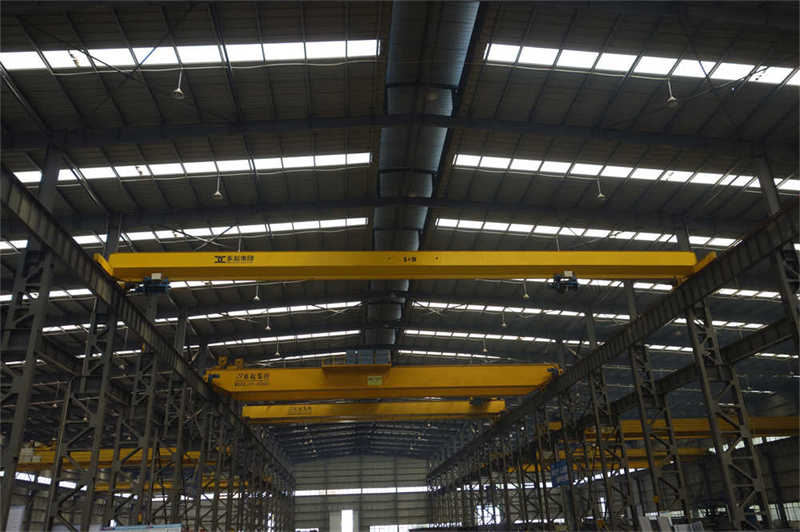
An overhead crane built for A7 duty cycle (heavy-duty usage) will typically cost more because the materials must be rated for high tensile strength and fatigue resistance. Cranes with a higher duty cycle are built for tougher, more frequent operations and come with a higher price tag due to the more durable components, increased motor power, and specialized design features.
Industry data shows that the price premium for upgrading work duty classification can be substantial. Moving from A3 to A5 typically adds 15–30% to the equipment cost. Moving from A5 to A7 can add another 30–50% or more, depending on capacity and configuration. In some cases, the difference between A3 and A7 can reach 30–100% .
To make this concrete, consider a 10-ton electric overhead traveling (EOT) crane with a 22.5-meter span. Market pricing illustrates the clear progression:
| Work Duty Class | Approximate Price (USD) | Premium Over A3 |
|---|---|---|
| A3 (Light Duty) | $18,500 | Baseline |
| A5 (Medium Duty) | $21,000 | +13.5% |
| A7 (Heavy Duty) | $27,000 | +46% |
Source: Industry pricing data for comparable 10-ton, 22.5m span EOT cranes with IP54 protection and 8/0.8 m/min lifting speeds.
What Exactly Are You Paying For?
The price difference is not arbitrary markup. Each step up in duty classification requires fundamental engineering upgrades:
From A3 to A5 (Medium Duty):
- Structural reinforcement: Heavier beam sections and thicker web plates to handle increased cyclic loading
- Motor upgrades: Higher service factor motors capable of more starts per hour without overheating
- Brake enhancements: Larger brake coils and friction surfaces for increased stopping frequency
- Gearbox upgrades: Higher load-bearing capacity and improved heat dissipation
- Electrical system improvements: Contactors and relays rated for higher switching frequency
From A5 to A7 (Heavy Duty):
- Fatigue-resistant design: Complete structural analysis for infinite fatigue life under maximum load cycles
- Premium drive systems: SEW, NORD, or equivalent heavy-industrial gearmotors with extended service intervals
- Redundant safety systems: Dual brakes, overload protection redundancy, enhanced limit switching
- Thermal management: Forced cooling for motors and VFDs in continuous operation
- Specialized materials: Higher-grade steel alloys, hardened wheels, premium bearings
An A5 crane typically uses standard commercial-grade components suitable for a single-shift operation. An A7 crane requires industrial-grade components designed for three-shift, 24/7 operation in demanding environments. The engineering, materials, and manufacturing precision required for A7 duty are fundamentally different—and fundamentally more expensive.
Why the Cheapest Quote Is Rarely the Best Value
A critical point that many buyers miss: when comparing quotes from different suppliers, verify that the work duty classification is identical. A supplier quoting an A3 crane will naturally appear 30–46% less expensive than a supplier quoting an A7 crane—but the two cranes are not comparable products. They are different tools designed for different jobs.
As industry guidance notes, buyers should be cautious: 90% of standard workshops only require A5 duty. Do not be pressured into purchasing a higher classification than your application actually demands—but equally, do not be tempted by a low price that reflects an under-specified duty class.
Section 2: How Work Duty Classification Affects Crane Lifespan
Design Life Expectations by Duty Class
The relationship between work duty classification and expected service life is direct and well-documented. According to industry standards:
| Work Duty Classification | Expected Service Life | Typical Applications |
|---|---|---|
| A1–A2 | 30 years | Occasional maintenance, standby service |
| A3–A5 | 25 years | General manufacturing, warehousing, assembly |
| A6–A7 | 20 years | Heavy industry, steel mills, continuous production |
Source: Industry service life data based on standard operating conditions and proper maintenance.
At first glance, this data appears counterintuitive: why would a more expensive, heavy-duty A7 crane have a shorter design life than a lighter-duty A3 crane?
The answer lies in the definition of “design life.” A crane’s design life is calculated based on a specific number of working cycles —not calendar years. An A7 crane operating 24 hours a day, 7 days a week will accumulate its design cycle count in approximately 20 years. An A3 crane operating 4 hours a day, 5 days a week will take 25–30 years to accumulate its design cycle count.
The key insight: When operated within its rated duty classification, each crane delivers its full design life. When operated beyond its rated duty classification, lifespan collapses dramatically.
The Cost of Under-Specifying: What Happens When A3 Meets A7 Demands
The most expensive mistake in crane procurement is installing a crane rated for a lower duty class in an application that demands a higher one. The consequences are both predictable and severe:
Accelerated Component Wear: Operating an A5 crane in A7 conditions wears out parts 3–5 times faster. Gearboxes overheat. Brake linings glaze and fail. Contactors burn out from excessive switching. Wire ropes fatigue prematurely.
Structural Fatigue: The crane’s steel structure is designed for a specific number of stress cycles. Exceeding that cycle count—even if loads remain within rated capacity—leads to fatigue cracking at welded joints and high-stress connection points. This damage is cumulative and often invisible until catastrophic failure occurs.
Warranty Voidance: Every crane manufacturer specifies the duty classification for which the equipment is designed. Operating beyond that classification voids the warranty. When a gearbox fails after 18 months in a continuous production environment, and the manufacturer determines the crane was specified as A3 for an A7 application, the repair cost falls entirely on the buyer.
Production Downtime: For continuous production lines such as steel mills or automotive assembly, the hourly cost of unplanned downtime far exceeds the entire purchase price of the crane. An under-specified crane that fails unexpectedly can generate losses of $50,000–$500,000 per hour in stopped production—dwarfing any initial “savings” from purchasing a lower-classification crane.
The Real-World Example
A food processing facility in Southeast Asia required a crane for moving mixing vessels weighing approximately 8 tons. The procurement team, focused on capital cost, selected an A3-rated crane—adequate on paper for the 8-ton load.
What the specification missed: The operation required 120 lifts per day, with the crane moving continuously during two 10-hour shifts. The A3 crane was designed for intermittent, light-duty use. Within 14 months, the gearbox failed, the wire rope showed accelerated wear, and the facility faced three unplanned production stoppages.
Total cost of the “cheaper” choice:
- Original A3 crane: $18,000
- Replacement gearbox and repairs: $7,500
- Production downtime (estimated): $42,000
- Replacement with A7-rated crane: $34,000
Lesson: The application demanded a heavy-duty crane. The 10-ton capacity was correct; the duty classification was not. The A7 crane, while more expensive initially, was the appropriate tool for the job.
Section 3: DONGQI CRANE Work Duty Classification Capabilities
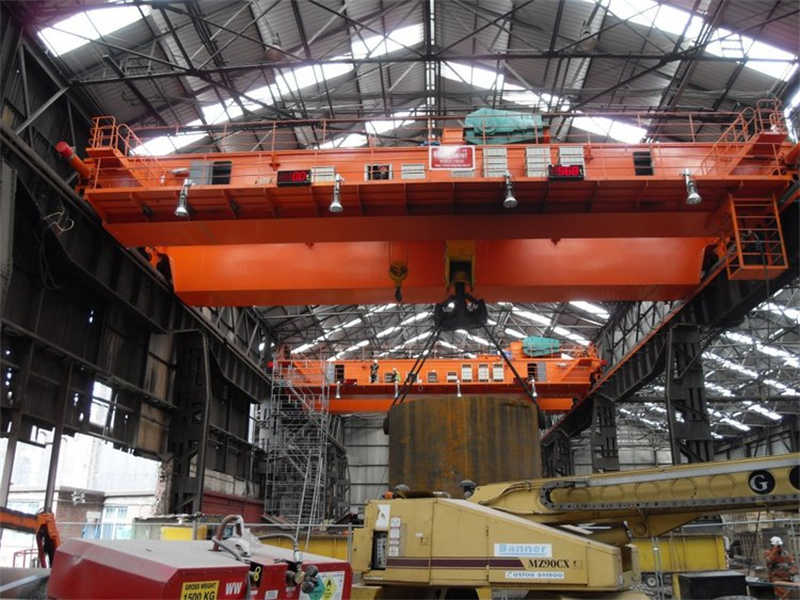
DONGQI CRANE manufactures overhead cranes and gantry cranes across the full spectrum of work duty classifications, from A3 light-duty applications to A7/A8 heavy-duty industrial service. Our manufacturing capabilities and certifications ensure that every crane we produce meets the exacting requirements of its specified duty class.
Standard Product Duty Class Ranges
| Product Series | Work Duty Range | Typical Applications |
|---|---|---|
| HD Series Single Girder | A3–A5 | General manufacturing, warehousing, light assembly |
| QD Series Double Girder | A3–A6 | Heavy fabrication, machinery handling, steel processing |
| QDX Series Heavy-Duty Double Girder | A5–A7 | Steel mills, foundries, continuous production, ports |
| European-Style Hoists | M5–M7 (A5–A7 equivalent) | High-frequency production, automation integration |
| Metallurgical/Specialty Cranes | A7–A8 | Molten metal handling, hazardous environments |
Our QDX series double girder overhead crane, for example, carries A5 working class designation and handles standard industrial operations reliably across the full 5t–100t capacity range while maintaining exceptional performance throughout their 30-year service life in standard environmental conditions. For more demanding applications, we manufacture cranes up to A7 and A8 duty classifications, including metallurgical cranes, casting cranes, and other specialized configurations.
How DONGQI CRANE Engineers Determine the Correct Duty Class
We do not expect buyers to determine their own work duty classification. Our engineering team conducts a thorough duty cycle analysis before quoting any crane. We evaluate:
- Load spectrum: What is the typical load as a percentage of rated capacity? How often is maximum load lifted?
- Operating hours: Single shift, double shift, or continuous 24/7 operation?
- Lifts per day: How many complete working cycles occur in a typical shift?
- Environmental conditions: Indoor/outdoor, temperature extremes, dust, humidity, corrosive atmospheres
- Future production plans: Will production volume increase in the next 5–10 years?
Based on this analysis, we specify the correct FEM/ISO classification—ensuring you pay for exactly what you need, not more and not less.
Section 4: The Decision Framework—How to Choose the Right Duty Class
Step 1: Identify Your Load Spectrum
| Load Spectrum Category | Description | Typical Duty Class |
|---|---|---|
| Light | Rarely lifts rated load; typically lifts light loads; used for installation and maintenance | A3–A4 |
| Moderate | Occasionally lifts rated load; frequently lifts moderate loads | A5–A6 |
| Heavy | Frequently lifts rated load; typically lifts loads near capacity | A6–A7 |
| Severe | Continuously lifts rated load; loads consistently near capacity | A7–A8 |
Step 2: Determine Your Utilization Level
| Operating Pattern | Daily Hours | Annual Hours | Typical Duty Class |
|---|---|---|---|
| Occasional use | 1–4 hours | < 500 hours | A1–A3 |
| Single shift | 4–8 hours | 1,000–2,000 hours | A3–A5 |
| Double shift | 8–16 hours | 2,000–4,000 hours | A5–A6 |
| Continuous operation | 16–24 hours | > 4,000 hours | A6–A8 |
Step 3: The Quick Reference Decision Table
| Your Application | Recommended Duty Class | Key Consideration |
|---|---|---|
| Maintenance workshop, occasional equipment changeouts | A3 | Lowest cost; do not use for production |
| Light assembly, warehouse picking, infrequent use | A3–A4 | Cost-effective for intermittent duty |
| General manufacturing, standard production line | A5 | Optimal balance for most factories |
| Heavy fabrication, machinery manufacturing | A5–A6 | Higher cycle counts require upgraded components |
| Steel service center, foundry, continuous process | A6–A7 | 24/7 operation demands heavy-duty design |
| Steel mill, molten metal handling, extreme duty | A7–A8 | Specialized engineering required |
Step 4: Avoid These Common Mistakes
Mistake 1: Selecting based on capacity alone. Many buyers approach the process with a single number in mind: “We need a 10-ton crane.” They send RFQs with only tonnage specified, receive quotes ranging from $18,500 to $27,000, and cannot understand the disparity. The missing variable is work duty classification.
Mistake 2: Assuming higher duty class is always better. Over-specifying a crane wastes capital. An A7 crane requires a heavier runway, more powerful electrical service, and more complex installation. In a light-duty application, these are unnecessary expenses with no operational benefit.
Mistake 3: Failing to plan for future production increases. If your production volume is expected to double within five years, specifying A5 today when you will need A7 tomorrow creates a costly replacement scenario. Build future capacity into your specification.
Mistake 4: Comparing quotes without verifying duty class. A supplier quoting an A3 crane will naturally appear 30–46% less expensive than a supplier quoting an A7 crane. Verify that all quotes are based on identical technical specifications—including work duty classification—before comparing prices.
Section 5: The DONGQI CRANE Support Model
DONGQI CRANE operates a direct-from-factory support model that ensures you receive accurate technical guidance without intermediary markups.
What We Provide
Pre-Sale Engineering Analysis: Before we quote any crane, our engineering team conducts a thorough review of your application requirements, including load spectrum analysis and duty cycle evaluation. We ensure you receive a crane specified for your actual operating conditions—not over-specified unnecessarily, and certainly not under-specified dangerously.
Direct Engineer Dispatch: When your crane arrives at your facility, we dispatch experienced DONGQI CRANE engineers directly from our China headquarters to your site anywhere in the world. Our engineers supervise installation, oversee commissioning, conduct load testing, and provide operator training. You receive support from the engineers who designed and built your equipment.
Rapid Spare Parts Fulfillment: We maintain comprehensive parts inventory at our 240,000-square-meter manufacturing facility. Standard replacement components ship within 24–48 hours via international express courier, reaching most global destinations within 3–7 business days.
Remote Technical Support: Our engineering team provides video-assisted troubleshooting via WeChat, WhatsApp, or Zoom. Many operational questions can be resolved remotely, minimizing downtime.
What We Do Not Provide
DONGQI CRANE does not maintain local sales agencies or spare parts warehouses in destination countries. Our business model is direct-from-factory. This eliminates intermediary markups and ensures you receive factory-direct pricing—and factory-direct engineering expertise.
Conclusion: Invest in the Right Duty Class Today
Work duty classification is not a technical detail to be ignored. It is the single most important variable determining whether your crane will deliver reliable, safe service for decades—or become a source of frustration, downtime, and unexpected cost.
Choose A3 when: Your operation is maintenance-focused, with infrequent lifts, light loads, and no production pressure. A3 cranes deliver reliable performance at the lowest capital cost for intermittent duty.
Choose A5 when: Your operation is a standard manufacturing or warehousing environment with regular single-shift or light double-shift operation. A5 represents the optimal balance of performance and economy for the majority of industrial applications.
Choose A7 when: Your operation runs continuously, lifts heavy loads near capacity, or cannot tolerate unplanned downtime. A7 cranes are engineered for the most demanding industrial environments, with premium components and fatigue-resistant design that justify their higher initial cost through extended reliability and lower total cost of ownership.
At DONGQI CRANE, our commitment is not to sell you the most expensive crane—it is to help you select the right crane for your application. A crane correctly specified for its duty cycle will deliver decades of safe, efficient, and reliable service. That is the truest measure of value.
Ready to determine the correct work duty classification for your application?
[Contact DONGQI CRANE‘s engineering team today for a complimentary application review and custom proposal.]
DONGQI CRANE: Your Direct-from-Factory Partner for Overhead Cranes, Gantry Cranes, and Custom Lifting Solutions Since 1985.
Work Duty Classifications: A3 • A4 • A5 • A6 • A7 • A8
ISO 9001 • ISO 14001 • ISO 45001 • CE Certified
240,000m² Manufacturing Facility • 10,000+ Annual Capacity • Exports to 96+ Countries
Direct Engineer Dispatch Worldwide • Express Spare Parts Delivery • Remote Technical Support
