
24-Sep-2025
KBK Crane Performance & Lifespan Decoded: An In-Depth Look at Components from Track to Hoist | Dongqi Crane
What determines the performance & lifespan of a KBK crane? Dongqi Crane provides a professional analysis of how tracks, suspensions, trolleys, & hoists impact your modular crane system’s reliability, safety, and TCO.
Introduction: The Power of a System – Where Excellence Meets Every Component
KBK cranes, as versatile and modular lifting solutions, are the backbone of efficiency in modern workshops, assembly lines, and warehouses. However, the overall performance, smooth operation, and extended service life of a KBK system are not accidental. They are the direct result of the impeccable quality, precise engineering, and perfect synergy of its core components. From the overhead tracks to the lifting hoist, every part plays a critical role.
At Dongqi Crane, we believe that true value lies in understanding these details. This article provides a professional deep-dive into the key components of a KBK crane system and explains how their quality directly impacts your operation’s productivity and your investment’s longevity.
Chapter 1: The “Skeleton” of the System – The KBK Track
The KBK track is the fundamental framework that carries the entire load and guides the trolley’s movement. Its quality sets the stage for the entire system’s rigidity and precision.
- How Track Quality Affects Performance & Lifespan:
- Material: High-tensile strength alloy steel, used by reputable manufacturers like Dongqi Crane, offers a superior safety factor, reduces the system’s dead weight, and provides exceptional resistance to fatigue and deformation over time compared to standard carbon steel.
- Manufacturing Process: The difference is profound. Precision cold-formed tracks are superior to welded alternatives. They offer a smoother internal surface, consistent dimensions, and minimal inherent stress. This results in significantly lower rolling resistance for the trolley, reducing operating effort, minimizing wear on wheels, and ensuring quiet, smooth travel.
- Key Takeaway: Inferior tracks with poor straightness or uneven joints cause jerky movement, excessive sway, and accelerated wear on every other component that moves along them.
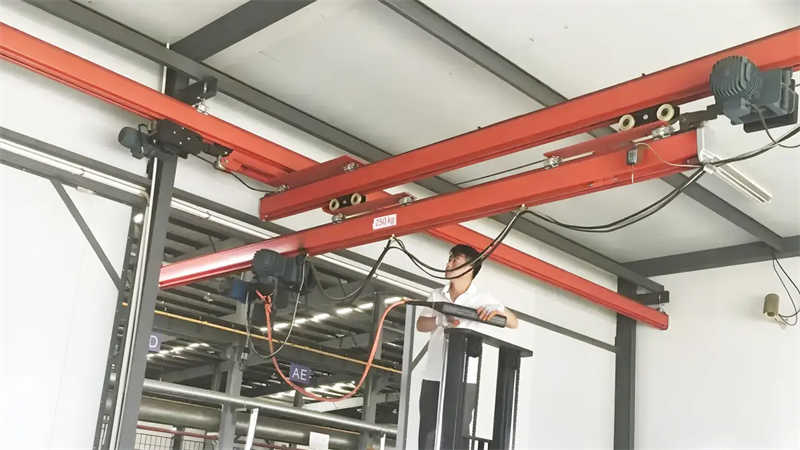
Chapter 2: The Critical “Joints” – Suspension Systems & Track Connectors
Often overlooked, the components that hold the system together are vital for stability and safety.
- Suspension System Stability: These components securely attach the KBK tracks to the supporting building structure (I-beams or KBK profile beams). A rigid and correctly installed suspension system prevents unwanted sway, ensuring precise load positioning and eliminating damaging dynamic loads that can prematurely fatigue the entire structure.
- Track Connector Precision: These connectors are the unsung heroes of a smooth run. High-precision connectors ensure a seamless, near-flawless transition between track segments.
- How They Affect Performance & Lifespan: Low-quality connectors create a noticeable “step.” Each time a trolley passes over this step, it causes an impact. This repeated shock loading is a primary cause of wheel flange damage, track end deformation, and eventual failure.
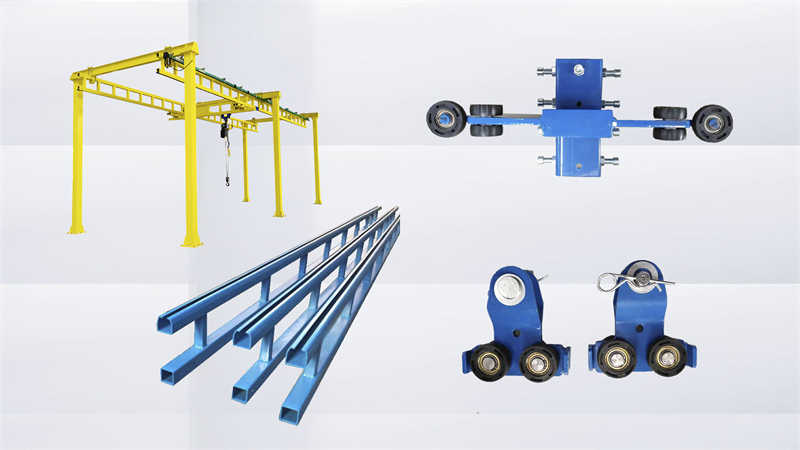
Chapter 3: The “Legs” of the System – The Trolley & End Trucks
The trolley is the unit that travels along the track, carrying the hoist and the load. Its agility defines operational efficiency.
- Trolley Wheel Assembly Design:
- Wheel Material: Polyamide (Nylon) wheels are common for their quiet operation, excellent wear resistance, and ability to prevent track scoring. Steel wheels offer higher load capacity for heavier duties. Dongqi Crane helps you select the ideal material for your specific application.
- Axles & Bearings: Axles made from hardened steel and sealed, lubricated-for-life bearings ensure effortless movement and protect against contamination. This combination guarantees smooth operation and dramatically extends service intervals.
- How They Affect Performance & Lifespan: A trolley that sticks or requires excessive force to push indicates poor-quality wheels or bearings. This leads to operator fatigue, inaccurate spotting, and increased strain on the entire system.
Chapter 4: The “Heart” of the System – The Electric Hoist
The hoist is the powerhouse responsible for the actual lifting and lowering. Its quality is paramount for both performance and safety.
- Hoist Type Selection:
- Wire Rope Hoists: Ideal for higher lifting speeds and greater hook heights, perfect for demanding, high-cycle applications.
- Chain Hoists: Known for their compact design and lighter weight, excellent for low-headroom environments and precise, slower lifts.
- How Core Hoist Components Affect Performance & Lifespan:
- Motor: High-quality motors with Class F insulation and a high IP (Ingress Protection) rating (e.g., IP55) are essential. They withstand frequent starts/stops without overheating and are protected against dust and water spray, ensuring reliability in harsh conditions.
- Gearbox: The heart of smooth lifting. Precision-machined, heat-treated gears operate with minimal noise, high efficiency, and exceptional durability, transmitting power reliably for years.
- Braking System: This is your primary safety feature. A reliable, fail-safe brake is non-negotiable for securing loads and preventing accidents.
- Load Components (Hook, Wire Rope/Chain): Dongqi Crane uses components manufactured from high-grade materials that meet or exceed international standards, eliminating the weakest links in your lifting operations.
Chapter 5: The Dongqi Crane Advantage – Synergy Through Superior Integration
A KBK crane is a perfect example of the “chain is only as strong as its weakest link” principle. Simply assembling high-quality parts is not enough; they must be perfectly matched.
- System-Level Engineering: Dongqi Crane does not merely sell components. Our engineers design from a holistic system perspective, performing calculations to ensure that the capacity of the tracks, the stability of the suspensions, and the power of the hoist are in perfect harmony.
- Rigorous Quality Control: From raw material inspection to final assembly and testing, every step in our manufacturing process is subject to strict quality protocols (ISO 9001 certified). This ensures consistency, reliability, and safety in every crane we deliver.
- Customization Capability: We understand that every application is unique. Whether you operate in a cleanroom, explosive atmosphere, or high-cycling factory, we can specify and configure components to meet your exact performance and environmental requirements.
Conclusion: Choose Dongqi Crane – A Commitment to Every Detail
In summary, the exceptional performance, safety, and long-term durability of a KBK crane are rooted in the uncompromising quality of each core component—from the track and connectors to the trolley and hoist. Choosing based solely on initial cost often leads to higher long-term expenses through downtime, repairs, and premature replacement.
At Dongqi Crane, our philosophy is built on a commitment to quality at every level. We provide lifting solutions that are not just functional but are productive, durable, and safe throughout their entire lifecycle.
Ready to invest in a KBK system built to last?
- Planning a new project? Contact our engineering team for a system design optimized for your needs.
- Experiencing issues with your current crane? We offer professional assessment and upgrade services to solve performance and reliability problems.
Contact Dongqi Crane today for a expert consultation!
FAQ Section (Optional Addition to the Article)
Q1: What is the most common cause of premature wear in a KBK system?
A: Often, it’s a combination of poor-quality track connectors and misaligned tracks, causing impact loads that accelerate wear on trolley wheels and the tracks themselves.
Q2: Why does my KBK trolley require so much force to push?
A: This typically indicates issues with the trolley wheels or bearings. It could be due to inferior bearings, wheels not suited for the track, or misalignment within the system.
Q3: Are polyamide (nylon) wheels better than steel wheels?
A: Each has advantages. Polyamide wheels are quieter, won’t damage the track, and are corrosion-proof, making them ideal for most standard workshops. Steel wheels offer higher load capacity for heavier applications. We can advise on the best choice for you.
