
16-Oct-2025
Light Duty Single Girder Overhead Cranes: The Ultimate Solution for Precision Glass and Mold Handling
1 Introduction to Light Duty Single Girder Overhead Cranes
In the world of industrial material handling, efficiency and precision are paramount—nowhere more so than in the delicate operations of glass and mold handling. The light duty single girder overhead bridge crane has emerged as an indispensable solution for these specialized tasks, combining robust lifting capacity with the finesse required to handle fragile, high-value materials. These cranes represent a category of overhead lifting equipment characterized by their compact design, cost-effectiveness, and exceptional maneuverability, making them particularly suitable for factories dealing with glass products or industrial molds.
The fundamental importance of these cranes in glass and mold industries cannot be overstated. When handling tempered glass panels for architectural applications, precision molds for manufacturing, or delicate glassware, the margin for error is virtually nonexistent. A minor impact, sudden movement, or imprecise positioning can result in catastrophic product loss and potentially dangerous situations. Single girder overhead cranes are specifically engineered to address these challenges, offering smooth operation, precise control, and exceptional stability that ensure the safe transportation of these sensitive loads.
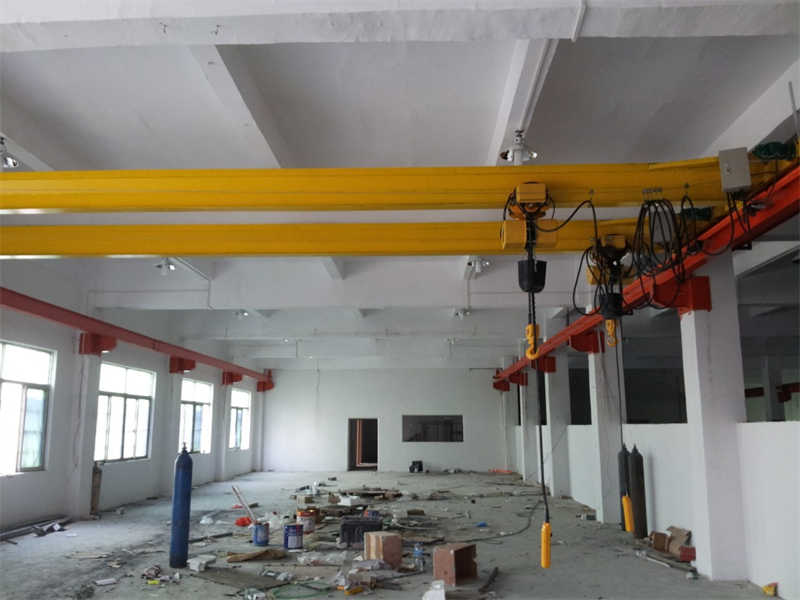
At their core, light duty single girder overhead cranes consist of a single bridge girder supported on both ends by trucks that travel along elevated runways. This configuration differs from double girder models in its simplified structure, reduced weight, and lower initial investment, while still providing adequate capacity for most glass and mold handling applications. Typically, these cranes feature capacities ranging from 1 to 20 tons, with spans customizable to fit specific facility dimensions—generally between 7.5 to 31.5 meters according to standard specifications .
The versatility of these cranes extends beyond basic lifting functions. Modern iterations incorporate variable speed controls, anti-sway technology, and precision positioning systems that enable operators to manipulate loads with millimeter accuracy. These features are particularly valuable in glass manufacturing facilities where molds must be carefully extracted from machinery or when positioning glass sheets into processing equipment. The ability to make minute adjustments during the lifting process significantly reduces the risk of damage to both the products and the production equipment.
For mold handling specifically, these cranes address several critical challenges. Molds used in glass production are often exposed to high temperatures and must be moved with extreme care to avoid surface damage that could affect product quality. Additionally, molds come in varied sizes and weights, requiring flexible handling solutions that can adapt to different production needs. Single girder cranes equipped with specialized attachments can navigate these challenges effectively, providing the durability to withstand harsh industrial environments while maintaining the precision necessary for delicate operations .
2 Crane Structure and Technical Specifications
2.1 Comprehensive Component Analysis
The structural integrity of light duty single girder overhead cranes derives from their carefully engineered components, each serving a specific function in the overall material handling system. The main girder forms the primary lifting beam, typically constructed from high-quality steel to provide durability and corrosion resistance. This girder is designed without welding in some models, creating a more reasonable and reliable structure that maintains integrity under load . The end trucks located at either end of the main girder contain wheels that enable the crane to travel along the runway rails, with configurations varying based on whether the crane is top-running or underhung.
The hoist and trolley system represents the heart of the lifting mechanism. In single girder configurations, the electric hoist moves horizontally along the bottom flange of the main beam on a dedicated track. For glass and mold applications, wire rope hoists are typically preferred for their smooth operation and precise control, with models like CD/MD types commonly specified . The control system varies from simple pendant controllers to sophisticated radio remote systems, with selection depending on the required level of operational precision and visibility.
The electrical infrastructure provides power to all moving components, typically utilizing a 3-phase AC 380V/50Hz power supply as standard . This system includes safety features such as limit switches, overload protection, and emergency stop functions that collectively ensure secure operation. For facilities with limited space or specific layout requirements, underslung cranes offer an alternative configuration where the crane suspends from the roof structure rather than running on top of rails, maximizing available headroom—a particularly valuable feature in retrofitted facilities.
2.2 Critical Performance Parameters
Understanding the technical specifications of light duty single girder overhead cranes is essential for selecting the appropriate equipment for glass and mold handling applications. The load capacity fundamentally determines the crane’s suitability, with standard models typically ranging from 1 to 20 tons, though specialized versions can extend to 25 tons . For glass manufacturing, common requirements fall between 3-10 tons, while mold handling may necessitate capacities up to 20 tons depending on the specific application.
The span of a crane—defined as the horizontal distance between the runway rails—directly impacts its coverage area within a facility. Standard single girder cranes offer spans from 7.5 to 31.5 meters, with custom designs available for unique layouts . This parameter must be carefully calculated based on the facility dimensions and the intended workflow to ensure complete coverage of the working area without unnecessary overextension.
Lifting height represents another crucial consideration, specifying the vertical distance the hook can travel between its highest and lowest positions. For glass and mold applications, this parameter must accommodate not only the immediate lifting needs but also any future requirements that might arise from process changes. Standard lifting heights range from 6 to 30 meters, with customizations available . The lifting speed typically varies between 0.3-8 m/min, with dual-speed options offering both standard and precision modes for different operational requirements .
Table: Technical Parameters of Light Duty Single Girder Overhead Cranes
| Parameter | Standard Range | Specialized Options | Glass/Mold Considerations |
|---|---|---|---|
| Load Capacity | 1-20 tons | Up to 25 tons | 3-10 tons for glass; 5-20 tons for molds |
| Span | 7.5-31.5 meters | Custom spans available | Dependent on facility layout and workflow |
| Lifting Height | 6-30 meters | Custom heights available | Must accommodate equipment access and storage needs |
| Lifting Speed | 0.3-8 m/min | Dual-speed options | Slower speeds for fragile materials |
| Work Duty | A3-A5 | A6 for metallurgical | A3-A5 suitable for most applications |
Speed parameters significantly influence operational efficiency, with three distinct motion types to consider. Lifting speed controls the vertical movement of the load, typically ranging from 0.3-8 m/min for standard operations . Cross travel speed (trolley movement along the girder) and long travel speed (crane movement along the runway) generally range from 20-30 m/min, with variable frequency drive (VFD) options available for smoother acceleration and deceleration . These speed controls are particularly valuable in glass and mold handling, where gradual starts and stops prevent load swinging that could damage fragile materials.
The work duty classification (A3-A5 for most light duty cranes) indicates the intended usage intensity, with A3 representing light to moderate use and A5 denoting more frequent operation . For glass manufacturing facilities with continuous production cycles, selecting a crane with an appropriate duty classification ensures longevity and reduces maintenance requirements. Understanding these technical specifications in relation to specific operational needs enables manufacturers to select the optimal crane configuration for their glass and mold handling requirements.
3 Applications in Glass and Mold Handling
3.1 Glass Manufacturing Applications
The glass manufacturing industry presents some of the most demanding material handling challenges, where the combination of fragile materials, high-value products, and precision-dependent processes necessitates specialized equipment. Light duty single girder overhead cranes have proven instrumental in various glass handling applications, from raw material placement to finished product transfer. In typical glass production facilities, these cranes are deployed for handling raw material batches, transferring molten glass containers, positioning molds, and moving finished glass products through various processing stages.
The handling of glass molds represents a particularly critical application. These molds, typically made from precision-machined metal, shape the molten glass into desired forms and require extremely careful handling to maintain their surface integrity. Any scratches, dents, or deformities in the mold will transfer to the glass products, resulting in quality issues or production rejects. Single girder cranes with variable speed control and precision positioning capabilities enable operators to extract molds from machinery and transport them to cleaning or storage areas without damage, significantly reducing mold maintenance costs and extending service life .
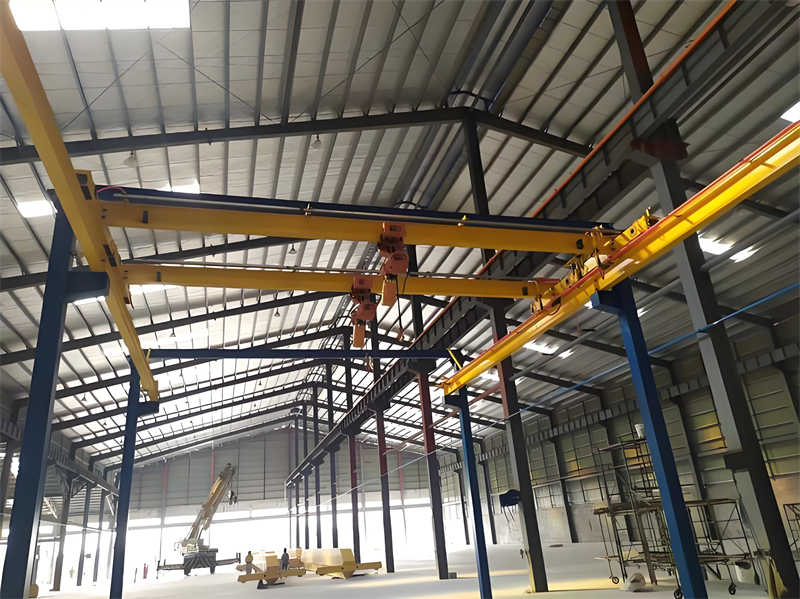
Specific examples demonstrate the practical implementation of these cranes in glass manufacturing. A installation in Saudi Arabia features a 5-ton single girder overhead crane with a 15-meter span specifically designed for handling glass sheets and products . The crane’s smooth operation and precise control minimize breakage and improve handling efficiency in production and processing areas. Similarly, glass manufacturing facilities dealing with larger panels utilize cranes with anti-sway technology to prevent pendulum motions that could stress the glass, while those handling tempered glass products benefit from soft start/stop functions that eliminate sudden force applications.
3.2 Mold Handling Applications
Mold handling presents unique challenges that single girder overhead cranes are uniquely positioned to address. Molds used in glass production are often heavy (ranging from 1-20 tons), delicate, and temperature-sensitive, having been exposed to molten glass. The process of extracting molds from forming machinery requires exceptional precision to avoid damaging either the mold or the surrounding equipment. Furthermore, molds must often be transported to cleaning stations, storage areas, or maintenance sections without exposure to impacts or vibrations that could affect their dimensional stability.
The high-temperature environment of glass manufacturing facilities adds another layer of complexity to mold handling. Single girder cranes designed for these applications often incorporate heat-resistant components, specialized coatings, and temperature-tolerant electrical systems that maintain performance despite ambient heat. In facilities dealing with extremely high temperatures, such as those near glass melting furnaces, specialized metallurgical cranes with enhanced thermal protection may be specified, though standard light duty cranes with appropriate modifications typically suffice for most mold handling tasks .
Specific mold handling applications vary based on production scale. Small-scale operations typically handling molds up to 10 tons often utilize compact jib cranes or smaller overhead cranes that provide precision in tight spaces. Medium-scale operations with molds ranging from 10-20 tons commonly employ single girder overhead cranes with variable speed control, while large-scale operations dealing with molds exceeding 20 tons may require heavy-duty gantry cranes or larger overhead cranes . The flexibility of single girder cranes to accommodate these varying requirements makes them suitable for glass manufacturers of all sizes.
Table: Crane Selection Based on Application Scale
| Operation Scale | Typical Mold Weight | Recommended Crane Type | Key Features |
|---|---|---|---|
| Small-scale | 1-10 tons | Compact jib cranes or smaller overhead cranes | Precision in tight spaces |
| Medium-scale | 10-20 tons | Single girder overhead cranes with variable speed control | Flexibility and moderate lifting capacity |
| Large-scale | 20-50 tons | Heavy-duty gantry cranes or large overhead cranes | High lifting capacity and mobility over large areas |
3.3 Industry-Specific Case Studies
Real-world implementations of light duty single girder overhead cranes in glass and mold handling provide valuable insights into their practical benefits. A notable example comes from a glass manufacturing facility in Saudi Arabia that implemented a 5-ton single girder overhead crane for handling glass products and molds. The crane, model AQ-HD with a 15-meter span and 6-meter lifting height, enabled precise and stable lifting of fragile glass materials, minimizing breakage and improving handling efficiency in production areas . The compact design of the single girder configuration proved particularly advantageous in the space-constrained environment of the existing facility.
Another implementation at a plastic injection molding company demonstrates the versatility of these cranes in mold handling applications. This installation featured a 5-ton top riding, double girder bridge crane with a 22.5-foot span, specifically designed to lift molds out of the plastic injection molding machine . The configuration incorporated a double girder hoist to maximize hook height for machine servicing—a critical consideration when extracting large molds from heavy equipment. The installation utilized VFD control for both bridge and trolley motion, ensuring smooth, precise movements during the delicate extraction process.
For larger-scale operations, a installation at a manufacturing plant in Uzbekistan showcases the application of multi-point underhung bridge cranes with capacities of 5, 10, and 15 tons for handling heavy components in large-span workshops . The long-span design (up to 56 meters) eliminated the need for extra supporting columns, maximizing floor space and improving layout efficiency—a significant advantage in facilities requiring unobstructed work areas for large glass panels or oversized molds.
4 Comprehensive Crane Selection Guide
4.1 Determining Load Requirements
Selecting the appropriate light duty single girder overhead crane for glass or mold handling begins with a thorough assessment of load requirements. This process involves more than simply identifying the maximum weight to be lifted; it requires consideration of the load characteristics, center of gravity, and attachment methods specific to glass and mold handling. For glass manufacturers, this means accounting not only for the weight of glass sheets or products but also for the specialized lifting attachments required, such as vacuum lifters, specialized clamps, or custom spreader bars that distribute force evenly across fragile materials.
The weight distribution of molds presents another important consideration. Unlike standardized loads, molds often have irregular shapes and uneven weight distribution that can affect lifting stability. When selecting a crane for mold handling, it’s essential to consider not just the total weight but also the load moment—the combination of weight and distance from the crane’s support structure. This calculation ensures the crane can handle not only the weight but also the potential imbalance created by asymmetrical loads. Additionally, manufacturers should consider future requirements, selecting a crane with additional capacity to accommodate potential increases in mold sizes or glass panel dimensions.
A comprehensive approach to determining load requirements involves:
- Identifying maximum weight: Assessing the heaviest item to be lifted, including any auxiliary equipment
- Evaluating load geometry: Documenting the dimensions, shape, and center of gravity of typical loads
- Considering dynamic loads: Accounting for additional forces generated during acceleration, deceleration, and sudden stops
- Factoring attachment weight: Including the weight of specialized lifting attachments in total load calculations
- Planning for future needs: Incorporating anticipated increases in capacity requirements due to business growth or product changes
For glass manufacturers, an additional consideration involves the fragility factor of handled materials. While not quantifiable in traditional load calculations, fragility may necessitate selecting a crane with higher precision controls than strictly required by weight alone, ensuring the protection of high-value, easily damaged products throughout the handling process.
4.2 Assessing Environmental Factors
The operating environment significantly influences the selection and specification of light duty single girder overhead cranes for glass and mold handling applications. Temperature conditions represent a particularly important consideration in glass manufacturing facilities, where processes often generate substantial heat that can affect crane performance. Standard cranes are typically rated for ambient temperatures of -20°C to 40°C , but areas near melting furnaces or forming equipment may experience higher temperatures that require heat-resistant components, specialized lubricants, or thermal shielding to ensure reliable operation.
Air quality considerations also play a crucial role in crane selection for glass and mold environments. Glass production often generates fine particulate matter that can infiltrate electrical components and mechanical systems, while facilities handling certain types of molds may encounter corrosive atmospheres that accelerate equipment degradation. In these environments, cranes with enhanced sealing (IP54 or higher ratings), corrosion-resistant coatings, and stainless steel components provide extended service life and reduced maintenance requirements. For extreme conditions, such as areas with explosive dust or vapors, explosion-proof cranes with specially designed motors and electrical systems may be necessary .
The physical layout of the facility represents another critical environmental factor. Facilities with limited headroom often benefit from low-headroom crane designs that maximize available vertical space, while those with obstructed pathways may require custom runway configurations to navigate around fixed equipment. The structural capacity of the building itself must also be considered, with top-running cranes requiring adequate support structures and undershung cranes demanding robust overhead framing capable of supporting both the crane and its loads. In facilities where installing support structures is impractical, free-standing crane systems with integrated support columns offer a viable alternative .
4.3 Control Systems and Operational Features
The selection of appropriate control systems and operational features dramatically impacts the efficiency and safety of light duty single girder overhead cranes in glass and mold handling applications. Pendant controls represent the most basic option, providing simple operation from a fixed position with direct connection to the crane. While cost-effective and reliable, pendant controls limit operator mobility and may not provide the precise control necessary for delicate glass handling operations. Radio remote controls offer enhanced flexibility, allowing operators to position themselves for optimal visibility during critical lifting operations, significantly improving precision while maintaining safety by keeping personnel away from the load path .
For the highest level of precision in glass and mold handling, variable frequency drives (VFDs) have become increasingly standard. VFDs provide smooth acceleration and deceleration by controlling the voltage and frequency supplied to crane motors, eliminating the jerky movements associated with traditional contactor-based controls. This gradual speed transition is particularly valuable when handling fragile glass products or precision molds, where sudden movements could cause damage or alignment issues. Additionally, VFDs reduce mechanical stress on the crane itself, extending component life and reducing maintenance requirements.
Specialized operational features further enhance crane performance in glass and mold applications:
- Anti-sway systems: Utilize advanced control algorithms to automatically minimize load swing during movement, critical for fragile glass panels
- Precision positioning: Provides fine control over crane movement, often with positioning accuracy within millimeters
- Dual-speed controls: Offer both standard and precision operating modes for different handling requirements
- Load monitoring systems: Prevent overloads and provide feedback on actual load weights
- Collision avoidance systems: Use sensors to prevent interference with other equipment or cranes in the same workspace
The integration of these advanced control systems and operational features transforms a basic lifting device into a precision material handling system capable of meeting the exacting requirements of glass and mold applications. While representing an additional investment, these features typically deliver a rapid return through reduced product damage, increased operational efficiency, and enhanced workplace safety.
Table: Control System Comparison for Glass and Mold Cranes
| Control Type | Precision Level | Operator Mobility | Typical Applications |
|---|---|---|---|
| Pendant Control | Basic | Limited to cord length | General purpose lifting where operator can maintain safe distance |
| Radio Remote | High | Unlimited within range | Applications requiring optimal visibility and positioning |
| Cabin Control | Moderate | Limited to cabin location | Large facilities with frequent long-distance movement |
| Automated System | Highest | Not applicable | Repetitive processes with well-defined pathways |
5 Safety Features and Compliance Standards
5.1 Essential Safety Systems
The safe operation of light duty single girder overhead cranes in glass and mold handling environments depends on the implementation of redundant safety systems that protect both personnel and valuable products. Overload protection represents one of the most fundamental safety features, preventing the crane from lifting loads beyond its rated capacity. These systems typically employ load sensors integrated into the lifting mechanism that automatically disengage the hoist function if the load exceeds safe parameters. For glass and mold applications where load values may vary significantly between operations, some advanced systems provide visual or audible alerts as the crane approaches capacity, giving operators opportunity to reassess the load before reaching critical limits.
Limit switches form another critical safety component, preventing the crane from traveling beyond its designed operational range. These switches include upper limit switches that stop the hoist motion before the hook reaches its maximum height, lower limit switches that prevent overwinding of the hoist cable, and end approach limiters that gradually slow and then stop crane movement as it approaches the end of the runway. In glass handling applications where precise positioning is crucial, soft limit systems can be implemented to reduce speed as the crane approaches its travel limits while still allowing precise manual positioning, unlike traditional hard limits that completely stop movement.
For specialized glass and mold handling applications, additional safety systems enhance operational security:
- Anti-sway technology: Utilizes advanced control algorithms to minimize load swing during movement, particularly important for large glass panels that can develop dangerous pendulum motions
- Emergency stop systems: Provide immediate cessation of all crane functions through easily accessible buttons on pendant controls, remote transmitters, or strategically located pull-cords along the runway
- Load monitoring displays: Give operators real-time information about load weight, helping prevent accidental overloads before they engage the safety systems
- Two-speed control: Allows operators to switch between standard and precision modes, with the precision mode providing dramatically reduced speeds for delicate positioning operations
- Thermal protection sensors: Monitor motor temperatures and prevent overheating during intensive operations, particularly valuable in high-temperature glass manufacturing environments
5.2 Regulatory Compliance and Certification
Compliance with international safety standards and obtaining appropriate certifications is not merely a legal formality but a crucial assurance of quality and safety for light duty single girder overhead cranes used in glass and mold handling. The CE marking indicates conformity with health, safety, and environmental protection standards for products sold within the European Economic Area . This certification requires comprehensive documentation of design calculations, safety system implementations, and quality control processes, providing customers with confidence in the crane’s safety integrity.
ISO certification, particularly ISO9001 for quality management systems, demonstrates the manufacturer’s commitment to consistent quality in design, production, and servicing . For crane components, additional specific certifications may apply, such as GS certification for electrical safety and RoHS compliance for restriction of hazardous substances in electrical components . These certifications collectively assure customers that the crane meets internationally recognized standards for safety, performance, and environmental responsibility.
Beyond the base crane structure, specific applications may require additional compliance considerations. Cranes operating in explosive atmospheres must meet ATEX directives or similar regional standards, with appropriate explosion-proof ratings such as ExdⅡBT4 or ExdⅡCT4 for components that could ignite surrounding gases or dust . Similarly, cranes used in food processing environments or other hygienic applications may require specialized coatings, stainless steel components, or cleanroom-compatible designs that prevent product contamination. Understanding these industry-specific requirements ensures the selected crane not only performs its intended function but does so in compliance with all relevant regulations.
6 Customized Solutions for Specialized Applications
6.1 Application-Specific Engineering
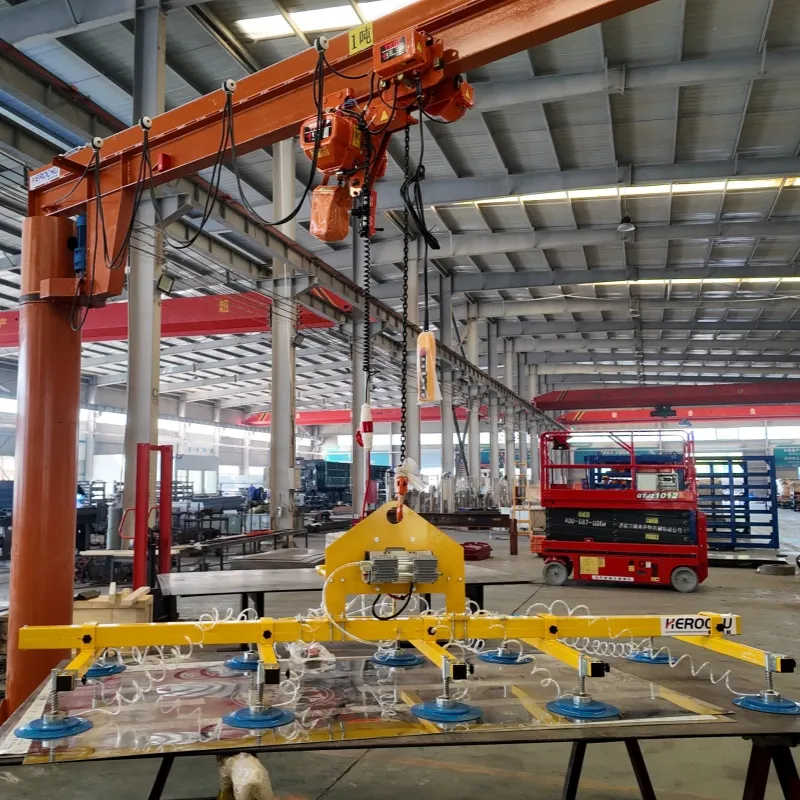
The diverse nature of glass and mold handling operations often necessitates customized crane solutions that address specific challenges beyond the capabilities of standard offerings. Specialized lifting attachments represent one of the most common customizations, with vacuum lifters being particularly valuable for handling large glass panels. These systems use negative pressure chambers to securely grip smooth, non-porous surfaces without mechanical clamps that could cause stress points or edge damage. For mold handling, customized spreader beams with multiple attachment points distribute weight evenly, preventing distortion during lifting that could affect mold precision.
Environmental adaptations form another category of customization, particularly relevant in glass manufacturing facilities with elevated temperatures. Cranes operating near melting furnaces or hot glass processes may require thermal shielding for critical components, high-temperature-resistant cables, and specialized lubricants that maintain viscosity and protective qualities under extreme conditions. In facilities with corrosive atmospheres, enhanced corrosion protection through stainless steel components, specialized coatings, or galvanized finishes extends equipment life and maintains operational reliability .
For facilities with spatial constraints or unique workflow patterns, custom runway configurations optimize material handling efficiency. These may include:
- Cantilevered runway extensions: That allow the crane to service loading docks or specific equipment beyond the main support structure
- Interlocking crane systems: Where multiple cranes operate in the same area with coordinated movement and collision avoidance
- Transfer car systems: That enable a single crane to service multiple parallel runways, expanding coverage without duplicating equipment
- Custom clearance configurations: That accommodate existing equipment, building supports, or other fixed obstructions in the work area
6.2 Advanced Control System Integration
The integration of advanced control systems elevates standard light duty single girder cranes into precision handling instruments capable of meeting the exacting requirements of glass and mold applications. Programmable Logic Controller (PLC) based systems provide the foundation for these advanced capabilities, allowing for customized operational sequences, precision speed control, and integration with other facility automation. For repetitive processes such as transferring molds between specific locations, these systems can store position coordinates for single-command operation, reducing operator dependence and improving consistency.
Variable Frequency Drives (VFDs) have transitioned from premium options to standard requirements for precision glass and mold handling. By controlling the frequency and voltage supplied to crane motors, VFDs enable smooth acceleration and deceleration profiles that eliminate the jerky movements associated with traditional contactor-based controls. The most advanced systems offer sensorless vector control that maintains torque at low speeds for precise positioning, along with active load control that detects and compensates for load sway through automatic counter-movements. These features collectively provide the precise, predictable movement essential for handling fragile or high-value materials.
The emergence of Industry 4.0 capabilities has introduced new possibilities for crane optimization and maintenance:
- Remote monitoring systems: That track crane utilization, performance metrics, and maintenance requirements through cloud-based platforms
- Predictive maintenance algorithms: That analyze operational data to identify potential component failures before they result in downtime
- Digital twin technology: That creates virtual crane replicas for testing operational modifications without disrupting production
- Automated documentation: That maintains comprehensive records of lift histories, maintenance activities, and compliance requirements
- Integration with facility management systems: That coordinates crane operations with other material handling equipment for optimized workflow
These advanced control integrations transform the crane from an isolated lifting device into an integrated component of the smart manufacturing environment, providing both immediate operational benefits and long-term maintenance advantages.
7 Future Trends in Glass and Mold Crane Technology
7.1 Smart Control and Automation
The future development of light duty single girder overhead cranes for glass and mold handling points toward increasingly sophisticated control systems and expanded automation capabilities. Artificial intelligence (AI) integration represents one of the most promising frontiers, with systems capable of learning optimal movement patterns for specific loads and automatically adjusting operational parameters to minimize swing, reduce cycle times, and prevent damage to fragile materials. These AI systems can analyze historical operational data to identify inefficiencies and suggest improvements, creating continuously optimized material handling processes without direct human intervention.
Computer-assisted operation represents another significant trend, augmenting human operator capabilities with precision guidance systems. These systems use laser positioning, machine vision, or RFID tracking to identify load positions and automatically execute precise positioning with minimal operator input. For glass panel handling, this might involve automatic alignment with processing equipment, while for mold handling it could mean precise placement in cleaning or storage fixtures. The most advanced systems provide augmented reality interfaces that overlay positioning guides and operational data directly into the operator’s field of view, dramatically reducing positioning time while improving accuracy.
The progression toward fully automated crane systems continues to advance, with particular relevance for repetitive glass and mold handling operations:
- Automatic path planning: That calculates optimal routes between points while avoiding obstacles and minimizing swing
- Fleet management systems: That coordinate multiple cranes in the same workspace for maximum efficiency without interference
- Automatic load identification: That uses sensors or vision systems to identify loads and select appropriate handling parameters
- Integration with production planning systems: That automatically dispatches cranes based on production schedules without human intervention
- Self-diagnostic capabilities: That continuously monitor component health and performance, automatically scheduling maintenance before failures occur
7.2 Energy Efficiency and Sustainable Design
The growing emphasis on sustainable manufacturing has accelerated the development of energy-efficient technologies for overhead cranes serving the glass and mold industries. Regenerative power systems represent one of the most significant advancements, capturing energy during lowering operations and braking phases then repurposing it for other crane functions or returning it to the facility’s power system. These systems are particularly valuable in glass manufacturing facilities with frequent lifting cycles, where the accumulated energy savings can substantially reduce overall power consumption while decreasing the thermal load on electrical components.
Lightweighting strategies through advanced materials and design optimization contribute significantly to improved energy efficiency. The use of high-strength steel alloys with superior strength-to-weight ratios enables lighter crane structures that require less power for acceleration and deceleration. Some European-designed cranes already incorporate these principles, achieving weight reductions of 30% or more compared to traditional designs while maintaining equivalent strength characteristics . Additionally, composite materials are beginning to appear in non-critical components, further reducing moving mass and inertial resistance.
Advanced motor and drive technologies have dramatically improved the energy profile of modern overhead cranes:
- Permanent magnet motor technology: That provides higher power density and efficiency compared to traditional induction motors
- IE4 and IE5 premium efficiency classifications: That meet the highest international standards for motor efficiency
- Sleep mode functionality: That automatically reduces power consumption during periods of inactivity
- Power factor correction: That minimizes reactive power demands and reduces utility penalties for poor power factor
- Adaptive power management: That automatically adjusts energy usage based on operational demands and facility power constraints
These energy-efficient technologies collectively reduce the environmental impact of material handling operations while delivering tangible economic benefits through reduced operating costs—a combination particularly appealing to glass manufacturers facing global competition and increasing energy prices.
8 Conclusion
Light duty single girder overhead cranes have evolved into sophisticated material handling solutions specifically capable of meeting the exacting requirements of glass and mold handling applications. Their compact design, precision control capabilities, and adaptability to challenging environments make them indispensable assets in these specialized industries. As glass manufacturers face increasing pressure to improve product quality, reduce breakage, and increase operational efficiency, these cranes provide the technological foundation to achieve these competing objectives simultaneously.
The selection of an appropriate crane for glass or mold handling requires careful consideration of multiple factors, including load characteristics, environmental conditions, control requirements, and safety considerations. The comprehensive technical specifications available for modern cranes—spanning capacity, span, lifting height, speed parameters, and duty classifications—provide the data necessary to match equipment capabilities to specific operational needs. Meanwhile, the availability of customized solutions ensures that even unique challenges can be addressed through specialized engineering.
Looking toward the future, trends in automation, energy efficiency, and digital integration promise to further enhance the capabilities of these already versatile material handling systems. Glass and mold manufacturers who embrace these technological advancements position themselves for improved competitiveness through increased efficiency, reduced product damage, and enhanced workplace safety. In this context, the strategic selection and implementation of light duty single girder overhead cranes transitions from a simple equipment purchase to a significant business optimization decision with far-reaching implications for operational success.
