
31-Oct-2025
Low Clearance Hoist Single Beam Overhead Crane with VFD Control: A Comprehensive Analysis
Introduction
In today’s demanding industrial environments, efficient material handling is a critical component of operational success. The Low Clearance Hoist Single Beam Overhead Crane with VFD (Variable Frequency Drive) Control represents a significant technological advancement in lifting equipment, designed to address specific spatial and operational challenges in modern facilities. This crane configuration combines space-efficient design with precision control technology, offering a compelling solution for various industries. As manufacturers like Dongqi Crane continue to innovate in this segment, understanding the complete profile of this equipment—from its technical specifications to its economic implications—becomes essential for potential users. This analysis explores the various facets of this specialized crane system, providing insights that can inform smarter acquisition and operational decisions.
Product Overview and Technical Specifications
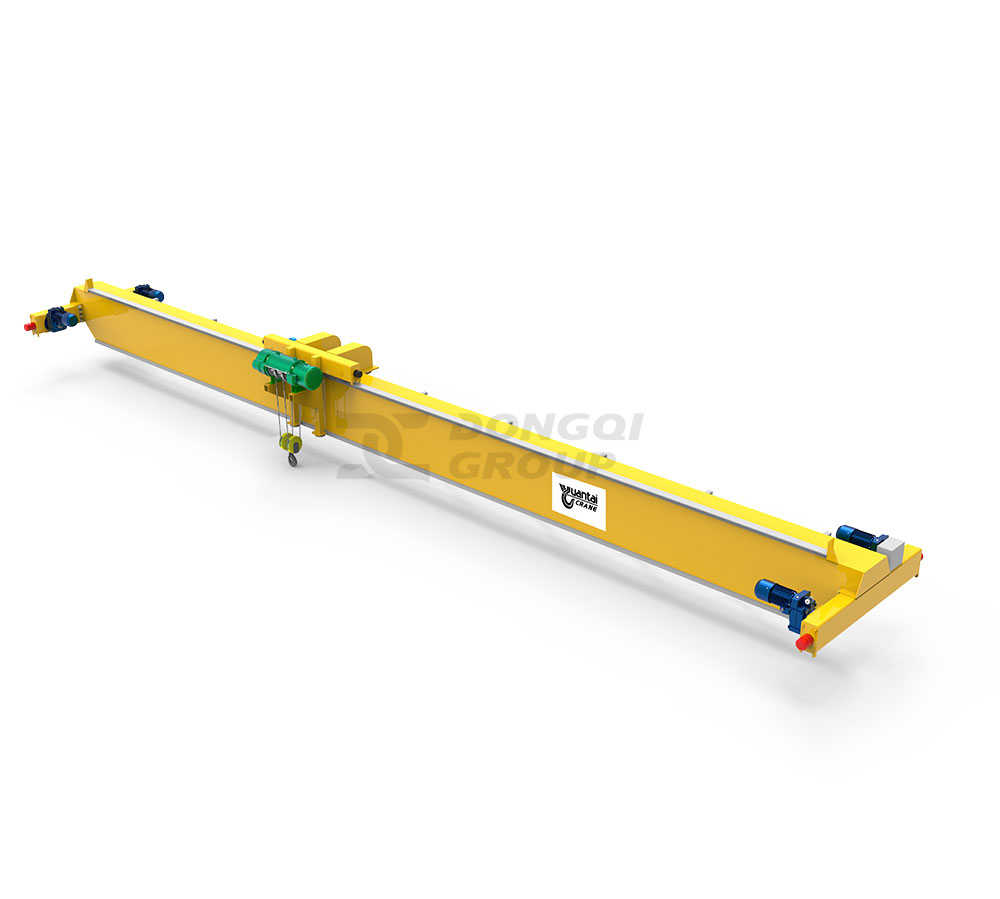
The Low Clearance Hoist Single Beam Overhead Crane with VFD Control is engineered with a distinctive design approach that prioritizes vertical space optimization without compromising lifting performance. As the name suggests, this configuration features a single girder design with a compact hoist system that minimizes the distance between the hook and the overhead support structure. This design is particularly valuable in facilities where vertical headroom is restricted, such as low-ceiling buildings, multi-level facilities, or plants with extensive overhead infrastructure.
Key Technical Specifications
- Lifting Capacity: These cranes typically offer capacities ranging from 1 ton to 20 tons, with some specialized models handling up to 32 tons . The capacity is carefully calibrated to work efficiently within the low clearance design parameters.
- Span and Height: Standard spans range from 7.5 to 31.5 meters, with lifting heights customizable from 6 to 30 meters based on application requirements . The low headroom design typically reduces the required vertical space by 15-30% compared to conventional overhead cranes.
- Speed Parameters: With VFD control, lifting speeds vary from 0.8 to 8 m/min depending on capacity, while trolley traveling speed reaches 20 m/min and long travel speed also operates at 20 m/min . The variable frequency drive allows for precise speed adjustment across these ranges.
- Power Supply: These systems typically operate on 3-phase AC power at 220-480V with frequency of 50/60Hz , making them compatible with standard industrial power systems.
- Working Duty Classification: Most low clearance single girder cranes with VFD control are rated for Class A5 operation , indicating suitability for moderate duty cycles with regular operation.
Key Applications and Industry Uses
The unique combination of compact design and precision control makes this crane configuration particularly valuable in specific environments and applications. The space-optimized design addresses a common constraint in many industrial facilities, while the advanced control system ensures operational excellence in handling diverse loads.
Primary Application Sectors
- Manufacturing Facilities: In manufacturing plants, especially those with limited vertical clearance, these cranes excel in assembly line operations, equipment maintenance, and material transfer between workstations. The VFD control enables precise positioning of components during assembly processes.
- Warehousing and Logistics: Distribution centers and warehouses with space constraints benefit from the low clearance design, which maximizes usable storage volume while maintaining efficient material handling capabilities. The smooth operation provided by VFD control helps protect goods from damage during movement.
- Specialized Environments: The precise control offered by VFD systems makes these cranes ideal for handling delicate or high-value loads such as electronic components, molds, and dies . Industries like aerospace, automotive, and precision engineering particularly value this capability.
- Facilities with Structural Limitations: Older industrial buildings or facilities with height restrictions can implement effective lifting solutions without costly structural modifications that might be required with conventional crane systems.
Advantages of VFD Control in Overhead Cranes
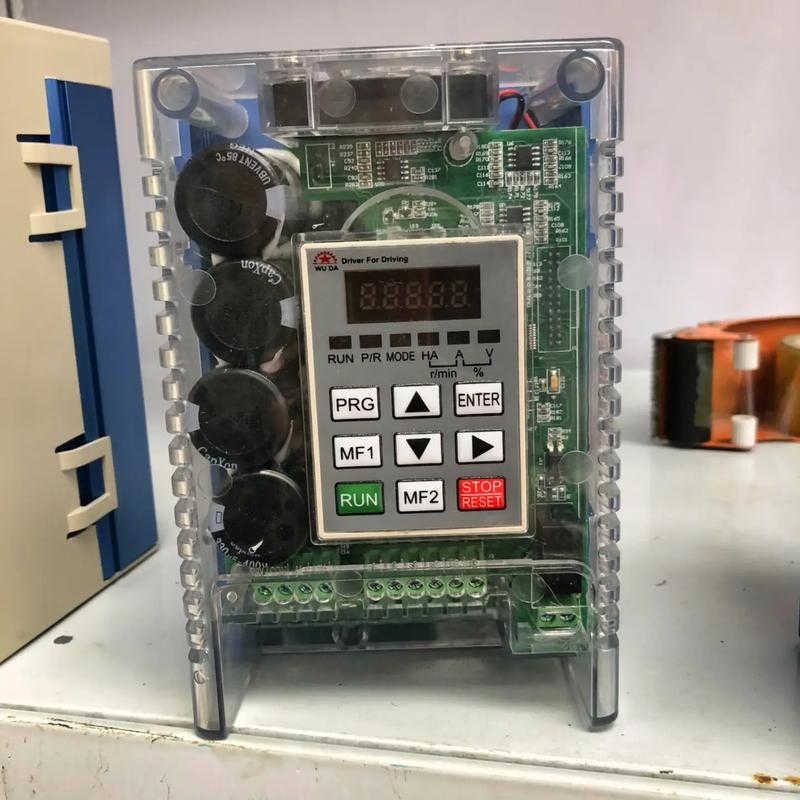
The integration of Variable Frequency Drive technology represents a significant technological leap over traditional control systems, offering numerous operational benefits that enhance both performance and economy.
Enhanced Control and Precision
- Adjustable Speed Operations: Unlike conventional systems limited to fixed speeds, VFD control enables infinitely variable speed adjustment within a 40:1 ratio . This allows operators to match lifting and traveling speeds precisely to specific task requirements.
- Smooth Acceleration and Deceleration: Programmable acceleration and deceleration ramps eliminate abrupt starts and stops , reducing stress on both the crane structure and the load being handled.
- Precise Load Positioning: The ability to make minimal incremental movements enables exact positioning of loads, critical in assembly applications or when working in confined spaces .
Operational Benefits and Efficiency
- Reduced Mechanical Wear: By minimizing abrupt movements and eliminating harsh braking, VFD systems significantly decrease wear on brakes, gearboxes, and other transmission components . This extends service intervals and reduces replacement part costs.
- Energy Efficiency: VFD-controlled cranes typically consume 20-30% less power compared to conventional systems , as they only draw current proportional to the actual operational requirement rather than operating at full capacity continuously.
- Brake Preservation: The VFD system controls deceleration through motor control rather than relying solely on mechanical brakes, which are then primarily used for parking . This can extend brake life by up to 400% in high-use applications.
Cost Analysis and Pricing Factors
Understanding the financial implications of acquiring and operating a Low Clearance Hoist Single Beam Overhead Crane with VFD Control requires consideration of both initial investment and long-term operational economics.
Initial Purchase Price
The price range for these specialized cranes varies significantly based on specifications:
- Standard Models: Basic low clearance single girder cranes start at approximately $4,000 for lower capacity units .
- Mid-Range Configurations: For a 10-ton capacity crane with standard features, prices typically range between $4,000 and $45,000 .
- High-Capacity Customized Units: Specialized configurations with higher capacities (16-20 ton) and custom features can range from $5,000 to $50,000 .
- Premium European Designs: Cranes with European standards and advanced VFD controls typically command $10,000 to $80,000 depending on specifications .
Key Factors Influencing Price
- Lifting Capacity: Higher capacity units require more robust structural components and powerful hoisting mechanisms, directly impacting cost. For example, a 20-ton capacity crane may cost 50-100% more than a 5-ton capacity unit with similar span .
- Span Requirements: Longer spans necessitate stronger and more substantial girders, increasing both material and manufacturing costs. Each additional meter beyond standard spans can add 5-15% to the base price.
- Control System Sophistication: Basic VFD systems add approximately 15-20% to the cost compared to conventional controls, while advanced systems with multiple programmable parameters and diagnostics capabilities can add 25-40% .
- Customization Level: Standard designs are most economical, while customizations for specific applications, such as explosion-proof versions (which can cost $50,000 to $300,000 ) or special height requirements, significantly increase costs.
Operational and Lifecycle Costs
- Energy Consumption: The VFD technology can reduce power consumption by 20-30% , creating meaningful savings in facilities with continuous crane operations.
- Maintenance Expenses: Reduced wear on brakes and mechanical components lowers maintenance costs by 30-50% compared to conventional systems , with fewer production interruptions for repairs.
- Component Longevity: The gentle acceleration and deceleration profiles can extend the service life of key components by 40-60% , reducing long-term replacement costs.
User Requirements and Selection Criteria
Identifying the right crane configuration for specific operational needs requires careful assessment of both current requirements and future expectations.
Key Selection Considerations
- Capacity and Span Requirements: Accurately determine maximum load weights and movement patterns within the facility. Consider potential future needs that might require additional capacity.
- Vertical Space Constraints: Precisely measure available headroom to ensure the low clearance design provides sufficient advantage. The compact design typically saves 15-30% of vertical space compared to standard overhead cranes.
- Duty Cycle and Usage Intensity: Evaluate the expected operational frequency and select an appropriate working class (A3-A5 for moderate use, A6-A7 for heavy cycling) .
- Control Precision Needs: Assess the level of positioning accuracy required for operations. Applications involving delicate loads or precise placement benefit most from VFD capabilities.
- Environmental Factors: Consider ambient conditions such as temperature ranges (standard units operate from -20°C to 40°C ), presence of corrosive elements, or potential explosive atmospheres.
Cost-Benefit Analysis Framework
- ROI Calculation: Evaluate the payback period based on productivity gains, energy savings, and reduced maintenance. Most operations achieve ROI within 1-3 years depending on usage intensity.
- Total Cost of Ownership: Look beyond initial price to include installation, maintenance, energy, and potential downtime costs over the equipment’s expected service life.
- Productivity Impact: Consider how features like faster positioning, reduced load damage, and increased operational precision contribute to overall operational efficiency.
Conclusion
The Low Clearance Hoist Single Beam Overhead Crane with VFD Control represents a specialized lifting solution that effectively addresses the dual challenges of space optimization and operational precision. For facilities with vertical space constraints, the compact design enables the implementation of effective overhead lifting solutions where conventional cranes would be impractical. The integration of VFD control technology transforms these cranes from simple lifting devices to precision material handling systems capable of enhancing overall operational efficiency.
While the initial investment exceeds that of basic crane systems, the long-term operational benefits—including reduced energy consumption, lower maintenance costs, and extended equipment life—typically justify the premium. Additionally, the productivity gains from precise load positioning and smoother operation can deliver substantial value in manufacturing and assembly applications.
For businesses considering this equipment, the decision should be informed by a comprehensive analysis of specific spatial constraints, operational requirements, and total cost of ownership rather than initial price alone. With proper specification and installation, these advanced crane systems can serve as valuable assets that enhance material handling capabilities while optimizing space utilization in diverse industrial environments.
