
12-May-2026
[May 2026 Update] Mainstream Crane Manufacturers: A Head-to-Head Comparison and Selection Guide
Introduction: Choosing the Right Partner in a Transforming Market
A crane is rarely a standalone purchase. It is a long-term capital investment, typically expected to serve for 15 to 25 years while operating safely under load cycles often numbering in the millions. The manufacturer you select will influence not only your equipment specification and upfront cost but also installation delivery time, product reliability, spare parts availability, local technical support, and the costs you will incur over the full lifecycle.
The global overhead crane market continues to expand. In 2025, the market was valued at approximately USD 5.24 billion and is projected to reach USD 7.97 billion by 2031, growing at a compound annual growth rate of 7.24%. Behind these numbers lies a fast-evolving competitive landscape. Procurement teams in 2026 face a fundamentally different evaluation challenge than they did a decade ago: design standards have converged internationally, Chinese manufacturers have grown rapidly in technical capability, and smart technologies are reshaping how cranes are operated and maintained.
This guide offers a structured, fact-driven comparison of the brands procurement teams most frequently encounter when sourcing overhead and gantry cranes. It is published by Dongqi Crane—the Sino-New Zealand joint venture based in China’s “Cradleland of Cranes”—and covers the global heavyweights as well as regional specialists, including three major Chinese manufacturers you should know. Our goal is to equip you with a transparent evaluation framework so you can match manufacturer strengths to your project requirements.
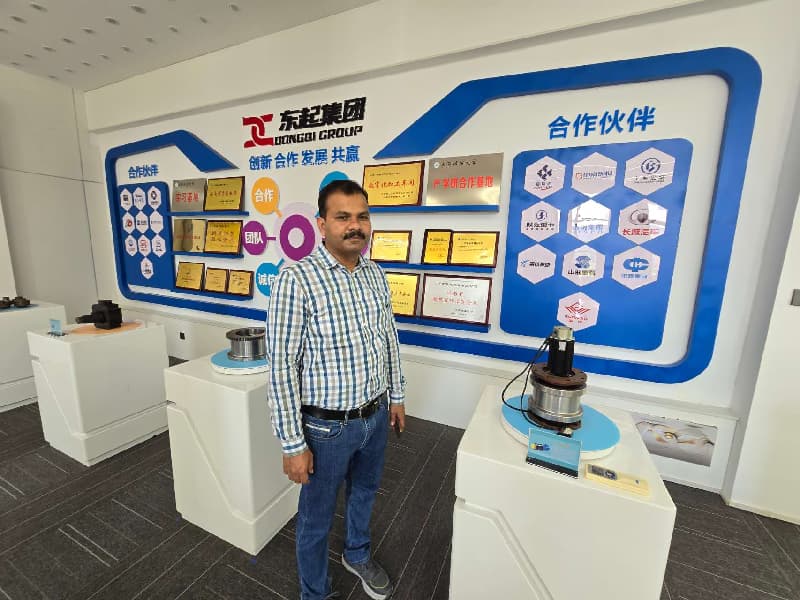
About Dongqi Crane: Dongqi Crane operates a 240,000-square-meter manufacturing facility in Changyuan, Henan Province, and delivers more than 10,000 crane sets annually. With over 3,600 employees—including 500 technicians and more than 70 senior engineers—and products exported to 96 countries, we combine European design philosophy with Chinese manufacturing capacity. Every product is certified to ISO 9001, ISO 14001, and ISO 45001, with CE certification available for equipment destined for European markets.
Part 1: How the Global Crane Industry Is Evolving (2025–2026)
1.1 Market Momentum
Three structural trends are reshaping crane procurement worldwide in 2026:
- Infrastructure and energy investment is accelerating in emerging markets across Southeast Asia, the Middle East, and Africa, driving demand for gantry and heavy-duty overhead cranes.
- Manufacturing reshoring and nearshoring is creating new factory construction in North America and Europe, with preference for efficient, space-optimized European-style cranes.
- Sustainability pressures are pushing facility owners to choose lighter, energy-efficient equipment—a trend that favors FEM/ISO crane designs and effectively disadvantages traditional heavy designs.
These trends are reflected in Dongqi Crane’s own experience: in 2025, European-style hoists demonstrated the fastest growth trajectory within our product portfolio, signaling a clear market shift toward energy-efficient, compact, and intelligent lifting equipment.
1.2 The Standard-Setting Landscape
Two major design frameworks govern overhead cranes globally: the CMAA standard, dominant in North America, and the FEM/ISO standard, widely adopted across Europe, the Middle East, Asia-Pacific, and internationally funded projects worldwide. While both are rigorous, their philosophical foundations differ significantly:
| Dimension | CMAA (North America) | FEM/ISO (Global / European) |
|---|---|---|
| Classification | Service Class A–F, a holistic judgment of usage intensity | Duty Group (A1–A8 & M1–M8), based on a two-dimensional matrix of load spectrum and operating hours |
| Design Philosophy | Experience-based, pragmatic—proven through decades of heavy industrial service | Analytical and mathematical, explicitly predicting fatigue life based on statistical models |
| Structural Approach | Tends toward robust structures with built-in safety margins | FEA-optimized lightweight structures with precisely calculated stress and fatigue resistance |
| Typical Products | Traditional heavy double-girder bridge cranes | Modular European single- and double-girder cranes with lower self-weight |
| Primary Regions | North America, Latin America, some Asian facilities | Europe, Middle East, Africa, Asia-Pacific, global projects |
The trend in 2026 is toward convergence: many projects worldwide now allow either standard, provided the engineering documentation is complete. Buyers need to understand the standard their preferred manufacturer is built around—and what it means for building impact, operational cost, and service life. A CMAA crane designed for a North American steel mill will behave very differently on the runways than an FEM crane rated for the same capacity.
Misunderstanding these standards can lead to costly errors—either underspecifying a crane that fails prematurely under demanding conditions, or overspecifying one with an inflated initial price and excessive ongoing operating costs.
Part 2: The Major Global Crane Manufacturers
Below, we introduce the brands most commonly encountered by international crane buyers. These profiles are based on publicly available information, industry reports, and Dongqi Crane’s market intelligence.
2.1 Konecranes (Finland)
Headquarters: Hyvinkää, Finland
Founded: 1994 (roots trace to 1910)
Konecranes is one of the world’s largest dedicated lifting equipment companies, offering overhead cranes, gantry cranes, port equipment, and comprehensive service contracts. The company is known for its global service network, which is among the densest in the industry. Konecranes equipment is designed to ISO and FEM standards and is widely used in manufacturing, process industries, shipyards, and container terminals.
Strengths: Unmatched global presence, strong aftermarket service, advanced smart-crane features (TRUCONNECT remote monitoring), broad product range spanning light to ultra-heavy.
Typical Buyer: Large multinational corporations seeking a single-source supplier with guaranteed local support in most countries.
2.2 Demag Cranes (Germany)
Headquarters: Wetter, Germany (as part of Konecranes Group since merger; brand continues independently)
Origins: Engineering pioneer since 1819; crane manufacturing since the early 1900s
Demag is a globally recognized brand in industrial cranes, crane components, and drive systems. The company offers a comprehensive range including overhead traveling cranes, jib cranes, electric hoists, and process crane solutions. Demag is known for high-precision German engineering with standard configurations up to 80 tons lifting capacity, runway gauges up to 30–35 meters, and travel speeds up to 60 m/min on bridge and 32 m/min on cross-travel.
Strengths: Excellent component quality, deep engineering capability, strong brand recognition, extensive drive-technology portfolio.
Typical Buyer: Manufacturers and logistics operators who prioritize German engineering and are willing to pay a premium for the Demag brand and component ecosystem.
2.3 ABUS Kransysteme GmbH (Germany)
Headquarters: Gummersbach, Germany
ABUS specializes in lifting equipment and crane components, with core products including overhead cranes, jib cranes, and electric hoists. The company is a significant player in the European and global single-girder and light-double-girder crane segments, offering capacities up to 300 tons and spans of 8–30 meters, with reliability ratings reaching 91%.
Strengths: Reliable, standardized design; moderate price point for German engineering; strong European distribution.
Typical Buyer: Medium-sized workshops and general manufacturing facilities seeking European-quality standard overhead crane solutions.
2.4 GH Cranes & Components (Italy)
Headquarters: Spain / Italy (with strong presence in both)
GH Cranes & Components is a diverse European manufacturer offering overhead cranes, gantry cranes, jib cranes, and various special-purpose cranes. GH offers a broad range of capacities and is frequently specified in general manufacturing, warehousing, and some specialized industries.
Strengths: Flexible manufacturing capabilities; wide product range; competitive European pricing.
Typical Buyer: Projects requiring medium- to heavy-duty cranes with European certification at a more accessible price point than the premier German and Nordic brands.
2.5 Liebherr Group (Germany/Switzerland)
Headquarters: Bulle, Switzerland
Liebherr is one of the world’s largest heavy equipment manufacturers, known for mobile cranes, tower cranes, maritime cranes, and heavy-lift overhead cranes. While its overhead crane business is a smaller portion of its overall portfolio, its reputation for structural engineering excellence and extreme lifting capacities (often for specialized ports, shipyards, and heavy-component handling) is globally recognized.
Strengths: Exceptional heavy-lift expertise; legendary build quality; strong R&D investment.
Typical Buyer: Port authorities, shipyards, heavy-component manufacturers requiring cranes beyond 100 or 200 tons rated capacity.
2.6 Street Crane (UK)
Headquarters: Chapel-en-le-Frith, United Kingdom
Street Crane is one of the UK’s largest overhead crane manufacturers, with a particular strength in crane kits and hoist units supplied to local crane builders worldwide. The company’s products are found across manufacturing, warehousing, and automotive facilities.
Strengths: Excellent hoist technology; flexible supply models (kits for local integration).
Typical Buyer: Local crane builders and EPCs seeking premium hoist components; projects where British engineering certification carries weight.
2.7 Kito (Japan)
Headquarters: Yamanashi, Japan
Kito is a Japanese specialist in lifting equipment, particularly electric and manual hoists, chain blocks, and light crane systems. Through acquisitions including Harrington Hoists in the US, Kito has built a global footprint.
Strengths: Hoist and chain-block technology leadership; broad light-crane and workstation crane capability; strong Asia-Pacific distribution.
Typical Buyer: Buyers seeking premium Japanese hoists and light crane systems for manufacturing and assembly lines.
Part 3: Chinese Crane Manufacturers—A Growing Force
Chinese crane manufacturers are increasingly prominent in international procurement. Product quality, design standardization, and global service capability among leading Chinese firms have advanced significantly over the past decade. Three companies illustrate the different approaches within the Chinese industry.
3.1 Dongqi Crane (Henan, China)
Headquarters & Manufacturing Base: Changyuan, Henan Province, China—the renowned “Cradleland of Cranes”
Structure: Sino-New Zealand joint venture
Dongqi Crane occupies a distinct position within the global market: we design and manufacture to both FEM and ISO standards (with CMAA-compatible products available upon request), combining European design rigor with Chinese manufacturing efficiency and scale. Our 240,000-square-meter facility produces more than 10,000 crane sets annually and is equipped with over 2,000 sets of manufacturing and detection devices, including four-gun air-protection portal-shaped automatic welding machines, impeller blasting descaling equipment, digital-control plant drills, and automated spray-paint lines.
Our product portfolio spans overhead cranes (single-girder and double-girder), gantry cranes (rail-mounted and rubber-tyred), jib cranes, electric hoists, winches, and specialized equipment for sectors including steel, mining, paper, petrochemical, and high-tech manufacturing industries such as cleanroom environments and nuclear facilities. Production infrastructure supports capacities from light-duty 1-ton workshop cranes up to engineered heavy-lift systems exceeding 300 tons, manufactured to FEM M7/M8 mechanism classifications.
Dongqi Crane is certified to ISO 9001 (Quality Management), ISO 14001 (Environmental Management), and ISO 45001 (Occupational Health & Safety), with CE certification for products destined for European and other regulated markets. We maintain a dedicated overseas service team of 36 multilingual professionals operating in English, Arabic, Spanish, Russian, and Korean, and have established a permanent office in Pakistan. Products are distributed across 96 countries worldwide.
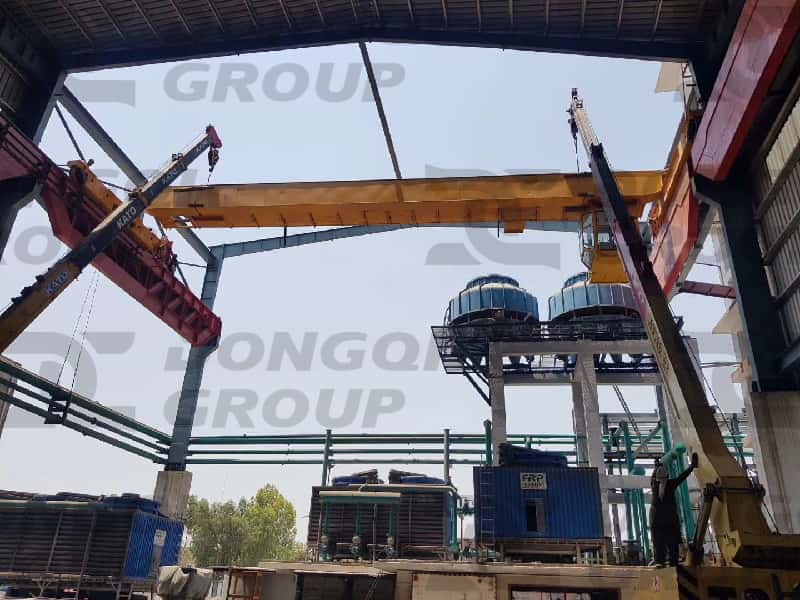
Typical Buyer: Industrial companies, EPC contractors, and local crane builders seeking FEM/ISO-standard equipment with competitive pricing and responsive international support. Particularly strong value proposition for heavy-duty applications, emerging-market projects, and cases requiring significant customization capability.
Dongqi’s Core Technologies & Quality Assurance:
| Technology / Process | Description |
|---|---|
| European FEM/ISO Design | FEA-optimized box-girder structures using S355JR and S420ML high-strength steel, achieving 25-30% weight reduction without compromising safety margins. |
| Advanced Welding | Four-gun air-protection portal-shaped automatic welding machines for deep, consistent penetration on fatigue-critical joints. |
| Surface Preparation | Impeller blasting descaling equipment achieving SA 2.5 grade; automated spray-paint lines for uniform corrosion protection. |
| Precision Machining | CNC-controlled plant drills and machining centers for exact end-carriage alignment, wheel-axle geometry, and gearbox mounting interfaces. |
| Load Testing | Every crane undergoes factory assembly and testing: static testing at 125% of rated capacity and dynamic testing at 110% of rated capacity. |
| Smart Monitoring | Optional AICrane system with real-time load spectrum recording, vibration analysis, motor diagnostics, and predictive maintenance alerts. |
3.2 ZPMC (Shanghai Zhenhua Heavy Industries)
Headquarters: Shanghai, China
ZPMC is one of the world’s largest manufacturers of port machinery and heavy equipment, renowned globally for container cranes, ship-to-shore gantries, and heavy offshore lifting systems. The company also produces overhead cranes and gantry cranes, primarily for very large-scale applications.
Strengths: Unmatched capacity for mega-scale projects; global dominance in port equipment; deep experience with extreme capacities and long spans.
Typical Buyer: Port authorities, terminal operators, and heavy-industry projects requiring space-frame or ultra-high-capacity cranes.
3.3 Weihua Group (Henan, China)
Headquarters: Changyuan, Henan Province, China—the same “Cradleland of Cranes” as Dongqi
Weihua is a major Chinese crane manufacturer with a strong domestic market presence and growing international profile. The company offers a comprehensive range of overhead cranes, gantry cranes, and hoists. It competes primarily with value-priced traditional designs, though it has also introduced European-standard product lines.
Strengths: Very large production capacity; extensive product coverage; aggressive pricing in standard traditional-crane categories.
Part 4: Comparison Dimensions—What Matters Most in Selection
A thorough evaluation of crane manufacturers requires systematically comparing several dimensions. Weighting these dimensions depends on each buyer’s specific situation, but every dimension matters.
4.1 Design Standard & Technology Philosophy
This is the most fundamental differentiator. Manufacturers such as Konecranes, Demag, ABUS, GH, and Dongqi Crane assemble European-standard (FEM/ISO) products. Others primarily build to CMAA or traditional Chinese national standards. The standard affects:
- Structural weight (FEM cranes are typically 25–30% lighter for the same capacity, resulting in lower wheel loads and often reduced runway steel costs).
- Duty classification precision (FEM is more granular and fatigue-life-oriented, allowing closer matching to actual usage).
- Energy efficiency (European cranes with VFD-equipped motors consume significantly less energy—Dongqi’s European-standard product line achieves measurable reductions versus traditional alternatives).
When comparing Dongqi Crane to the European premium brands, the difference lies not in the design standard itself—all design to FEM/ISO—but in the pricing structure (Dongqi leverages manufacturing scale) and the degree of standard customization available.
4.2 Manufacturing Quality & Capacity
| Manufacturer | Annual Output (est.) | Factory Scale | Quality System |
|---|---|---|---|
| Konecranes | Multi-thousand units across global facilities | Multiple plants in Finland, Europe, Asia, Americas | ISO, CE, and proprietary testing |
| Demag | Multi-thousand units | Plants in Germany and globally | ISO, CE, rigorous component testing |
| ABUS | Strong mid-tier output | German manufacturing base | ISO, CE, European certifications |
| Dongqi Crane | 10,000+ crane sets annually | 240,000 m² single-site plant, 2,000+ equipment sets | ISO 9001, ISO 14001, ISO 45001, CE |
| ZPMC | Large-scale heavy equipment | Massive production bases in Shanghai and Nantong | ISO, specialized maritime certifications |
Dongqi Crane’s single-site production capacity is among the highest globally, enabling economies of scale that translate into competitive pricing without compromising on testing and quality control.
4.3 Product Range & Application Coverage
| Manufacturer | Overhead Cranes | Gantry Cranes | Jib Cranes | Hoists | Heavy-Duty / Specialized |
|---|---|---|---|---|---|
| Konecranes | ✓ Full range | ✓ | ✓ | ✓ | ✓ (Ladle, nuclear, port, process) |
| Demag | ✓ Up to 80t standard | ✓ | ✓ | ✓ (including chain) | ✓ (Process cranes) |
| ABUS | ✓ Up to 300t | ✓ | ✓ | ✓ | ✓ (Some specialized) |
| Dongqi Crane | ✓ Full range (1t to 300t+) | ✓ (RMG, RTG, MG) | ✓ (Pillar, wall) | ✓ (Wire rope, chain, European) | ✓ (Ladle, grab, explosion-proof, foundry, cleanroom) |
| Weihua | ✓ Full range | ✓ | ✓ | ✓ | ✓ (Some specialized) |
The market coverage of Dongqi Crane is comprehensive, and our recent 2025 product line performance confirms strong demand across multiple categories: overhead cranes represented approximately 26% of our total volume (with HD Series bridge cranes dominating in heavy-duty sectors like steel and metal fabrication), gantry cranes accounted for approximately 15%, and hoists led at approximately 42% of volume, with European-style hoists growing most rapidly.
4.4 Pricing & Total Cost of Ownership
Pricing is always case-specific—it depends on capacity, span, duty classification, options, import duties, and freight. However, general cost tiers observed in international procurement are as follows:
| Cost Tier | Manufacturers | Typical Premium vs. Baseline |
|---|---|---|
| Premium European | Konecranes, Demag, Liebherr | +50% to +100% vs. Chinese European-standard |
| Mid-Range European | ABUS, GH, Street Crane | +30% to +70% |
| Chinese European-Standard | Dongqi Crane | Baseline for FEM/ISO compliant equipment |
| Value Traditional Chinese | Weihua, various domestic brands | -20% to -40% below Chinese European-standard, but heavier and often shorter life |
Importantly, equipment purchase price is only one part of the total cost equation. Total installed cost includes runway steel, building modifications, installation, and freight. Dongqi Crane’s lighter FEM crane designs typically reduce runway steel requirements and wheel loads on existing building columns, which can fully or partially offset any equipment price differences.
4.5 Lead Time & Supply Chain Resilience
In 2026, supply chain stability matters. Dongqi Crane’s operational data from 2025 shows standard MG Series gantry cranes achieving lead times of 8–10 weeks for standard configurations, while highly customized heavy-duty systems naturally require longer engineering and fabrication periods. European manufacturers typically quote 14–20+ weeks for standard cranes, with specialized systems taking 20–30 weeks or more. A factory visit to Dongqi’s Changyuan facility enables buyers to verify manufacturing throughput and quality processes firsthand.
4.6 After-Sales Support & Service Network
| Manufacturer | Global Service Network | Regions of Strength |
|---|---|---|
| Konecranes | Dense, 50+ countries | North America, Europe, Asia-Pacific |
| Demag | Extensive, strong in Europe | Europe, global via Konecranes network |
| Dongqi Crane | 36-person multilingual overseas team; permanent office in Pakistan; 96-country export | Asia, Middle East, Africa, Latin America, Oceania |
| Weihua | Growing international presence | Asia, selected emerging markets |
For buyers evaluating Dongqi Crane, the distinguishing proposition is not a Konecranes-scale service network in North America or Western Europe. Rather, it is the combination of European-standard design integrity with direct factory access, competitive pricing, and committed support in the world’s fastest-growing industrial regions. In Pakistan specifically, Dongqi’s permanent overseas office provides local service and cost-effective equipment, a commitment that sets us apart from manufacturers without in-country presence.
Part 5: Selection Framework—Matching Manufacturer to Your Project
Use the following decision guide to narrow your options. It translates your project profile into a recommended evaluation path.
5.1 Decision Guide by Priority
| If Your Priority Is… | Consider First… | Why |
|---|---|---|
| Global service density (North America/Europe) | Konecranes, Demag | Unmatched local service network |
| Premium German engineering | Demag, ABUS | Precision and long-standing reputation |
| FEM/ISO quality at competitive cost | Dongqi Crane | European-standard design + manufacturing scale advantage |
| Journeyman-level robust equipment | Weihua, various Chinese value-tier | Lowest delivered cost for standard applications |
| Extreme heavy-lift (200t+) | Liebherr, Konecranes, ZPMC, Dongqi (engineered) | Specialized heavy-lift engineering |
| Port and container handling | ZPMC, Konecranes | Specialized port equipment expertise |
5.2 The “Right-Sizing” Principle
Selecting a manufacturer is not about finding the single “best” brand—it is about matching the manufacturer to the application’s actual requirements. A facility doing light assembly, 2 hours of crane use per day, does not need a Konecranes CXT with TRUCONNECT remote monitoring. Nor does a steel mill running three shifts at A7 duty classification need a value-tier traditional crane.
Dongqi Crane’s philosophy is to guide customers toward right-sized solutions—and our portfolio, encompassing everything from fundamental MG Series gantry cranes to highly engineered ladle cranes, supports that principle. For buyers whose site requirements exceed our standard catalog, our engineering team will confirm feasibility, and if the requirement falls outside our manufacturing capability, we will state so directly rather than stretching a design beyond its safe envelope.
5.3 Summary Matrix
| Dimension | Dongqi Crane | European Premium (Konecranes/Demag) | Mid-Range European (ABUS/GH) | Traditional Chinese Value |
|---|---|---|---|---|
| Design Standard | FEM/ISO | FEM/ISO (+ CMAA options) | FEM/ISO | GB/CMAA mostly |
| Quality Certification | ISO 9001/14001/45001, CE | ISO, CE, industry-specific | ISO, CE | Varies |
| Price Level | Competitive | Premium (+50% to +100%) | Mid-range (+30% to +70%) | Lowest |
| Lead Time (typical) | 8–10 weeks standard | 14–20+ weeks | 12–18 weeks | 6–10 weeks |
| European-Style Hoist | ✓ Fastest-growing segment | ✓ Core offering | ✓ Good coverage | ✗ Limited |
| Heavy-Duty (A6–A7+) | ✓ Full capability | ✓ Premium capability | ✓ Select models | ✓ Traditional heavy designs |
| International Support | 36-person team, Pakistan office, 96 country export | Global service network | Growing international | Limited / distributor-based |
| Custom Engineering | ✓ Strong (in-house 70+ engineers) | ✓ Premium ($) | ✓ Moderate | ✗ Limited, mostly standard designs |
Part 6: How Dongqi Crane Is Positioned in the Global Market
6.1 Our Value Proposition
Dongqi Crane occupies a distinct competitive position: we are a full-service FEM/ISO crane manufacturer with the production scale and cost structure of China’s largest crane industrial cluster, certified to international standards. We do not match the global service footprint of Konecranes in North America, nor do we match the prestige of Demag engineering in Western Europe. But for the rapidly growing share of global crane procurement—projects in Asia, the Middle East, Africa, Latin America, and Oceania—we believe we offer the most balanced combination of design quality, manufacturing capability, price competitiveness, and project support.
6.2 Continuous Product Innovation
As described in Dongqi’s 2026 Global Gantry Crane Market Outlook, our product philosophy is built on the understanding that there is no “universal” crane, only the “most suitable” solution. We continually refine our designs based on project feedback and market analysis. In 2026, we anticipate demand for flexible KBK and modular crane solutions to grow at 1.5 to 2 times the rate of the traditional crane market as manufacturers prioritize adaptable production lines and rapid layout reconfiguration.
6.3 A Factory You Can Visit
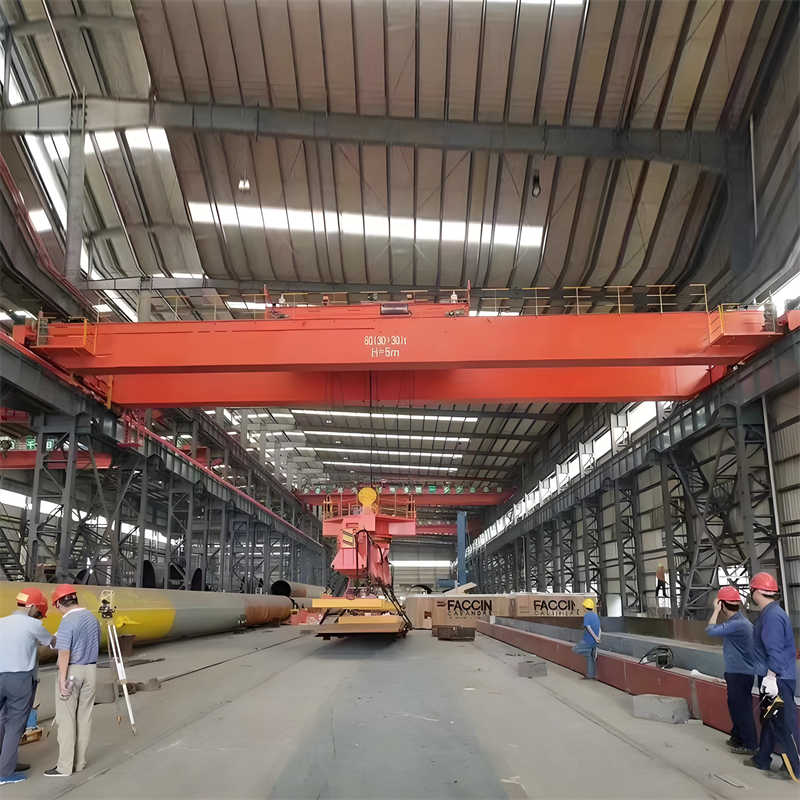
We actively invite prospective clients to visit our 240,000-square-meter manufacturing facility in Changyuan, Henan Province—the heart of China’s crane industry. A factory visit allows procurement teams to verify our manufacturing capabilities, quality control processes, and testing procedures firsthand. Over 2,000 sets of manufacturing and detection equipment are deployed across a facility producing more than 10,000 crane sets annually. When you visit Dongqi Crane’s factory, you are not judging sales assurances alone—you are seeing where and how your crane is made.
Part 7: Recommendations for Buyers
7.1 Know Which Standard Your Project Requires
If your building is in North America and designed to CMAA assumptions, make sure any FEM crane proposed has had its wheel loads and runway interfaces verified. Conversely, if your project follows European or ISO norms, ensure the manufacturer can provide the required design calculation packages.
7.2 Evaluate Total Project Cost, Not Just Equipment Price
Differences in wheel loads, runway impacts, building height requirements, and installation complexity mean that two cranes with the same rated capacity and span can have very different total installed project costs. Dongqi Crane’s engineering team provides comparative analyses to help clients understand the total picture.
7.3 Verify Quality Certifications
Request valid ISO and CE certificates from your shortlisted suppliers. At Dongqi Crane, we welcome such requests and maintain all certification documentation for client review.
7.4 Plan Service and Spare Parts Before Purchasing
A crane supplier with no local support in your country can become a liability. Clarify spare parts availability, response times, and service arrangements. Dongqi Crane’s growing international service infrastructure, including a permanent Pakistan office and multilingual overseas service team, is designed to provide responsive support where it is needed.
Conclusion: An Invitation to Compare
The decision of which crane manufacturer to partner with will influence your facility’s productivity, maintenance budget, and safety for decades. We believe the best procurement decisions are made through direct, transparent comparison—evaluating not just price, but design integrity, manufacturing quality, lifecycle cost, and service commitment.
We invite you to include Dongqi Crane in your evaluation. Review our certifications. Visit our factory. Compare our engineering documentation with that of other suppliers. Send us your specifications and see the proposal our 70+ senior engineers develop.
Contact Dongqi Crane:
- Website: pk.craneyt.com
- Engineering Inquiry: Submit your project requirements for a customized proposal—response within 24 hours
- Factory Visit: Schedule an inspection of our Changyuan manufacturing facility
- Overseas Support: Dedicated multilingual service team across key markets
We do not claim to be the best choice for every project. But for a growing number of industrial companies worldwide, Dongqi Crane represents the intelligent balance—European-standard engineering backed by the scale and cost-efficiency of China’s largest crane manufacturing cluster.
© 2026 Dongqi Crane. All rights reserved. This guide presents publicly available information and Dongqi Crane’s own capabilities for comparative purposes. All brand names and trademarks are the property of their respective owners. Manufacturer profiles are based on industry reports, published materials, and market observation as of May 2026.
