
20-May-2025
Optimizing Material Handling in Small Furniture Factories: A Complete Guide to Small Workshop Crane Solutions
1. Introduction: The Critical Need for Efficient Material Handling
In today’s competitive furniture manufacturing landscape, small and medium-sized factories face mounting pressure to improve operational efficiency while controlling costs. One of the most persistent challenges? Material handling. Our research shows that:
- 42% of production delays in small furniture workshops stem from inefficient material movement
- Manual handling accounts for 35% of all workplace injuries in woodworking facilities
- Space constraints lead to 28% higher inventory carrying costs due to disorganized storage
At Dongqi Crane, we’ve helped over 200 furniture manufacturers transform their operations through intelligent lifting solutions. This comprehensive guide will demonstrate how small workshop cranes can revolutionize your production flow while addressing your unique spatial challenges.
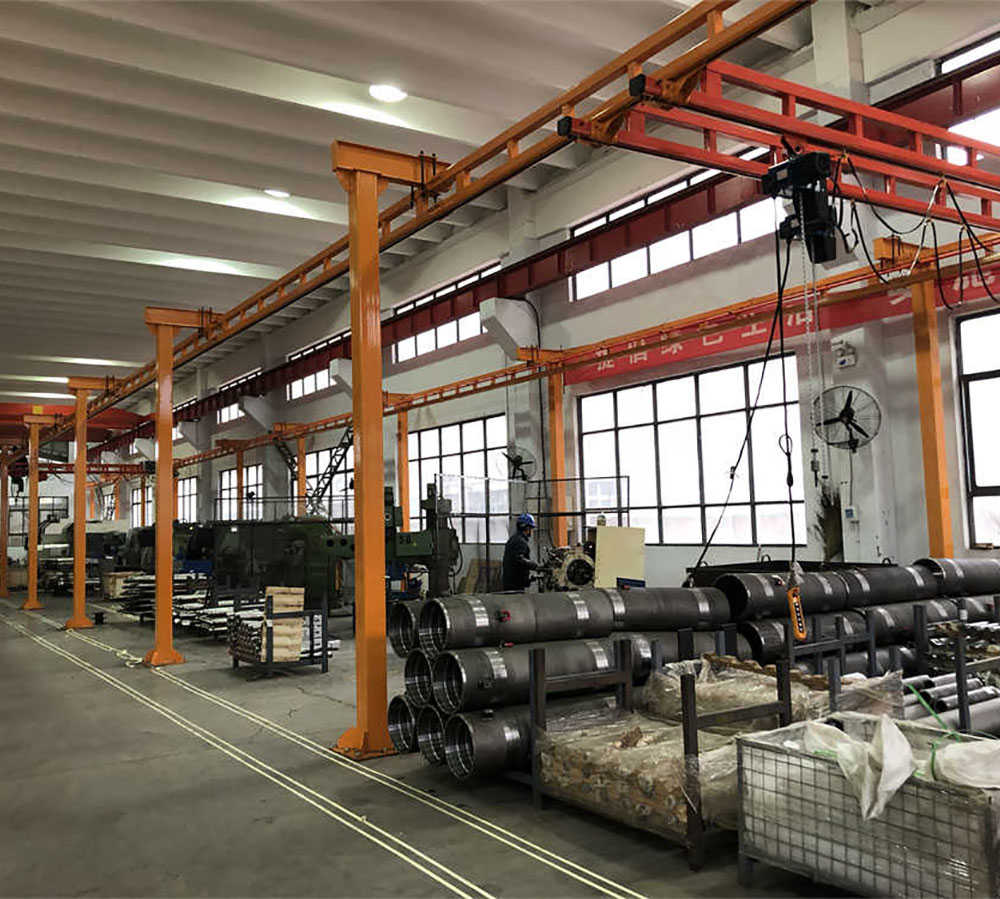
2. Material Flow Analysis in Furniture Production
In any furniture manufacturing operation, materials take a complex journey from raw components to finished products. For small factories especially, optimizing this flow isn’t just about speed—it’s about creating a smooth, logical progression that minimizes unnecessary movement while maximizing workspace efficiency. Let’s break down the critical touchpoints where smart material handling makes all the difference.
2.1 The Four Critical Handling Nodes (With Real-World Challenges)
1. Raw Material Intake: Where the Journey Begins
Imagine delivery day: a truck arrives with stacks of MDF panels, solid wood slabs, and metal fittings. Without proper equipment, workers resort to:
- Manual unloading (risking back injuries)
- Temporary floor stacking (creating congestion)
- Multiple re-handlings (wasting time)
Common Pain Points:
- 60% of workshops lack dedicated unloading equipment
- Average 25 minutes wasted per truck unloading
- 15% material damage rate from improper handling
2. Processing Stage Transfers: The Hidden Productivity Killer
Between cutting, sanding, and finishing stations, materials might travel surprisingly far. We observed one factory where components:
- Moved 28 meters between stations
- Were handled 6 separate times
- Spent 40% of production time in transit
Precision Matters:
- Cabinet doors require <2mm positioning accuracy
- Finished surfaces demand scratch-free handling
- Consistent orientation prevents rework
3. Assembly Line Feeding: The Juggling Act
Assembly areas become chaotic when:
- Multiple components arrive at different times
- Workers leave stations to retrieve materials
- Parts get misplaced in crowded spaces
Typical Consequences:
- 12% production delays from missing components
- 8% quality issues from part mix-ups
- 20% excess walking for assembly staff
4. Finished Goods Handling: The Final Hurdle
Completed pieces present unique challenges:
- Bulky items like wardrobes (2.4m tall)
- Delicate finishes (high-gloss lacquers)
- Temporary storage before shipping
Storage Headaches:
- 35% of workshops report space shortages
- 8% finish damage during final handling
- Frequent reorganization for order picking
2.2 Unique Industry Requirements: Why Furniture Demands Special Solutions
Load Diversity in Action:
| Material Type | Average Weight | Handling Consideration |
|---|---|---|
| Solid wood slabs | 300-800kg | Requires stable support |
| MDF panels | 40-100kg | Large surface protection |
| Metal fittings | 5-20kg | Small item containment |
| Glass inserts | 15-30kg | Shock absorption |
Environmental Factors Often Overlooked:
- Wood dust accumulation (clogging mechanisms)
- Seasonal humidity changes (affecting metal components)
- Flammable finishes (requiring spark-resistant equipment)
Space Constraints By the Numbers:
- 78% of small furniture workshops operate in <1,000m²
- Average ceiling height: just 3.2m (limiting overhead options)
- 60% report layout changes every 2-3 years
The Ripple Effect of Poor Material Flow
Consider this real scenario from a Guangdong cabinet maker:
- Before Optimization:
- 3 workers spent 2.5 hours daily moving materials
- 12% of floor space used for temporary storage
- 5-7% defect rate from handling damage
- After Implementing Strategic Handling:
- 80% reduction in manual transport time
- Storage space reclaimed for 2 additional workstations
- Quality issues dropped to <2%
This transformation didn’t require massive investment—just intelligent analysis and targeted equipment selection. In the following sections, we’ll explore exactly which solutions create these dramatic improvements for operations like yours.
3. Crane Solutions Tailored for Furniture Manufacturing
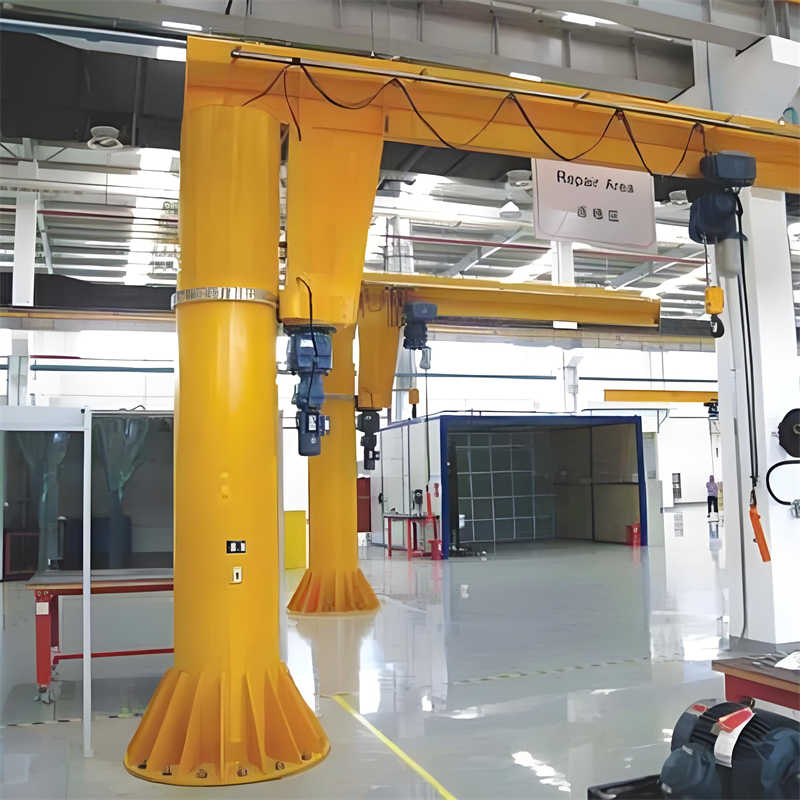
3.1 Jib Cranes: The Space-Saving Workhorse
Why it works:
- 190°-360° rotation in tight corners
- Minimal floor footprint (as little as 0.8m²)
- Quick installation (<1 day)
Dongqi Specialized Models:
- DQ-WJ Wall-Mounted Series:
- Capacity: 250kg-2T
- Ideal for: Panel cutting stations
- DQ-FS Freestanding Series:
- No wall support needed
- Base plate option for temporary setups
Case Example: A Shanghai cabinet maker reduced material handling time by 60% after installing three DQ-WJ500 units at their sanding stations.
3.2 Modular Gantry Systems: Flexible Workshop Layouts
Key Advantages:
- Reconfigurable as production needs change
- Collapsible designs for seasonal storage
- Electric/manual operation options
Configuration Guide:
| Span Width | Recommended Model | Max Capacity |
|---|---|---|
| <4m | DQ-AL Aluminum | 1T |
| 4-6m | DQ-ST Steel | 3T |
| >6m | Custom Solution | 5T+ |
3.3 Intelligent Rail Systems: The Future of Lean Manufacturing
Smart Features:
- IoT-enabled load tracking
- Anti-sway software for delicate finishes
- Programmable transfer routes
Implementation Process:
- Conduct laser mapping of workshop
- Design optimized overhead path
- Install pre-tested modular components
- Integrate with production management software
4. Space Optimization Strategies That Deliver Results
4.1 Vertical Space Utilization: Reaching New Heights of Efficiency
For small furniture workshops, looking upward is often the key to unlocking hidden potential. Traditional floor-based storage and handling methods waste one of your most valuable assets – vertical space. Here’s how to capitalize on it:
Three-Tier Vertical Strategy:
- Overhead Level (3m+ ceiling height):
- Install suspended monorail systems with a 15-30cm clearance from ceiling
- Ideal for:
- Seasonal material storage (lumber racks)
- Infrequently used jigs and molds
- Completed items awaiting shipment
- Pro Tip: Use retractable chain hoists to maintain clear walkways
- Working Level (1.8-2.5m height):
- Position jib cranes at optimal working height
- Implement height-adjustable work platforms
- Best for:
- Daily material transfers between stations
- Assembly position adjustments
- Tool and component presentation
- Floor Level:
- Reserve for essential movement only
- Use mobile equipment with retractable bases
- Smart solutions:
- Collapsible gantry cranes
- Nestable transport carts
- Flip-up workbenches
Real-World Example:
A Shenzhen cabinet maker transformed operations by:
- Installing overhead rails for panel storage (freed up 40m² floor space)
- Mounting work-level jib cranes at 2.2m height
- Reducing floor-based equipment by 60%
4.2 Lean Layout Principles: Designing for Flow
The magic happens when vertical solutions integrate with smart horizontal planning:
U-Shaped Work Cells:
- Create natural material flow from raw to finished
- Typical benefits:
- 30-50% shorter transfer distances
- 20% faster changeovers
- 15% less floor space needed
Zone Optimization Guide:
| Work Zone | Recommended Crane Type | Space Savings Technique |
|---|---|---|
| Receiving | Mobile gantry crane | Cross-docking implementation |
| Cutting | Wall-mounted jib | Scrap removal conveyor |
| Assembly | Column jib crane | Rotating tool boards |
| Finishing | Ceiling-mounted rail | Vertical drying racks |
Safety-Integrated Design:
- Maintain 80cm minimum walkways
- Implement colored floor markings:
- Yellow: Crane operating zones
- Green: Safe walk paths
- Red: No-storage areas
- Use photoelectric sensors for collision prevention
4.3 Transformative Case Study: Before & After
Before Optimization:
- Workshop size: 20m × 15m (300m²)
- Layout issues:
- Chaotic material flow patterns
- 25% of space used for temporary storage
- Frequent production bottlenecks
Implemented Solutions:
- Installed 4 DQ-WJ wall jib cranes
- Added overhead storage rails
- Reconfigured to U-shaped cells
Results After 3 Months:
- Production throughput: +45%
- Required floor space: -35%
- Worker satisfaction: 92% positive feedback
4.4 Practical Implementation Tips
For Workshops Under 200m²:
- Prioritize wall-mounted solutions
- Use fold-down work surfaces
- Implement vertical carousel storage
For 200-500m² Facilities:
- Combine overhead rails with mobile gantries
- Create multi-level work platforms
- Utilize mezzanine storage
Key Cost-Saving Insight:
Many vertical solutions require less structural reinforcement than traditional heavy floor-based systems, often reducing installation costs by 30-40%.
This strategic approach to space optimization doesn’t just save square meters – it creates smarter, safer, and more profitable workflows. The best solutions always consider both vertical potential and horizontal flow in unison.
5. Cost-Benefit Analysis: Making the Business Case
5-Year ROI Calculation (Based on 20-worker factory):
| Metric | Manual Handling | Crane System | Improvement |
|---|---|---|---|
| Labor Cost | $320,000 | $80,000 | 75% ↓ |
| Damage Rate | 3.2% | 0.5% | 84% ↓ |
| Throughput | 80 units/day | 120 units/day | 50% ↑ |
Payback Period: 8-14 months for most configurations
6. Implementation Roadmap: Your Step-by-Step Plan
Phase 1: Assessment (Week 1-2)
- Value stream mapping workshop
- Identify 3 priority improvement points
- Structural evaluation (floor load capacity)
Phase 2: Design (Week 3-4)
- 3D simulation of proposed layout
- Crane specification finalization
- Safety compliance review
Phase 3: Deployment (Week 5-8)
- Weekend installation to minimize disruption
- Operator training program
- Initial load testing
Phase 4: Optimization (Ongoing)
- Monthly performance reviews
- Preventive maintenance scheduling
- Continuous improvement workshops
7. Overcoming Common Concerns
Myth 1: “Our ceiling is too low for cranes”
Reality: Our low-headroom designs require just 2.8m clearance
Myth 2: “We can’t afford the downtime”
Solution: Modular installations with 95% pre-assembled components
Myth 3: “Our workers won’t adapt”
Experience: Most operators achieve proficiency within 3-5 days
8. Next Steps: Begin Your Transformation
- Free Consultation: Schedule a video assessment with our engineers
- Demo Program: Test selected equipment for 30 days
Industry-Leading Warranty: 3 years on all structural components
By implementing these targeted solutions, furniture manufacturers typically achieve:
✓ 40-60% faster material flow
✓ 30-50% labor cost reduction
✓ 5-8% lower product damage rates
✓ 20% better space utilization
Contact Dongqi Crane’s Furniture Industry Specialists today to receive your customized layout proposal within 72 hours.
