
22-Oct-2025
Revolutionizing Workshop Efficiency: The Dongqi Light Crane Rail System for Glass Lifting
Subtitle: How Specialized Overhead Handling Solutions Enhance Safety, Precision, and Productivity in Glass and Panel Fabrication
Introduction: The Fragile Giant
In the modern workshop, few materials present as significant a handling challenge as glass. Whether it’s large laminated panels for architectural facades, delicate tempered glass for automotive windows, or heavy insulated units for commercial buildings, glass is simultaneously fragile, heavy, and hazardous to move. Traditional methods of manual handling or improvised lifting solutions are not only inefficient but also pose severe risks of product damage, workplace accidents, and worker injury.
This is where precision engineering and specialized material handling solutions make all the difference. The Dongqi Light Crane Rail System for Glass Lifting is not merely a piece of equipment; it is an integrated ecosystem designed to transform the workflow of any workshop dealing with large, sensitive panels. This article delves deep into how this system works, its core components, the undeniable benefits it delivers, and why it represents a critical investment for forward-thinking fabrication shops.
Section 1: Understanding the Dongqi Light Crane Rail System
At its core, the Dongqi Light Crane Rail System is an overhead material handling solution specifically engineered for the unique demands of lifting, moving, and positioning large, flat, and fragile loads like glass, polycarbonate sheets, and composite panels.
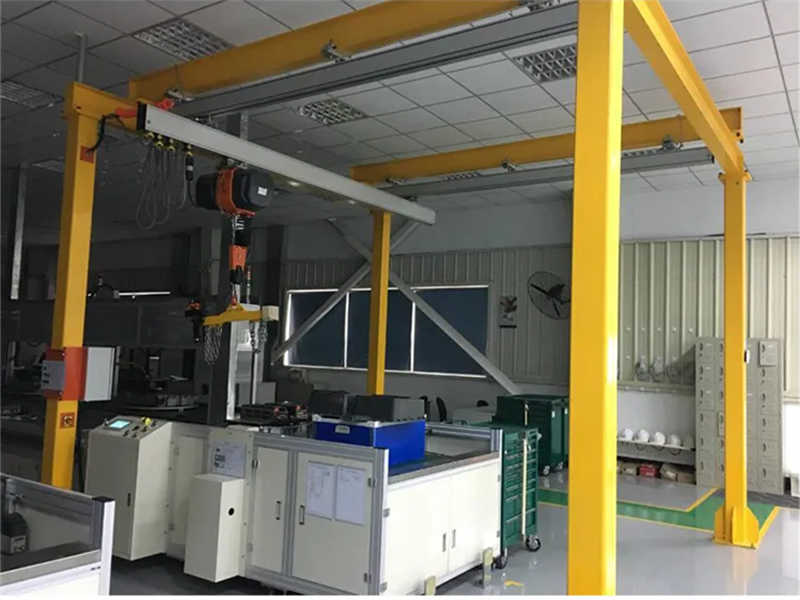
Unlike standard overhead cranes, this system is characterized by its lightweight yet robust structure, exceptional precision in movement, and specialized lifting attachments. The system typically consists of several key components working in harmony:
- The Runway System (The Track): This is the backbone of the installation. Dongqi provides high-strength, precision-formed steel or aluminum tracks that are mounted to the workshop’s ceiling structure or on freestanding support columns. The design ensures a smooth, level, and consistent path for the crane to travel, which is crucial for preventing sway and ensuring stable load movement.
- The Bridge Girder (The Crane): The bridge travels along the runway tracks. In a light crane system, this girder is often made from a patented aluminum or high-tensile steel profile that offers an excellent strength-to-weight ratio. This lightweight design reduces the effort required to move the crane, leading to smoother operation and less operator fatigue.
- The End Trucks: Located at each end of the bridge girder, the end trucks house the wheels that engage with the runway tracks. They are engineered for minimal rolling resistance and maximum stability, ensuring the crane moves effortlessly along its designated path.
- The Hoist and Trolley: This is the heart of the lifting mechanism. A precisely controlled electric or manual hoist is mounted on a trolley that moves laterally across the bridge girder. This two-dimensional movement (bridge travel along the runway and trolley travel across the bridge) allows the operator to position a load anywhere within the system’s coverage area with pinpoint accuracy.
- The Specialized Glass Lifting Vacuum Suction Device: This is the critical differentiator. Instead of slings or hooks, the system uses a vacuum lifter. This device features multiple suction cups, often made from high-grade nitrile rubber to prevent marking, that create a powerful vacuum seal on the glass surface. The lifter is controlled via a handheld pendant, allowing the operator to securely attach, lift, tilt, and release panels with the push of a button.
Section 2: The Compelling Advantages: Why Your Workshop Needs This System
Implementing a Dongqi Light Crane Rail System for glass lifting yields transformative benefits across three key areas: Safety, Productivity, and Product Integrity.
2.1 Unparalleled Safety Enhancement
- Elimination of Manual Handling: The most significant risk reduction comes from removing the need for workers to manually lift heavy, awkward-sized glass panels. This drastically cuts the incidence of musculoskeletal disorders, cuts, and lacerations.
- Secure Vacuum Grip: The vacuum lifter provides a uniform and secure hold across the surface of the glass. Built-in safety features, such as battery backup for power failures and automatic alarms for vacuum loss, ensure the load will not be dropped unexpectedly.
- Controlled and Predictable Movement: The smooth rail system allows for precise, jerk-free movement. Operators can navigate panels through crowded workshops without the dangerous swinging or drifting common with other lifting methods.
- Ergonomic Operation: The system does all the heavy lifting. The operator only needs to guide the load, often with minimal physical effort, reducing fatigue and increasing overall workplace well-being.
2.2 Dramatic Boost in Productivity and Efficiency
- Faster Cycle Times: What used to require a team of 3-4 people can now be accomplished safely and efficiently by a single operator. The process of picking, moving, and positioning a glass panel is reduced from minutes to seconds.
- Optimized Workflow: A well-designed rail system can be configured to cover key workflow areas—from the unloading dock, through the cutting and edging stations, to the final inspection and shipping areas. This creates a seamless, streamlined production line.
- Reduced Labor Costs: By enabling one-person operation for most lifting tasks, the system frees up skilled labor for more value-added tasks like fabrication, quality control, and installation, thereby optimizing the workforce.
- Minimal Setup Time: The vacuum lifter attaches to the glass in moments, unlike slings which require careful placement and balancing.
2.3 Superior Product Integrity and Damage Reduction
- No Point Loads or Edge Damage: Unlike mechanical clamps or slings that can exert extreme pressure on the edges, vacuum lifters distribute the holding force evenly across the surface, eliminating the risk of chipping, cracking, or micro-fractures.
- Elimination of Contamination: The lifting process is contact-only on the broad surface with clean suction cups, preventing marks from straps or dirt from gloves and handling. This is crucial for high-finish glass products.
- Precision Placement: The fine-control hoisting and travel movements allow operators to lower a panel onto supports, into a frame, or onto a processing table with millimeter accuracy, preventing impact damage during placement.
Section 3: Key Applications and Customization by Dongqi
The versatility of the Dongqi Light Crane Rail System makes it suitable for a wide range of industries and applications:
- Architectural Glass Fabrication: Handling large sheets of tempered, laminated, or insulated glass for windows, curtain walls, and skylights.
- Glass and Mirror Manufacturing: Moving raw glass sheets from storage to cutting lines, washing machines, and tempering furnaces.
- Automotive and Transportation: Installing windshields, side windows, and glass sunroofs in vehicles, buses, and trains.
- Solar Panel Production: Handling fragile photovoltaic panels and large glass substrates throughout the manufacturing process.
- Metal and Composite Panel Fabrication: The system is equally effective for handling large, thin sheets of aluminum, acrylic, or other composite materials.
A key strength of Dongqi Crane is our ability to provide customized solutions. We understand that no two workshops are identical. Our engineering team can design a system tailored to your specific needs, including:
- Span and Lifting Capacity: From small workstation cranes to systems spanning entire warehouses, with capacities ranging from 100kg to 2000kg or more.
- System Configuration: Simple monorails, single-girder cranes, or more complex double-girder and workstation bridge crane systems for complete area coverage.
- Control Systems: From simple push-button pendants to state-of-the-art radio remote controls for maximum operator mobility and safety.
- Vacuum Lifter Specifications: We can specify the ideal vacuum lifter with the correct number of suction cups, lifting capacity, and features like independent cup control for tilting panels.
Section 4: The Dongqi Difference: Quality, Reliability, and Support
Choosing Dongqi Crane is an investment in peace of mind. Our Light Crane Rail Systems are built to the highest international standards, using quality materials and components.
- Robust Engineering: Our cranes are designed for durability and long service life, even in demanding industrial environments.
- Smooth and Quiet Operation: Precision-machined components and high-quality bearings ensure effortless movement and low noise levels.
- Comprehensive Service: From initial consultation and design to installation, commissioning, and after-sales support, the Dongqi team is with you every step of the way. We provide thorough operator training and readily available spare parts.
Conclusion: A Clear Investment in Your Workshop’s Future
In an industry where margins are tight and the cost of failure is high—both in human and financial terms—the Dongqi Light Crane Rail System for Glass Lifting is not an expense; it is a strategic investment. It directly addresses the core challenges of safety, efficiency, and quality that define successful modern fabrication workshops.
By automating the most hazardous and labor-intensive part of your process, you are not just protecting your assets and your people; you are building a foundation for sustainable growth, enhanced reputation, and superior product quality. The question is no longer if you can afford to install such a system, but rather, can you afford the continued risks and inefficiencies of operating without one?
Contact Dongqi Crane today for a free, no-obligation consultation. Let our experts analyze your workshop layout and workflow to design a glass lifting crane system that will elevate your operations to a new level of performance and safety.
