
12-Feb-2026
The Architecture of Lift: Why Fragmented Procurement Fails the Modern Industrial Floor
In the lexicon of industrial motion, the overhead crane is often viewed as the skeleton of the factory—the rigid, reliable framework that defines the limits of possibility. The below-the-hook (BTH) device, conversely, is viewed as the muscle and tendon; the flexible, interchangeable component that actually touches the load.
This distinction, while anatomically useful, breeds a dangerous procurement fallacy. It suggests that the skeleton and the muscle are independent entities. It implies that you can build the perfect skeletal structure today, and add the muscle mass later without consequence. In the world of material handling, this separation of thought is not just inefficient; it is a primary cause of premature mechanical failure, avoidable workplace accidents, and the silent draining of capital through “retrofit creep.”
To understand why overhead cranes and below-the-hook devices must be architected as a single system, we must abandon the notion of the crane as a commodity and embrace it as a chassis—one that is rendered functionally obsolete the moment it is paired with an ill-suited lifting attachment.
The Phantom Limb Syndrome of Industrial Procurement
There is a pervasive myth in manufacturing that the overhead crane is the “permanent” infrastructure and the lifting device is the “consumable” tooling. This hierarchy leads to a predictable timeline: A facility installs a 10-ton bridge crane with a standard hook. Six months later, they purchase a coil lift. A year after that, they add a vacuum lifter for glass handling. Two years later, they install a manipulator for palletizing.
Individually, these purchases are justified. Collectively, they represent a phenomenon best described as Phantom Limb Syndrome. The crane operator looks up at the robust, expensive bridge crane and assumes it is capable. They feel the tug of the load and assume the system is healthy. But the crane itself is experiencing neurological conflict. It was prescribed a diet of hook loads, but it is being forced to digest cantilevered torque and off-center dynamic forces.
When you purchase a crane and a BTH device separately—often months apart, usually from different suppliers, rarely with shared engineering data—you are not saving money. You are degrading the resolution of your lifting system. You are forcing a high-precision tool to operate on a low-accuracy platform.
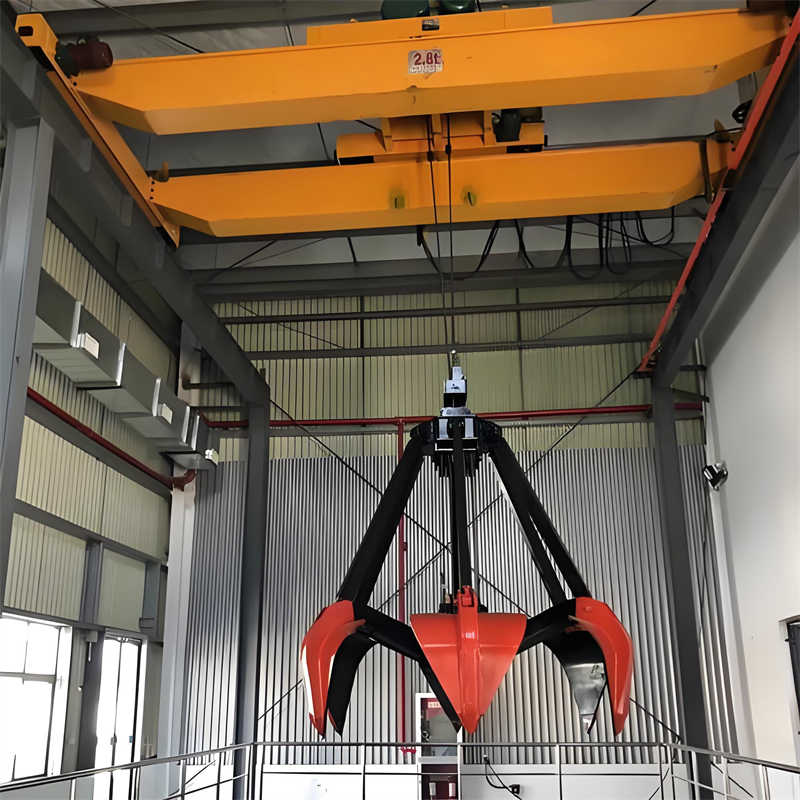
The Silent Geometry of Failure
The most dangerous assumption in overhead lifting is that weight is the only variable that matters. A 5-ton capacity crane, rated at 5 tons, should lift a 4.5-ton load safely, regardless of what hangs below the hook. This is engineering malpractice.
Crane design is governed by geometry, not just gravity. When a standard hook block lifts a symmetric load via slings, the load is centered. The forces are vertical. The stress on the end trucks, the bridge beams, and the trolley is predictable.
Now, introduce a BTH device purchased separately. Perhaps it is a spreader beam for long loads, or a sheet lifter with pivot points that extend 10 feet below the hook. You have just introduced a lever. The crane is no longer lifting a weight; it is managing a pendulum. The lateral forces generated by a long, rigid lifting device during acceleration and deceleration are rarely accounted for in a generic crane procurement contract.
This manifests in ways that standard preventative maintenance struggles to catch. The bridge wheels begin to flange. The cross shaft couplings wear asymmetrically. The runway rail shows a polished sheen on the inner edge. Maintenance managers blame the crane manufacturer. The crane manufacturer blames the “abusive” operator. The operator blames the tool.
No one blames the procurement process. But the procurement process is the root cause. When you buy the crane and the tool separately, you engineer the failure mechanism into the system before the first lift is ever made.
The Economic Fallacy of the “Standard” Crane
“Why buy a specialized crane now? We don’t know what we’ll be lifting in five years. Let’s just buy a standard 10-tonner and figure it out later.”
This is the most expensive sentence in industrial procurement. It stems from a misunderstanding of what “standardization” actually costs. A “standard” crane is designed to accommodate a standard hook height, a standard lift radius, and standard impact factors. The moment you hang a custom BTH device on that standard hook, the crane ceases to be standard.
Consider hook height. A generic crane is designed to lift a hook as high as possible to maximize clearance. However, many BTH devices—particularly motorized grabs or coil tongs—are tall. They contain their own gearboxes, frames, and hydraulics. When you add a 6-foot-tall coil lifter to a crane with a standard 20-foot hook height, your effective lift height is now 14 feet. You paid for a high-bay facility and a high-lift crane, but you cannot stack material because the architecture of the tool consumed the architecture of the building.
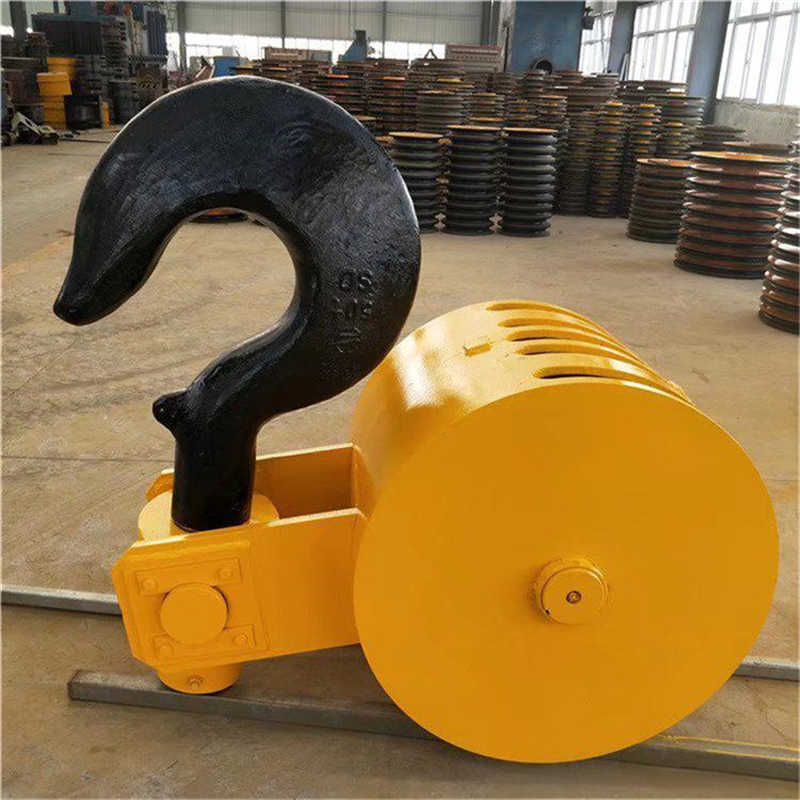
If these components were designed together, the engineer would lower the bridge or shorten the wire rope reeving to compensate. They would move the bumping posts to accommodate the different swing radius. Separately, you discover this incompatibility on installation day, forcing expensive field modifications or—worse—a permanent reduction in storage density.
The Retrofitting Tax: Paying Twice for the Same Engineering
There is a common question asked by plant engineers: “How expensive is retrofitting?” The answer is rarely communicated in dollars; it is communicated in opportunity cost.
Retrofitting a crane to accept a specific BTH device is not simply a matter of welding on a different hook. It involves several distinct taxes:
- The Structural Tax: The lateral forces induced by a rigid BTH device may require gusseting of the end trucks or reinforcement of the bridge girders. This requires hot work at height, shutting down the bay, and certifying welds—costs that are exponentially higher in the field than on the assembly floor.
- The Electrical Tax: A sophisticated BTH device often requires power and data. If you buy them together, power is supplied via a dedicated festoon system or a slip ring assembly on the hook block. If you buy them separately, you are looking at dangling pendants, temporary power whips, or expensive wireless retrofit kits. You pay the cost of electrification twice.
- The Calibration Tax: Modern variable frequency drives (VFDs) require tuning based on the mass and inertia of the load. If the BTH device adds significant weight and changes the load profile, the drive parameters must be reconfigured. Separately, this requires a field service engineer to tune a system that should have been tuned at the factory.
The “buy now, figure it out later” approach assumes that money is the only scarce resource. It ignores that downtime is the true currency of manufacturing. A retrofit that costs $15,000 in parts and labor incurs $50,000 in lost production if it takes three days to complete. A system designed together incurs zero downtime.
The Illusion of Interchangeability
Proponents of separate procurement often argue for “interchangeability.” They want the flexibility to use multiple tools on one crane. This is a valid operational need, but it is an engineering constraint, not an excuse for isolation.
Interchangeability does not mean “any tool works on any crane.” It means “a defined set of tools works on a defined crane.” This distinction is critical.
If you purchase a crane with the intention of using three different BTH devices, that crane must be engineered for the worst case of those three scenarios. Not the heaviest—the worst dynamic case. A light, long tool with a high center of gravity may impose more lateral stress on the crane than a short, heavy ingot. If you buy the crane before defining the tools, you are engineering for an average that does not exist.
When designed together, the engineer can specify a “design envelope.” The crane capacity may be de-rated for certain attachments, or specific speeds may be locked out when using high-center-of-gravity tools. This is not a limitation; it is a safety protocol. When purchased separately, this safety protocol does not exist. The operator assumes the 10-ton crane can lift 10 tons regardless of the tool, and the margin for error evaporates.
The User Experience Deficit
Beyond the physics and the finances, there is a human cost to fragmented lifting systems. The overhead crane is one of the few machines in a modern factory that relies on haptic feedback. The operator feels the load. They feel the sway. They feel the “cogging” of the motor.
A BTH device acts as a signal filter between the load and the operator. A well-integrated system—where the controls of the BTH device are harmonized with the controls of the crane—creates an intuitive experience. The operator presses left, the load goes left. The hydraulics engage smoothly as the crane reaches the target.
A poorly integrated system creates cognitive dissonance. The operator uses one pendant to move the crane and another pendant to actuate the grab. They look up to see the load, look down to find the right button, look up again—a classic initiation of the “head-down” accident sequence.
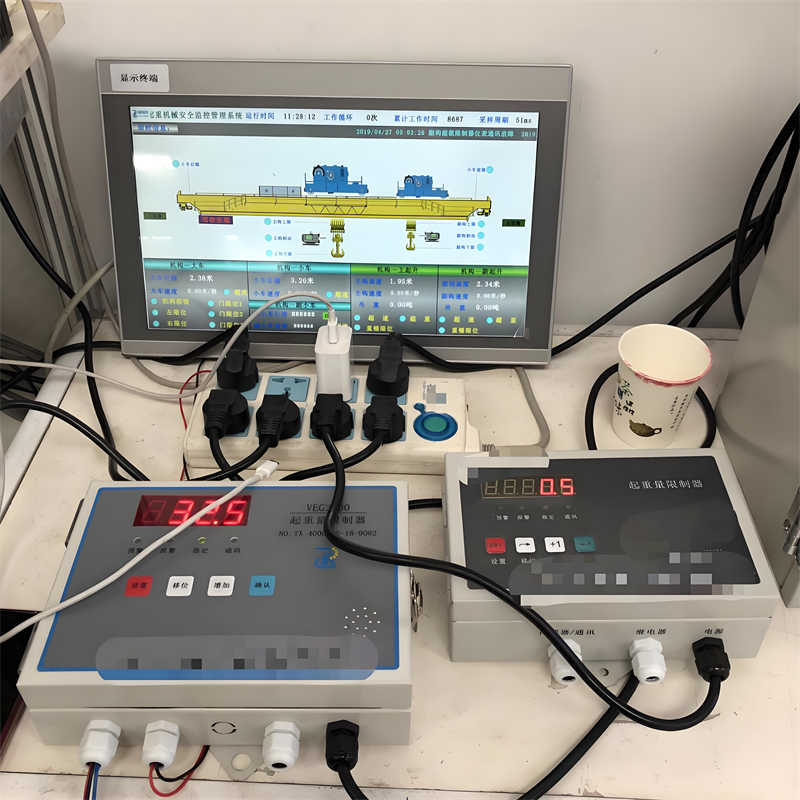
When purchasing separately, the user interface is an afterthought. When purchased together, the control architecture can be unified. The BTH device’s functions can be integrated into the crane’s radio remote. Safety interlocks can be programmed: the grab cannot open unless the crane is parked; the crane cannot move unless the load is secure. This is not luxury engineering; it is the difference between a tool and a weapon.
Future-Proofing as a Design Philosophy, Not a Guessing Game
“How can you future-proof an overhead crane?” This question usually implies a desire for untethered capacity—buying a 20-ton crane today for a 10-ton load just in case. But raw capacity is a poor hedge against the future.
True future-proofing lies in the interfaces, not the iron.
If you accept the philosophy that the crane and the BTH device are one system, then future-proofing becomes a matter of defining interface standards. This includes:
- The Mechanical Interface: Specifying a hook or a mounting bracket that is compatible with a family of future tools.
- The Power Interface: Installing a festoon system with extra conductors reserved for future tooling needs.
- The Data Interface: Specifying a controller with I/O available for future hydraulic or vacuum functions.
- The Software Interface: Insisting on an open-architecture control system that allows for the addition of anti-sway algorithms specific to future rigid tools.
You cannot future-proof a crane by guessing what you might lift. You can only future-proof it by designing a robust platform for unknown attachments. This requires the involvement of a lifting device engineer at the crane specification stage. Without them, your “future-proof” crane is just an oversized paperweight waiting for a load it cannot handle.
The Regulatory Grey Area
Standards organizations such as ASME (American Society of Mechanical Engineers) and OSHA (Occupational Safety and Health Administration) treat the crane and the BTH device as separate pieces of equipment for certification purposes. This regulatory separation reinforces the procurement separation.
However, the regulation addresses inspection intervals and proof testing. It does not address system dynamics. Legally, you can hang a poorly designed, untested magnetic lifter on a brand new bridge crane and put it into service, provided both have individual certifications.
This grey area creates liability exposure. In the event of a catastrophic failure, the investigation will not stop at the individual certifications. It will ask: Was the system engineered for this application? If the answer is no, the blame shifts from the manufacturer to the integrator—which is usually the end user.
By purchasing the crane and the BTH device as a single engineered package, you shift the liability to the entity best equipped to manage it: the engineering team that designed the interface. You move from a position of assembling parts to a position of specifying a solution.
Case Study: The Cost of Silence
Consider a hypothetical—but all too common—scenario. A steel service center installs a 15-ton double-girder crane. Six months later, they purchase a motorized coil grab for handling slit coils. The coil grab is 72 inches tall and weighs 4,000 pounds.
Separate Purchase:
- The crane was designed with a 24-foot hook height. With the 6-foot grab, stacking height is reduced by 25%.
- The crane’s slow speed setting is 20 FPM. The coil grab, with its long profile, swings excessively at 20 FPM. Operators reduce speed manually, increasing cycle time by 30 seconds per lift.
- The crane’s electrical enclosure has no spare terminals. Running power to the coil grab’s motor requires a new junction box and a field-installed transformer.
- The hook latch interferes with the coil grab’s suspension crossbar. A maintenance crew cuts the latch off, voiding the crane’s hook certification.
Integrated Purchase:
- The crane is specified with a 30-foot hook height to accommodate the grab.
- The crane is programmed with a “Coil Mode” that limits acceleration to 12 FPM and engages advanced anti-sway.
- Power and control are run to the hook block via a dedicated festoon, installed at the time of crane erection.
- The hook is replaced with a dedicated clevis mounting interface, eliminating the need for a latch.
The integrated system costs more on the initial purchase order. But the separate purchase incurs hidden costs that exceed the initial premium within the first two years of operation.
Reframing the Procurement Conversation
The resistance to buying cranes and lifting devices together is rarely technical; it is procedural. Procurement departments are structured around commodity codes. Cranes are capital expenditure (CapEx) equipment. BTH devices are often categorized as tooling or expense items. They are approved by different managers, funded by different budgets, and purchased on different timelines.
To overcome this, the conversation must be reframed. You are not buying a crane and a tool. You are buying lifted tons per hour. You are buying throughput. You are buying risk mitigation.
When viewed through the lens of productivity, the integration of the lifting device becomes the primary event, and the crane becomes the supporting asset. The question shifts from “How much crane do I need?” to “How do I move this specific material from point A to point B with maximum safety and minimum cycle time?”
This reframing forces the involvement of the BTH specialist early in the process. It forces the crane manufacturer to defend their design against the specific demands of the application. It replaces the vague concept of “capacity” with the specific metric of fitness for purpose.
Conclusion: The Synthesis of Lift
The industrial landscape is littered with cranes that lift far less than their nameplates suggest. They are burdened not by weight, but by incompatibility. They are slaves to tools that were born in a different drawing room, speaking a different engineering language.
To buy a below-the-hook device separately from an overhead crane is to assume that the physics of a lift are additive. They are not. They are multiplicative. The sway, the torque, the cycle time, and the risk do not add up; they amplify one another.
The decision to pair these elements at the conception stage is a decision to treat the industrial workspace as a cohesive biomechanical environment. It acknowledges that the steel in the bridge and the hydraulics in the grab are not separate kingdoms, but provinces of the same empire.
In an era of lean manufacturing and just-in-time delivery, the margin for error is zero. The factory cannot afford to guess. It cannot afford to retrofit. It cannot afford to train operators to compensate for engineering failures.
It can only afford to design the lift, completely, before the first beam is ever set in place.
