
18-Jun-2025
Underhung Crane Installation: Key Engineering Considerations
1. Introduction to Underhung Cranes
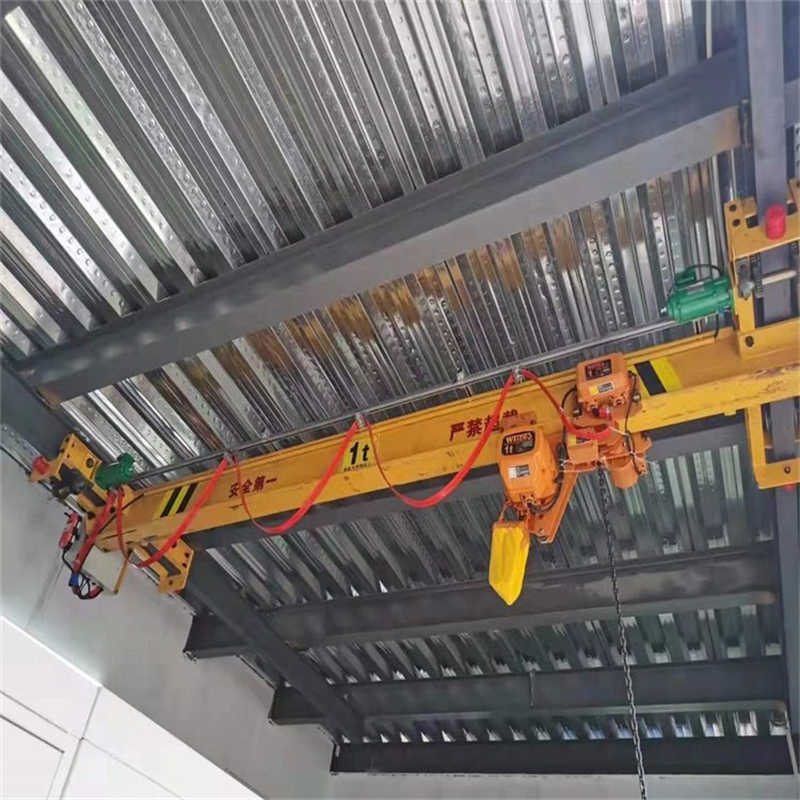
An underhung overhead crane (also known as an under-running crane) is a type of material handling system where the crane bridge travels on the bottom flange of runway beams, typically attached to the ceiling or roof structure. Unlike top-running cranes, which run on rails mounted above the runway beams, underhung cranes are ideal for facilities with limited headroom and require a more compact lifting solution.
Key Applications
- Warehouses & Distribution Centers – Maximizes vertical space for storage.
- Manufacturing & Assembly Lines – Supports precise load positioning.
- Automotive & Aerospace Industries – Used for component handling.
Advantages of Underhung Cranes
✔ Space-saving design – No need for additional support columns.
✔ Lower headroom requirement – Ideal for buildings with height restrictions.
✔ Modular & expandable – Can be integrated into existing structures.
2. Pre-Installation Planning
Proper pre-installation planning is critical to ensure the safety, efficiency, and longevity of an underhung crane system. This phase involves structural assessments, design specifications, and compliance checks to avoid costly mistakes during installation. Below is a detailed breakdown of key considerations.
A. Structural Assessment
1. Building Support Capacity
- Load Calculations: The supporting structure (ceiling beams, columns, or roof) must withstand:
- Dead Load (weight of the crane + runway beams)
- Live Load (maximum lifted weight + trolley weight)
- Dynamic Load (impact forces during movement, typically 25% of rated load)
- Engineering Evaluation: A structural engineer should verify:
- Beam strength (yield and fatigue resistance)
- Deflection limits (usually ≤ L/600 for runway beams per CMAA)
- Foundation stability (for freestanding systems)
2. Runway Beam Selection
- I-Beams vs. S-Beams:
- I-beams (W-beams) – Preferred for heavy-duty applications (higher load capacity).
- S-beams – Used for lighter loads, more economical but less rigid.
- Flange Width: Must accommodate the crane wheels (typically ≥ 3x wheel diameter).
- Material Grade: Common options include ASTM A36 (mild steel) or A572 (high-strength steel).
3. Deflection & Vibration Control
- Excessive deflection causes premature wear, misalignment, and safety risks.
- Solutions:
- Stiffener plates for added rigidity.
- Truss-supported runways for long spans.
- Damping pads to reduce vibration.
B. Design Specifications
1. Span & Lift Requirements
- Span Length: Distance between runway beams (typically 6m to 30m).
- Lifting Height: Determined by hoist drum size + hook approach.
- Clearance Needs: Minimum 300mm overhead & 200mm side clearance for safe operation.
2. Load Capacity & Duty Cycle
- Capacity Range: From 1 ton (light-duty) to 20+ tons (heavy-duty).
- Duty Classification (FEM/ISO Standards):
- FEM 1Am (Light) – Occasional use (e.g., maintenance).
- FEM 2m (Medium) – Regular use in workshops.
- FEM 3m (Heavy) – Intensive use in factories.
3. Electrical & Control Systems
- Power Supply Options:
- Festoon Systems (cable drag chains) – Best for shorter spans.
- Conductor Bars (Busbars) – Ideal for longer runways, less maintenance.
- Control Types:
- Pendant Control (wired handheld).
- Radio Remote Control (wireless, flexible operation).
C. Compliance & Safety Checks
1. Regulatory Standards
- OSHA 1910.179 (Overhead crane safety).
- ANSI/CMAA 70 (Design & testing requirements).
- FEM/ISO 4301 (Duty cycle classifications).
2. Risk Assessment
- Hazard Identification:
- Overloading (install load limiters).
- Collision risks (use bumper stops & anti-sway tech).
- Electrical hazards (grounding & insulation checks).
3. Installation Permits
- Local regulations may require permits for crane installation.
- Documentation Needed:
- Structural integrity reports.
- Manufacturer’s load charts.
- Electrical safety certifications.
Summary of Key Pre-Installation Steps
| Task | Action Required |
|---|---|
| Site Survey | Measure building dimensions, check obstructions. |
| Structural Review | Engineer evaluates load-bearing capacity. |
| Beam Selection | Choose I-beam/S-beam based on load & span. |
| Electrical Planning | Decide on power feed (festoon/busbar). |
| Safety Prep | Verify compliance with OSHA/ANSI. |
Pro Tip: Work with Dongqi Crane’s engineering team for a customized feasibility study before installation!
3. Key Engineering Considerations
A. Runway System Installation
- Precision Alignment: Misaligned runways cause wheel wear, jerky movement, and premature failure.
- Beam Anchoring: Must be securely bolted or welded to prevent shifting.
- End Stops & Buffers: Prevent crane overtravel and collisions.
B. Electrical & Safety Components
- Power Supply: Options include festoon systems, conductor bars, or cable reels.
- Safety Features:
- Overload protection (prevents lifting beyond capacity).
- Limit switches (automatic stopping at travel limits).
- Emergency stop buttons (manual override in emergencies).
C. Load Testing & Compliance
- Static Load Test: 125% of rated capacity to check structural integrity.
- Dynamic Load Test: 110% of rated capacity to verify smooth operation.
- Regulatory Compliance: Must meet OSHA, ANSI B30.11, and CMAA standards.
4. Step-by-Step Installation Process
Step 1: Runway Beam Mounting
- Secure beams to ceiling supports using high-strength bolts or welding.
- Ensure level alignment with laser measurement tools.
Step 2: Crane Bridge Assembly
- Assemble bridge girders and attach the hoist and trolley.
- Verify squareness to prevent crab walking.
Step 3: Electrical Wiring & Controls
- Install power feed systems (festoon or busbar).
- Connect pendant or radio remote controls.
Step 4: Alignment & Lubrication
- Check wheel-to-rail contact and adjust if necessary.
- Apply high-temperature grease to gears and bearings.
Step 5: Final Inspection & Certification
- Conduct load testing under supervision of a qualified engineer.
- Provide documentation (compliance certificates, manuals).
5. Common Challenges & Solutions
| Challenge | Solution |
|---|---|
| Beam Deflection | Reinforce with additional supports or stiffer beams. |
| Misalignment | Use laser alignment tools for precision. |
| Excessive Noise/Vibration | Install vibration dampeners and ensure proper lubrication. |
| Wheel Wear | Regularly inspect and replace worn wheels. |
Maintenance Tips:
- Monthly inspections of brakes, wires, and structural bolts.
- Annual load testing to ensure continued safety.
6. Why Choose Dongqi Crane?
✔ Custom Solutions – Tailored underhung cranes for specific load capacities and spans.
✔ Global Compliance – CE, ISO, and OSHA-certified manufacturing.
✔ Lifetime Support – Installation guidance, maintenance, and spare parts availability.
7. Conclusion
Proper underhung crane installation requires careful structural analysis, precision alignment, and compliance with safety standards. By following best practices in runway beam design, electrical setup, and load testing, businesses can ensure long-term reliability and safety.
Need a reliable underhung crane supplier? Contact Dongqi Crane today for engineered solutions and expert support!
